


Primary sourceBook1596
The Discovery of Guiana
Walter Raleigh · 1596
Raleigh's own 1596 account of his Orinoco expedition, mixing fact with the legend of a gold-rich empire called El Dorado.
Raleigh's own account of his search for El Dorado, revealing his ambitions, propaganda, and promotional skill.
About this source
What it is
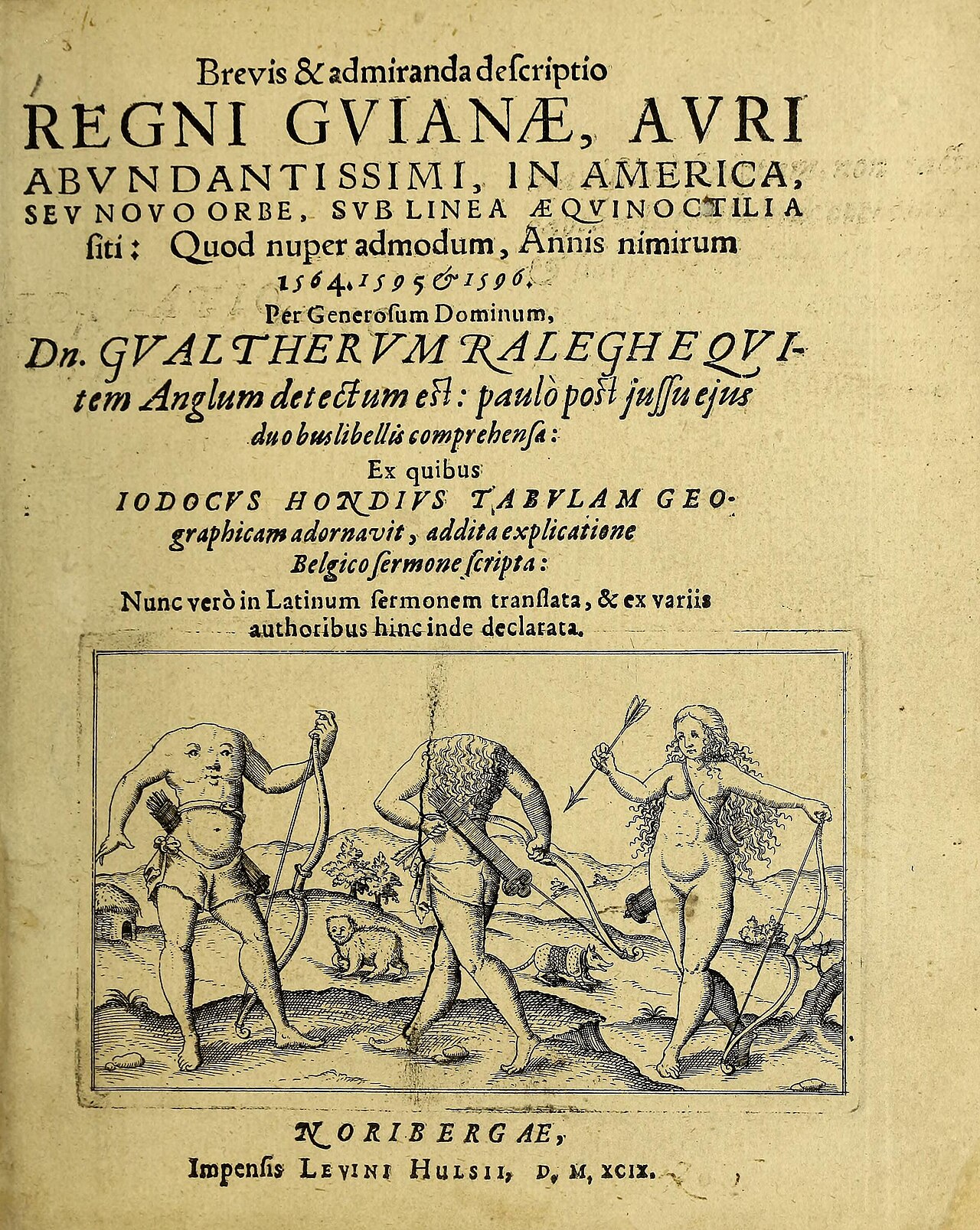
This book was written by Walter Raleigh in 1596, a year after he sailed to Guiana (modern Venezuela) searching for gold. He also visited Trinidad on the same voyage. The full title promises a 'large, rich, and beautiful Empire' including the golden city of Manoa, also called El Dorado.
Why it matters
Raleigh's expedition found no treasure and conquered no land, but his skilful writing turned the failure into a sensation. The book fuelled European belief in a hidden golden civilisation, helped spread anti-Spanish propaganda, and later cost Raleigh dearly: his promises about Guiana's gold were used against him at his trial after a second disastrous voyage.
Look closer
- Why might a writer describe gold he never actually found or brought home?
- What does the title page's imagery of strange peoples suggest about European ideas of distant lands?
- How might this book have shaped later explorers' and kings' decisions?
This book is part of the curated material that grounds the AI version of Sir Walter Raleigh on Humy.ai — when students ask about related events, the AI can quote it and cite it.
More Sir Walter Raleigh sources
Meet the AI Sir Walter Raleigh →Primary source
Charter to Sir Walter Raleigh
Elizabeth I · 1584
 Book
Primary source
The History of the World
Walter Raleigh · 1614
 Painting
Primary source
Sir Walter Raleigh
Nicholas Hilliard · c. 1585
 Painting
Primary source
John White's watercolours of the Roanoke voyage
John White · 1585-1586
 Book
Primary source
A briefe and true report of the new found land of Virginia
Thomas Harriot · 1588
Ready when you are
Start chatting with Sir Walter Raleigh now.
20 messages free · No credit card · Available in 50+ languages.