


Secondary sourcePaintingfirst half of 18th century
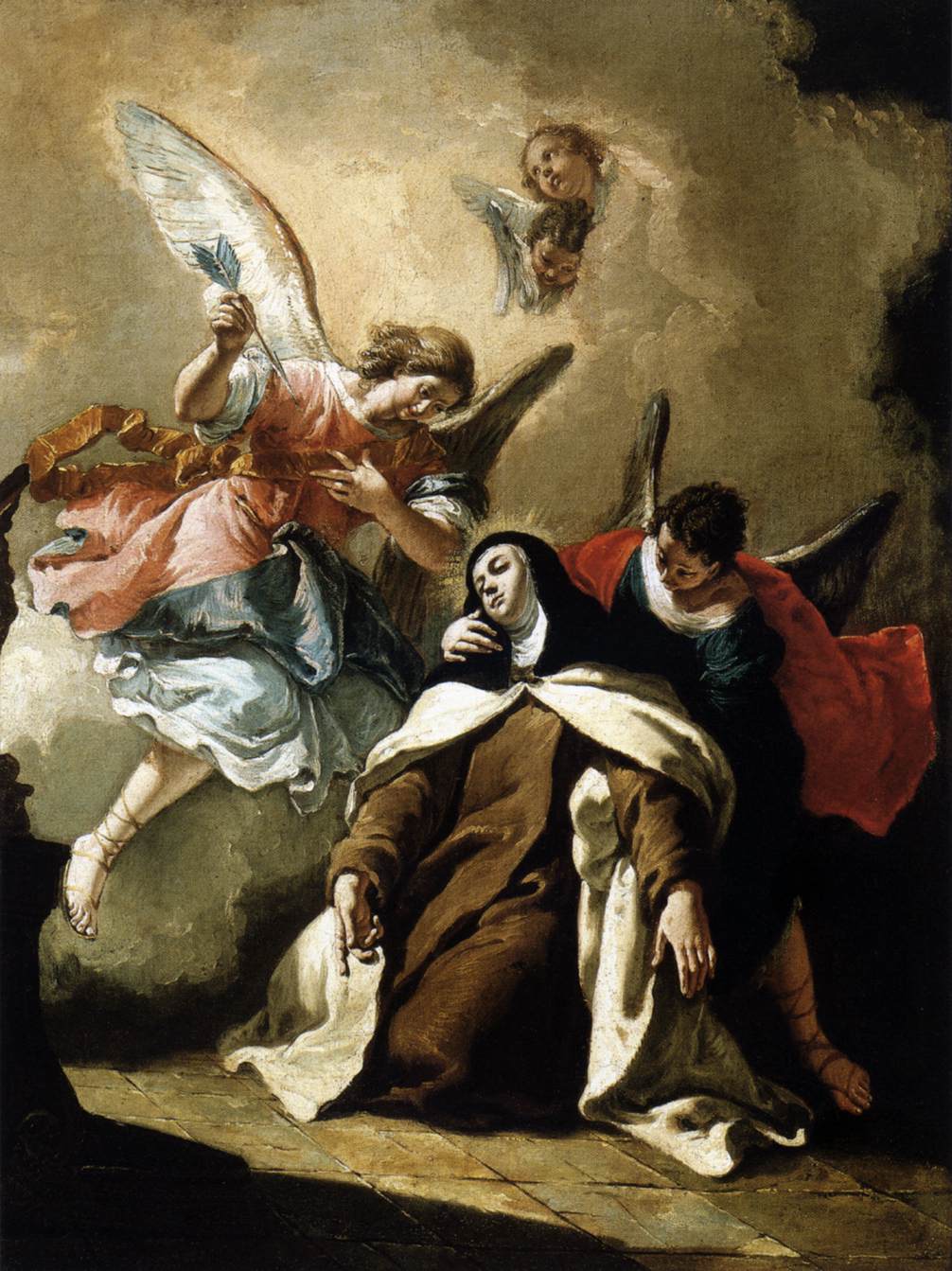
The Ecstasy of Saint Teresa
Francesco Fontebasso · first half of 18th century
An eighteenth-century Italian painting by Francesco Fontebasso of Teresa's ecstasy, showing her later artistic reception.
Shows how Italian painters pictured Teresa's ecstasy in the eighteenth century, a later image of her spiritual life.
About this source
What it is
This is an eighteenth-century Italian painting by Francesco Fontebasso, made in the first half of the century. It depicts the ecstasy of Teresa of Ávila. The catalogue record does not describe the composition in detail, so the image itself should be examined directly.
Why it matters
Catalogue notes describe the painting as showing Teresa's later artistic reception. Ecstasy scenes were a common subject in Catholic art of the period, and this work shows how Italian painters continued to picture her mystical experience long after her death.
Look closer
- How does the painter show Teresa's inner experience through her pose and expression?
- Why might a church or patron in the eighteenth century have wanted this subject?
- What does the painting leave out about what Teresa herself wrote about her experiences?
This painting is part of the curated material that grounds the AI version of Teresa of Ávila on Humy.ai — when students ask about related events, the AI can quote it and cite it.
More Teresa of Ávila sources
Browse all 93 →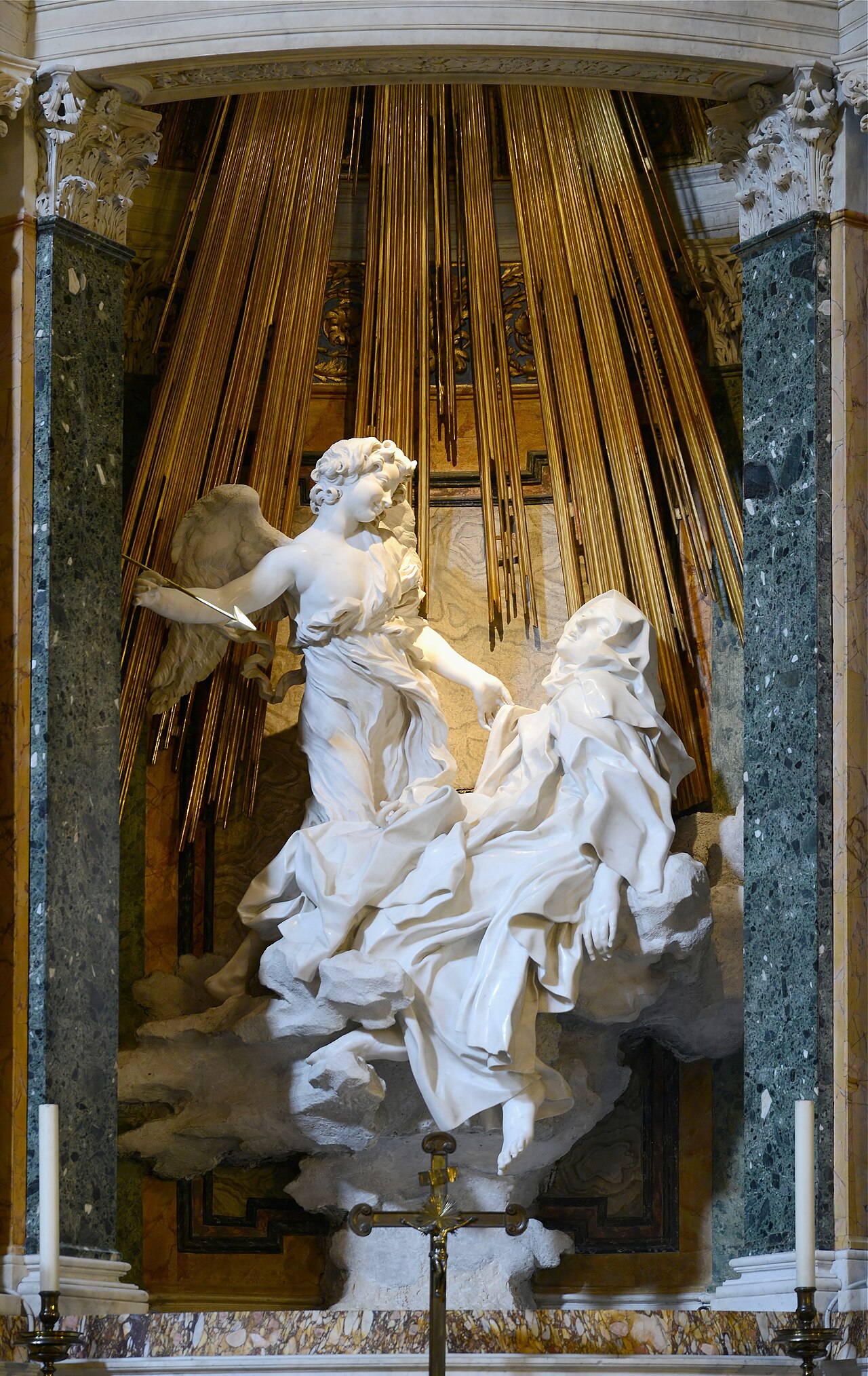 Sculpture
Secondary source
Ecstasy of Saint Teresa
Gian Lorenzo Bernini · 1647-1652
Primary source
The Interior Castle
Teresa of Ávila · written 1577, printed 1588
 Painting
Primary source
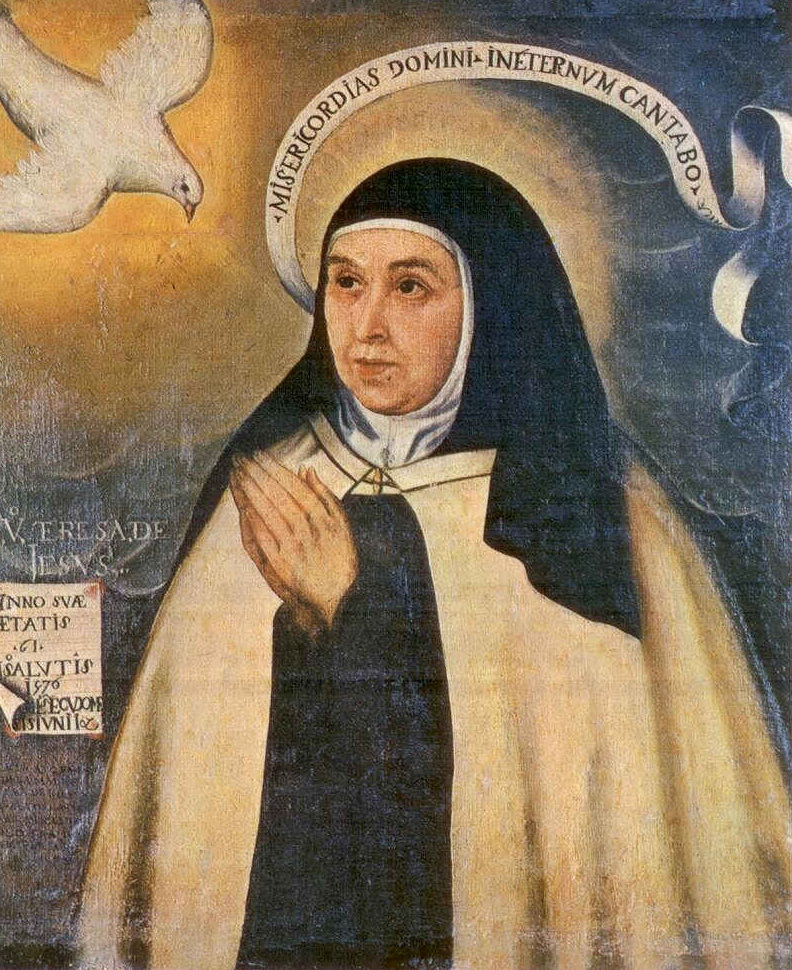
Portrait of Saint Teresa of Ávila
Juan de la Miseria · 1576
 Document
Primary source
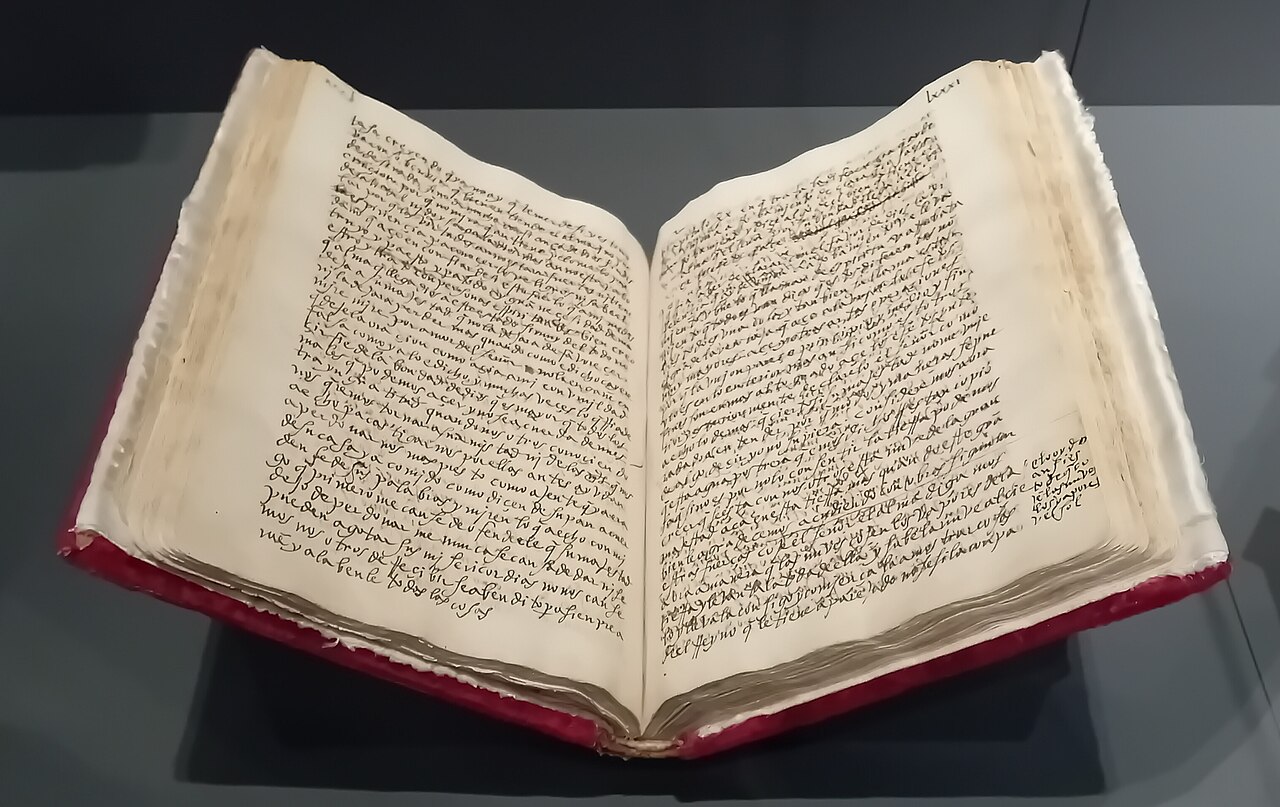
Manuscrito de la Vida de Santa Teresa de Jesús
Teresa of Ávila · 1562

Free account
Read every Teresa of Ávila source
Sign up free →
Ready when you are
Start chatting with Teresa of Ávila now.
20 messages free · No credit card · Available in 50+ languages.