


Secondary sourcePainting1745-1750
The Ecstasy of St Teresa
Michelangelo Unterberger · 1745-1750
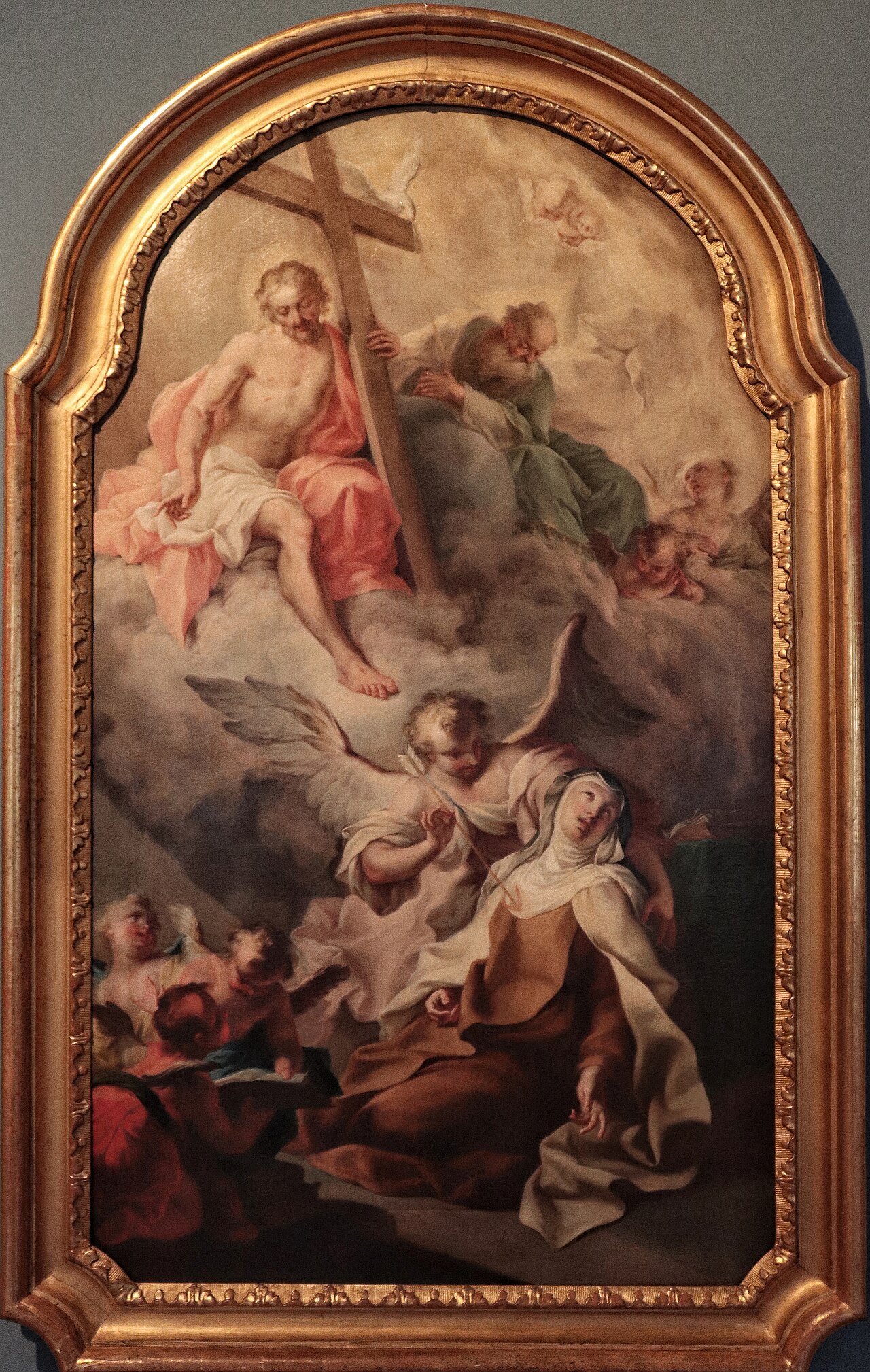
A mid-18th-century painting by Michelangelo Unterberger shows Teresa kneeling in ecstasy as Christ, God the Father, and angels appear above her.
Shows how a later painter pictured Teresa's ecstasy, one of her best-known spiritual experiences, which is why it belongs in her archive.
About this source
What it is
This is a framed painting by Michelangelo Unterberger, made between 1745 and 1750. It has an arched top in a gilded frame. Above, Christ with a cross and God the Father sit on clouds, with a dove and cherubs in the sky. Below, a nun in a white veil kneels and gazes upward, while a winged angel with an arrow stands beside her. Child angels and a red-robed figure sit at the lower left. The painting is in the catalogue of the Commons record.
Why it matters
Teresa wrote about her mystical experiences, and her ecstasy became one of the most painted scenes of her life. Unterberger worked in the mid-1700s, more than 150 years after her death in 1582. His painting shows how baroque artists turned her inner visions into dramatic images for churches and private devotion. It connects Teresa with the broader culture of art in Catholic Europe.
Look closer
- How does the painter show the difference between heaven above and the kneeling nun below?
- What role does the angel with the arrow play in the scene?
- What might this painting leave out about Teresa's own description of her experience?
This painting is part of the curated material that grounds the AI version of Teresa of Ávila on Humy.ai — when students ask about related events, the AI can quote it and cite it.
More Teresa of Ávila sources
Browse all 93 →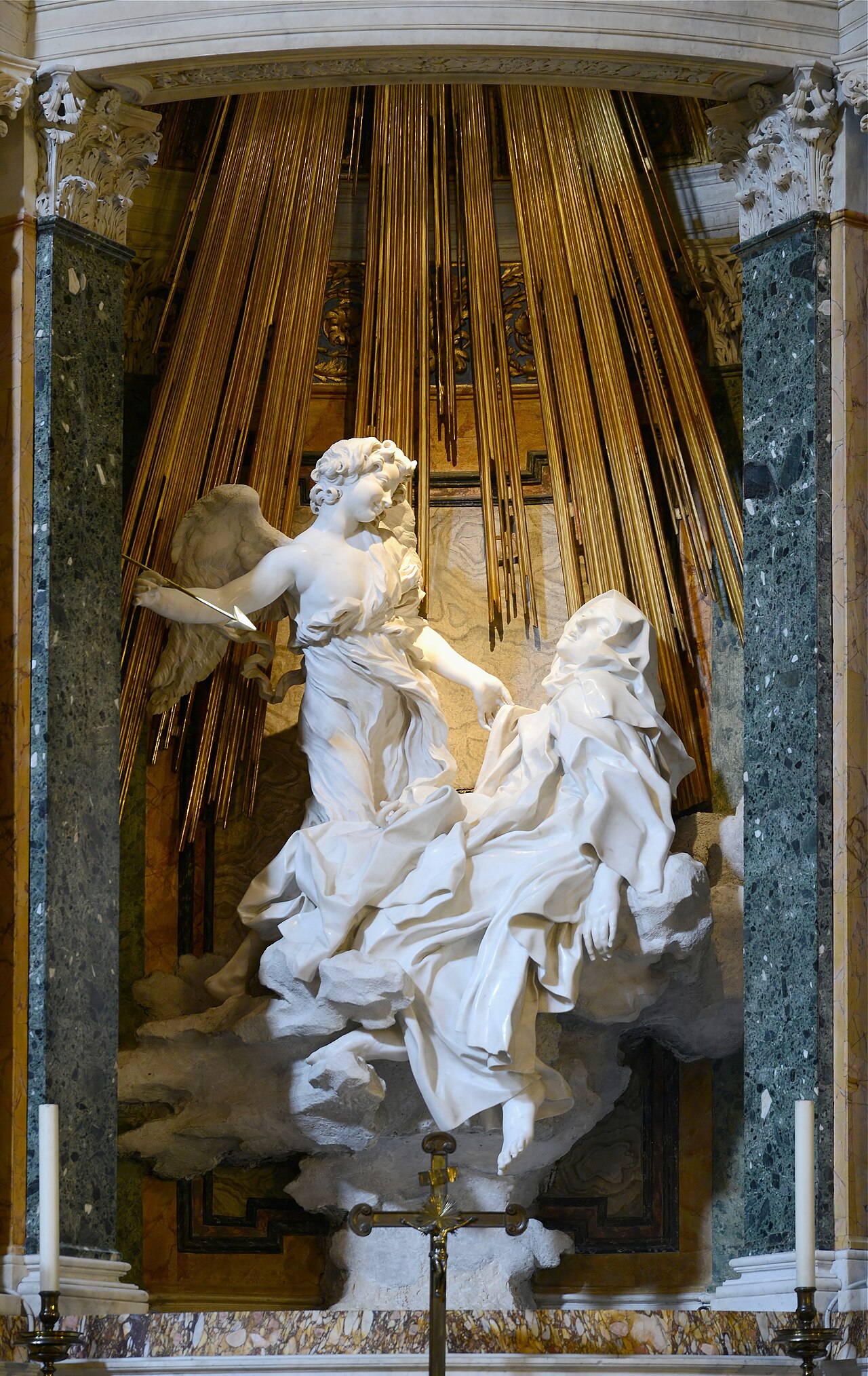 Sculpture
Secondary source
Ecstasy of Saint Teresa
Gian Lorenzo Bernini · 1647-1652
Primary source
The Interior Castle
Teresa of Ávila · written 1577, printed 1588
 Painting
Primary source
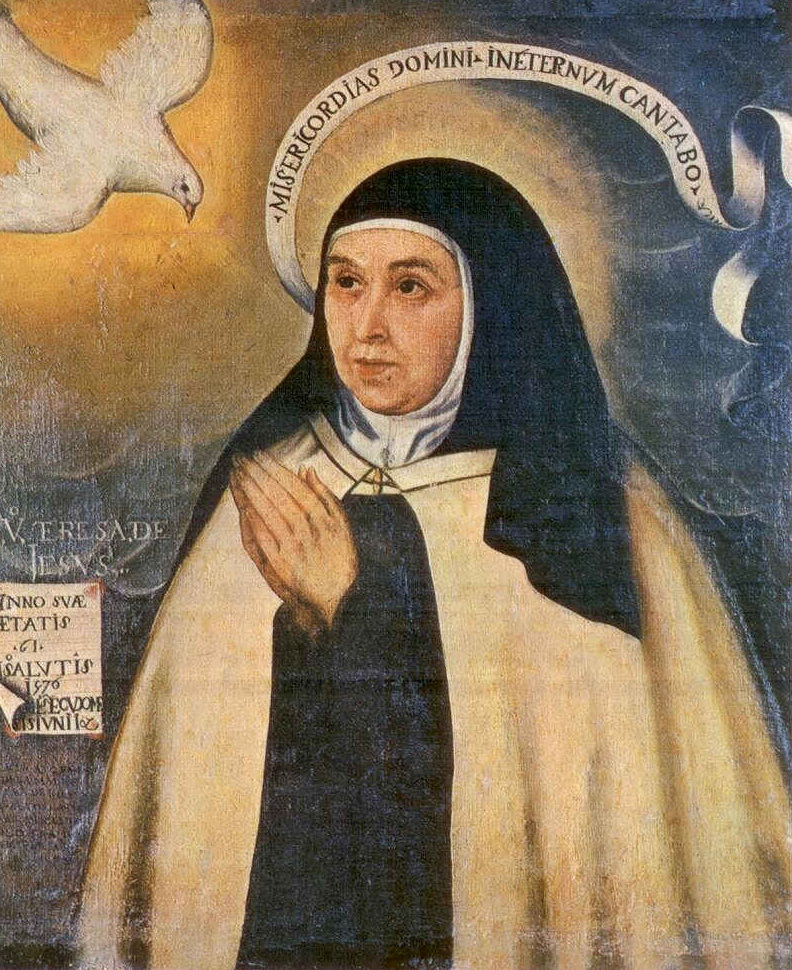
Portrait of Saint Teresa of Ávila
Juan de la Miseria · 1576
 Document
Primary source
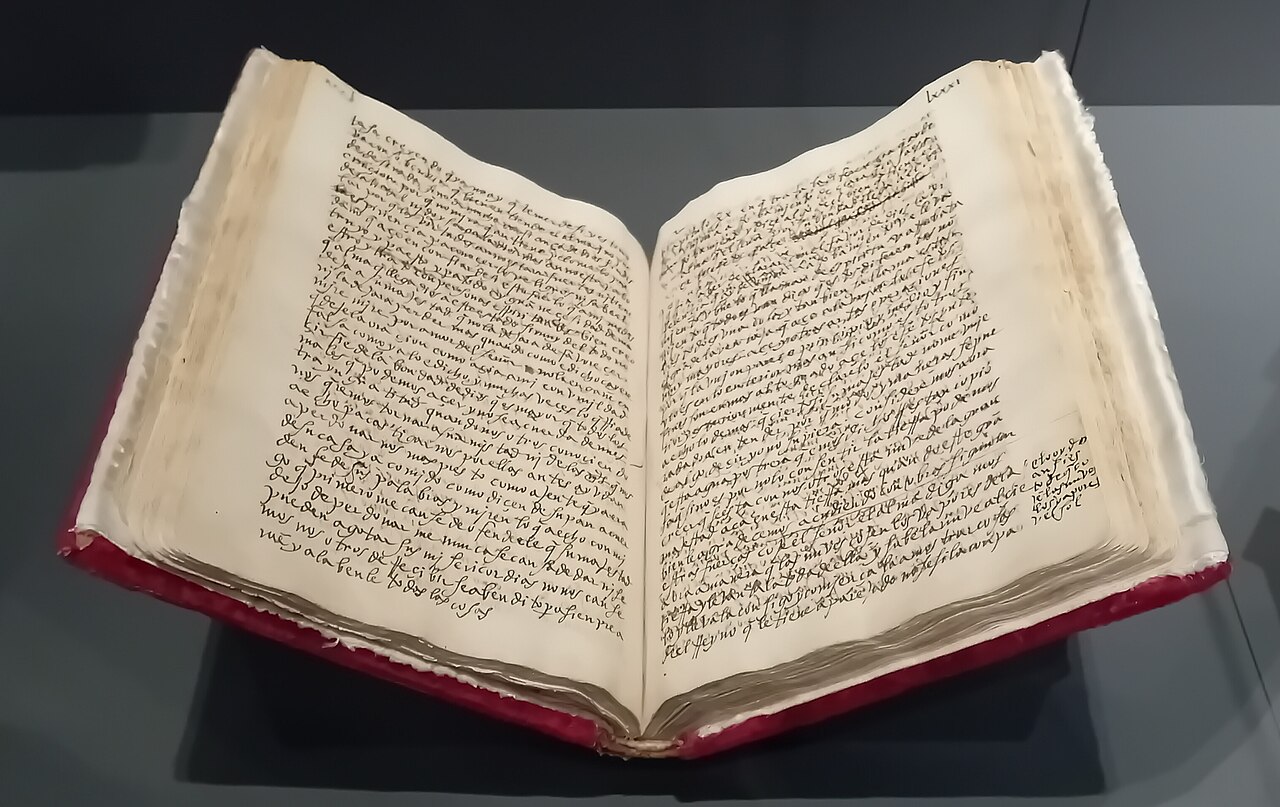
Manuscrito de la Vida de Santa Teresa de Jesús
Teresa of Ávila · 1562
Free account
Read every Teresa of Ávila source
Sign up free →
Ready when you are
Start chatting with Teresa of Ávila now.
20 messages free · No credit card · Available in 50+ languages.