


Secondary sourcePainting1627
The Ecstasy of St Theresa
Bernardo Strozzi · 1627
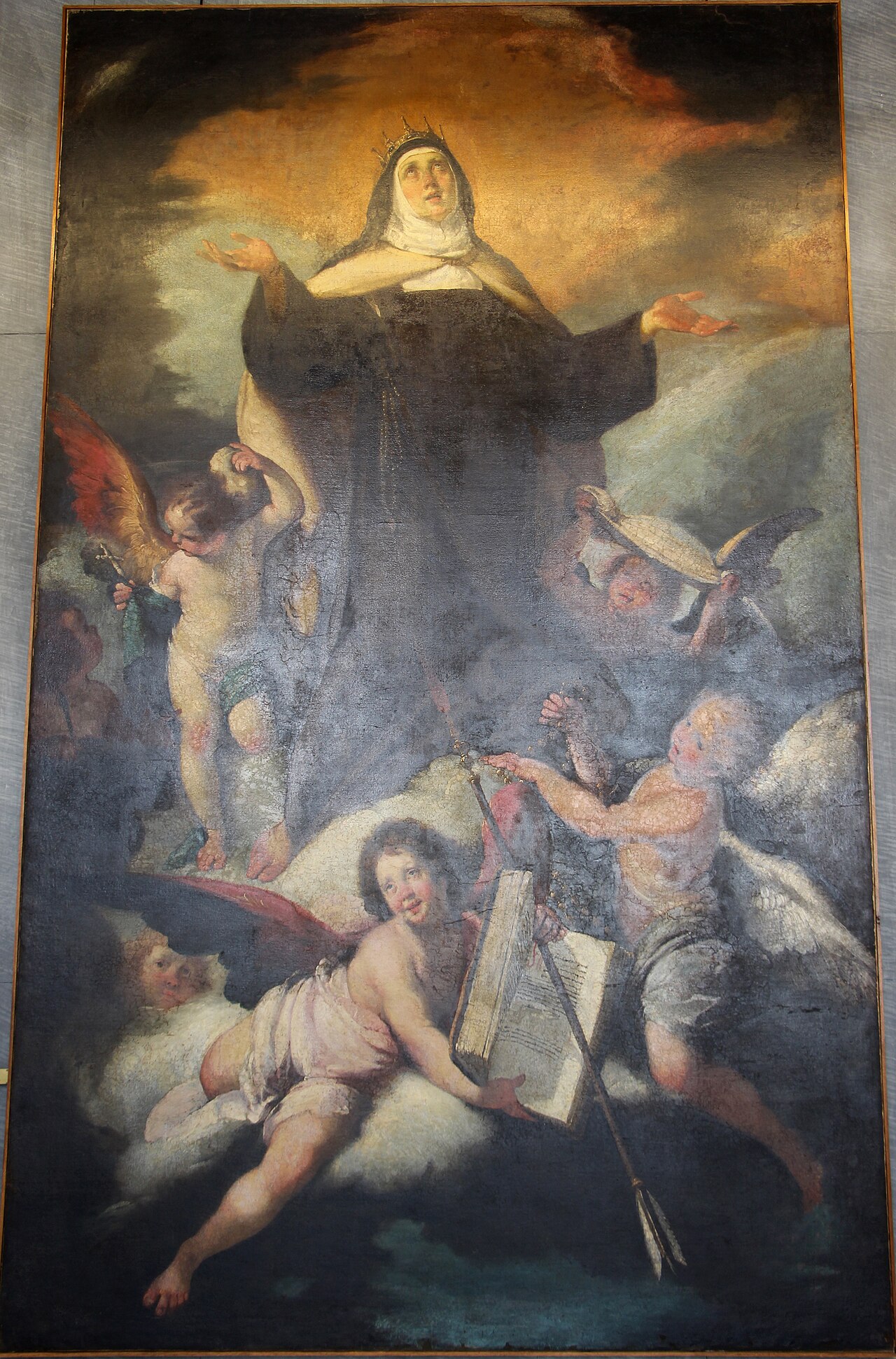
A painting by Bernardo Strozzi depicting Teresa's mystical ecstasy, made shortly after her canonization as a saint.
This painting shows Teresa's mystical ecstasy, reflecting how her story spread through Baroque art soon after her canonization.
About this source
What it is
This painting was made in 1627 by the Italian Baroque painter Bernardo Strozzi and is held at the Musei di Strada Nuova. It shows a crowned nun in a black habit with arms outstretched, gazing upward, surrounded by cherubs carrying arrows and a book on golden clouds.
Why it matters
Painted only a few years after Teresa was declared a saint, this work shows how quickly her mystical experiences—especially the moment known as the transverberation, when she described being pierced by divine love—became a popular subject for Italian Baroque artists, before Bernini's famous sculpture of the same scene.
Look closer
- What does the artist's choice of pose and light suggest about the nature of Teresa's experience?
- Why might cherubs and arrows be included in the scene?
- How might this image differ from how Teresa described the moment herself?
This painting is part of the curated material that grounds the AI version of Teresa of Ávila on Humy.ai — when students ask about related events, the AI can quote it and cite it.
More Teresa of Ávila sources
Browse all 93 →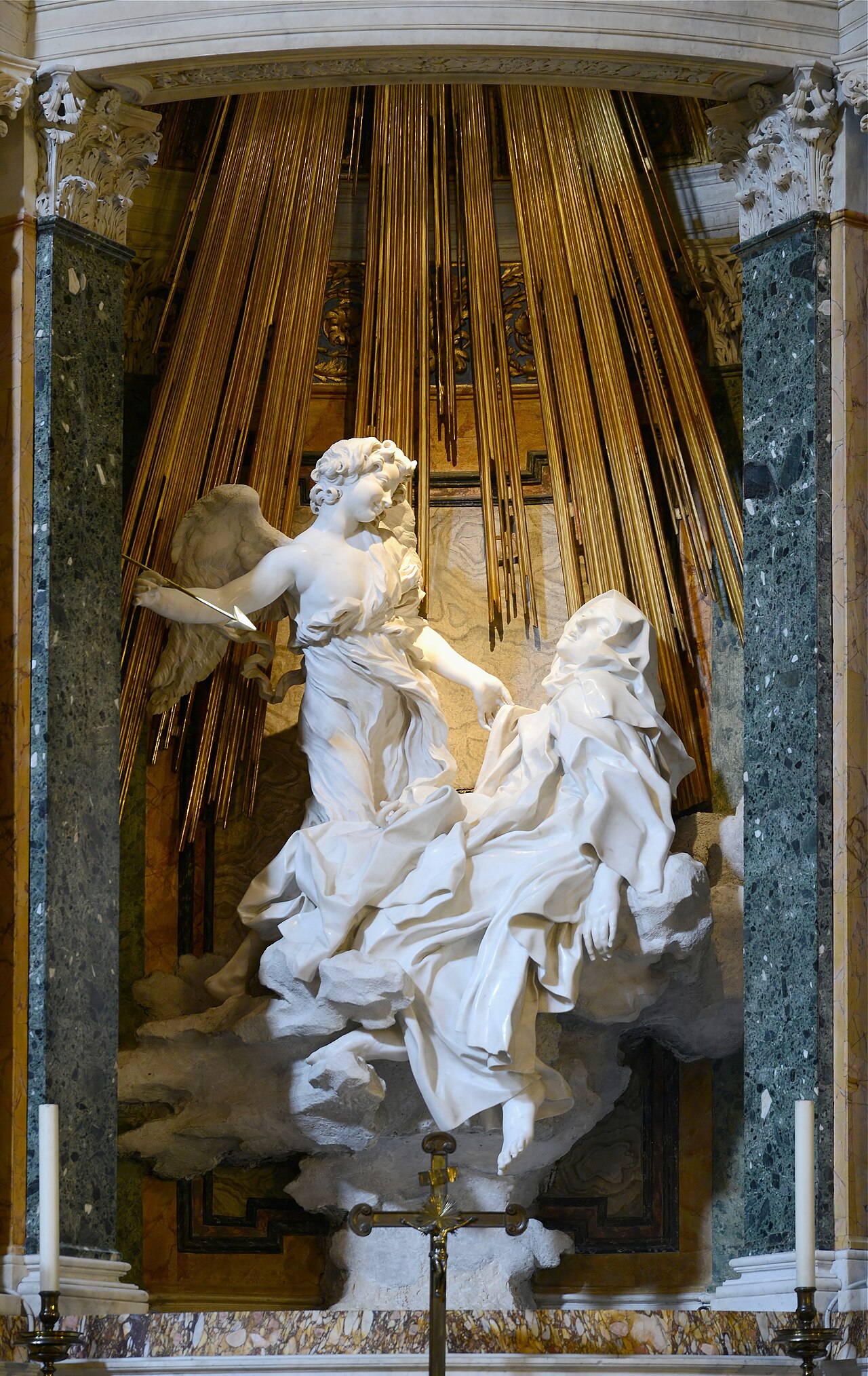 Sculpture
Secondary source
Ecstasy of Saint Teresa
Gian Lorenzo Bernini · 1647-1652
Primary source
The Interior Castle
Teresa of Ávila · written 1577, printed 1588
 Painting
Primary source
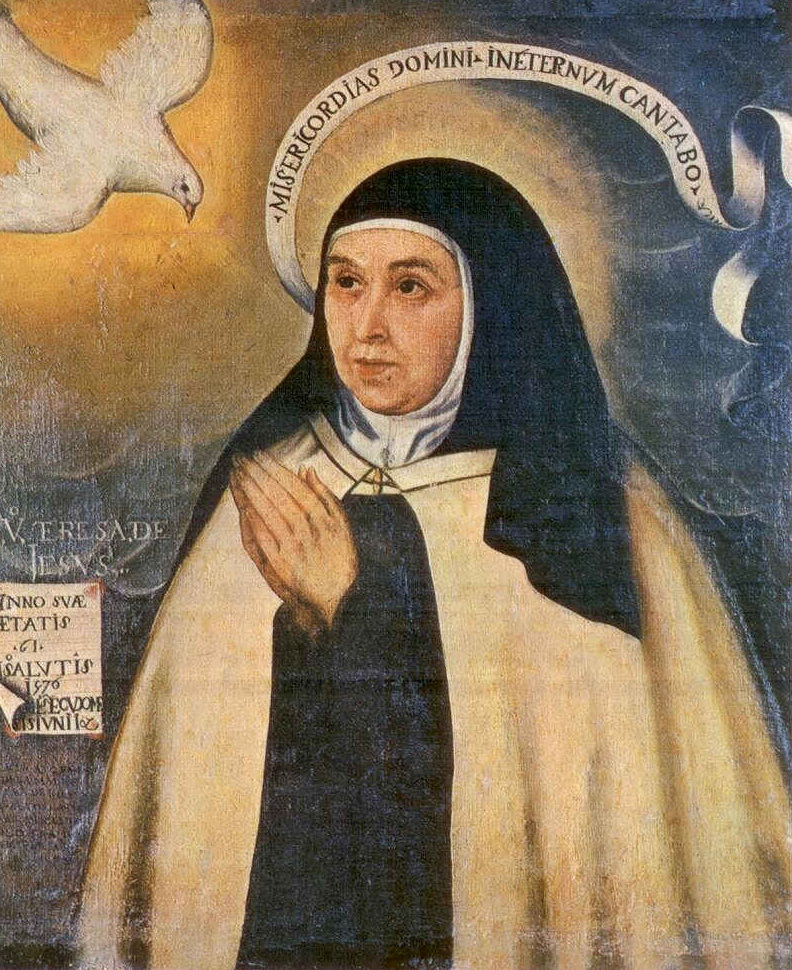
Portrait of Saint Teresa of Ávila
Juan de la Miseria · 1576
 Document
Primary source
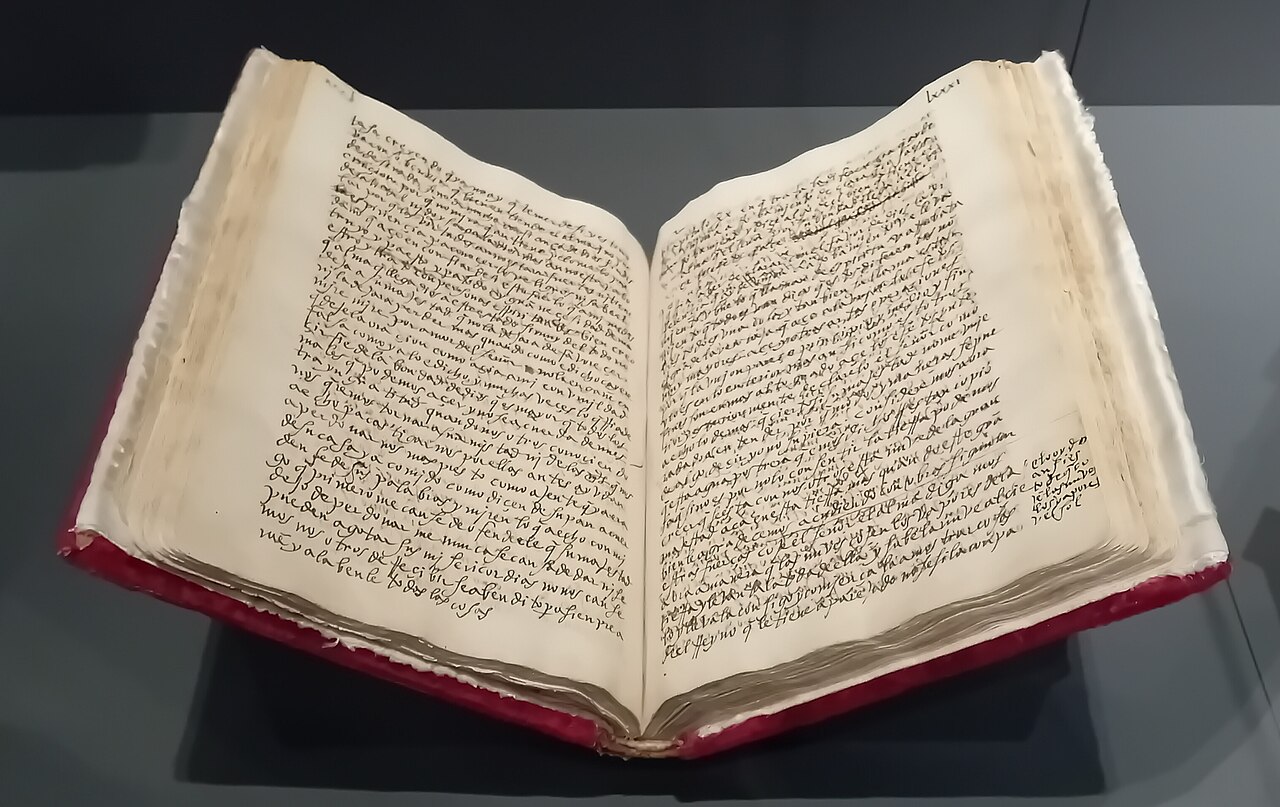
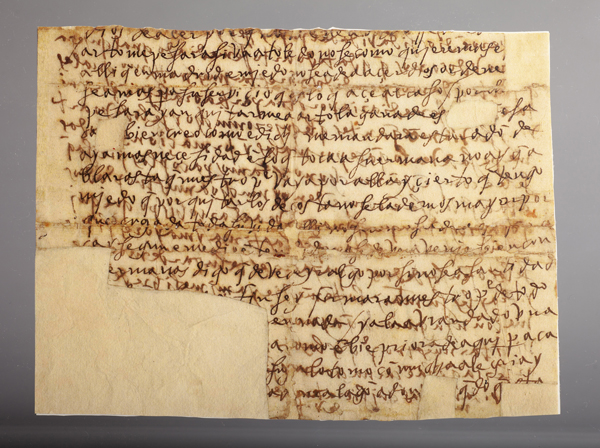
Manuscrito de la Vida de Santa Teresa de Jesús
Teresa of Ávila · 1562

Free account
Read every Teresa of Ávila source
Sign up free →
Ready when you are
Start chatting with Teresa of Ávila now.
20 messages free · No credit card · Available in 50+ languages.