


Primary sourceNewspaper article
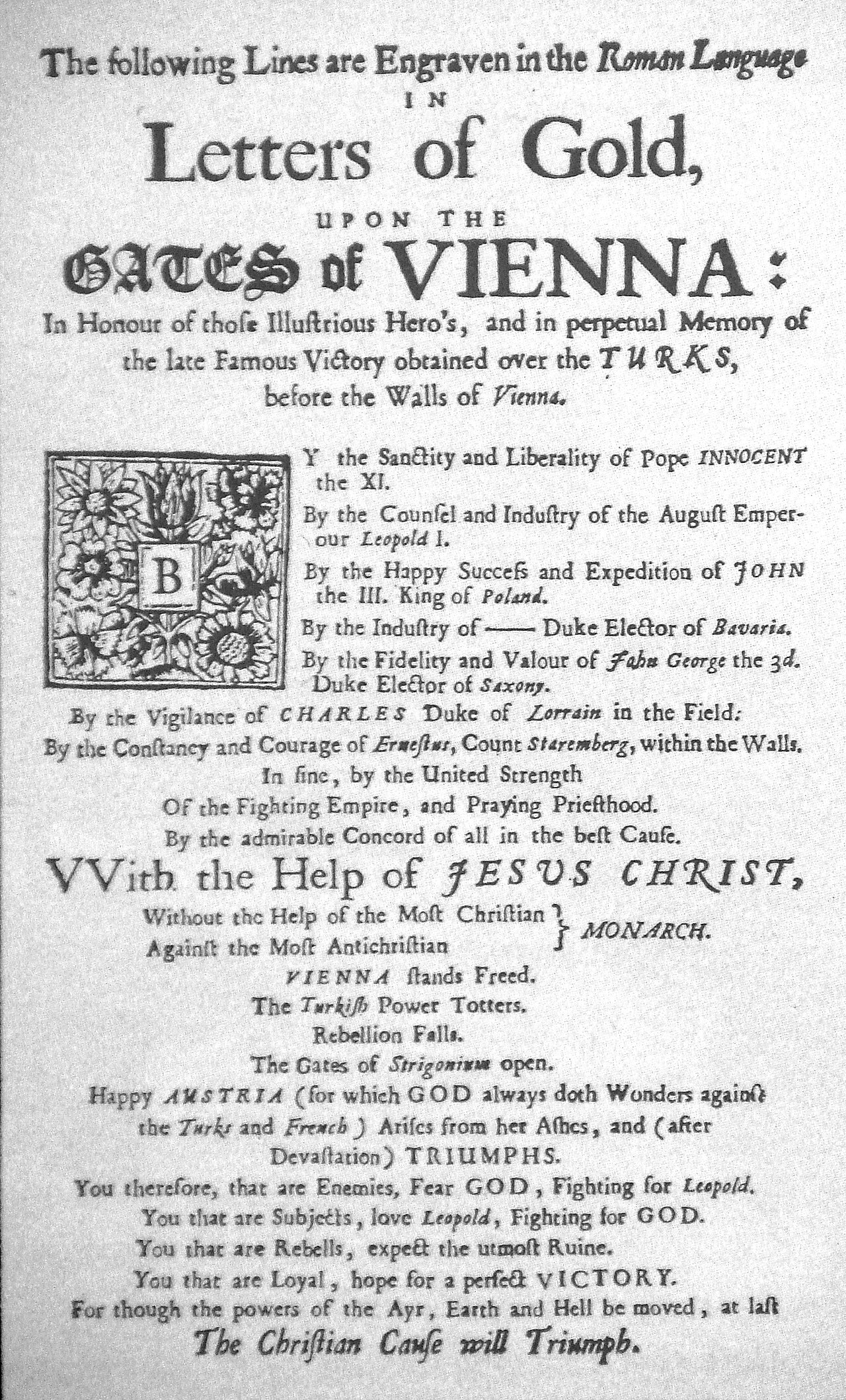
The following Lines are Engraven in the Roman Language in Letters of Gold, upon the Gates of Vienna
A 17th-century English printed broadside praising the victory at Vienna over the Turks. The catalogue describes it as foreign propaganda criticising Louis XIV for not supporting Christendom.
Shows how foreign critics portrayed Louis XIV as having abandoned Christian Europe during the 1683 siege of Vienna.
Free Humy account · No credit card · 124,284 sources to read
About this source
What it is
This is a 17th-century English printed broadside titled 'The following Lines are Engraven in the Roman Language in Letters of Gold, upon the Gates of Vienna'. It has a decorative floral woodcut initial 'B' and lines praising Pope Innocent XI, Emperor Leopold I and others for the victory over the Turks at Vienna. The image is a scan of the printed sheet. Its author is not named.
Why it matters
The curator's note describes the pamphlet as foreign propaganda that attacked Louis for abandoning Christendom against the Ottomans during the Siege of Vienna in 1683. The lines celebrate the allies who won the victory. Printed attacks like this show how Louis XIV's rivals used the press to shape opinion about him.
Look closer
- Which people does the broadside praise, and whom does it leave out?
- Why would a foreign printer want to present Louis as absent from this victory?
- How does the decorative style of the print affect how a reader trusts its message?
This newspaper article is part of the curated material that grounds the AI version of Louis XIV on Humy.ai — when students ask about related events, the AI can quote it and cite it.
More Louis XIV sources
Browse all 96 →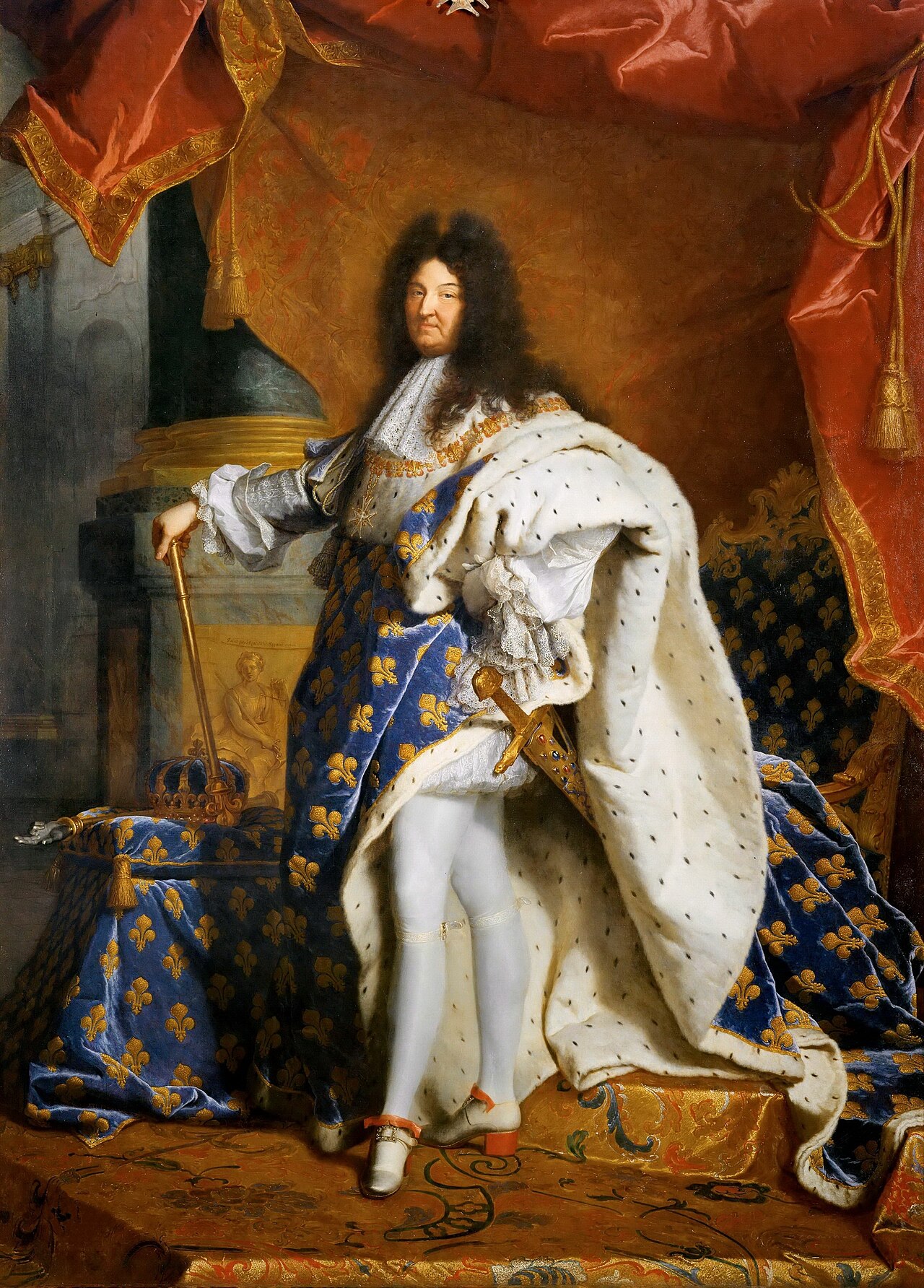 Painting
Primary source
Portrait of Louis XIV in Coronation Robes
Hyacinthe Rigaud · 1701
 Artifact
Primary source
Palace of Versailles
1661 onward
 Document
Primary source
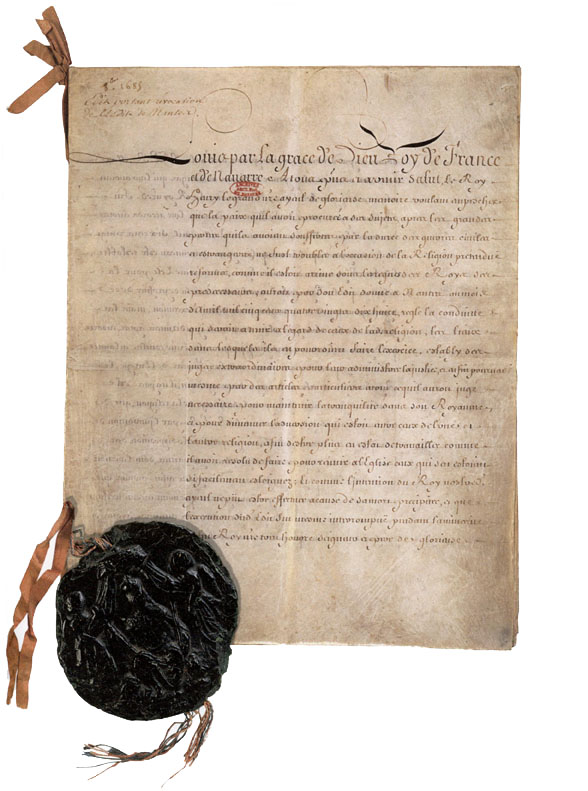
Edict of Fontainebleau
Louis XIV of France · 18 October 1685
 Document
Primary source
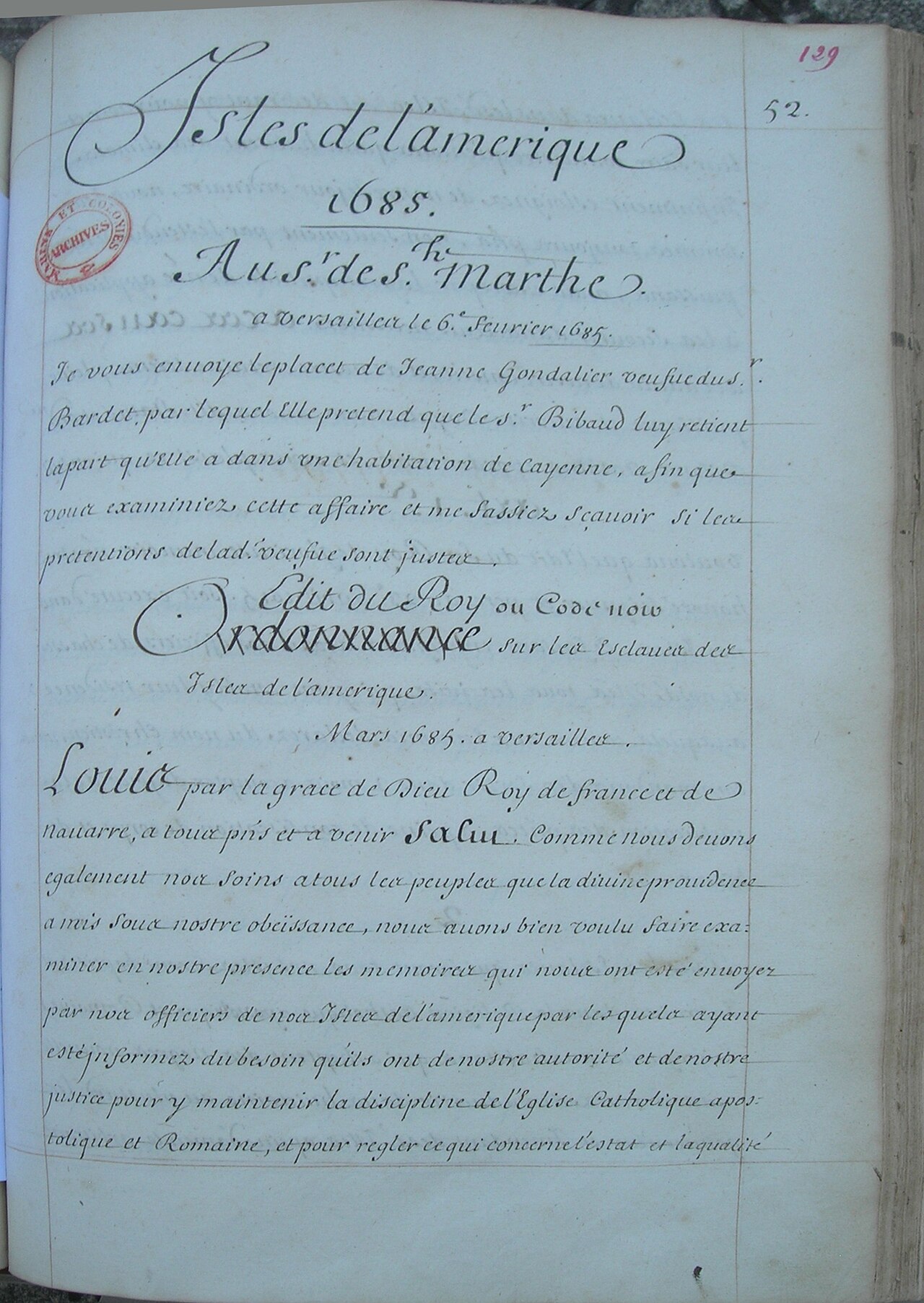
Ordinance of March 1685 on Slaves in the Islands of America
Louis XIV of France · March 1685
Free account
Read every Louis XIV source
Sign up free →
Ready when you are
Start chatting with Louis XIV now.
20 messages free · No credit card · Available in 50+ languages.