


Primary sourceBook1915
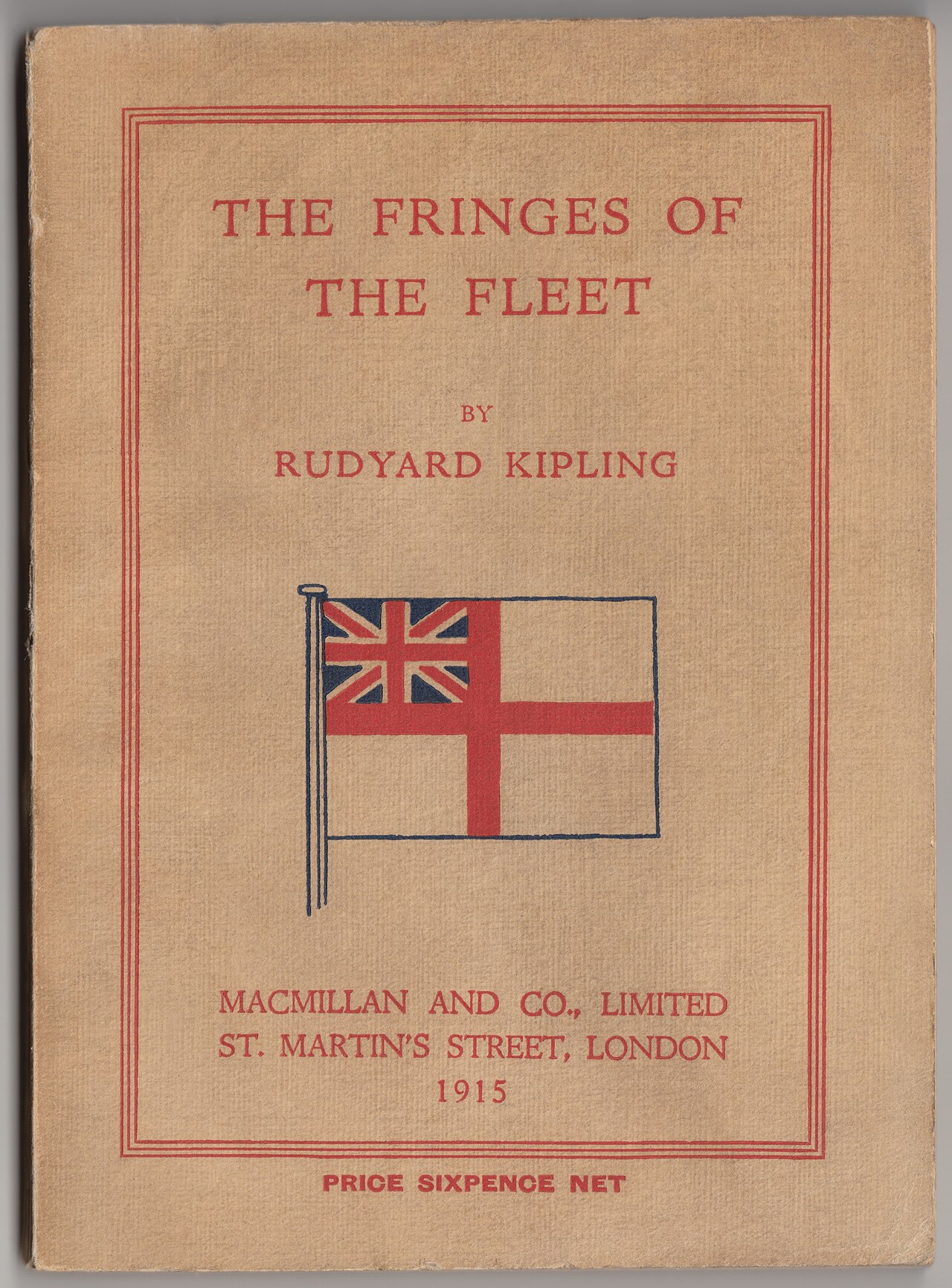
The Fringes of the Fleet
Rudyard Kipling · 1915
A 1915 booklet of essays and poems by Rudyard Kipling about the Royal Navy's less-known wartime work. Elgar later set four of its poems as a song cycle.
Kipling wrote these naval pieces as a commissioned wartime writer, showing his role as a propagandist for the war effort.
Free Humy account · No credit card · 120,912 sources to read
About this source
What it is
This is a booklet by Rudyard Kipling, first published in 1915. It grew out of six articles he wrote for The Daily Telegraph between 20 November and 2 December 1915, under the general title 'The Fringes of the Fleet'. Each article opened with a short untitled poem. The pieces cover auxiliary vessels, submarines, and patrols. In 1917 the English composer Edward Elgar wrote a song cycle using lyrics from the booklet. Its first performance was at the London Coliseum on 11 June 1917, sung by four baritones in merchant-seaman costume.
Why it matters
The booklet shows how Kipling wrote for the home front during the First World War. Its praise for ordinary sailors and civilian crews helped build public support for the war effort. The later Elgar songs, requested by Lord Charles Beresford, carried this message into theatres and music halls. One of the singers, Charles Mott, was killed in France in May 1918.
Look closer
- What does the cover's naval flag and the words 'Price Sixpence Net' suggest about who this booklet was written for?
- How do the poems describe the sailors and their enemies, and what kind of feelings do they try to create in readers?
- Which groups of people in the navy are left out of these pages, and why might Kipling have chosen to focus on the others?
This book is part of the curated material that grounds the AI version of Rudyard Kipling on Humy.ai — when students ask about related events, the AI can quote it and cite it.
More Rudyard Kipling sources
Browse all 93 →

Ready when you are
Start chatting with Rudyard Kipling now.
20 messages free · No credit card · Available in 50+ languages.