


Primary sourcePainting1761
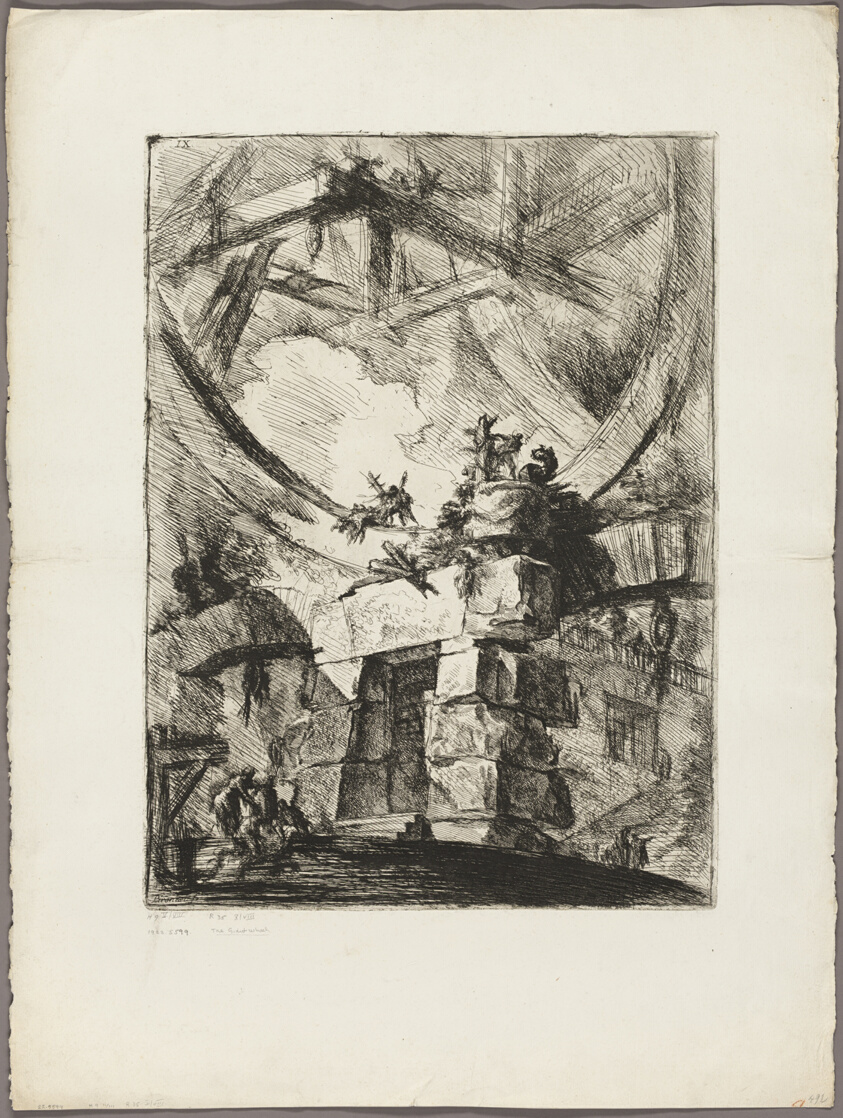
The Giant Wheel, Imaginary Prisons Plate 9
Giovanni Battista Piranesi · 1761
An 18th-century etching of an imaginary prison by Piranesi, part of the carceral imagery Foucault studied in his history of punishment.
This imaginary prison etching represents the carceral imagery and ideas about punishment Foucault studied.
About this source
What it is
This etching, made by Giovanni Battista Piranesi in 1761, is plate 9 from his series Imaginary Prisons. It shows a vast, imagined prison interior with towering stone piers, crisscrossing beams, and tiny human figures lost within the huge structure. It is held by the Art Institute of Chicago.
Why it matters
Piranesi's imagined prisons were not real buildings but artistic visions of confinement and power on a monumental scale. Michel Foucault's book Discipline and Punish examined the history of prisons and punishment in Europe, and images like this capture the imagination around imprisonment in the centuries before his own analysis.
Look closer
- How does the huge scale of the architecture compare to the tiny human figures?
- What feelings does this fantastical prison create, and why might an artist invent such spaces rather than draw a real prison?
- How might this kind of image have shaped ideas about punishment before Foucault wrote about it?
This painting is part of the curated material that grounds the AI version of Michel Foucault on Humy.ai — when students ask about related events, the AI can quote it and cite it.
More Michel Foucault sources
Browse all 29 → Photograph
Primary source
Michel Foucault Lecturing in Rio de Janeiro
1974
 Document
Primary source
FBI File on Michel Foucault
Federal Bureau of Investigation
 Photograph
Primary source
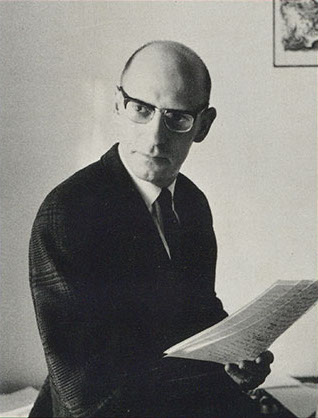
Portrait of Michel Foucault on The Order of Things Dust Jacket
1970
 Photograph
Primary source
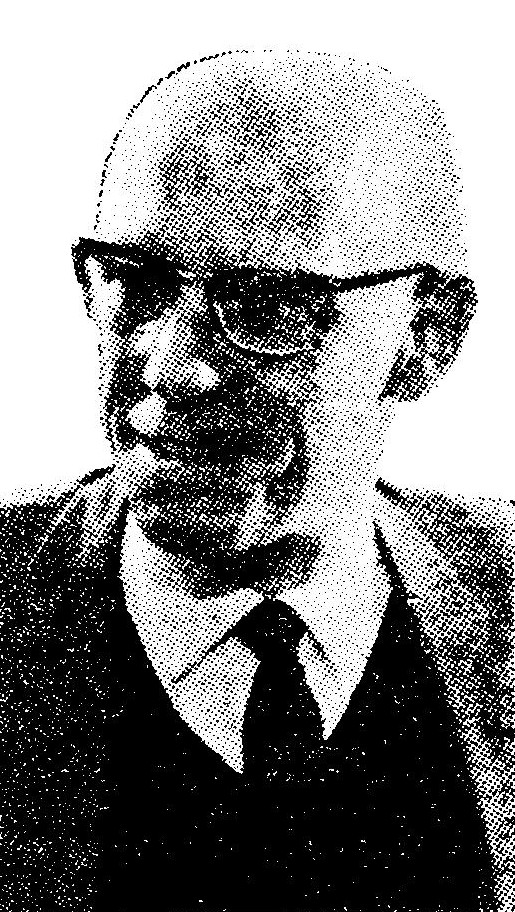
Portrait of Michel Foucault, c. 1968
c. 1968

Free account
Read every Michel Foucault source
Sign up free →
Ready when you are
Start chatting with Michel Foucault now.
20 messages free · No credit card · Available in 50+ languages.