


Primary sourcePainting1830
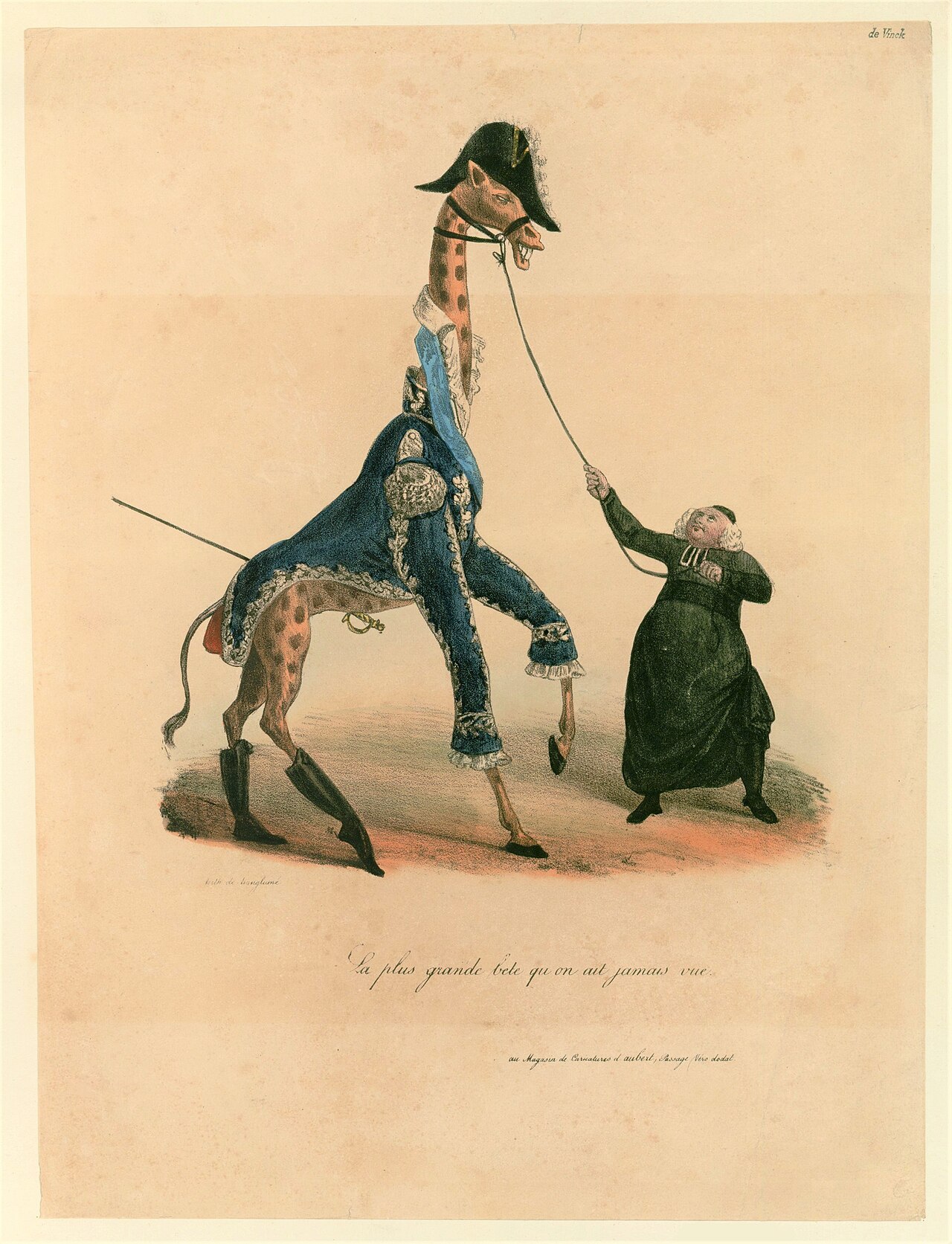
The Greatest Beast Ever Seen: Charles X as a Giraffe
Anonymous (printed by Pierre Langlumé) · 1830
An 1830 hand-colored caricature mocking Charles X by depicting him as a giraffe dressed in royal clothing, led on a rope.
A satirical caricature mocking Charles X during the public unrest that led to his overthrow.
About this source
What it is
This hand-colored lithograph was printed in Paris in 1830 by Pierre Langlumé and sold at a shop specializing in caricatures. It shows a giraffe wearing a bicorne hat, an embroidered coat, and a sash similar to those worn by Charles X, being led on a rope by a small man.
Why it matters
The image uses the real giraffe that was a sensation in Paris at the time to mock the king, dressing the animal in royal clothing to ridicule Charles X's authority. It is a vivid example of how popular culture and current events were used as tools for political satire in the lead-up to his downfall.
Look closer
- Why might an artist choose a giraffe, rather than a human figure, to represent the king?
- What do the clothes on the giraffe tell you about who it is meant to represent?
- How does combining a popular animal craze with political satire make the message more effective?
This painting is part of the curated material that grounds the AI version of Charles X of France on Humy.ai — when students ask about related events, the AI can quote it and cite it.
More Charles X of France sources
Browse all 98 →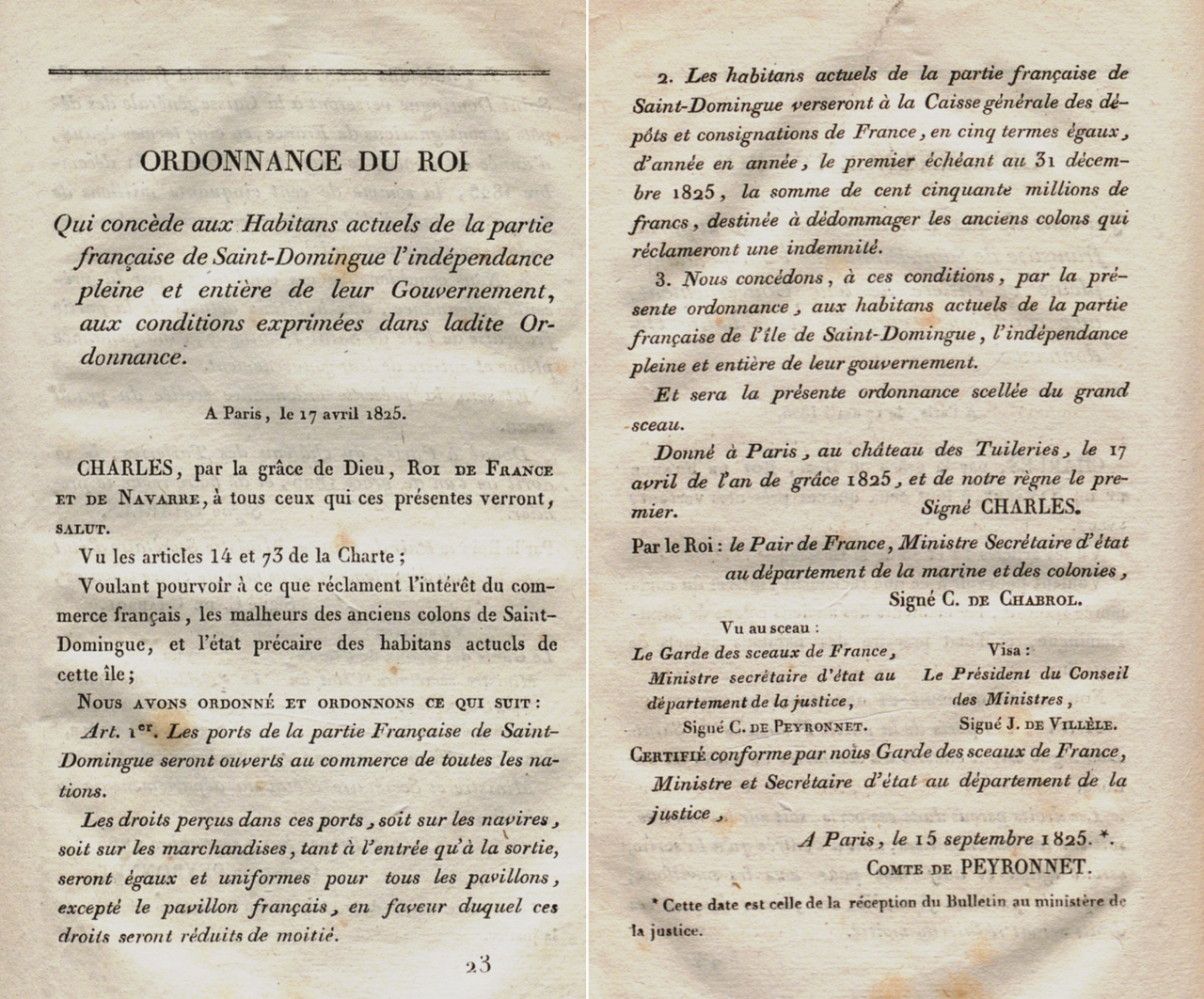 Document
Primary source
Ordonnance du 17 avril 1825 qui concède l'indépendance à Saint-Domingue
Charles X of France · 17 April 1825
 Document
Primary source
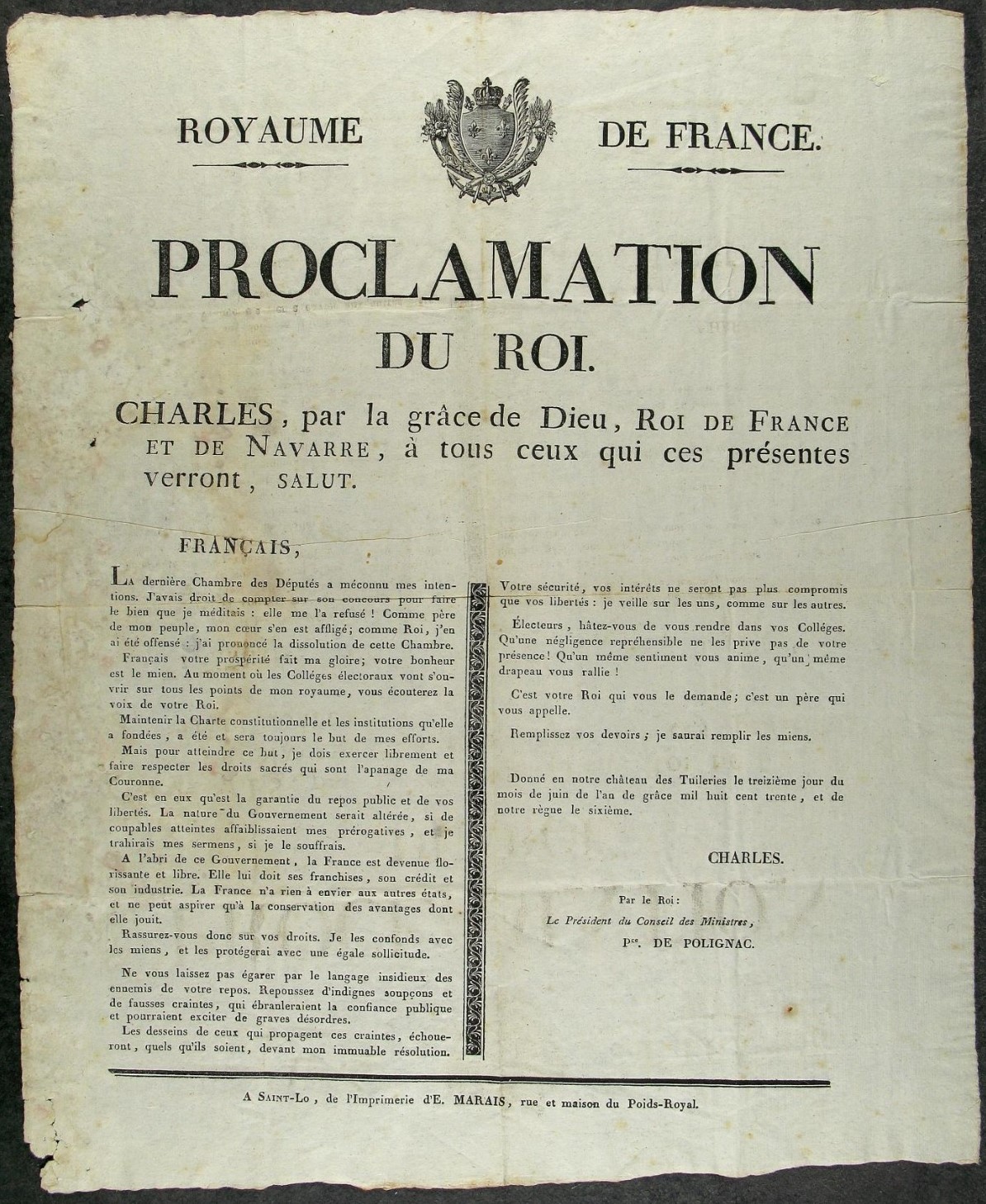
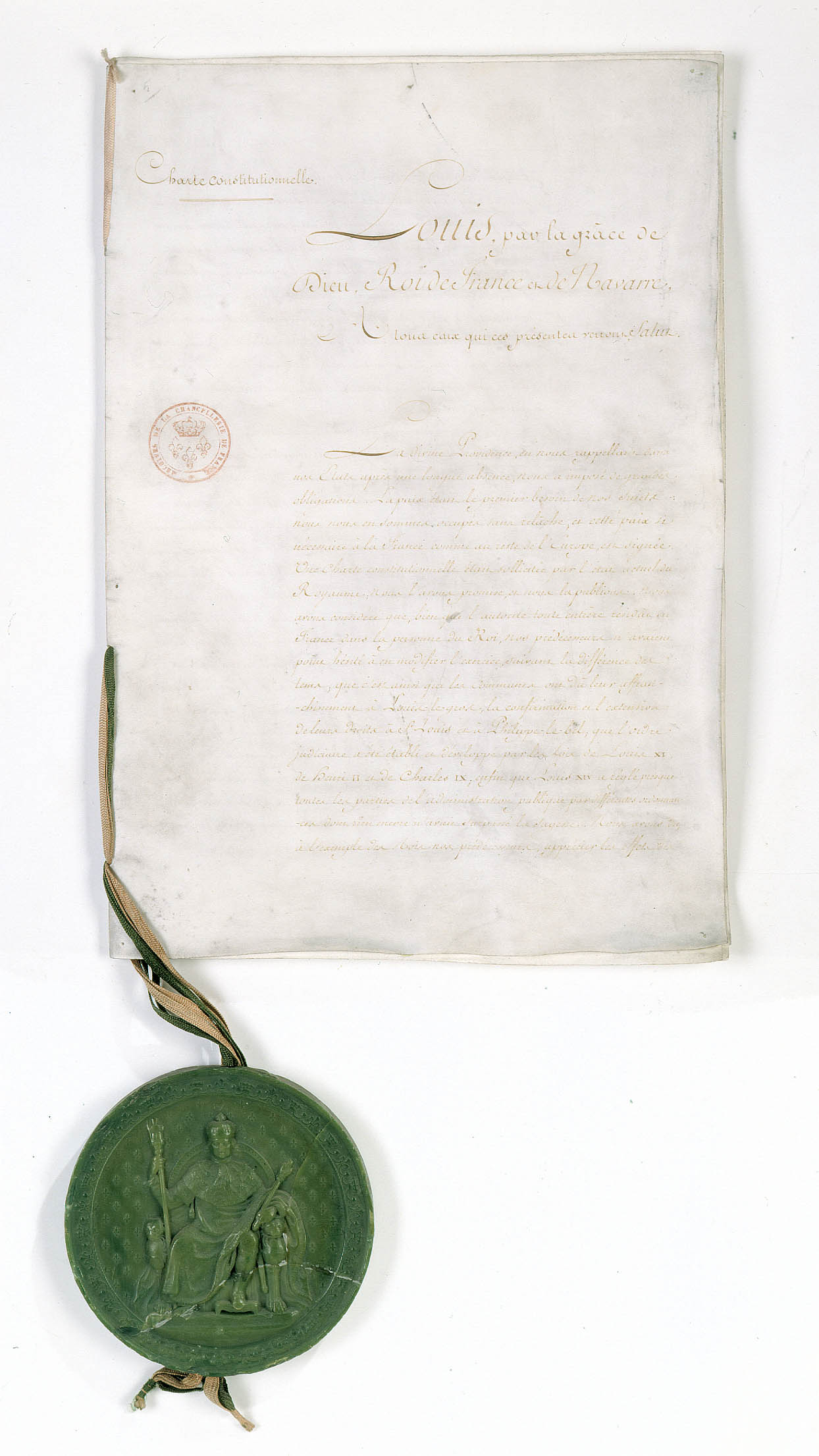
Proclamation du roi Charles X (13 juin 1830)
Charles X of France · 13 June 1830
 Painting
Primary source
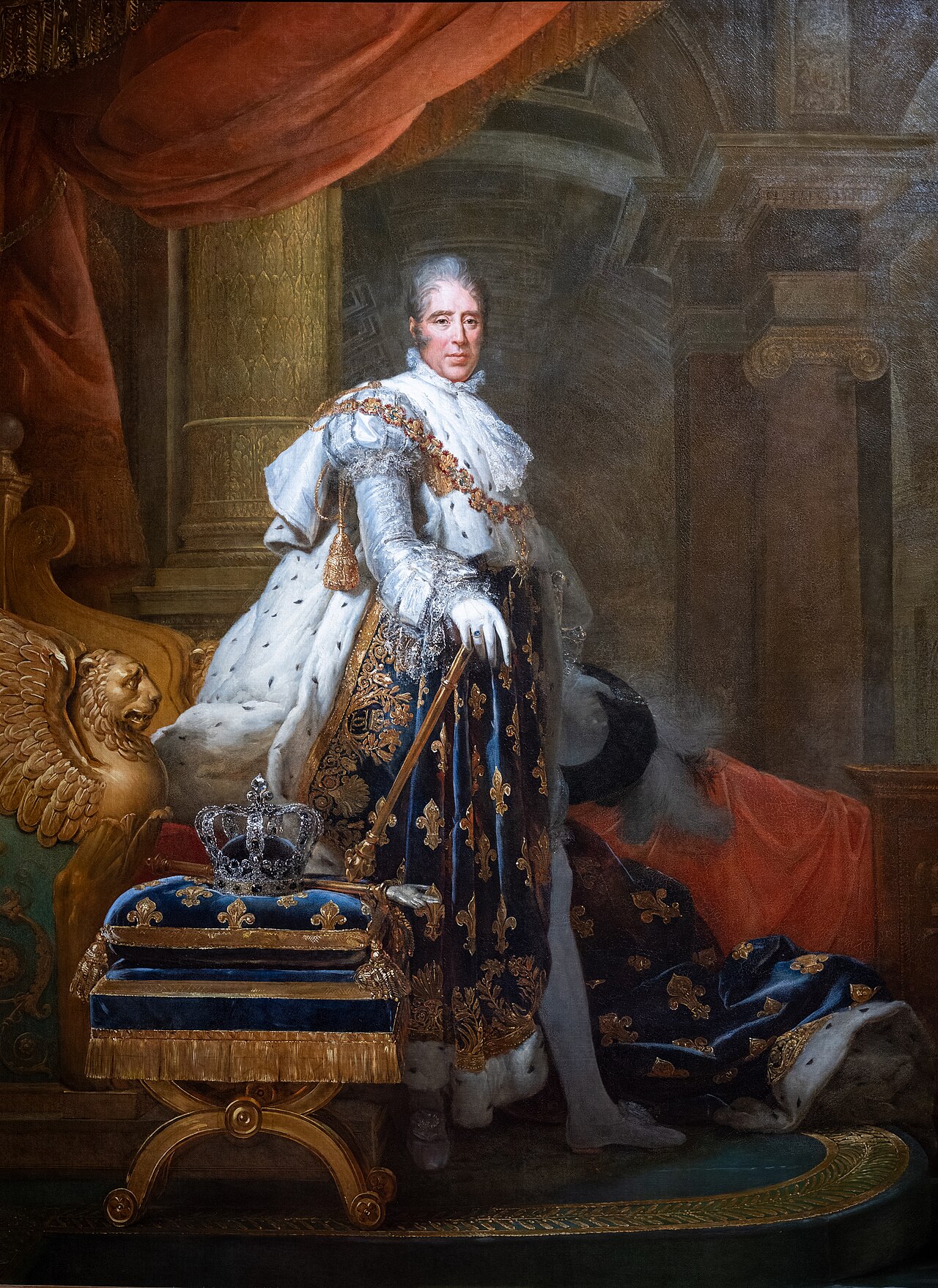
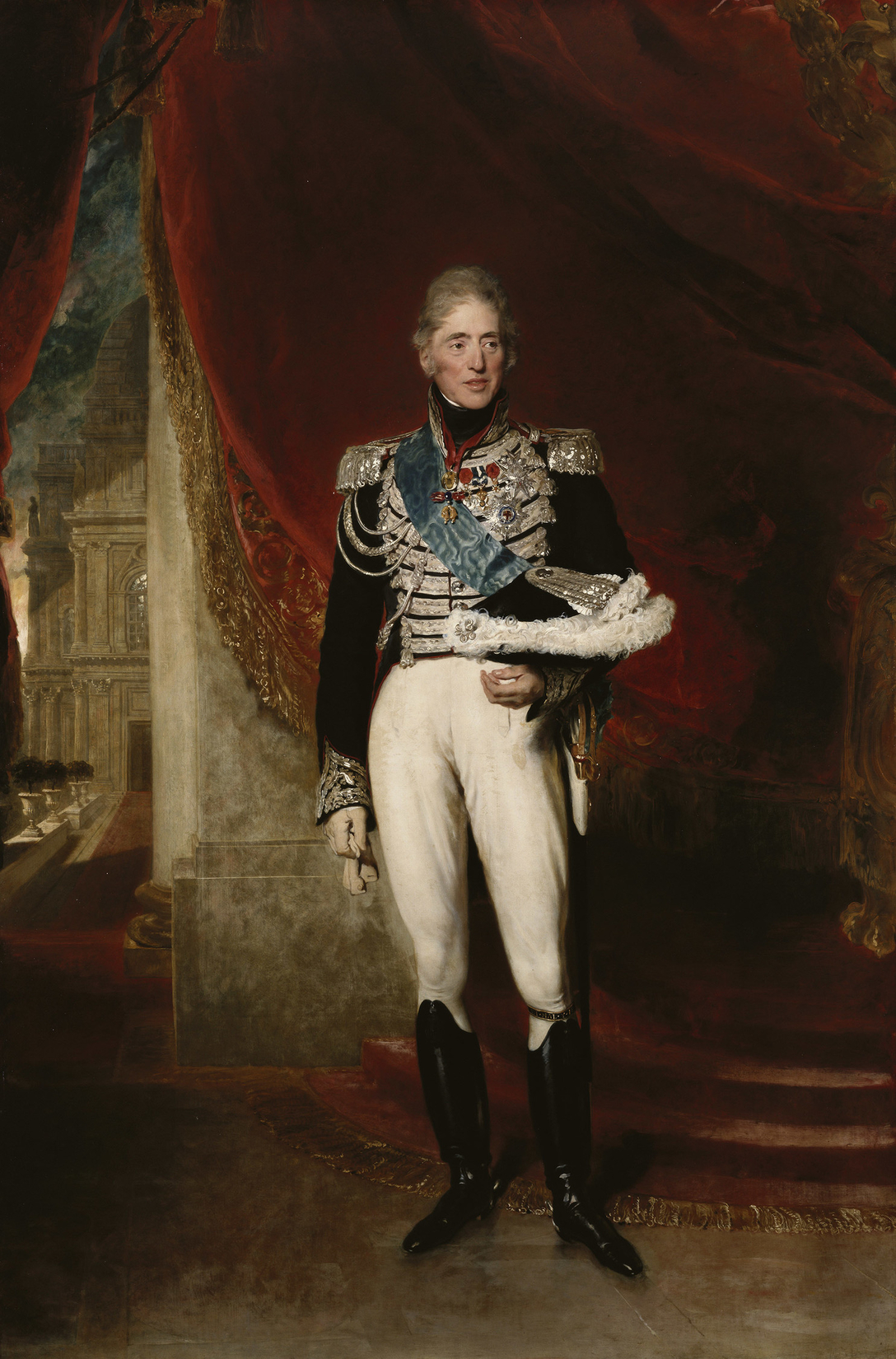
Charles X, King of France
François Gérard · 1824
 Painting
Secondary source
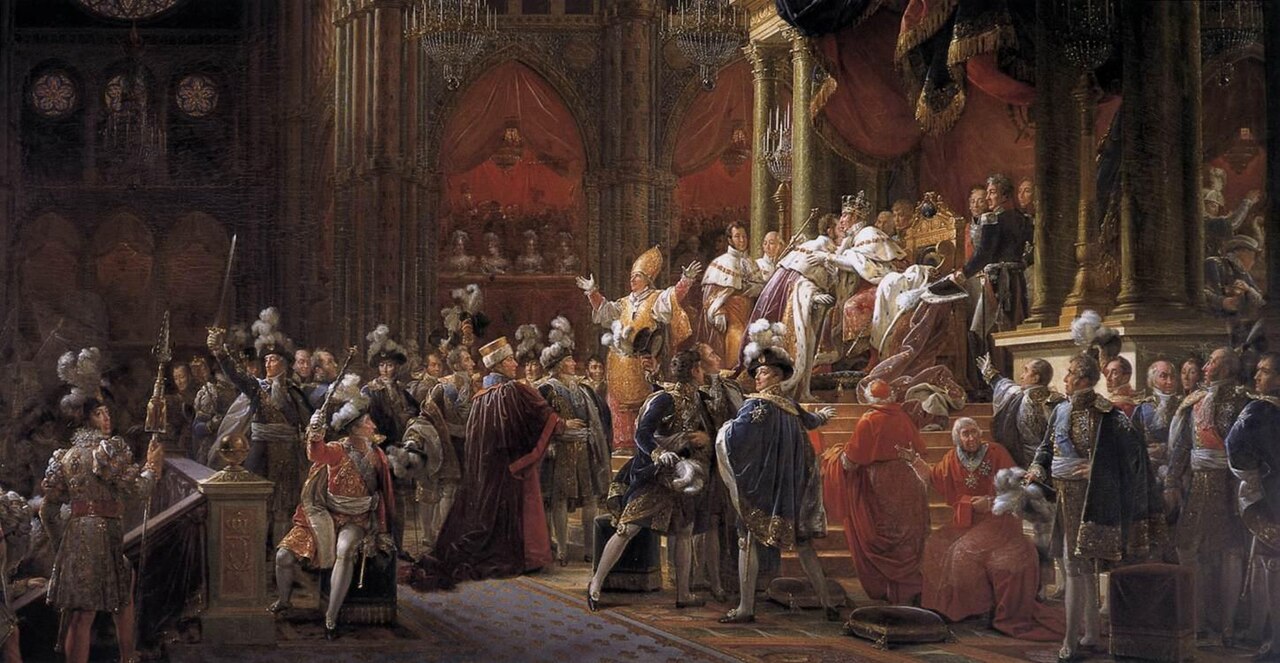
The Coronation of Charles X
François Gérard · 1825
Free account
Read every Charles X of France source
Sign up free →
Ready when you are
Start chatting with Charles X of France now.
20 messages free · No credit card · Available in 50+ languages.