


Primary sourcePainting1803
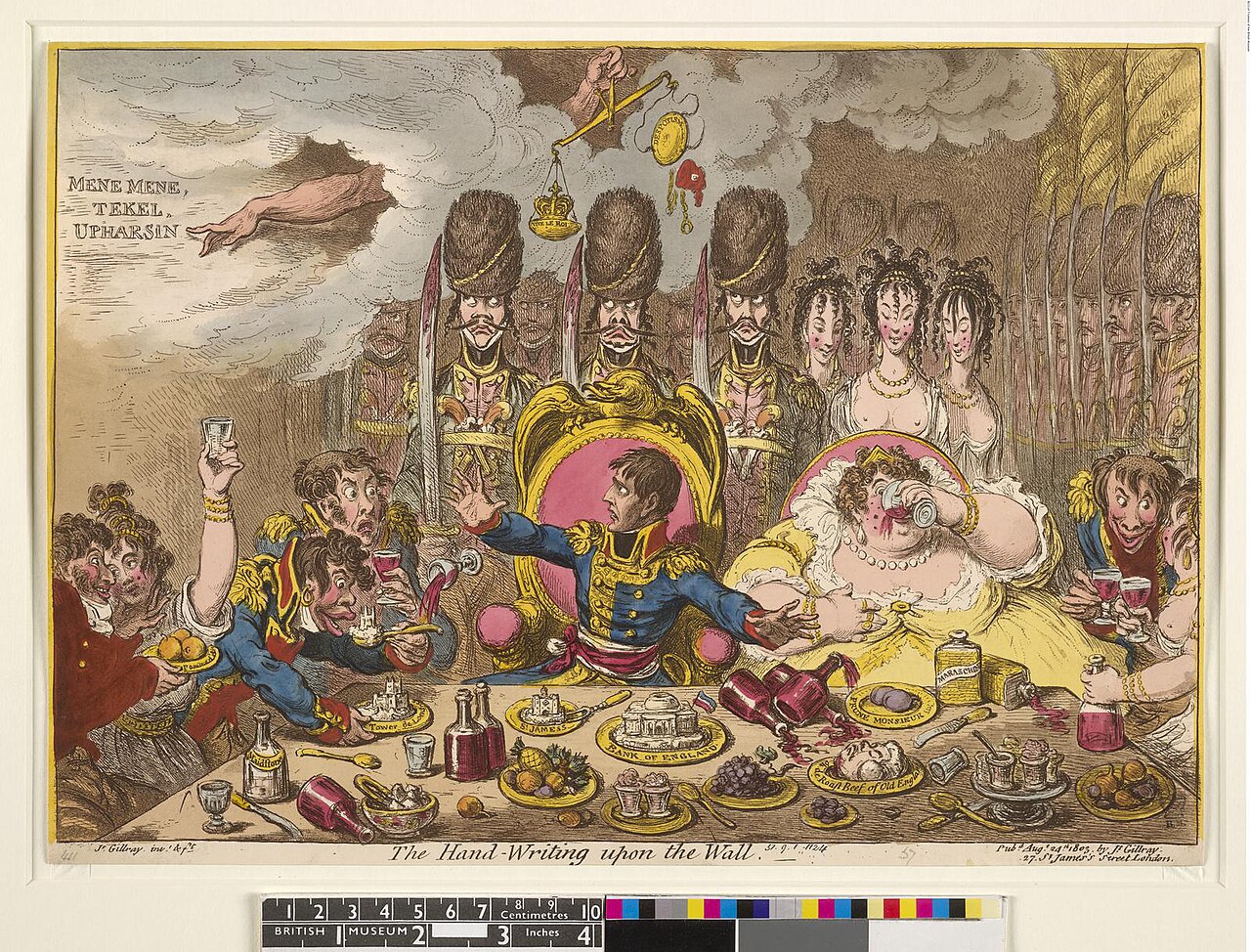
The Hand-Writing upon the Wall
James Gillray · 1803
A satirical print by James Gillray from 1803 showing Napoleon at a feast with Joséphine seated on his left. The writing on the wall and the mocking details present her as part of his excess.
Shows how Joséphine was mocked by her critics, seated beside Napoleon as a figure of excess in a British satirical print.
About this source
What it is
This print by James Gillray, dated 1803, is a hand-coloured etching. The Commons record describes a feast presided over by Napoleon, with Joséphine seated on his left. The dessert on the table has dishes moulded to look like English buildings. Napoleon has begun to eat 'St James's' but has dropped his fork and looks round in horror at the words 'Mene Mene, Tekel, Upharsin' on the wall, where the arm of Jehovah points. A pair of scales above him shows a crown ('Vive le Roi') outweighing 'Despotism'.
Why it matters
The print shows how Joséphine was pictured by her critics. In the record she is drawn as a heavy woman who drinks eagerly and spills her wine. The three young women behind her are identified as Napoleon's sisters Elisa, Pauline and Caroline, so the print also mocks his family. It is a caricature, not a neutral account of the feast, and it tells us more about the artist's view of power and luxury than about what really happened at a dinner.
Look closer
- What do the dishes, the spilled wine and the figures tell you the artist wanted viewers to think about?
- Who in the room is the only one who sees the writing on the wall, and what does his reaction suggest?
- What does this print leave out, such as any words or view from Joséphine herself?
This painting is part of the curated material that grounds the AI version of Joséphine de Beauharnais on Humy.ai — when students ask about related events, the AI can quote it and cite it.
More Joséphine de Beauharnais sources
Browse all 94 →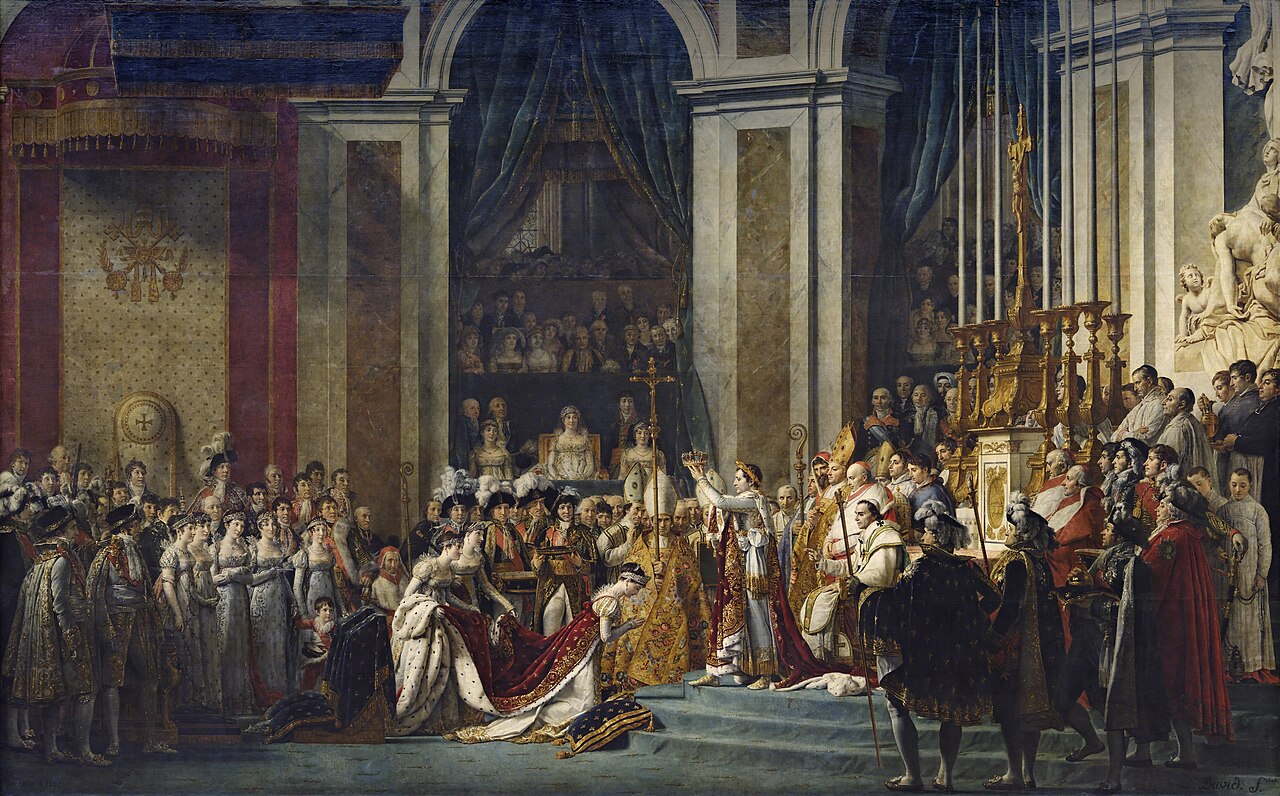 Painting
Primary source
The Coronation of Napoleon
Jacques-Louis David · 1807
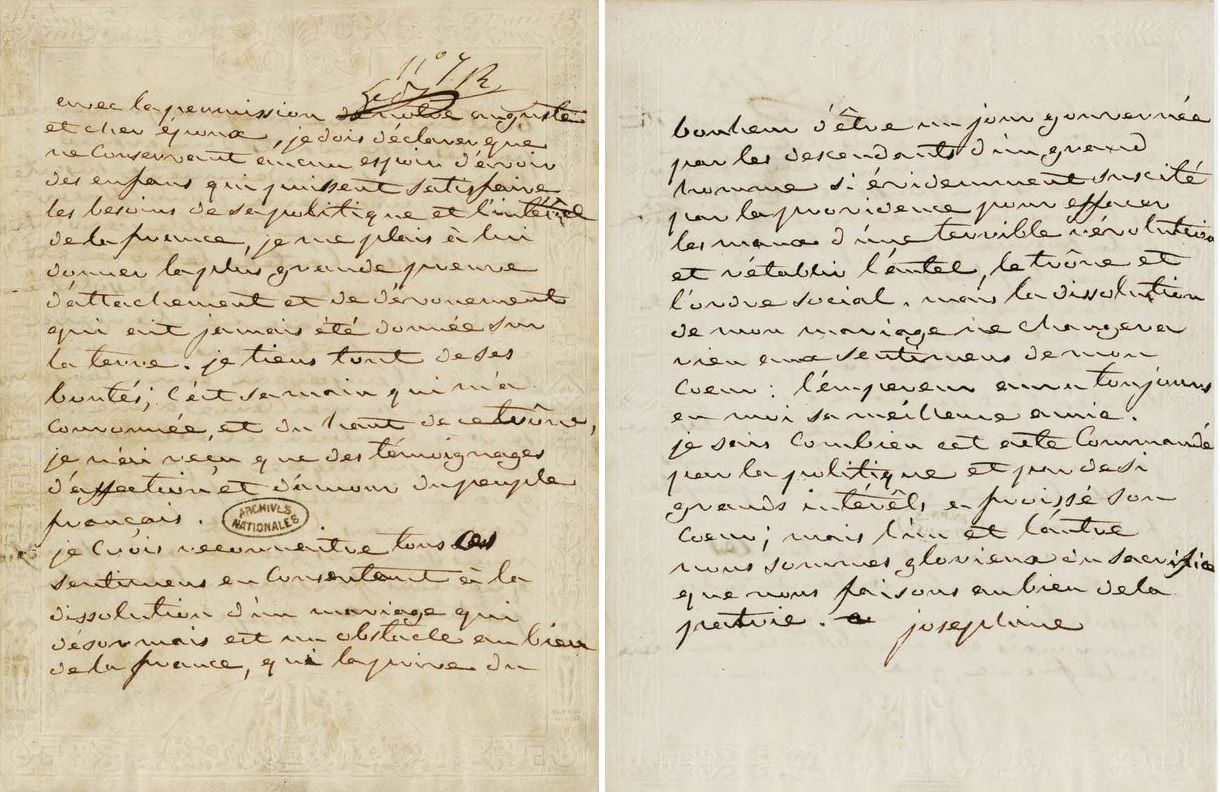 Letter
Primary source
Letter of Consent to the Dissolution of Her Marriage
Joséphine de Beauharnais · 15 December 1809
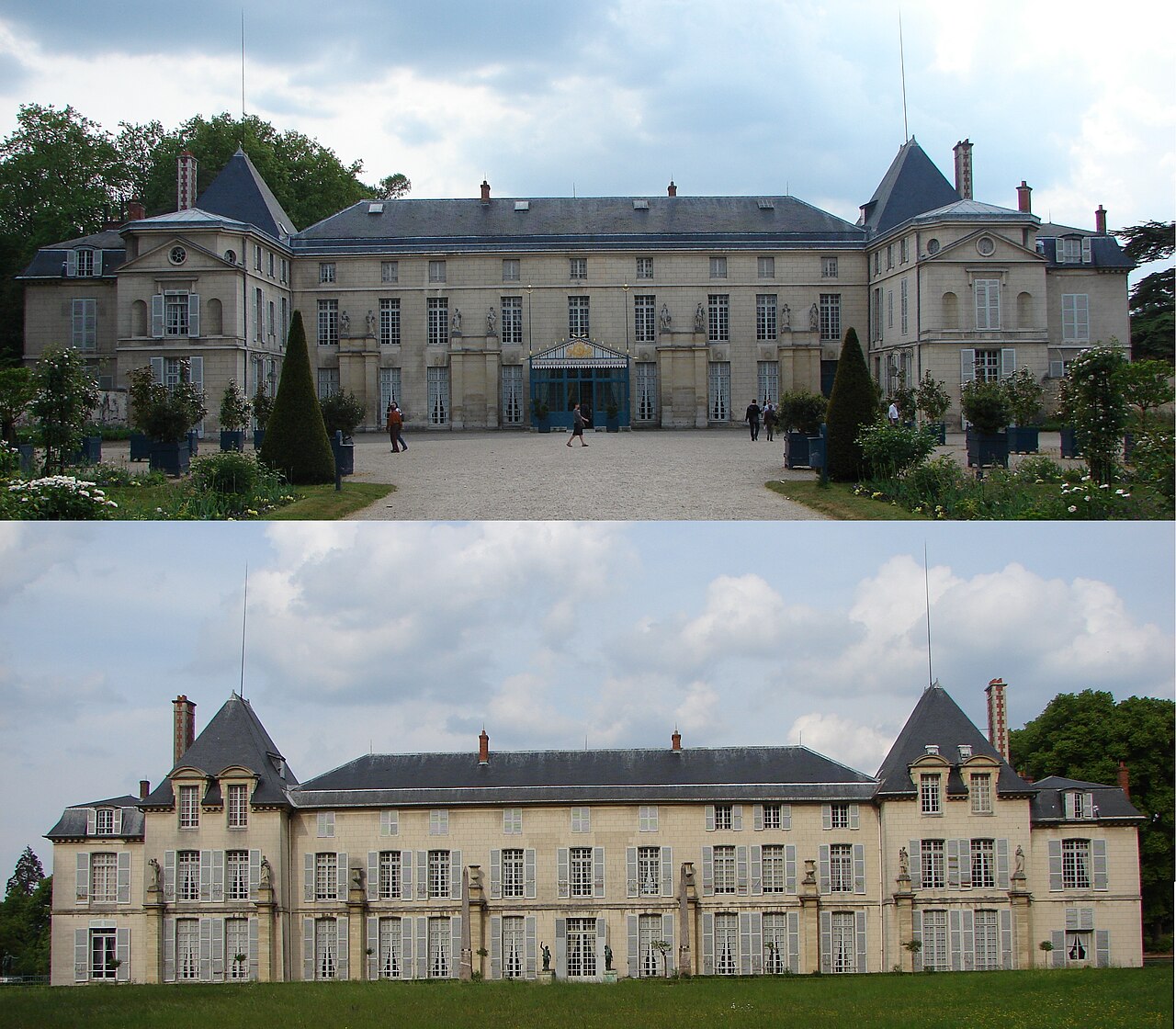 Artifact
Primary source
Château de Malmaison
1700 (purchased 1799)
 Painting
Primary source
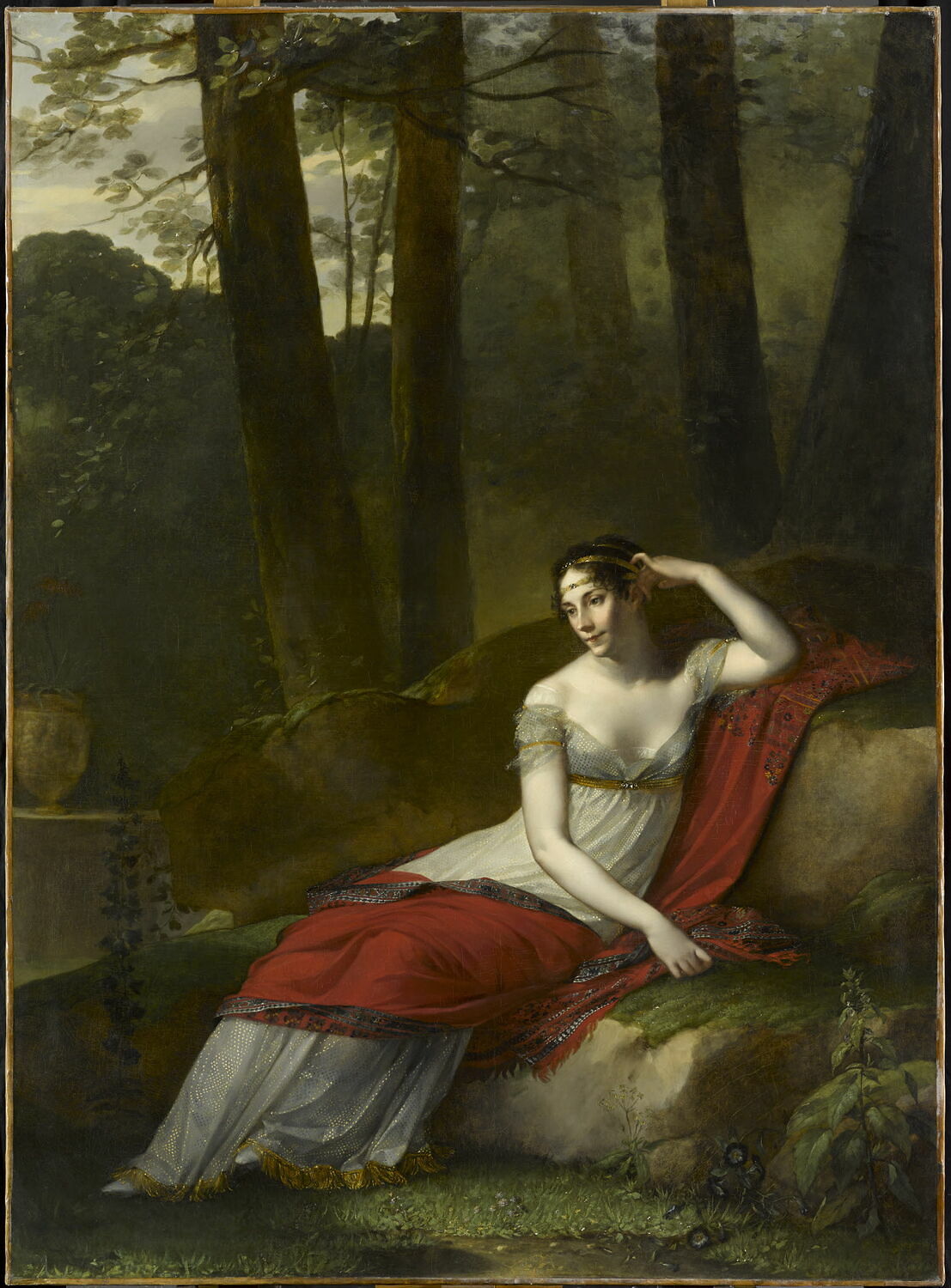
The Empress Joséphine
Pierre-Paul Prud'hon · 1805
Free account
Read every Joséphine de Beauharnais source
Sign up free →
Ready when you are
Start chatting with Joséphine de Beauharnais now.
20 messages free · No credit card · Available in 50+ languages.