


Secondary sourcePaintingc. 1500
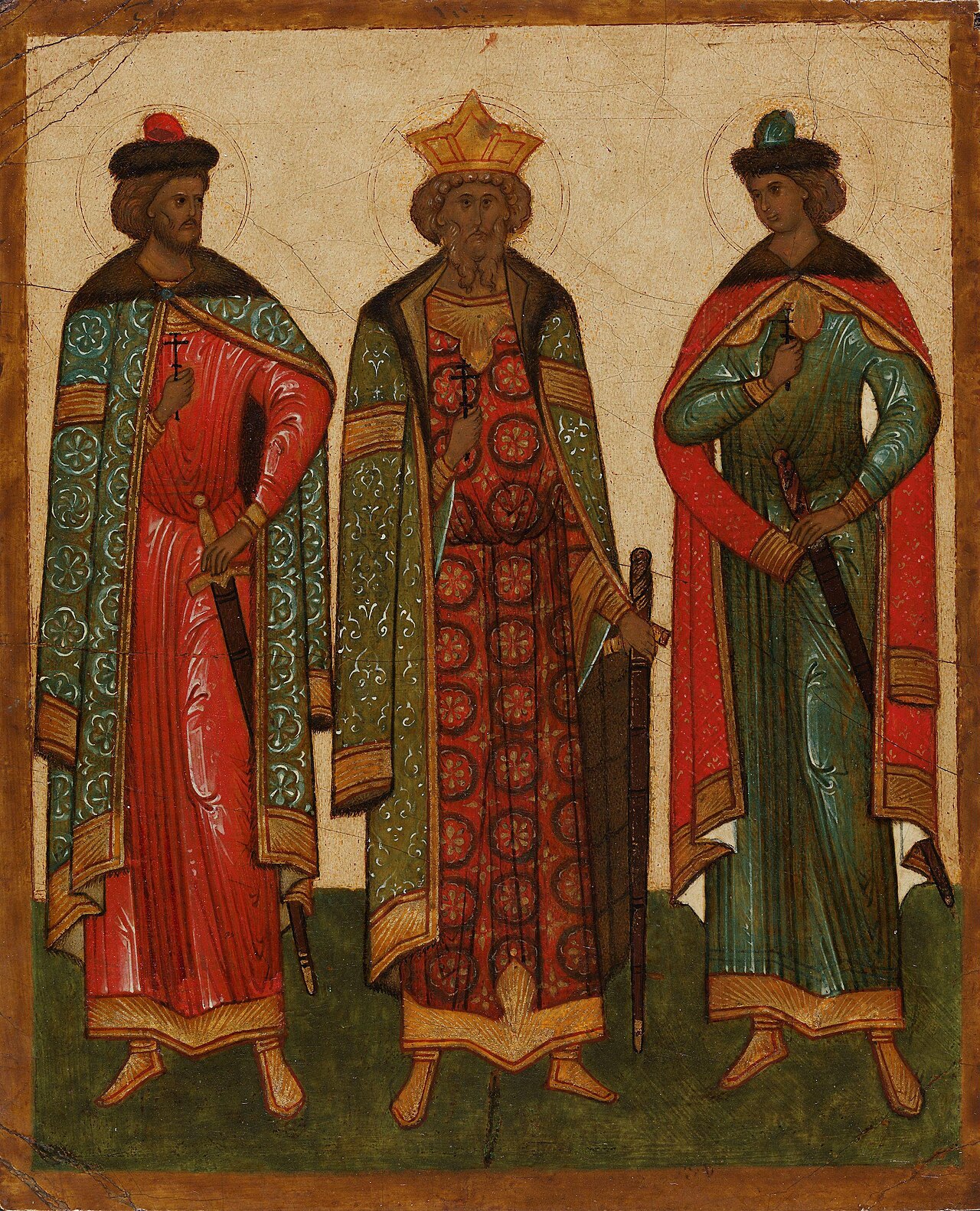
The Holy Princes Borys, Volodymyr and Hlib
c. 1500
A Novgorod-school icon from around 1500 showing Vladimir venerated as a saint standing between his martyred sons Borys and Hlib.
Depicts Vladimir venerated as a saint alongside his martyred sons, showing his later religious cult.
About this source
What it is
This icon, painted by an unknown artist of the Novgorod School around 1500, shows three standing princes: Vladimir the Great in the centre, crowned and holding a sword, flanked by his sons Borys and Hlib, both shown with halos. It is held at the National Museum of Art, Architecture and Design.
Why it matters
The icon reflects how Vladimir came to be venerated as a saint in the centuries after his death, pictured alongside his sons who were killed in the power struggles after his death and were themselves canonized as martyrs. It shows how rulers could become religious symbols long after their reigns.
Look closer
- Why is Vladimir shown with a crown and sword, while his sons appear differently dressed?
- What does it mean that this image was painted centuries after Vladimir lived?
- How does depicting a ruler as a saint shape the way later generations remember him?
This painting is part of the curated material that grounds the AI version of Vladimir the Great on Humy.ai — when students ask about related events, the AI can quote it and cite it.
More Vladimir the Great sources
Browse all 97 →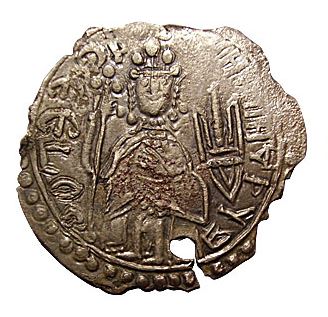 Artifact
Primary source
Srebrenik of Vladimir the Great
Mint of Vladimir I · c. 988–1015
 Document
Secondary source
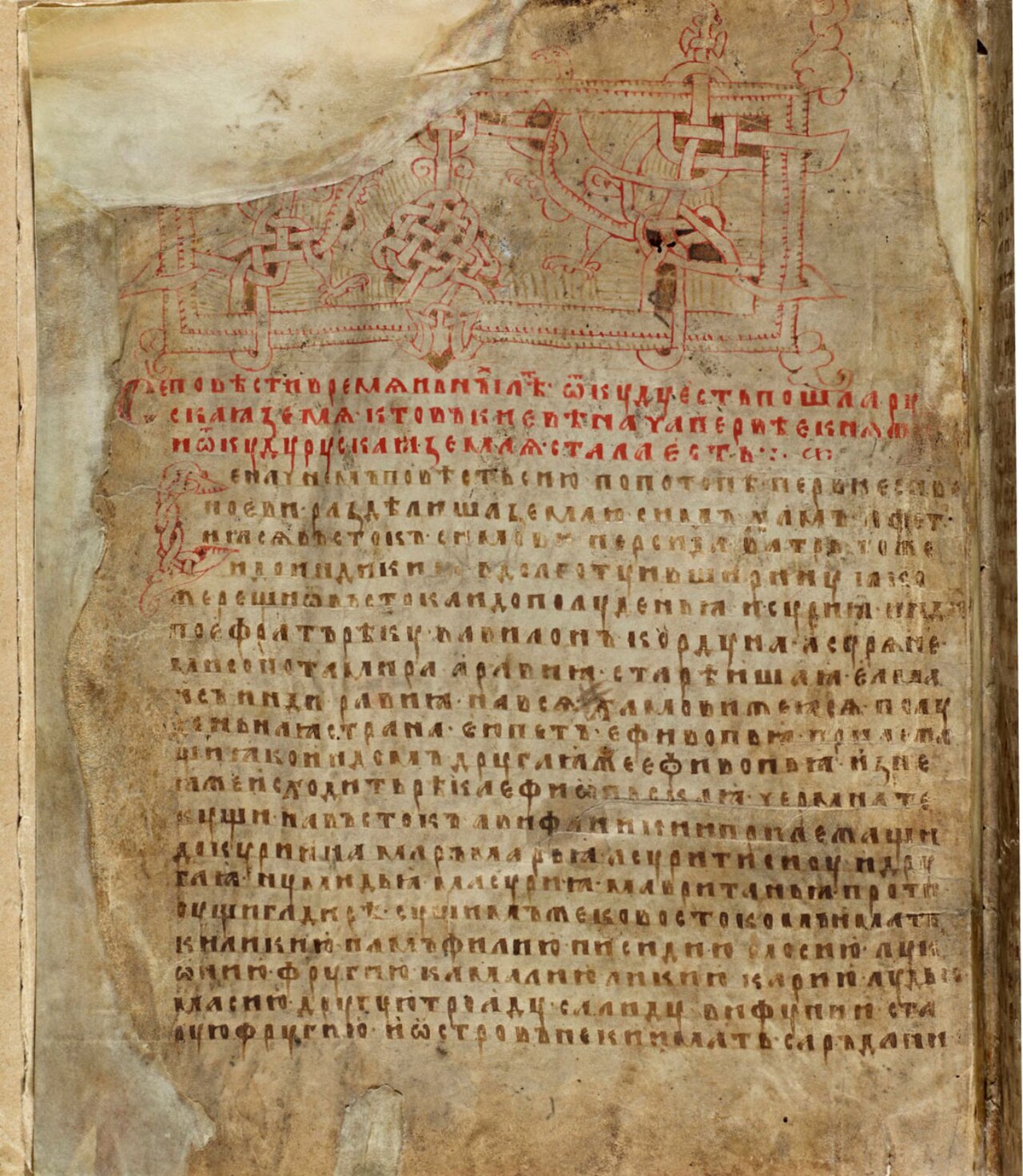
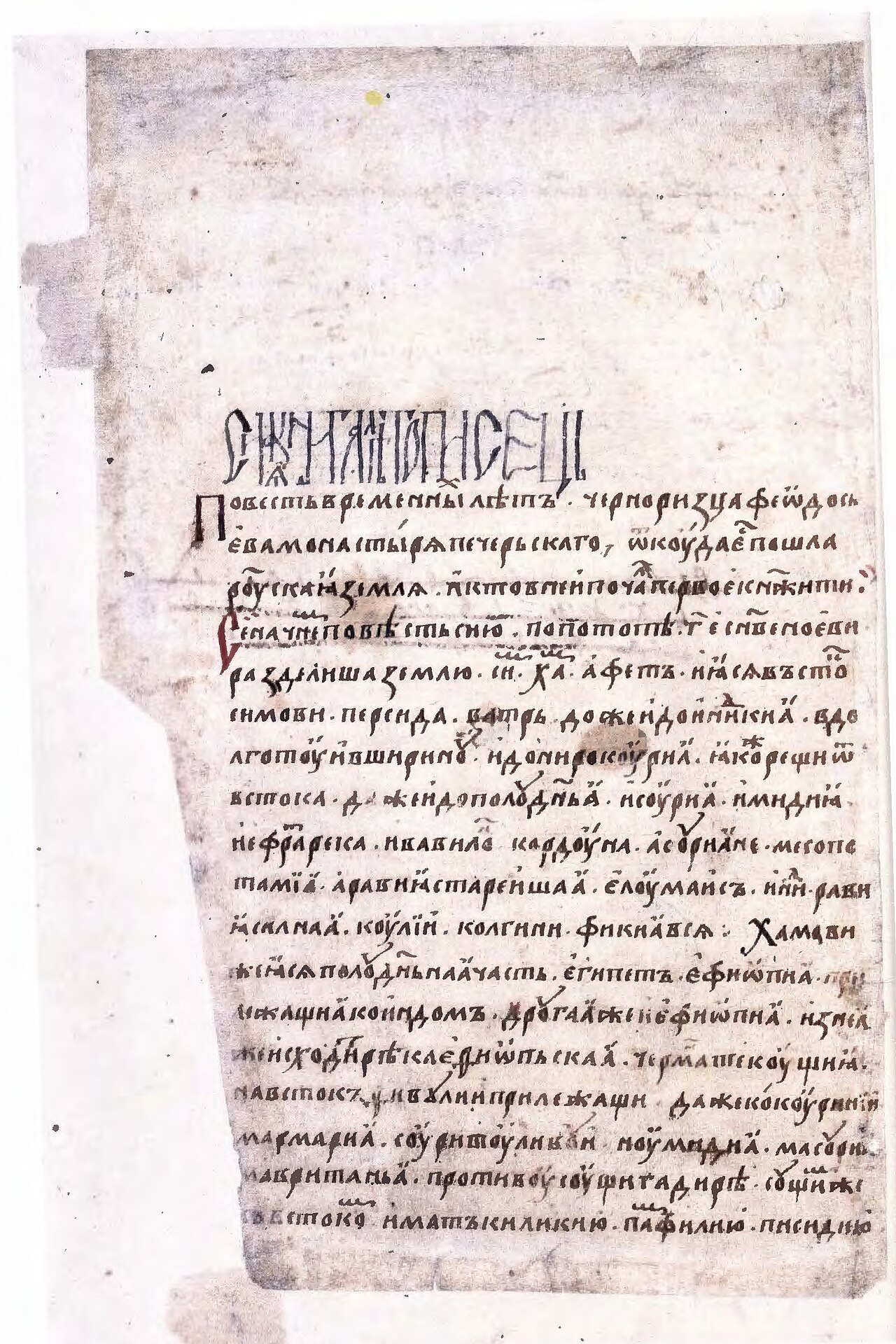
Laurentian Codex
Laurentius · 1377
 Artifact
Primary source
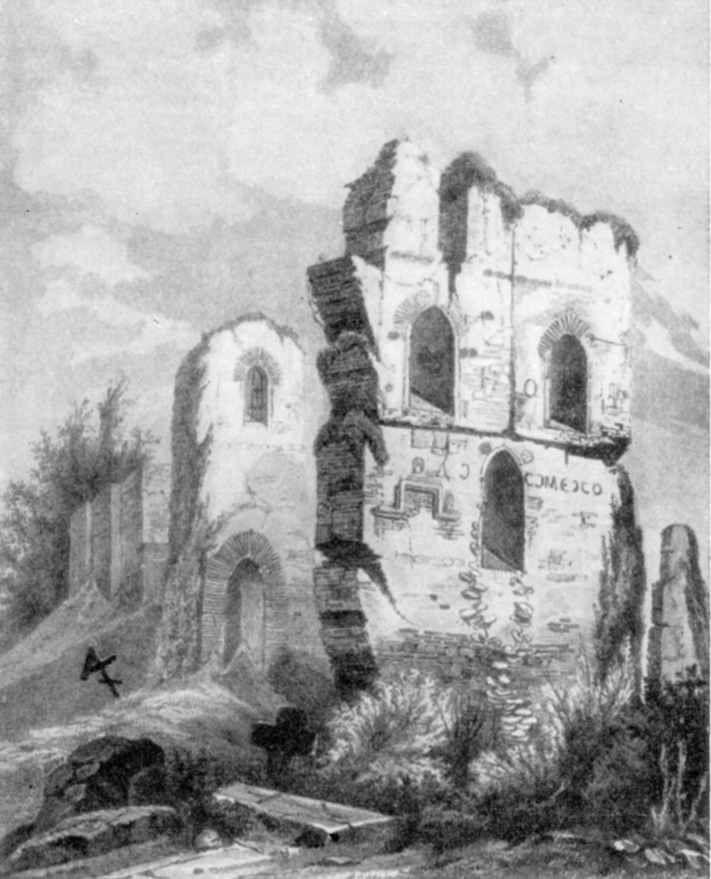
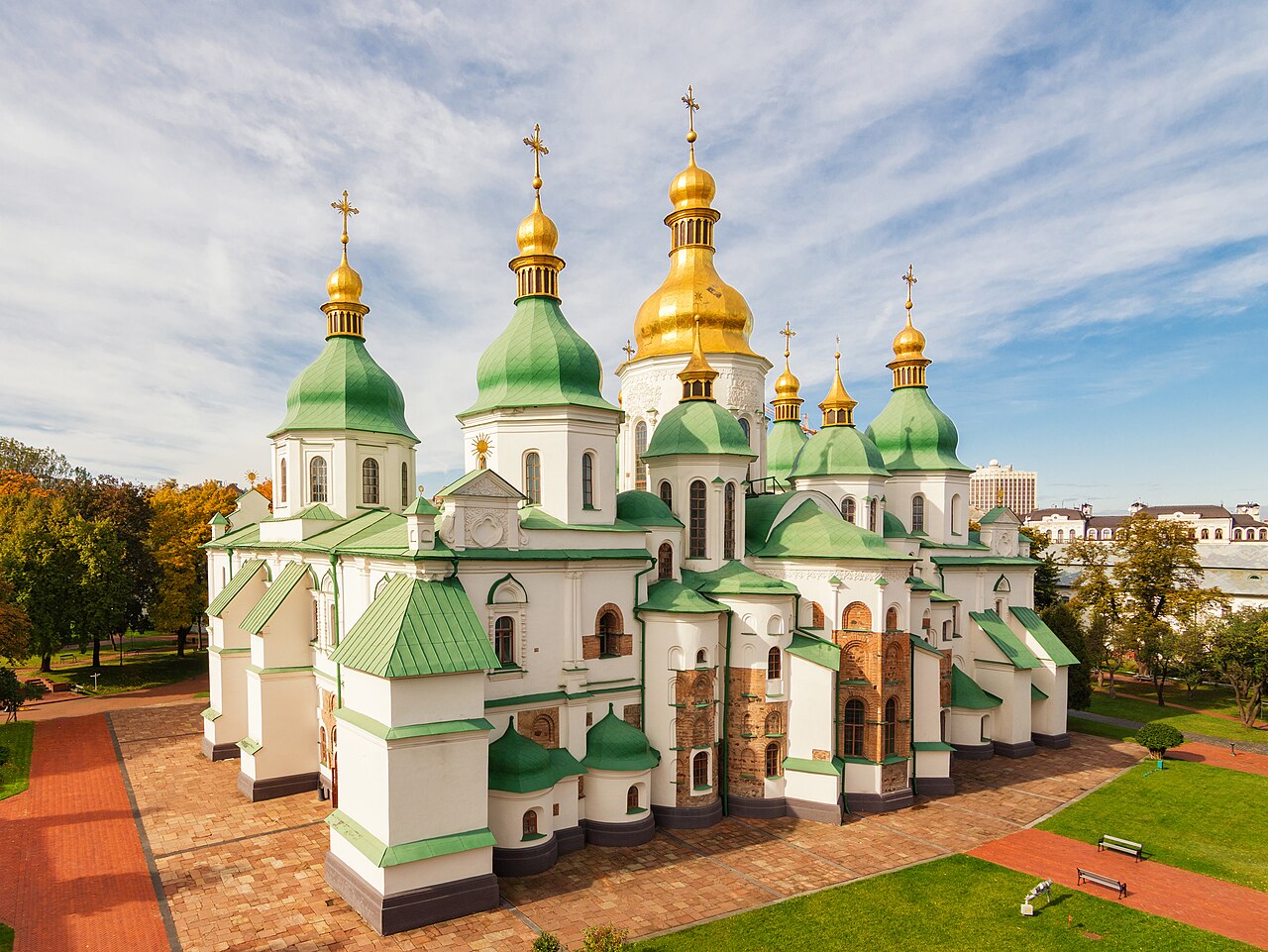
Church of the Tithes
996
 Painting
Secondary source
Radziwiłł Chronicle
c. 1500 (copy of a 13th-century original)
Free account
Read every Vladimir the Great source
Sign up free →
Ready when you are
Start chatting with Vladimir the Great now.
20 messages free · No credit card · Available in 50+ languages.