


Secondary sourcePainting1810
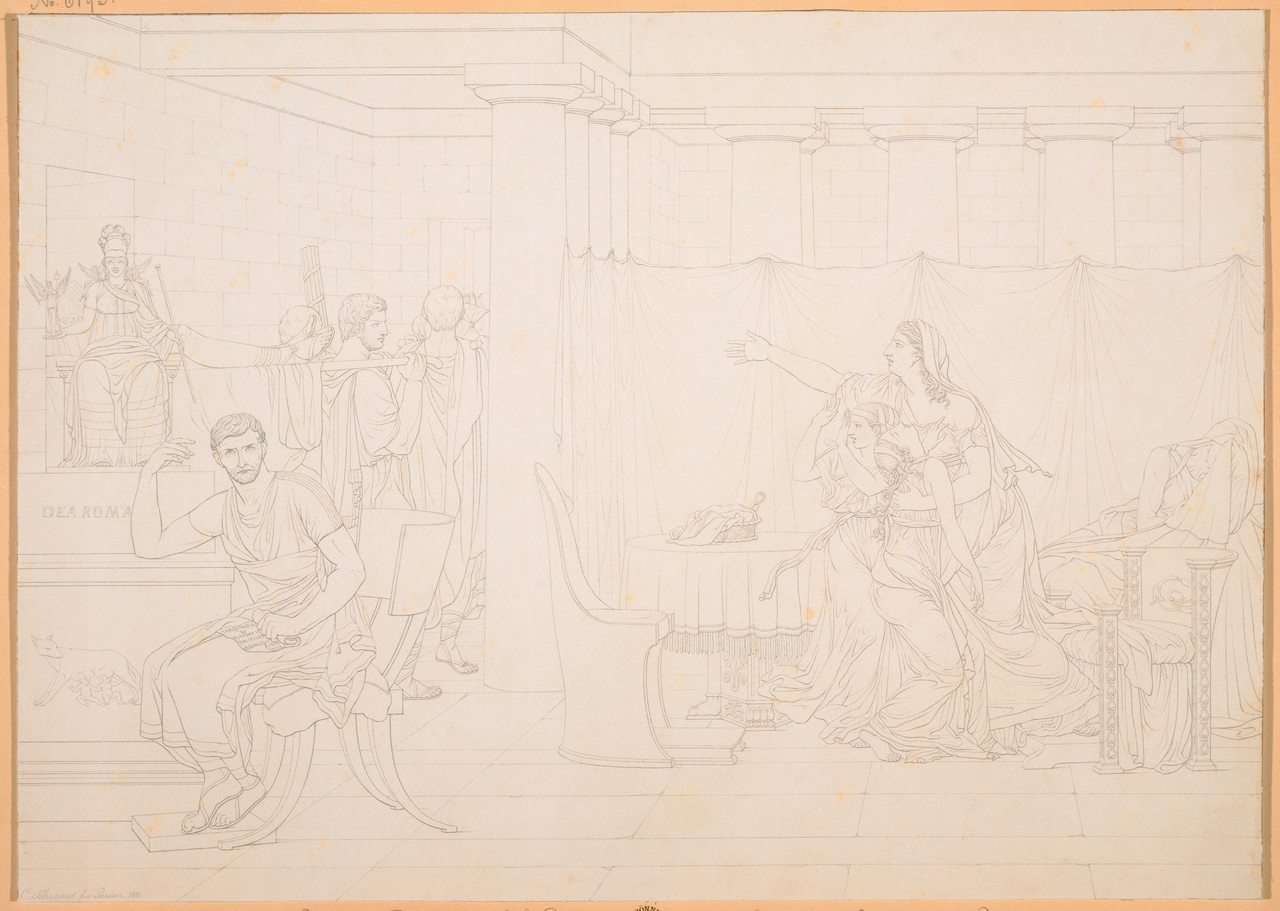
The Lictors Bring Brutus the Bodies of His Sons
Charles Johannot · 1810
An 1810 drawing imagining the moment lictors bring Brutus the bodies of his executed sons, a story from early Roman history.
This drawing depicts a story traditionally linked to a Brutus figure in early Roman history, showing grief over the sons' deaths.
About this source
What it is
This pencil drawing was made in 1810 by Charles Johannot. It depicts a scene from Roman legend in which lictors (Roman officials carrying bundles called fasces) bring the bodies of Brutus's sons to him after their execution, while grieving women look on.
Why it matters
This story is traditionally associated with Lucius Junius Brutus, an early figure in Roman history credited with founding the Republic, and the scene was a popular subject for artists illustrating Roman virtue and sacrifice. The drawing shows how artists centuries later used Roman history to explore themes of duty and loss.
Look closer
- What does the seated man's expression suggest about how the artist wanted viewers to feel?
- Why do you think the bodies themselves are not clearly shown in the drawing?
- How does the inclusion of the statue of Dea Roma in the background change the meaning of the scene?
This painting is part of the curated material that grounds the AI version of Marcus Junius Brutus on Humy.ai — when students ask about related events, the AI can quote it and cite it.
More Marcus Junius Brutus sources
Browse all 87 →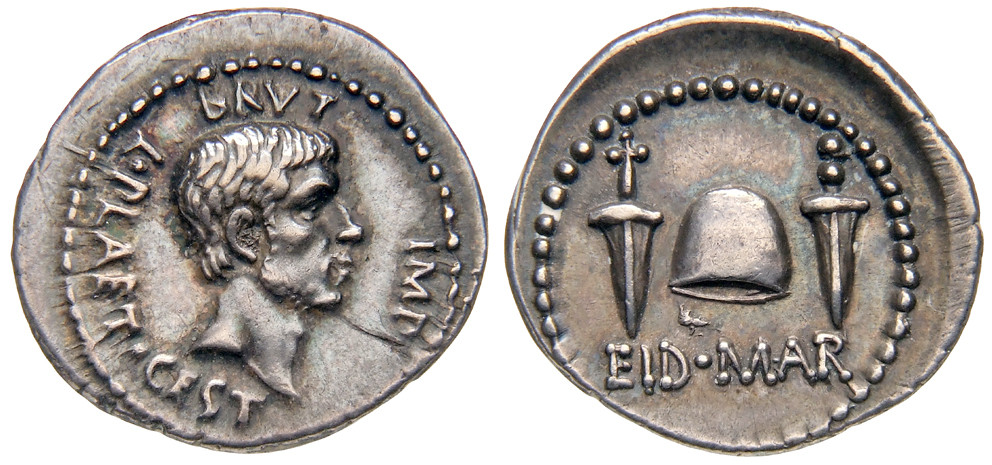 Artifact
Primary source
Ides of March coin
Lucius Plaetorius Cestianus · 43-42 BCE
Secondary source
Life of Brutus
Plutarch
Primary source
Epistulae ad Brutum
Cicero and Marcus Junius Brutus · 43 BC
 Book
Secondary source
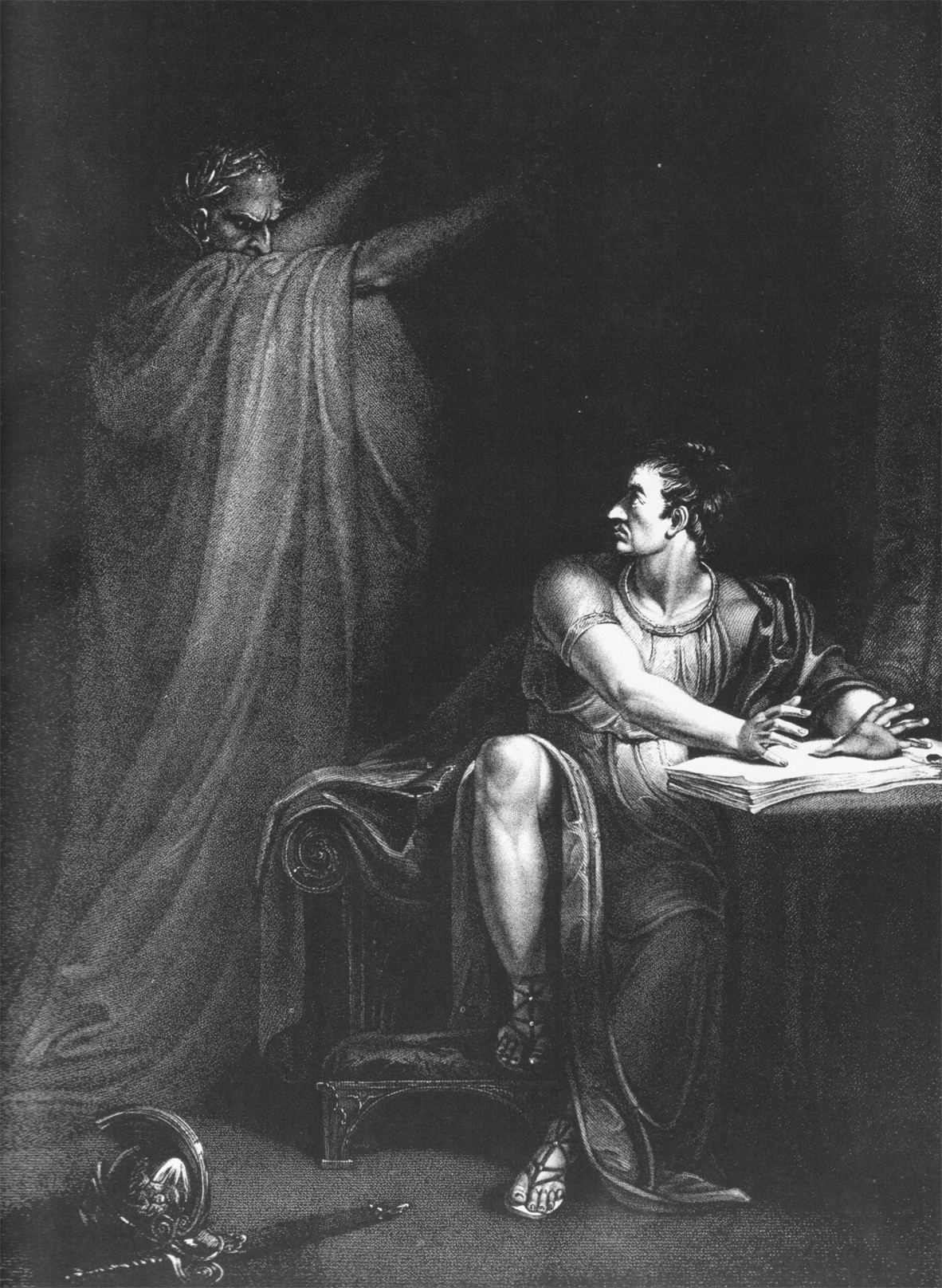
Julius Caesar
William Shakespeare · 1599
Free account
Read every Marcus Junius Brutus source
Sign up free →
Ready when you are
Start chatting with Marcus Junius Brutus now.
20 messages free · No credit card · Available in 50+ languages.