


Secondary sourcePainting1808
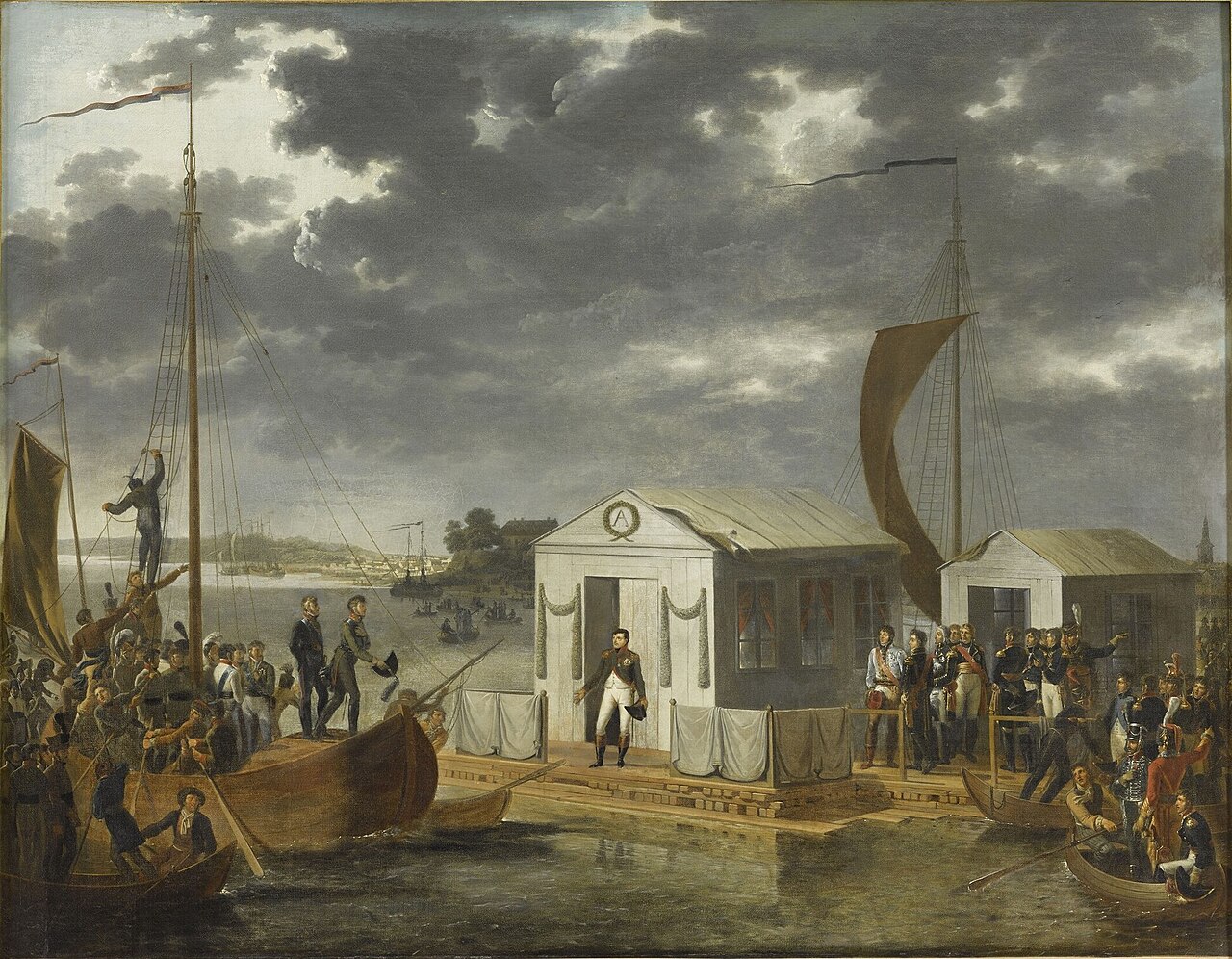
The Meeting of Napoleon I and Tsar Alexander I at Tilsit
Adolphe Roehn · 1808
A French painting of the staged 1807 meeting between Napoleon and Alexander I on a raft on the Neman river.
This painting depicts Alexander's staged 1807 meeting with Napoleon that began the Tilsit negotiations.
About this source
What it is
This 1808 history painting by the French artist Adolphe Roehn depicts the scene of 25 June 1807 when Napoleon met Emperor Alexander I of Russia on a raft in the middle of the River Neman. It is held at the Palace of Versailles.
Why it matters
The meeting led to the Peace of Tilsit, ending the War of the Fourth Coalition. The painting shows Napoleon arriving first, in a position of ascendancy, even though the real meeting was staged so both rulers arrived together — a reminder that this French painting presents Napoleon's version of events. The Prussians, Alexander's allies, are notably left out. Other figures shown include Marshal Murat, Marshal Berthier, Marshal Ney, and Grand Duke Konstantin.
- Why might the painter have shown Napoleon waiting for Alexander, when in reality they arrived together?
- Who is missing from this painting, and what does that absence suggest about whose story is being told?
- What does the choice of a raft, rather than land, tell you about how the meeting was staged?
This painting is part of the curated material that grounds the AI version of Tsar Alexander I on Humy.ai — when students ask about related events, the AI can quote it and cite it.
More Tsar Alexander I sources
Browse all 89 →Primary source
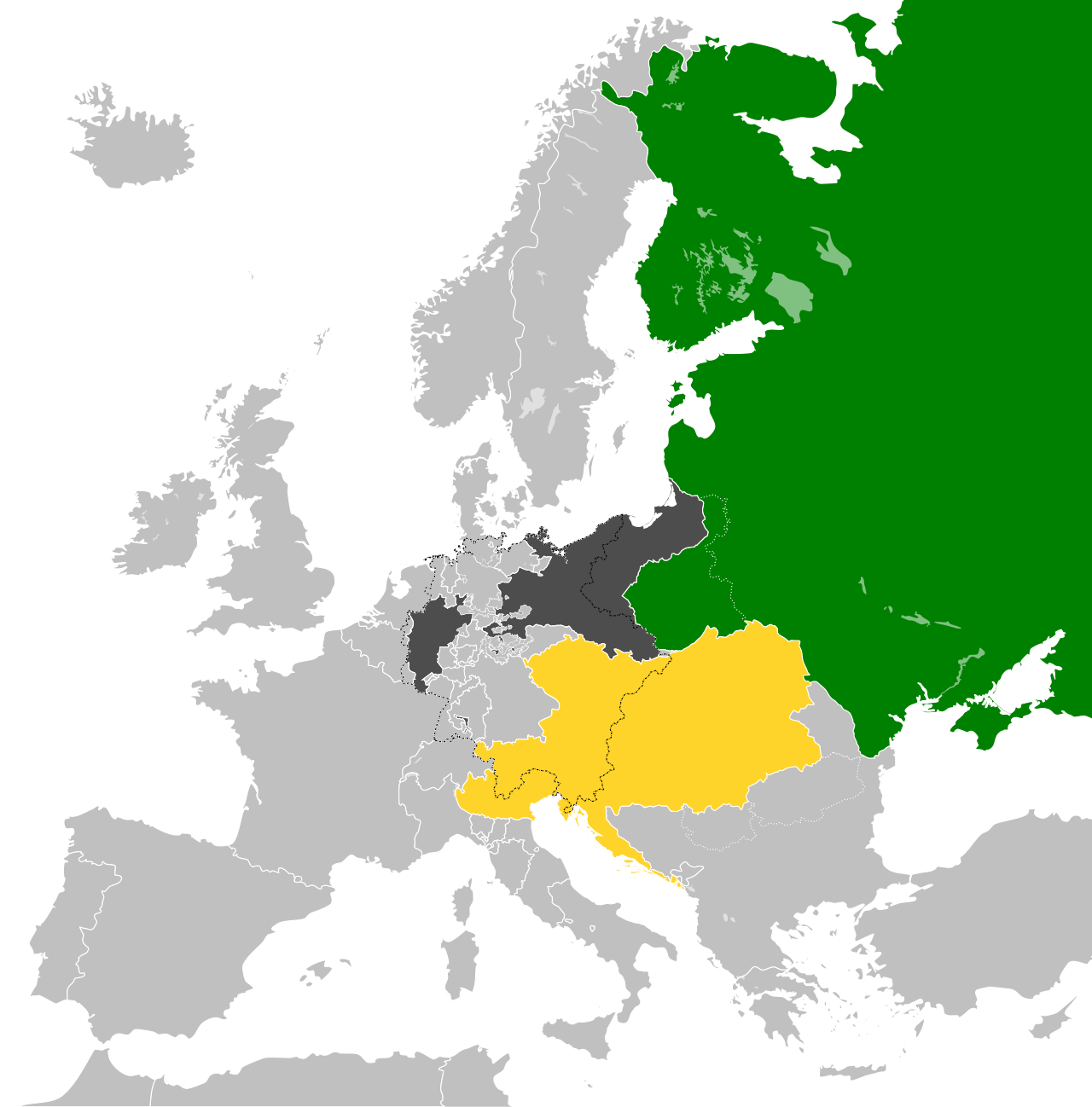
Treaties of Tilsit
7-9 July 1807
 Document
Primary source
Holy Alliance
Alexander I of Russia · 26 September 1815
 Document
Primary source
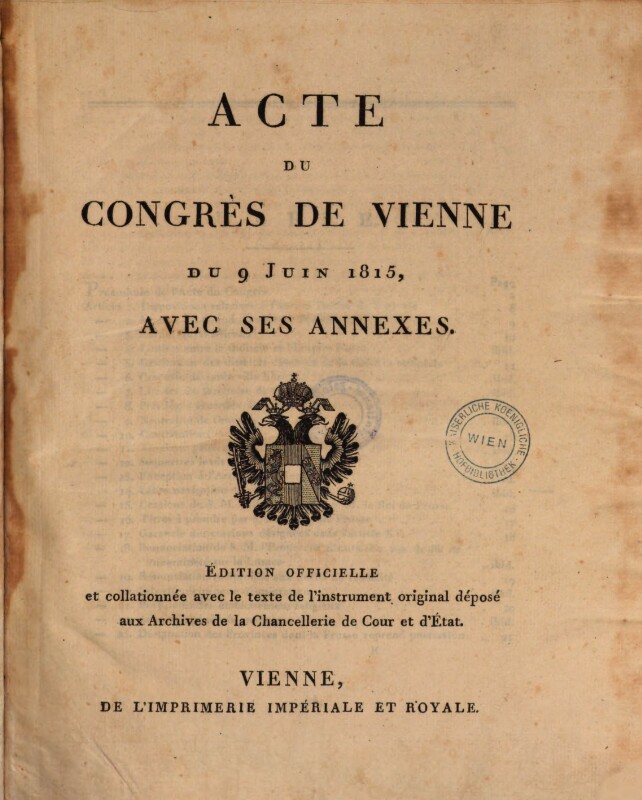
Final Act of the Congress of Vienna
9 June 1815
 Letter
Primary source
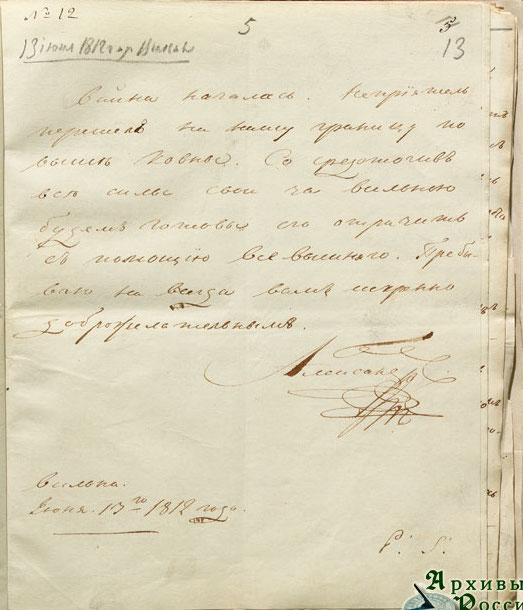
Alexander I's letter to N.I. Saltykov
Alexander I of Russia · 13 June 1812
Free account
Read every Tsar Alexander I source
Sign up free →
Ready when you are
Start chatting with Tsar Alexander I now.
20 messages free · No credit card · Available in 50+ languages.