


Secondary sourcePaintingc. 1450
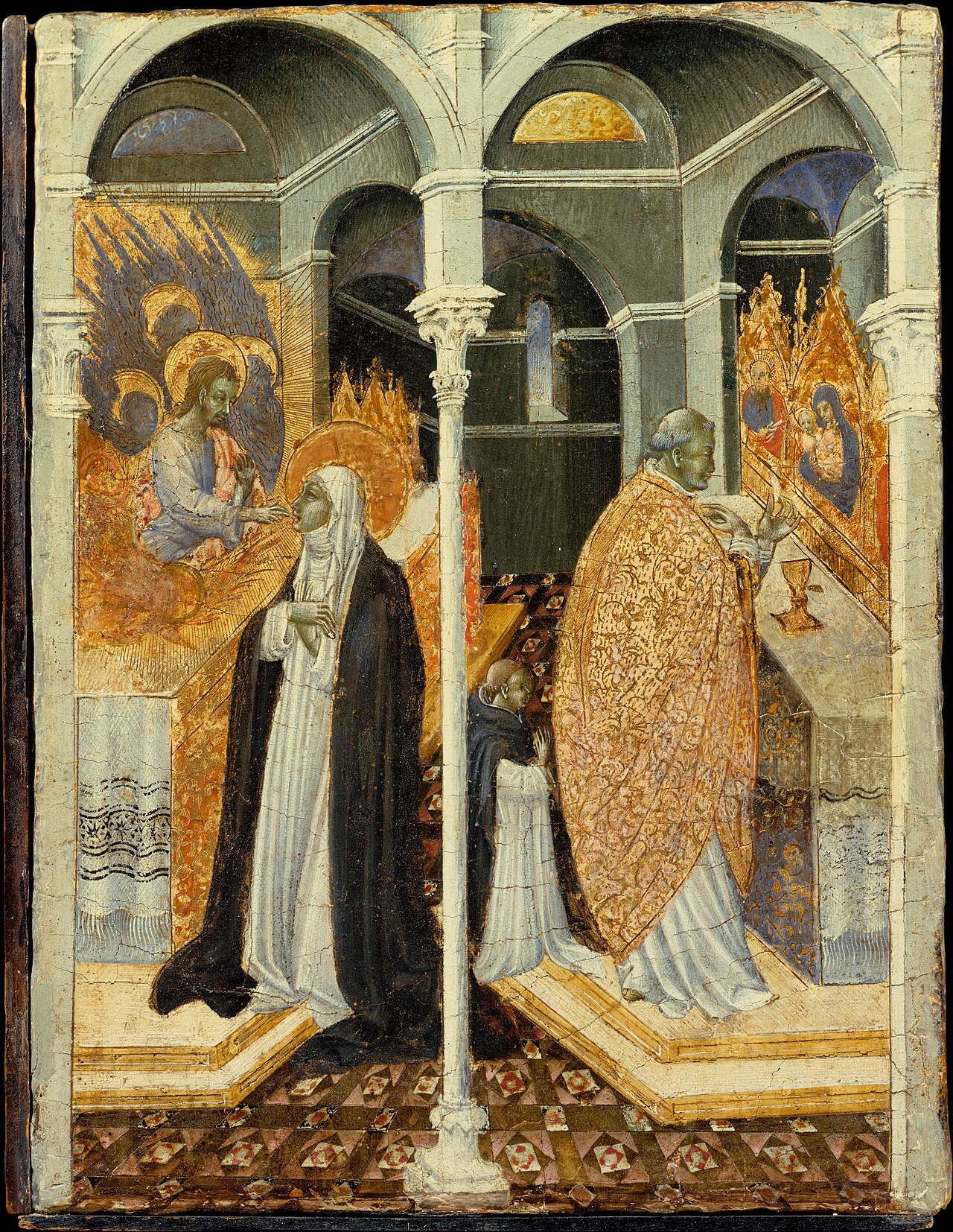
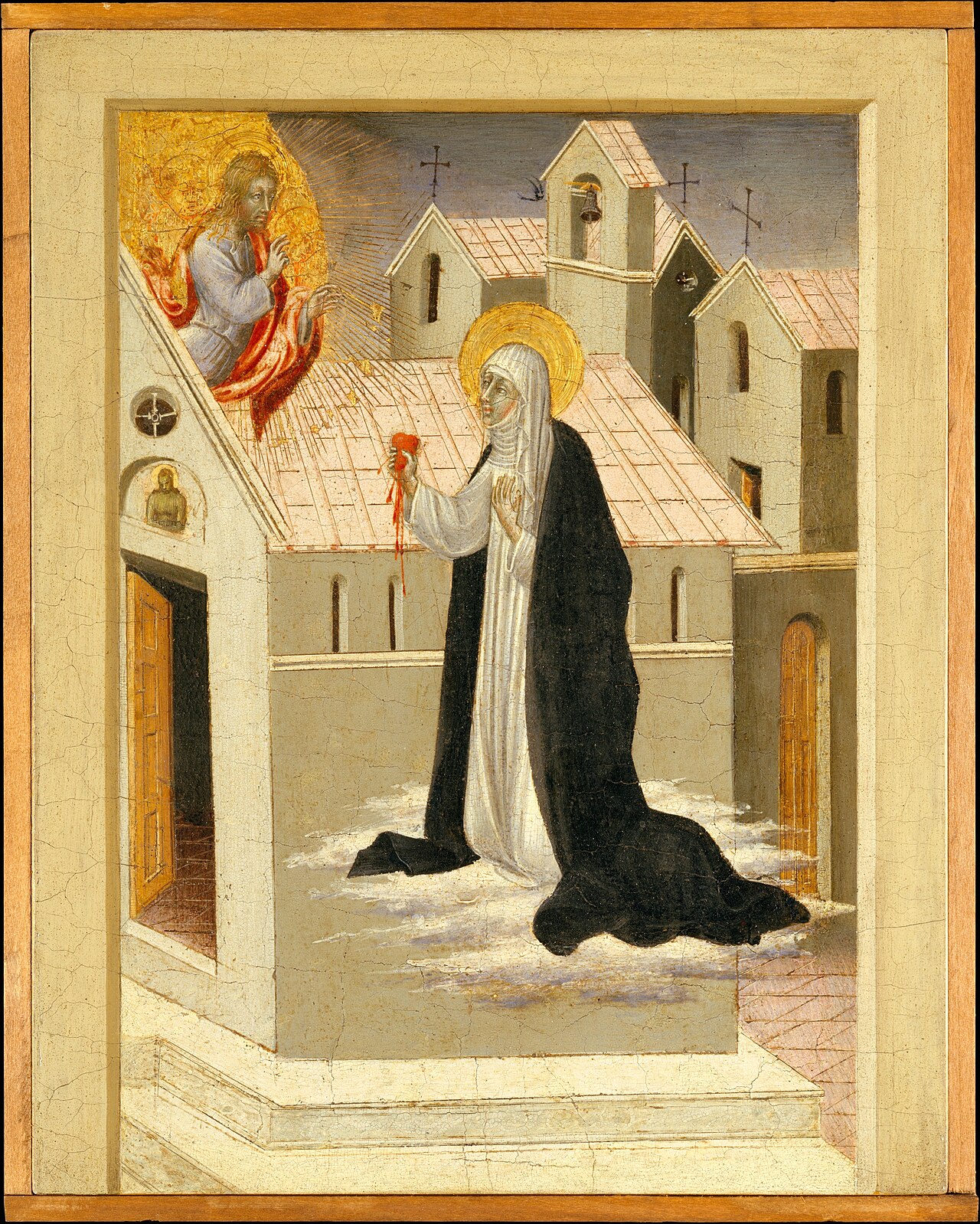
The Miraculous Communion of Saint Catherine of Siena
Giovanni di Paolo · c. 1450
A panel by Giovanni di Paolo showing Catherine receiving communion directly from Christ, reflecting her intense devotion to the Eucharist.
This panel depicts Catherine's intense Eucharistic devotion, linked to her extreme fasting.
About this source
What it is
This painting by Giovanni di Paolo, dated around 1450, shows a miraculous communion scene involving Catherine of Siena. It is held at the Metropolitan Museum of Art.
Why it matters
The scene reflects Catherine's famous devotion to the Eucharist, which was closely tied to her extreme fasting, a practice described in accounts of her life. The painting shows how later generations understood and visualised her spiritual intensity, turning her personal religious practices into dramatic religious imagery.
Look closer
- What does the direct contact between Christ and Catherine suggest about how the artist wanted viewers to see her?
- Why might an artist choose to depict a miraculous event rather than an ordinary scene from her life?
- What does this image not tell us about the real difficulties of Catherine's fasting?
This painting is part of the curated material that grounds the AI version of Catherine of Siena on Humy.ai — when students ask about related events, the AI can quote it and cite it.
More Catherine of Siena sources
Browse all 95 →Secondary source
Libro della divina dottrina
Catherine of Siena · 1912 edition (text dictated 1377-78)
 Letter
Primary source
Letters of Catherine of Siena
Catherine of Siena · 1375-1380
 Sculpture
Secondary source
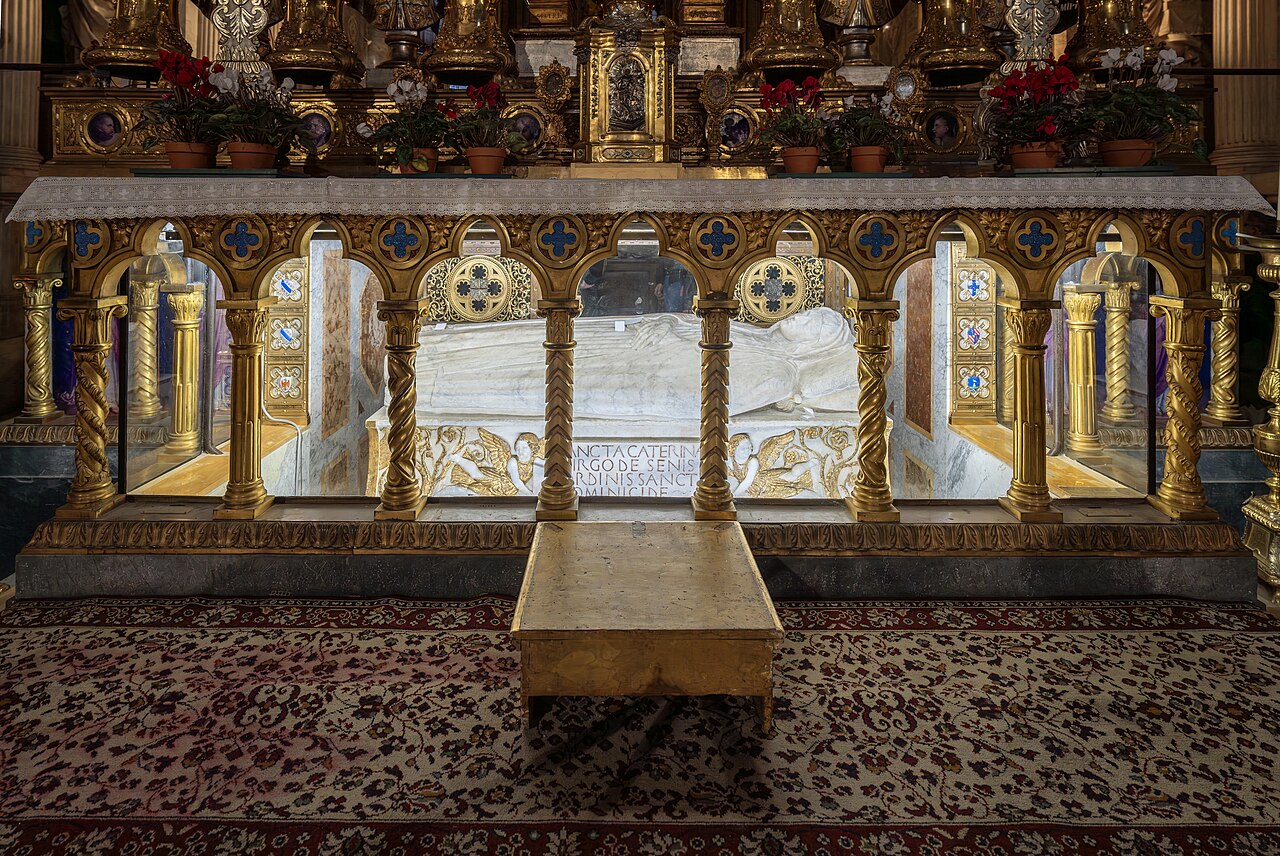
Saint Catherine of Siena tomb
 Artifact
Secondary source
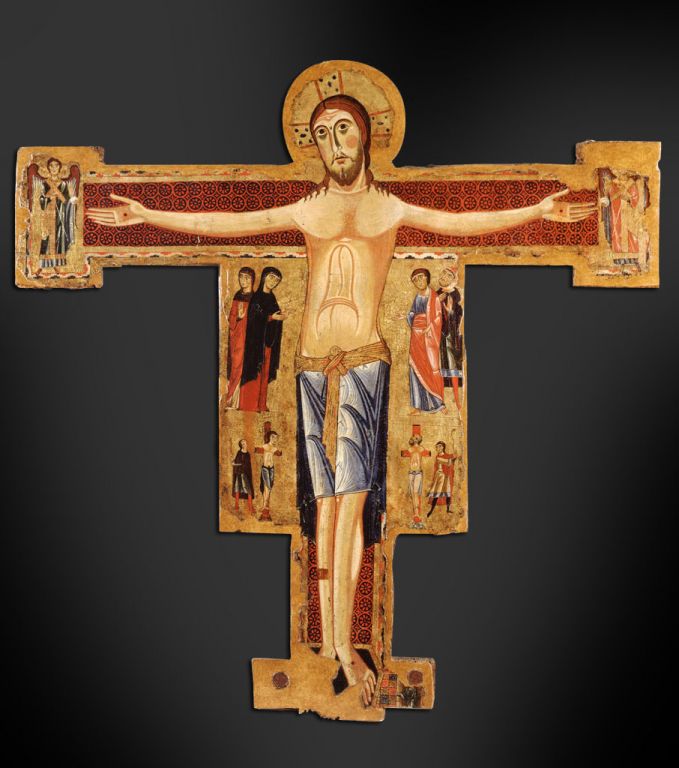
Crucifix of the Stigmata of Saint Catherine of Siena
1200 (crucifix); event dated 1375
Free account
Read every Catherine of Siena source
Sign up free →
Ready when you are
Start chatting with Catherine of Siena now.
20 messages free · No credit card · Available in 50+ languages.