


Secondary sourcePaintingc. 1811-1813
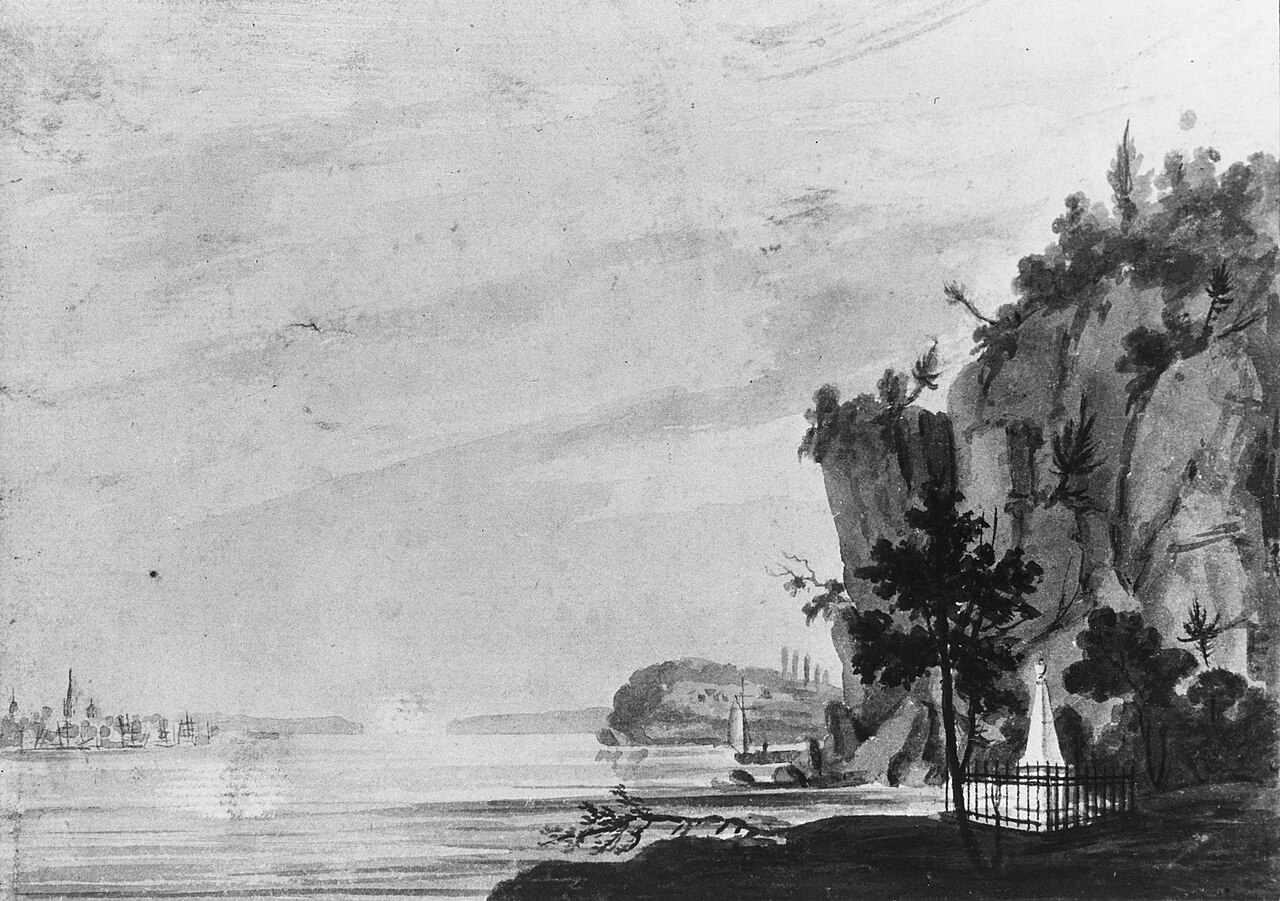
The Monument to Alexander Hamilton at Weehawken
Pavel Svinyin · c. 1811-1813
A watercolor by Pavel Svinyin recording the early memorial obelisk at the Weehawken dueling ground where Hamilton died, a monument that no longer survives.
This image records the lost monument erected at the site where Hamilton was fatally wounded in his famous duel.
About this source
What it is
This watercolor, made by Pavel Svinyin around 1811–13, shows a landscape with a cliffside, trees, and a small white obelisk behind an iron fence near the shore, with a sailboat on the river and a town in the distance.
Why it matters
The scene depicts an early monument erected at the dueling ground in Weehawken where Alexander Hamilton was fatally wounded. The monument shown in this image is now lost, making Svinyin's watercolor an important visual record of how the site was marked and remembered soon after Hamilton's death.
Look closer
- Why might people have built a monument at the exact site of the duel?
- What do the surrounding details—the river, boat, and distant town—add to the scene?
- Why is this image valuable now that the actual monument no longer exists?
This painting is part of the curated material that grounds the AI version of Alexander Hamilton on Humy.ai — when students ask about related events, the AI can quote it and cite it.
More Alexander Hamilton sources
Meet the AI Alexander Hamilton →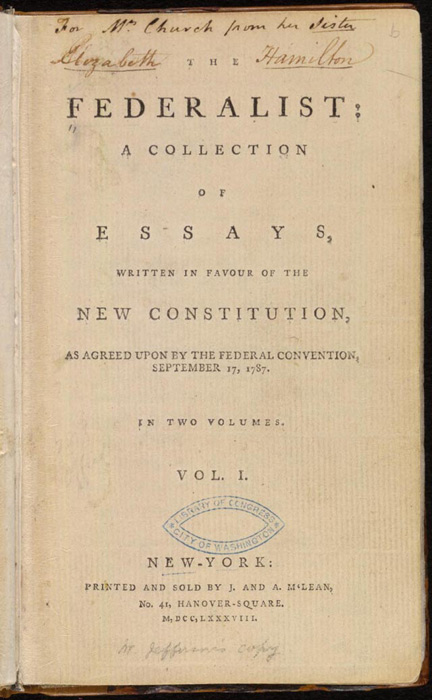 Book
Primary source
The Federalist Papers
Alexander Hamilton, James Madison, John Jay · 1788
Primary source
Federalist No. 78
Alexander Hamilton · 1788
Primary source
Federalist No. 70
Alexander Hamilton · 15 March 1788
 Document
Primary source
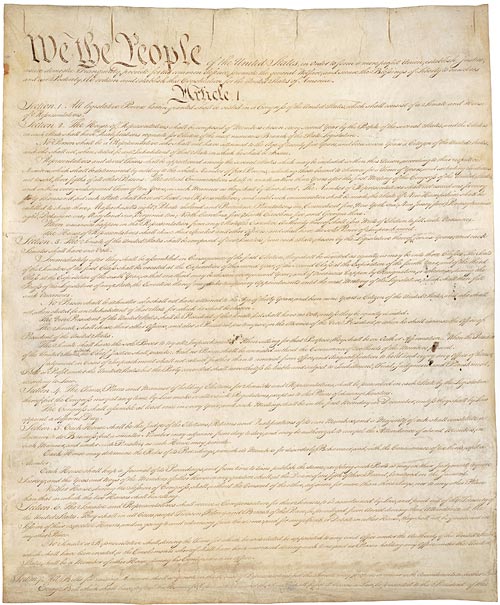
United States Constitution
Constitutional Convention · 17 September 1787
 Document
Primary source
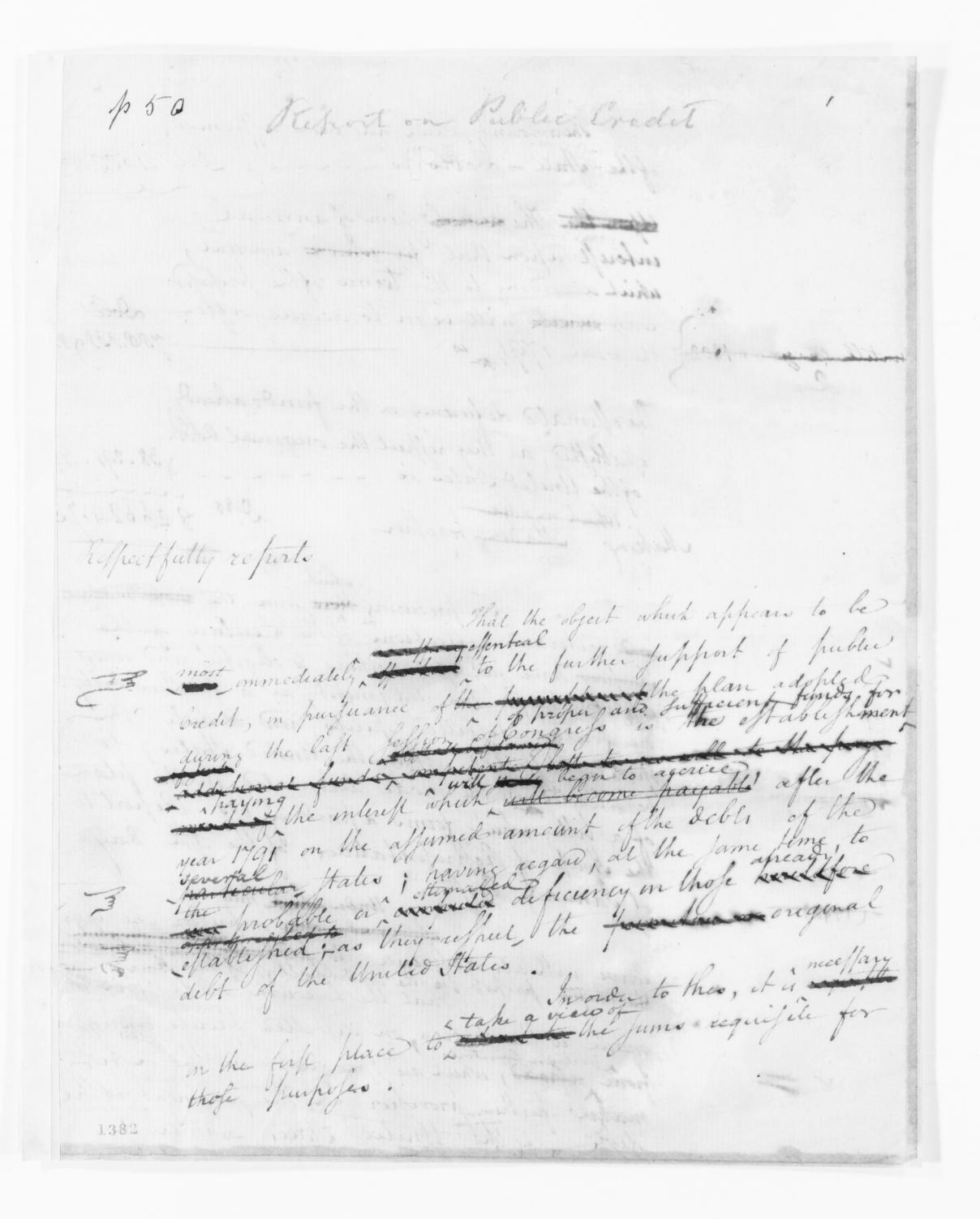
First Report on the Public Credit
Alexander Hamilton · 1790
Ready when you are
Start chatting with Alexander Hamilton now.
20 messages free · No credit card · Available in 50+ languages.