


Secondary sourcePainting
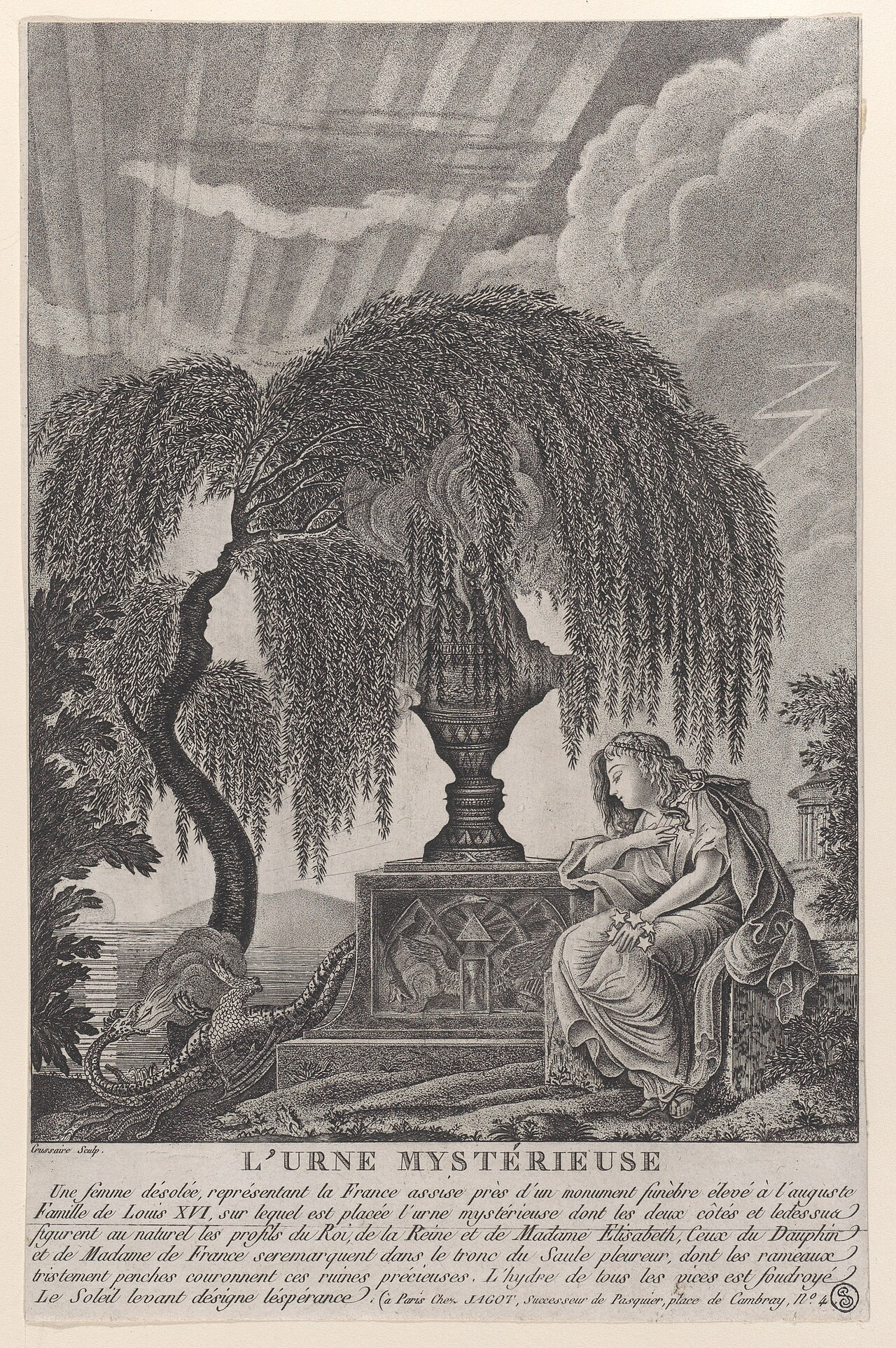
The Mysterious Urn
Pierre Jean Joseph Denis Crussaire
A royalist engraving that hides the silhouettes of the executed French king and queen within an urn and funerary scene.
A royalist print hiding her profile in hidden imagery, showing her secret posthumous veneration.
About this source
What it is
This is an engraved print called L'urne mystérieuse, held today by the Metropolitan Museum of Art. It shows a weeping woman beside a funerary monument topped by an urn, under a weeping willow, with a hydra struck by lightning and rays of light filling the sky, accompanied by French text.
Why it matters
According to the museum's note, the print secretly hides the profiles of the executed king and queen within the design of the urn. Royalists could not openly mourn Louis XVI and Marie Antoinette after their executions in 1793, so prints like this let sympathizers quietly honor their memory using hidden imagery and symbolism.
- Why might someone need to hide a political message inside a picture rather than show it openly?
- What do the weeping figure, the willow, and the wounded monster suggest about how the artist wanted viewers to feel?
- What does this print tell us about how dangerous it still was to mourn the royal family after 1793?
This painting is part of the curated material that grounds the AI version of Marie Antoinette on Humy.ai — when students ask about related events, the AI can quote it and cite it.
More Marie Antoinette sources
Meet the AI Marie Antoinette →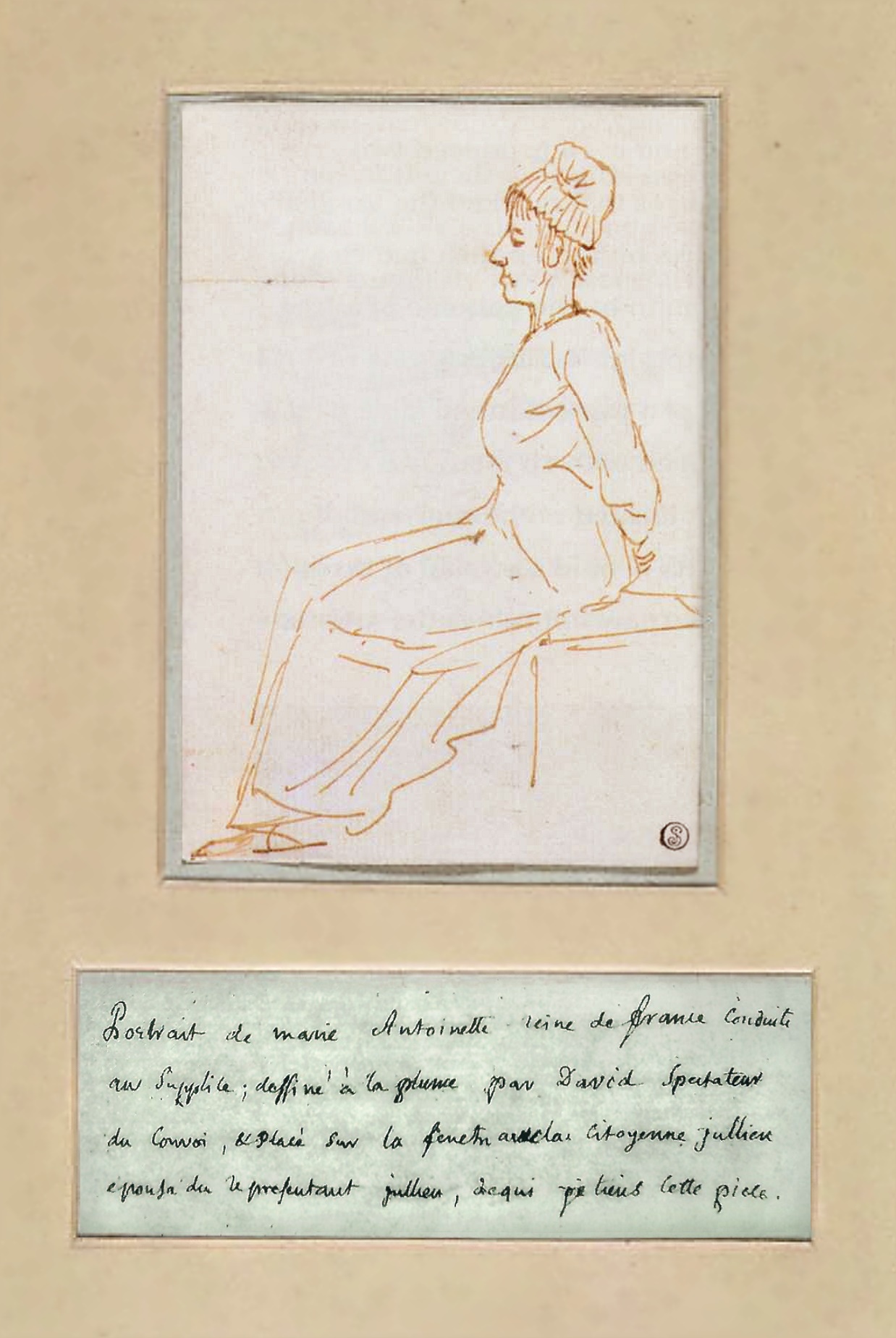 Painting
Primary source
Marie Antoinette Being Taken to Her Execution
Jacques-Louis David · 16 October 1793
 Painting
Primary source
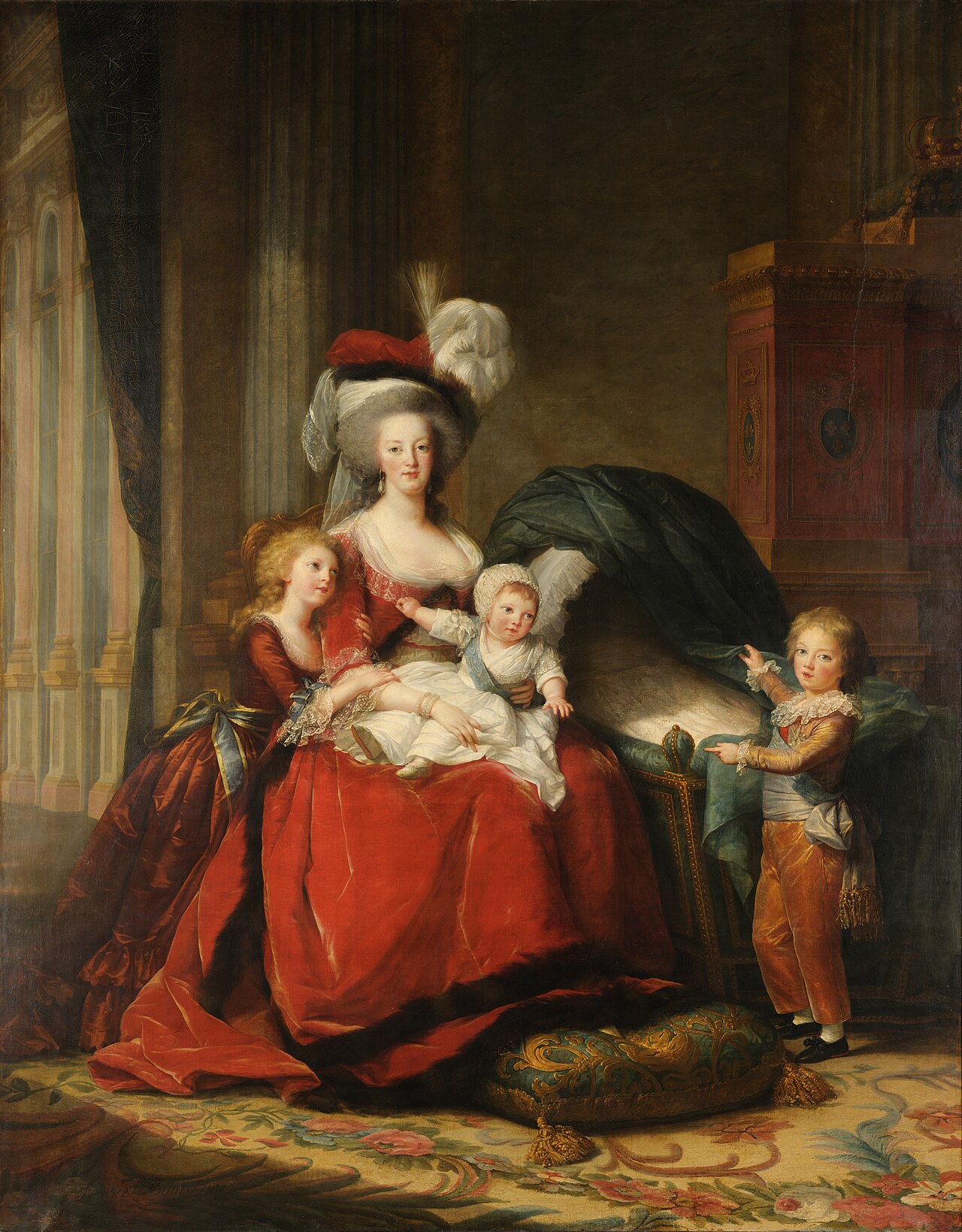
Marie Antoinette and Her Children
Élisabeth Louise Vigée Le Brun · 1787
 Painting
Primary source
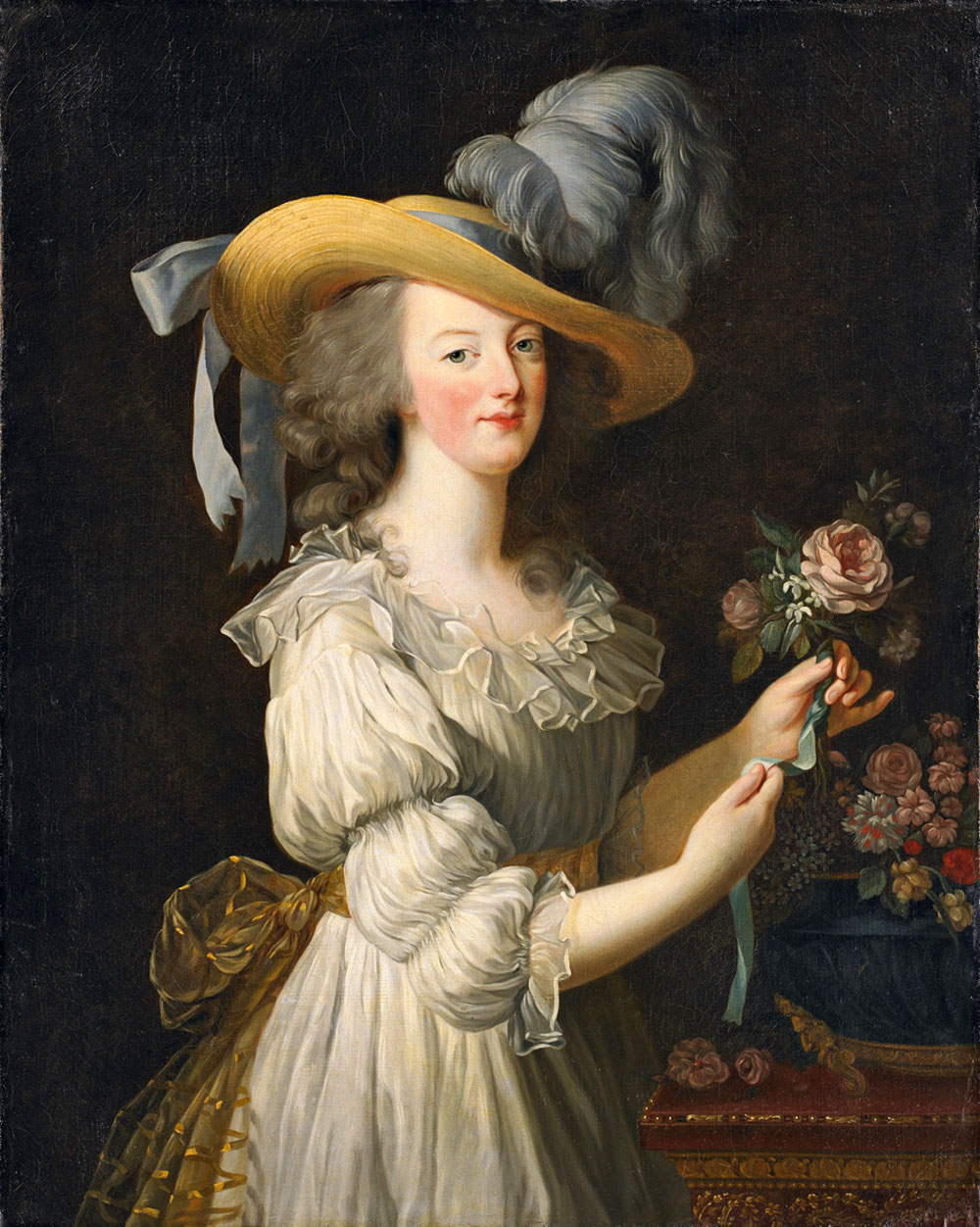
Marie Antoinette in a Muslin Dress
Élisabeth Louise Vigée Le Brun · 1783
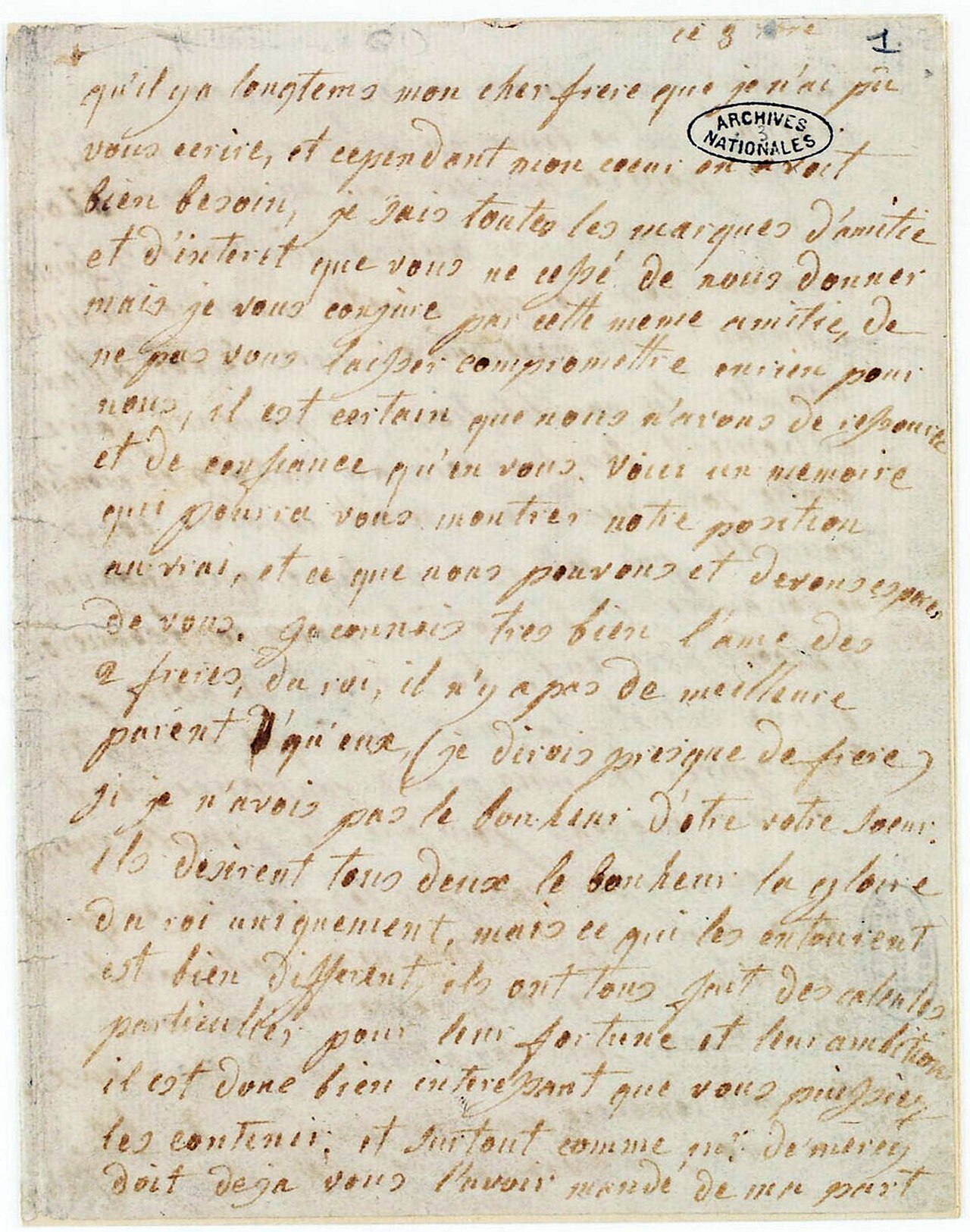 Letter
Primary source
Letter to Her Brother Emperor Leopold II
Marie Antoinette · 8 September 1791
 Artifact
Primary source
Petit Trianon
Ange-Jacques Gabriel · 1762-1768
Ready when you are
Start chatting with Marie Antoinette now.
20 messages free · No credit card · Available in 50+ languages.