


Primary sourceBook1837
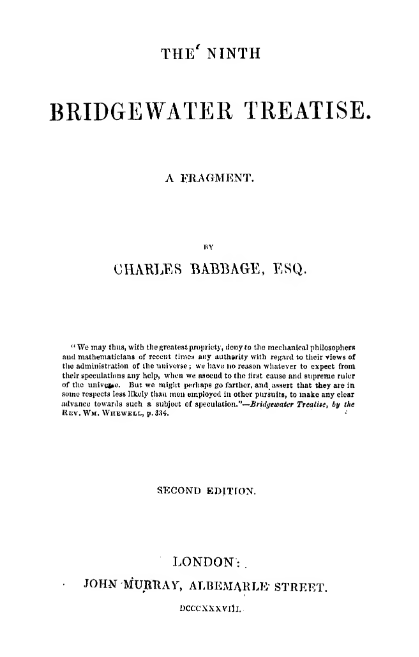
The Ninth Bridgewater Treatise
Charles Babbage · 1837
Babbage's 1837 book using the idea of a programmed calculating engine to argue, against critics, that mathematicians could speak meaningfully about God and nature.
Babbage wrote this book himself, using his calculating engine as a metaphor for God's design of nature.
Free Humy account · No credit card · 120,912 sources to read
About this source
What it is
This book was written by Charles Babbage and published in 1837 as an unauthorised addition to the official series of Bridgewater Treatises, which had been commissioned to use science to support belief in God. Babbage was not one of the invited authors, and wrote this in response to a remark by William Whewell dismissing mathematicians from such debates.
Why it matters
Babbage argued that his own experience designing programmable calculating engines gave him a unique way to imagine God as a kind of divine programmer who built the universe's laws in from the start, rather than intervening later. He used his engine to explain miracles as outcomes of complex pre-set rules, discussed geology and Scripture, and drew on correspondence between scientists John Herschel and Charles Lyell. Scholars have noted the book's ideas later influenced writers like Charles Dickens and Edgar Allan Poe.
Look closer
- Why might an engineer think his machine was a good way to explain religious questions?
- What does this book suggest about how Victorians tried to connect science and religion?
- What parts of Babbage's argument might seem strange or convincing to readers today?
This book is part of the curated material that grounds the AI version of Charles Babbage on Humy.ai — when students ask about related events, the AI can quote it and cite it.
More Charles Babbage sources
Browse all 91 →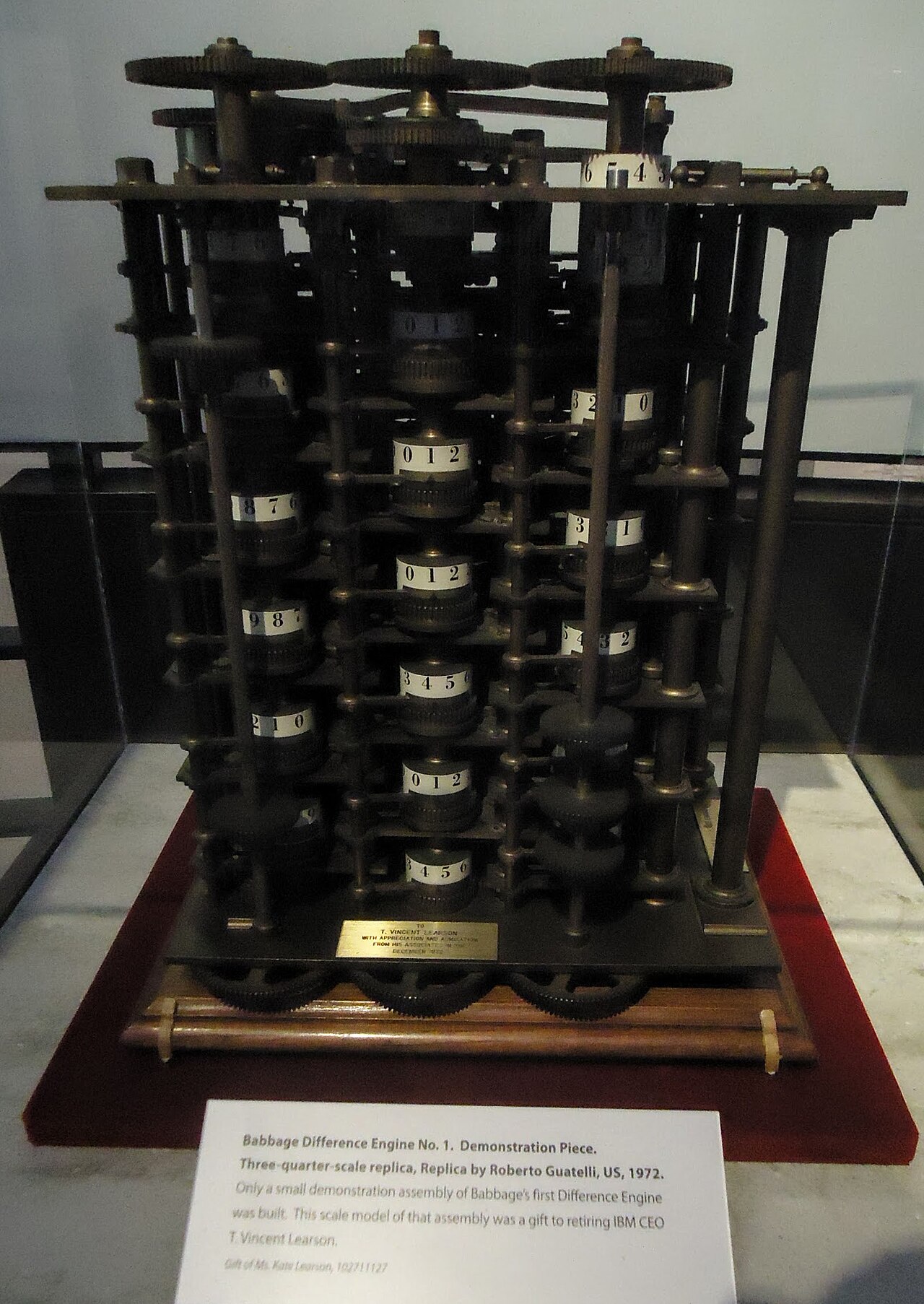 Artifact
Primary source
Difference Engine No. 1 Demonstration Piece
Charles Babbage; Joseph Clement · 1832
 Artifact
Primary source
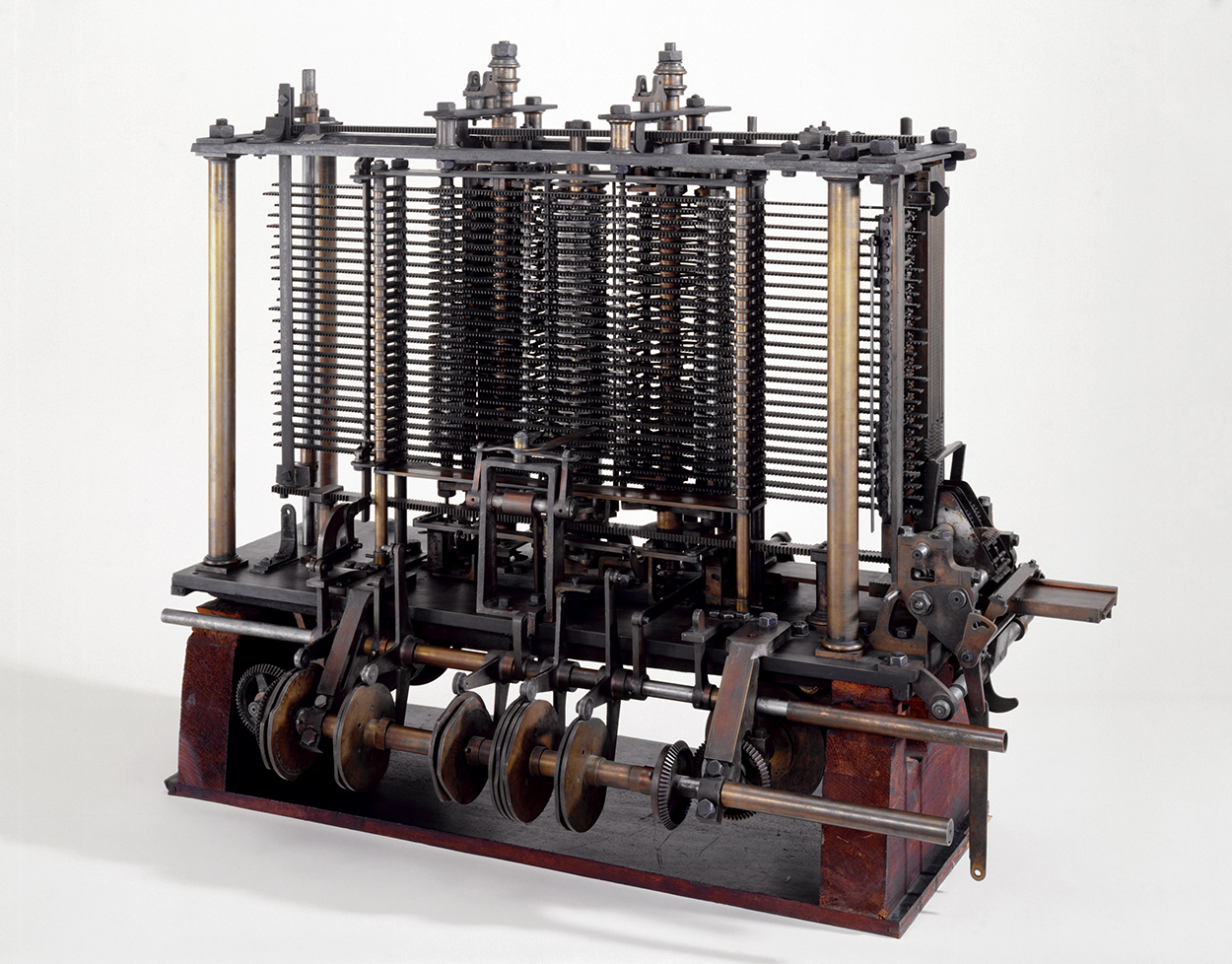
Babbage's Analytical Engine
Charles Babbage · 1871
Primary source
On the Economy of Machinery and Manufactures
Charles Babbage · 1832
Secondary source
Passages from the Life of a Philosopher
Charles Babbage · 1864
Free account
Read every Charles Babbage source
Sign up free →
Ready when you are
Start chatting with Charles Babbage now.
20 messages free · No credit card · Available in 50+ languages.