


Primary sourcePainting1908
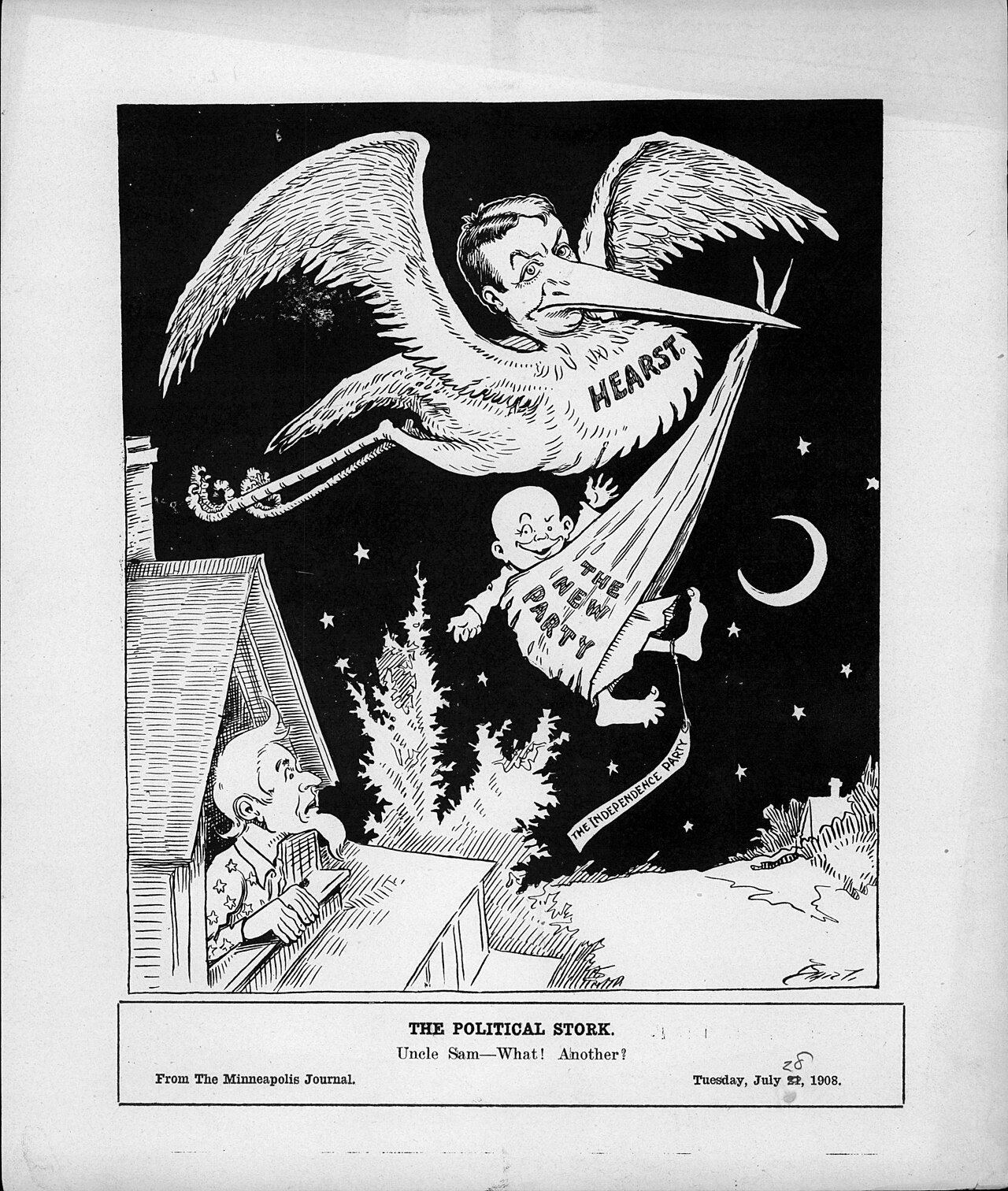
The Political Stork
Charles Lewis Bartholomew · 1908
A 1908 political cartoon showing Hearst as a stork delivering the new Independence Party to Uncle Sam, reflecting contemporary views of his political ambitions.
This cartoon satirizes Hearst's role in founding the Independence Party, showing how contemporaries viewed his political ambitions.
About this source
What it is
This is a political cartoon by Charles Lewis Bartholomew, published in 1908. It shows William Randolph Hearst drawn as a stork with a man's face, carrying a baby labeled 'The New Party' representing the Independence Party, which Hearst helped launch. Uncle Sam watches from a window below with a frown.
Why it matters
Hearst was not only a newspaper publisher but also an active political figure who tried to build his own party. This cartoon captures how the public and press viewed his political ambitions at the time, often with skepticism or amusement, as suggested by Uncle Sam's weary reaction ('What! Another?').
Look closer
- Why did the cartoonist choose to draw Hearst as a stork delivering a baby?
- What does Uncle Sam's expression suggest about public reaction to new political parties?
- How might this cartoon reflect bias or opinion rather than neutral reporting?
This painting is part of the curated material that grounds the AI version of William Randolph Hearst on Humy.ai — when students ask about related events, the AI can quote it and cite it.
More William Randolph Hearst sources
Browse all 93 →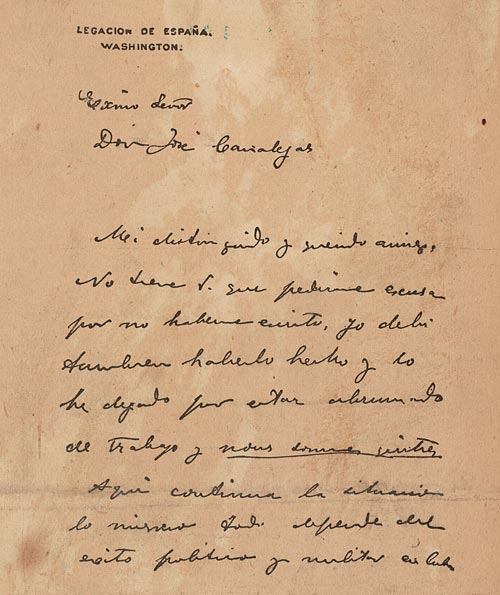 Letter
Primary source
De Lôme Letter
Enrique Dupuy de Lôme · 9 February 1898
 Painting
Primary source
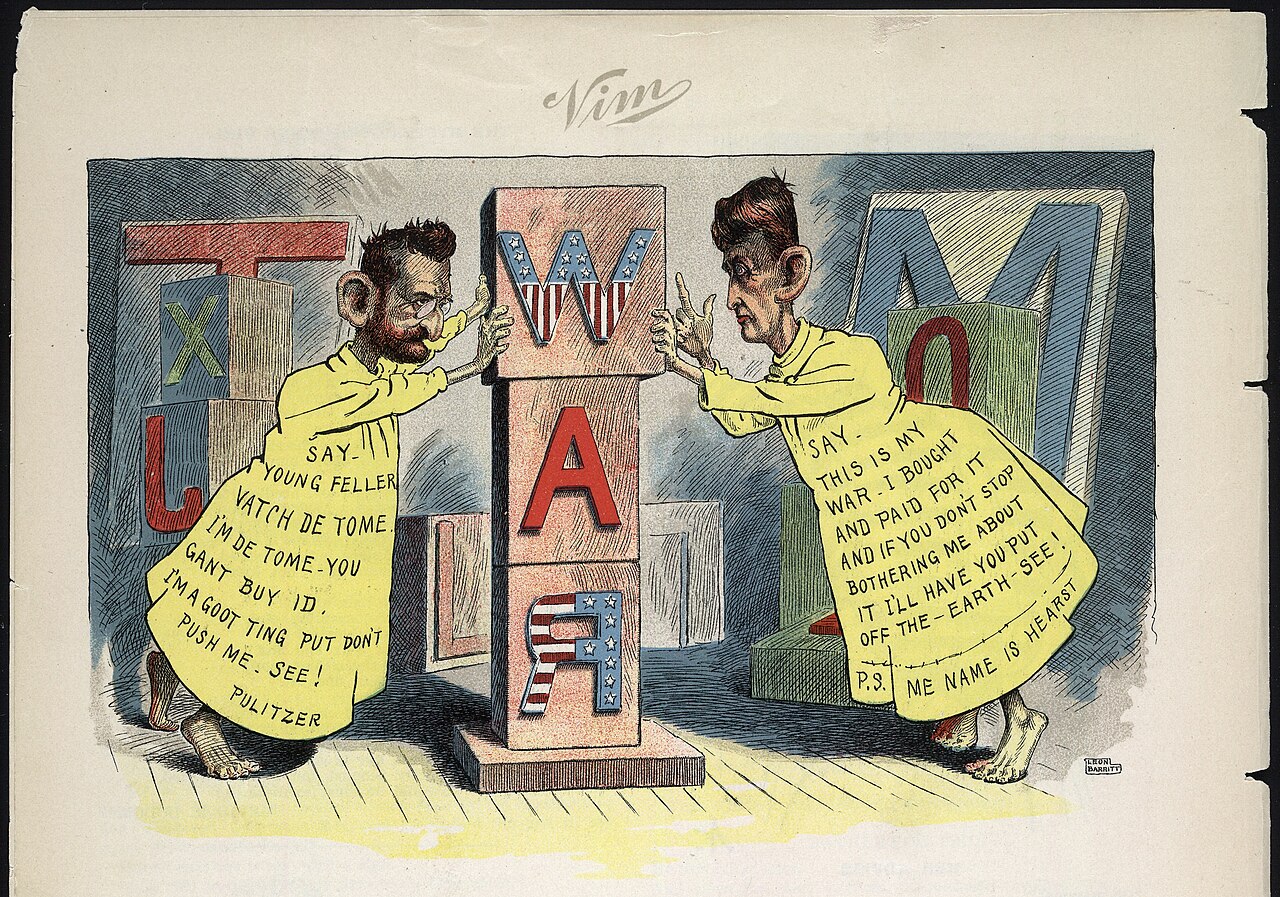
The Big Type War of the Yellow Kids
Leon Barritt · 1898
 Artifact
Primary source
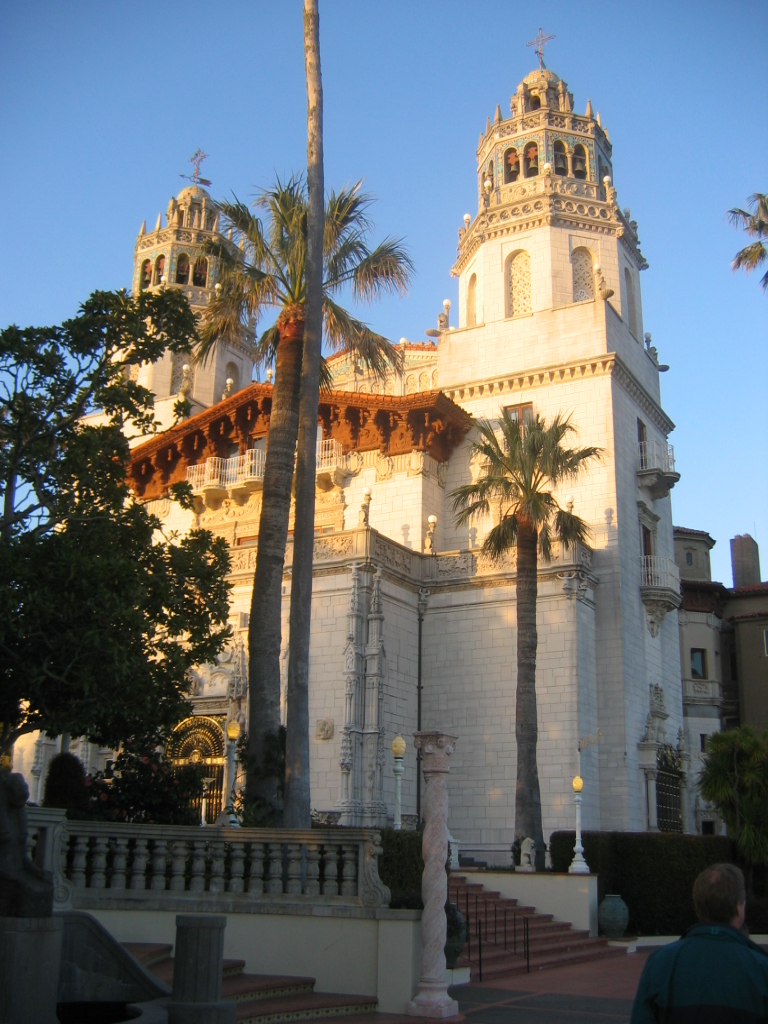
Hearst Castle
Julia Morgan · 1919-1947
 Photograph
Primary source
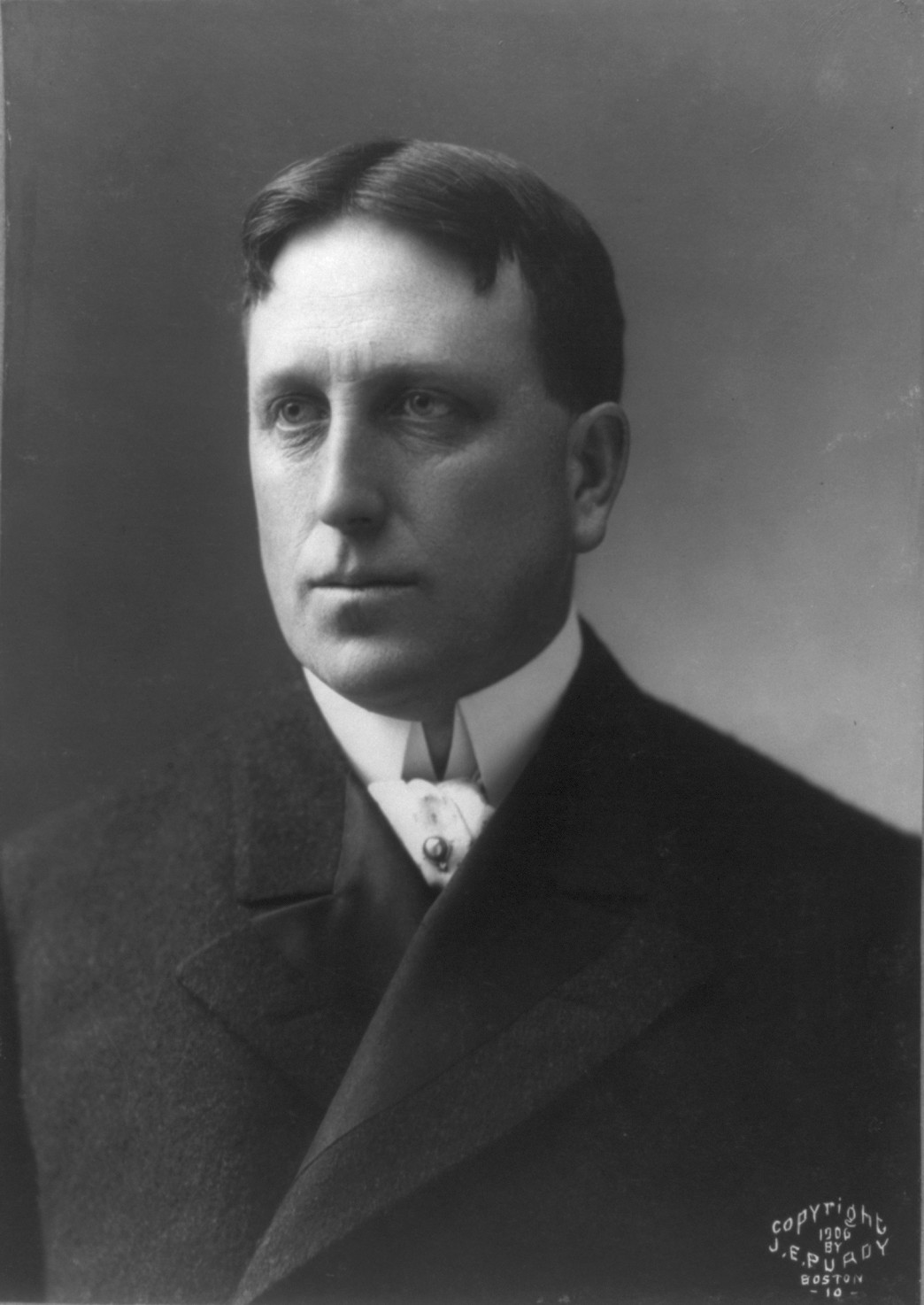
Portrait of William Randolph Hearst
James E. Purdy · 1906
Free account
Read every William Randolph Hearst source
Sign up free →
Ready when you are
Start chatting with William Randolph Hearst now.
20 messages free · No credit card · Available in 50+ languages.