


Secondary sourcePainting1844
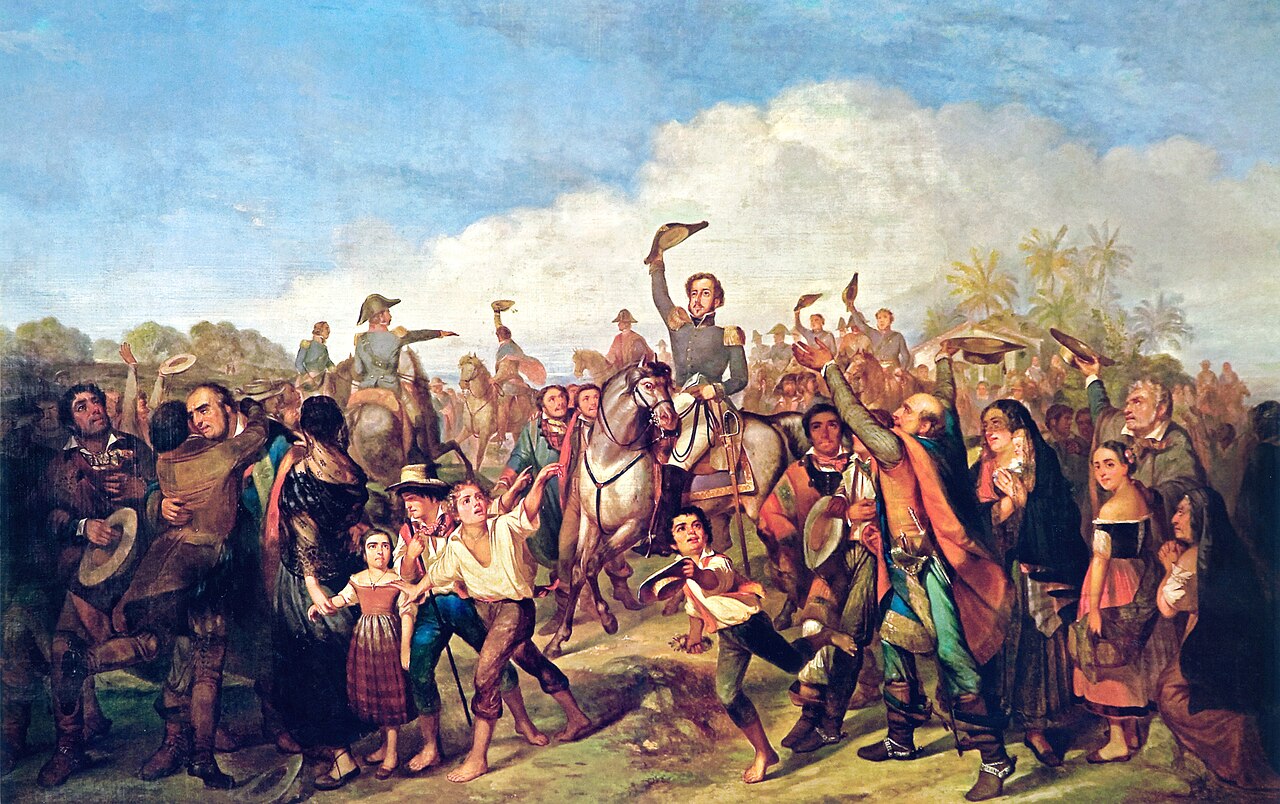
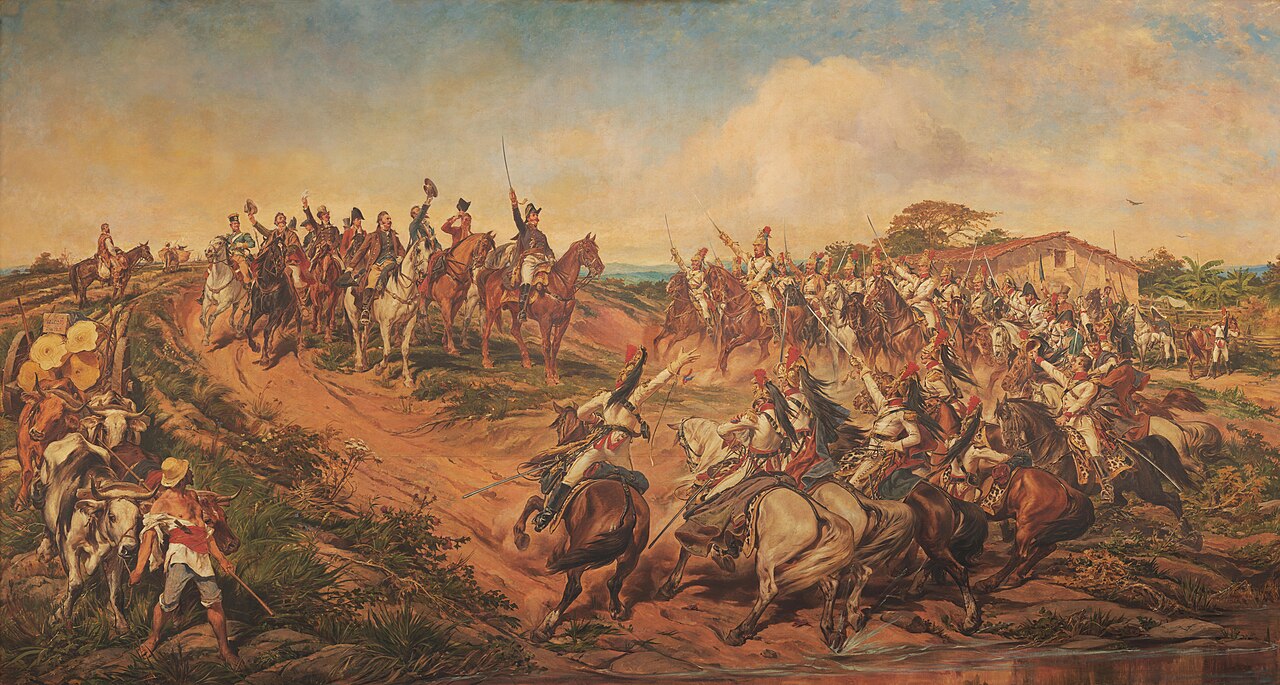
The Proclamation of the Independence of Brazil
François-René Moreaux · 1844
An 1844 painting by François-René Moreaux imagining the moment Pedro I declared Brazil's independence from Portugal.
Depicts Pedro I at the moment of proclaiming Brazil's independence, the central legendary act of his reign.
About this source
What it is
This large painting was made in 1844 by François-René Moreaux and shows the famous Ipiranga scene, in which a man in military uniform on horseback is surrounded by a cheering crowd. It is held by the Imperial Museum of Brazil.
Why it matters
The scene depicts Emperor Pedro I at the moment traditionally linked to Brazil's declaration of independence from Portugal. Painted decades after the event by Moreaux, it reflects how later generations imagined and mythologized this founding moment, and can be compared with other artists' versions, such as Pedro Américo's later canvas, to see how the story changed over time.
Look closer
- What emotions does the crowd's body language convey, and why might the painter have chosen to show it this way?
- Since this was painted years after the event, what parts of the scene might be invented or idealized?
- How does comparing this painting to other versions of the same scene change how you think about historical
This painting is part of the curated material that grounds the AI version of Pedro I of Brazil on Humy.ai — when students ask about related events, the AI can quote it and cite it.
More Pedro I of Brazil sources
Browse all 98 →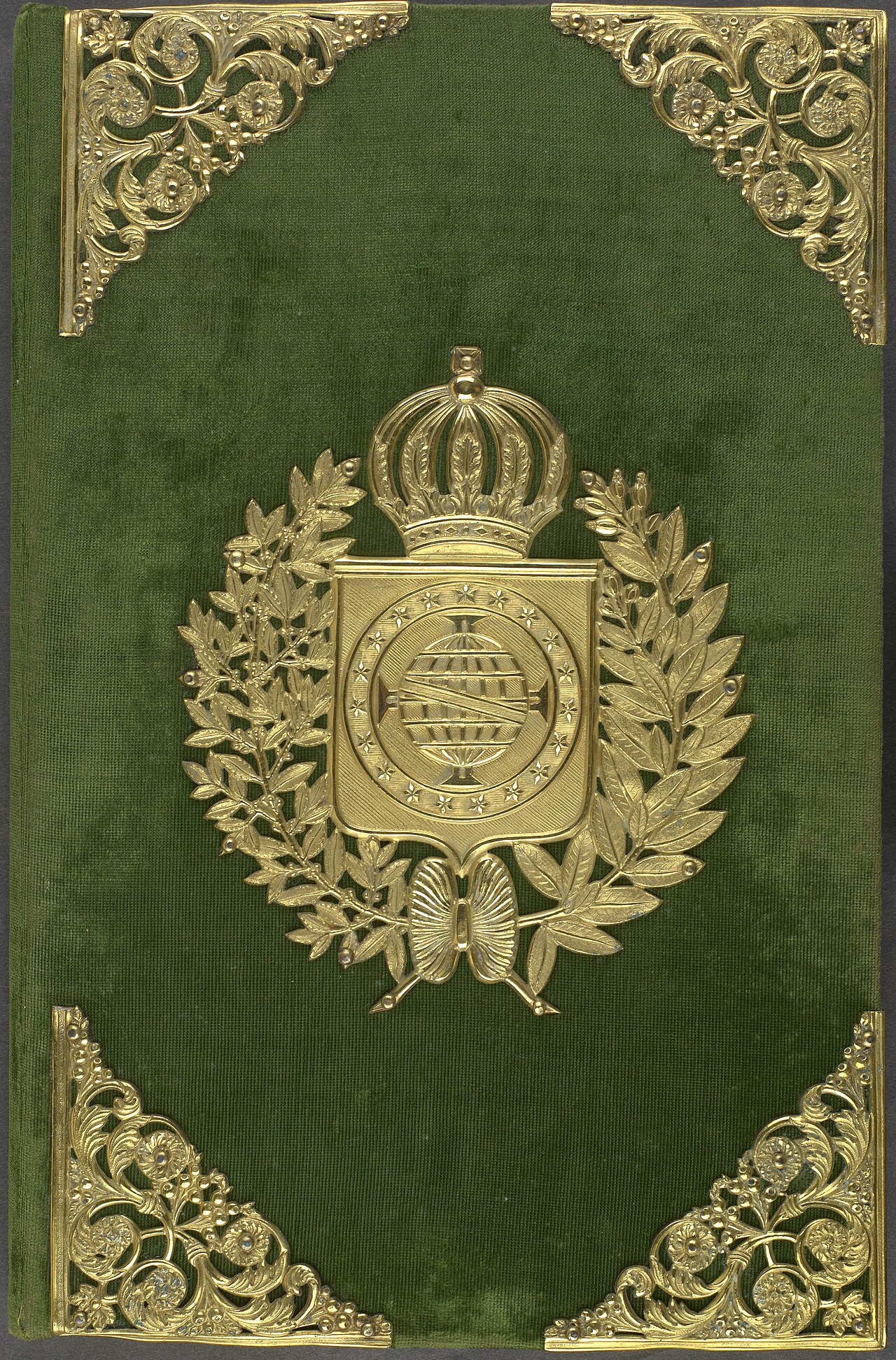 Document
Primary source
Constitution of the Empire of Brazil, 1824
State Council of the Empire of Brazil · 25 March 1824
 Document
Primary source
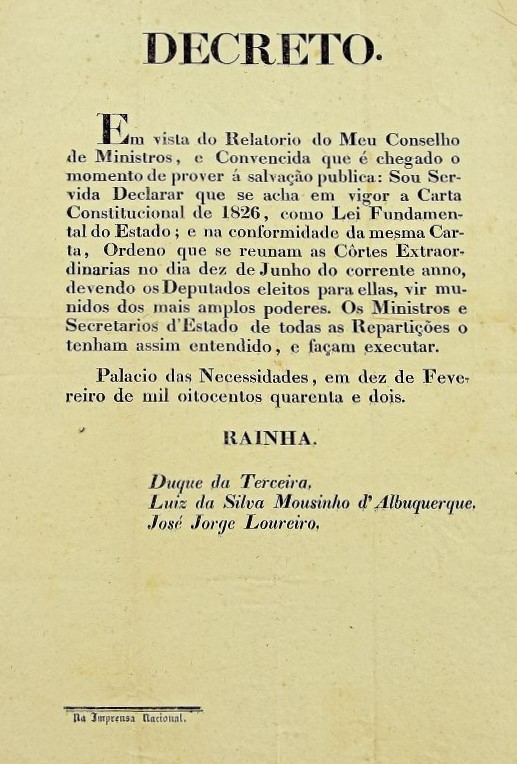
Charter of 1826
Pedro I of Brazil · 1826
 Book
Secondary source
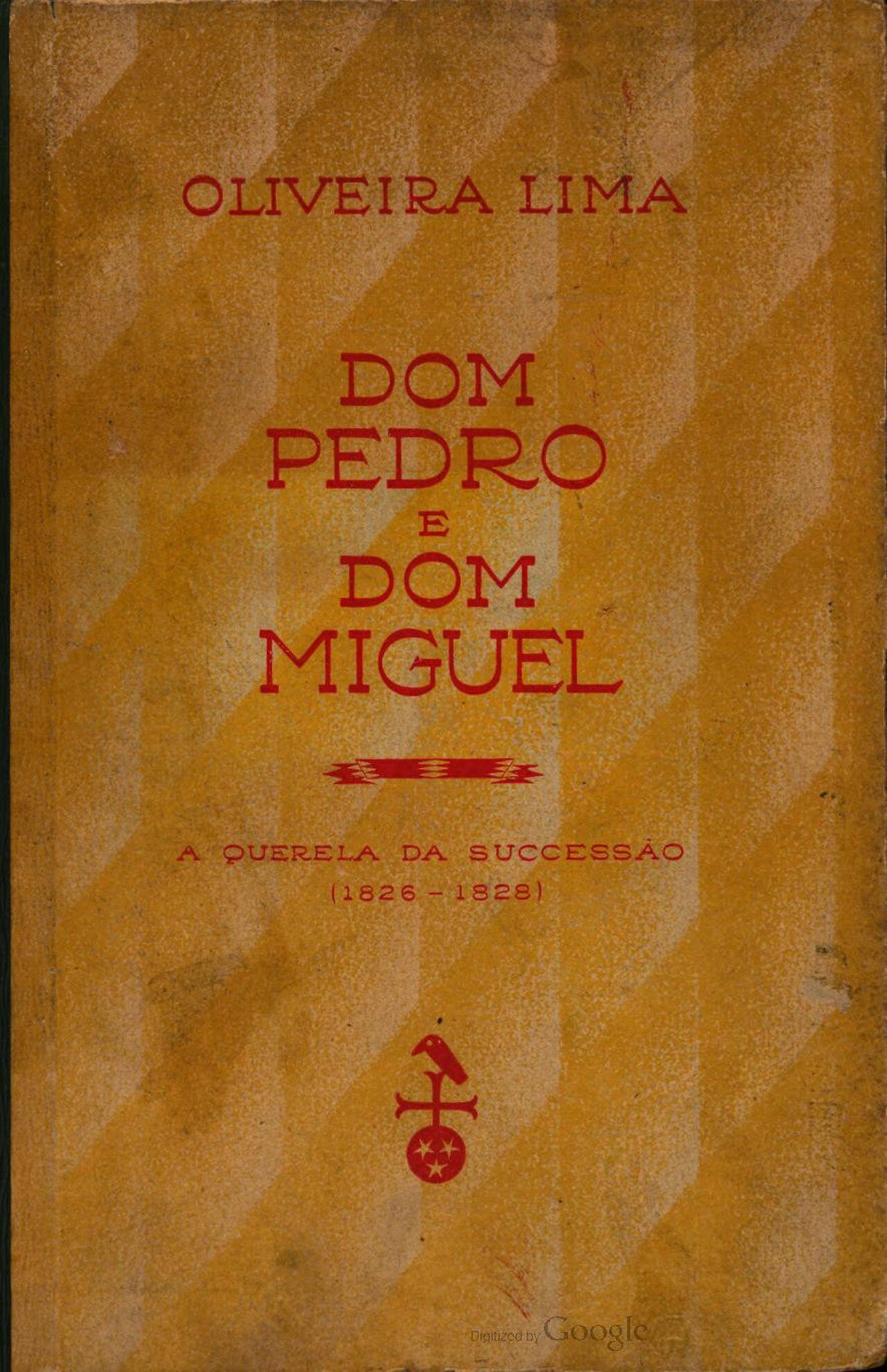
Dom Pedro e dom Miguel
Oliveira Lima
 Letter
Primary source
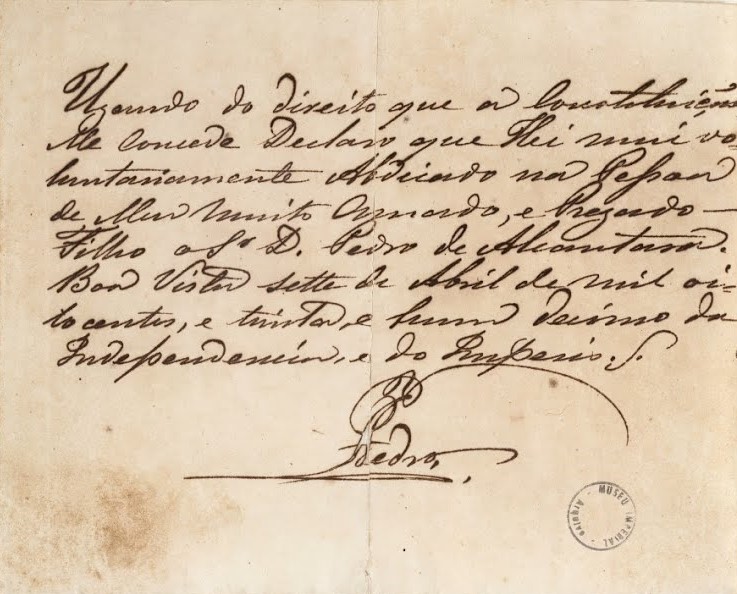
Letter of Abdication of 1831
Pedro I of Brazil · 7 April 1831
Free account
Read every Pedro I of Brazil source
Sign up free →
Ready when you are
Start chatting with Pedro I of Brazil now.
20 messages free · No credit card · Available in 50+ languages.