


Secondary sourcePainting1722
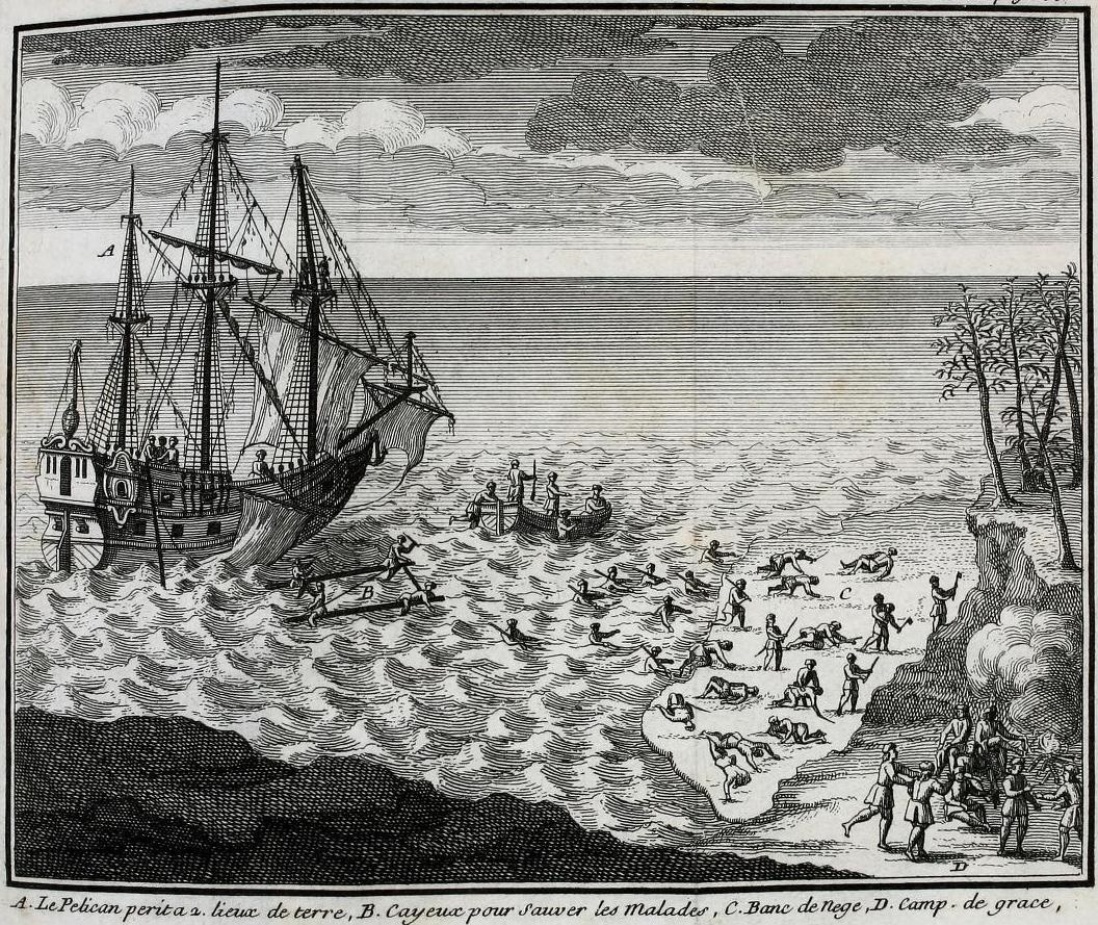
The Sinking of the Pelican
Unknown · 1722
An engraving showing the loss of the Pélican, Iberville's flagship, after his victory at the Battle of Hudson's Bay in 1697.
The image shows the sinking of Iberville's own flagship, the Pélican, after his naval victory at Hudson Bay.
About this source
What it is
This engraving by an unknown artist shows the French ship Pélican sinking after the Battle of Hudson's Bay in 1697. It comes from Claude-Charles Bacqueville de La Potherie's Histoire de l'Amérique septentrionale, printed in Paris in 1722, and is held by Library and Archives Canada.
Why it matters
The Pélican was Iberville's flagship. Even after his victory in the battle, the ship was lost, showing how dangerous and uncertain naval warfare and exploration in North America could be, regardless of military success.
Look closer
- What is happening to the people in the small boats and in the water?
- Why might an artist choose to record a shipwreck rather than only a victory?
- This image was made twenty-five years after the event — how might that affect its accuracy?
This painting is part of the curated material that grounds the AI version of Pierre Le Moyne d'Iberville on Humy.ai — when students ask about related events, the AI can quote it and cite it.
More Pierre Le Moyne d'Iberville sources
Meet the AI Pierre Le Moyne d'Iberville →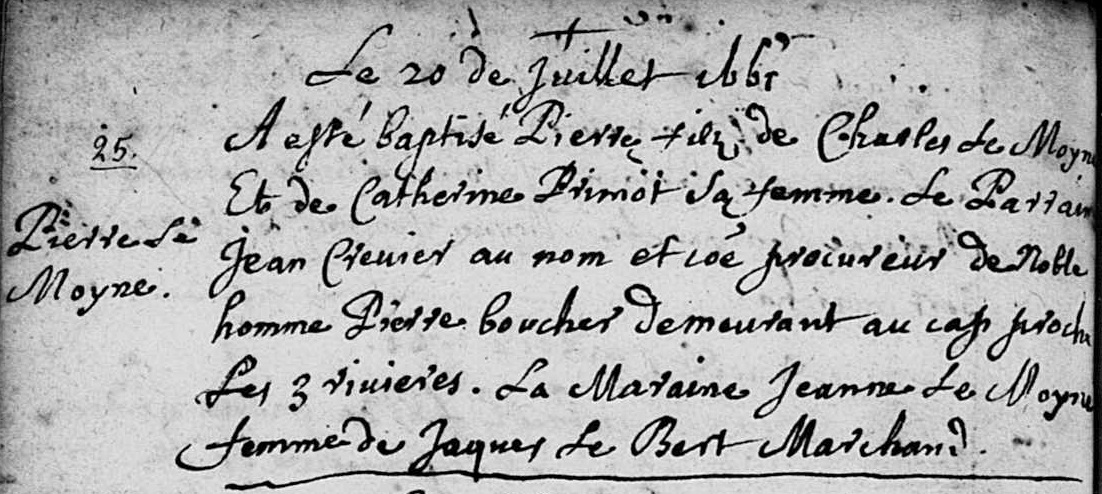 Document
Primary source
Baptismal Record of Pierre Le Moyne d'Iberville
Église catholique du Québec · 20 July 1661
 Book
Primary source
Histoire de l'Amérique septentrionale
Claude-Charles Le Roy de Bacqueville de La Potherie · 1722
 Diary entry
Primary source
Journal de l'expédition du chevalier de Troyes à la baie d'Hudson
Pierre de Troyes · 1686
 Artifact
Primary source
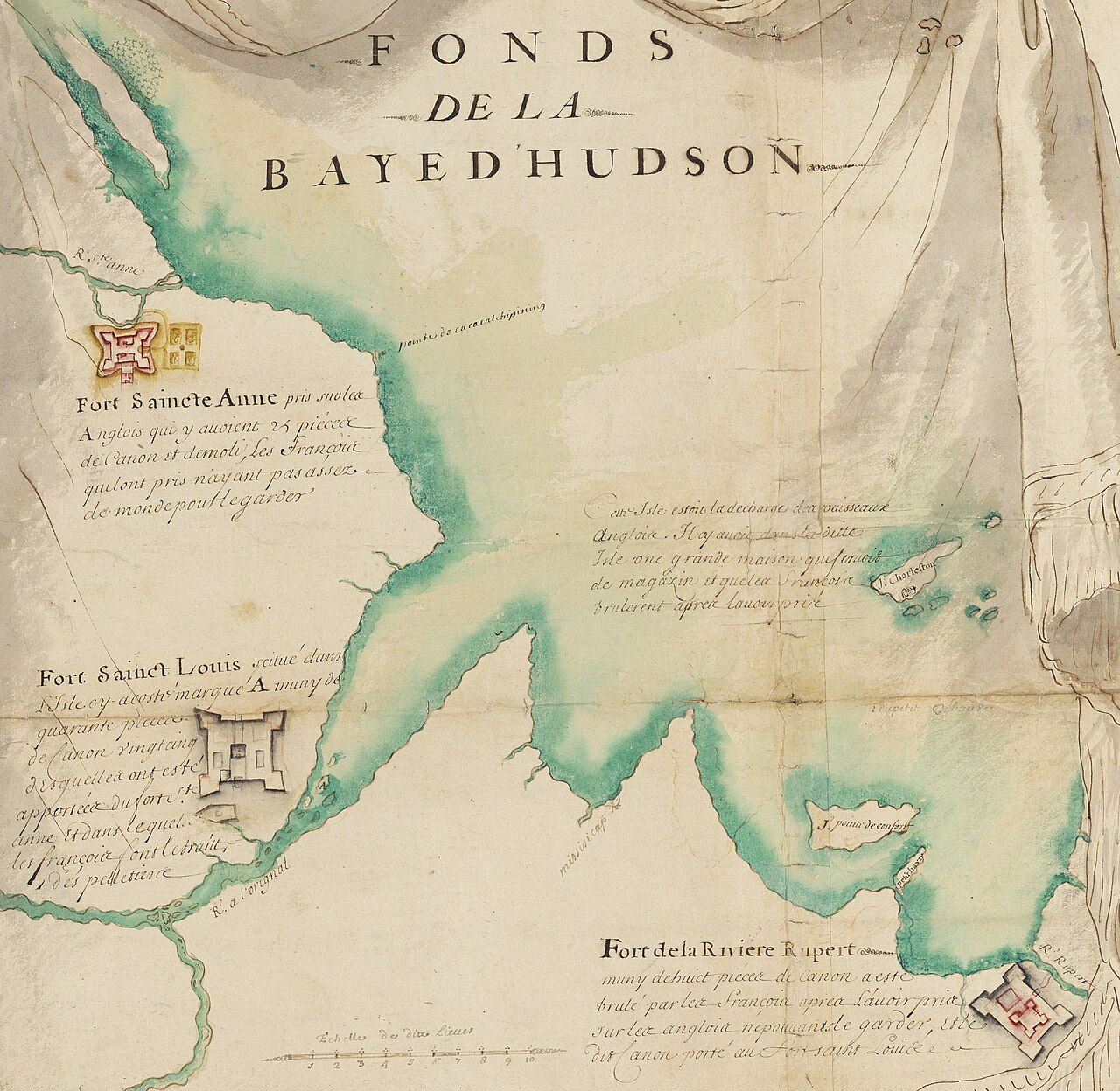
Fond de la baie d'Hudson avec les forts anglais pris par les Français en 1686
Pierre Allemand · 1686-1687
 Painting
Primary source
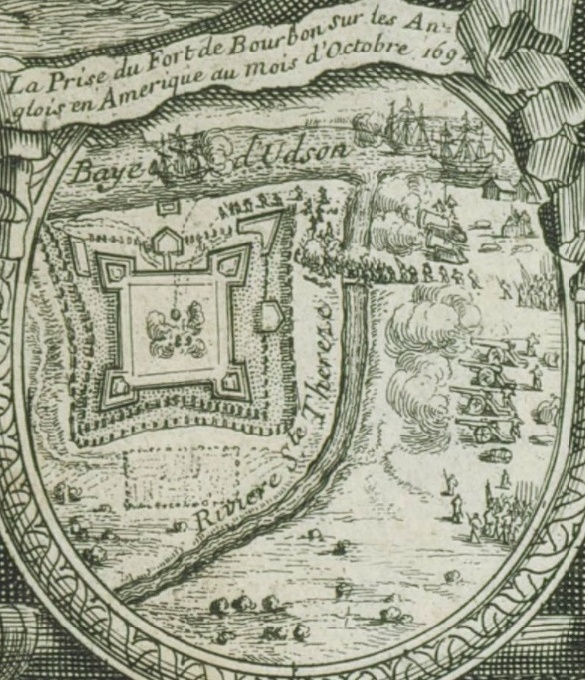
La prise du fort Bourbon dans la baie d'Hudson en 1694 par les Français
Nicolas Langlois · 1694
Ready when you are
Start chatting with Pierre Le Moyne d'Iberville now.
20 messages free · No credit card · Available in 50+ languages.