


Primary sourcePainting1800
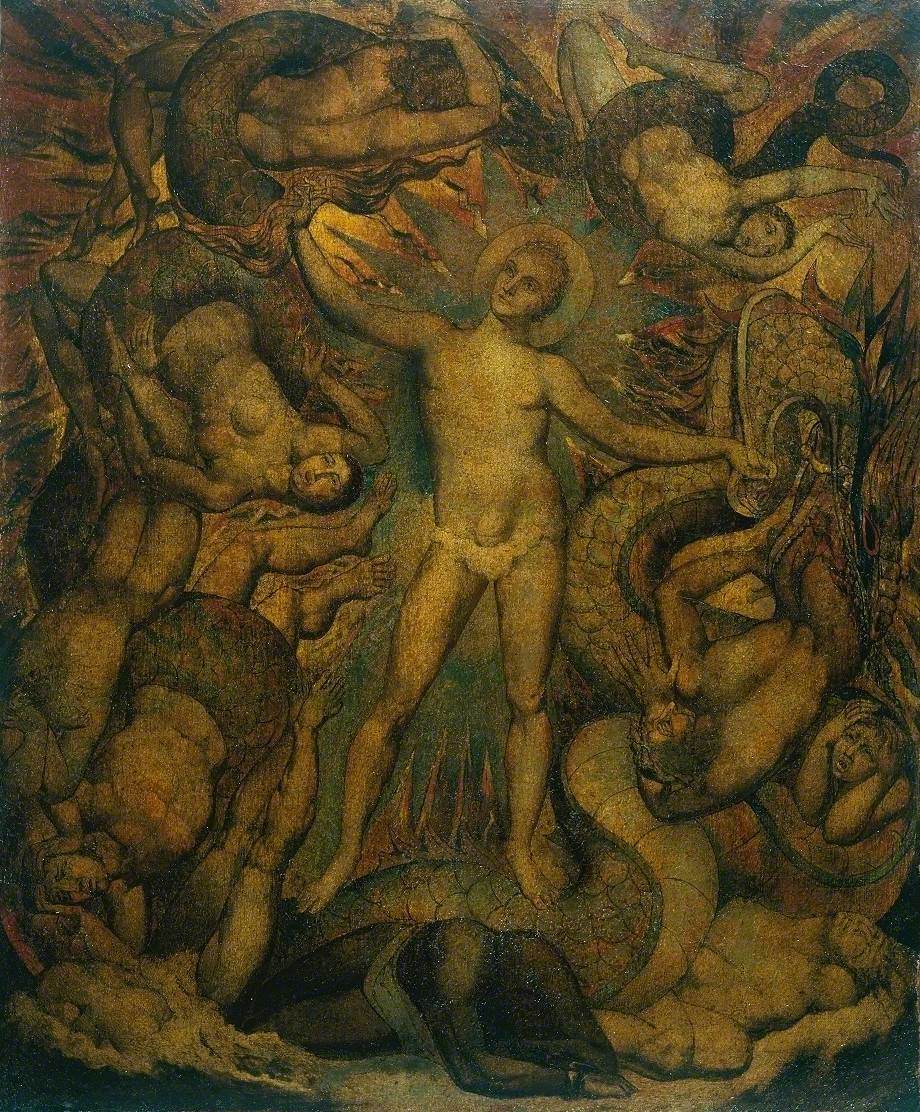
The Spiritual Form of Nelson guiding Leviathan
William Blake · 1800
A visionary painting by William Blake from 1800 showing a haloed, nude central figure standing on a serpent amid tangled figures, interpreted as Nelson.
Blake's visionary image presents Nelson as a quasi-divine agent of war, showing how Romantic artists reinterpreted him.
About this source
What it is
This painting by William Blake was made in 1800 and is held by the Tate. It shows a nude, haloed central figure standing on a coiled serpent, with arms outstretched. Around it are writhing, tangled nude figures in dark, swirling reds, golds and greens, in a turbulent, hellish scene. The painting is a visionary image that presents Nelson as a quasi-divine agent of war.
Why it matters
The painting shows how Romantic artists reinterpreted Nelson. Instead of a plain record of a naval hero, Blake gave him a spiritual and mythic role. The image reveals that Nelson was not only a military figure but also a symbol that artists could use to explore war, power and the meaning of victory.
Look closer
- What does the central figure stand on, and what might the serpent symbolise?
- Why might the artist have chosen to show many nude figures in distress around the hero?
- Does this image tell us what Nelson actually did, or what the artist thought his victories meant?
This painting is part of the curated material that grounds the AI version of Horatio Nelson, 1st Viscount Nelson on Humy.ai — when students ask about related events, the AI can quote it and cite it.
More Horatio Nelson, 1st Viscount Nelson sources
Browse all 96 →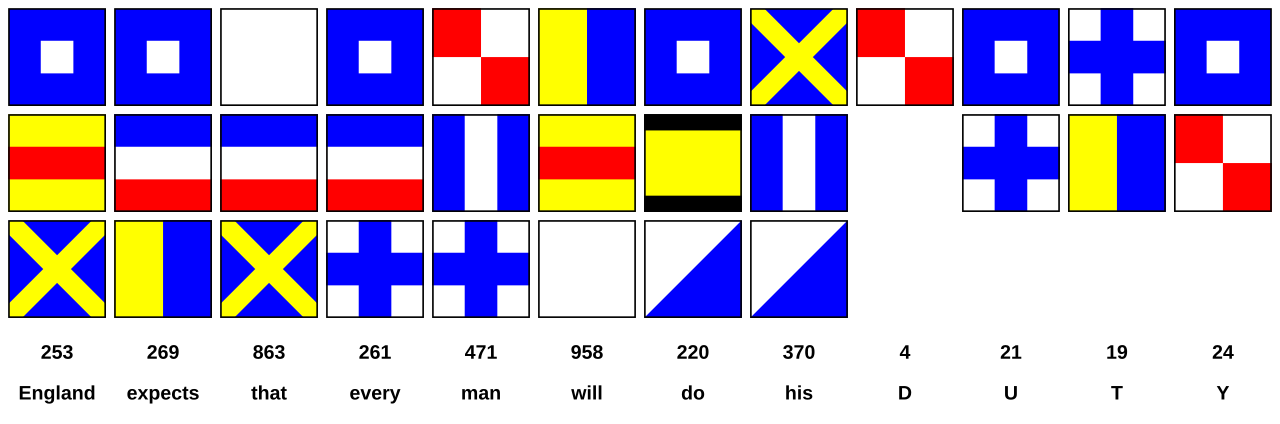 Document
Primary source
"England Expects" Signal
Horatio Nelson; John Pasco · 21 October 1805
Primary source
Codicil to Nelson's Will
Horatio Nelson · 21 October 1805
 Artifact
Primary source
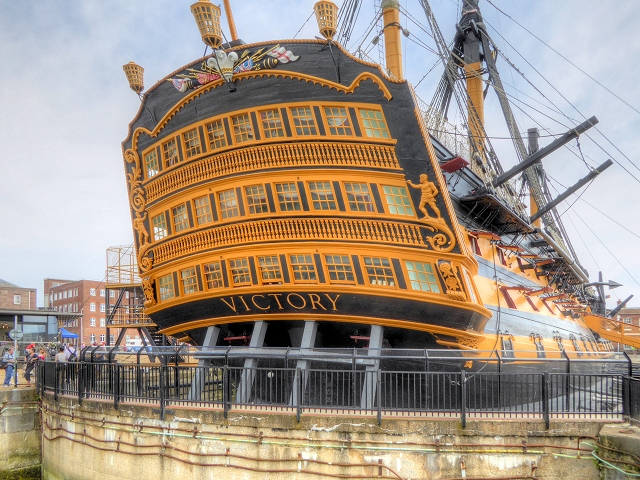
HMS Victory
1765 (built); 1805 (Trafalgar)
 Artifact
Primary source
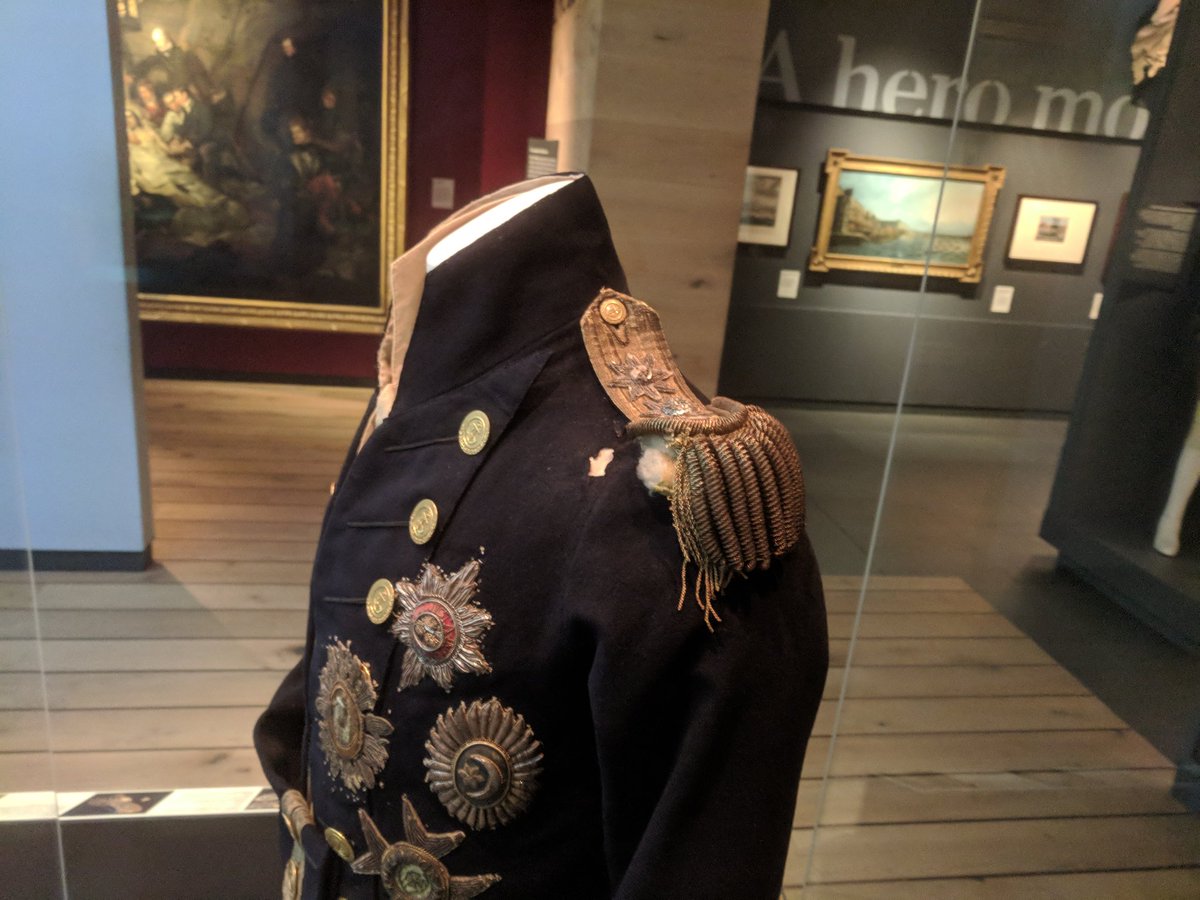
Nelson's Trafalgar Uniform Coat
c. 1805
Free account
Read every Horatio Nelson, 1st Viscount Nelson source
Sign up free →
Ready when you are
Start chatting with Horatio Nelson, 1st Viscount Nelson now.
20 messages free · No credit card · Available in 50+ languages.