


Primary sourcePaintingc. 1515, published 1549
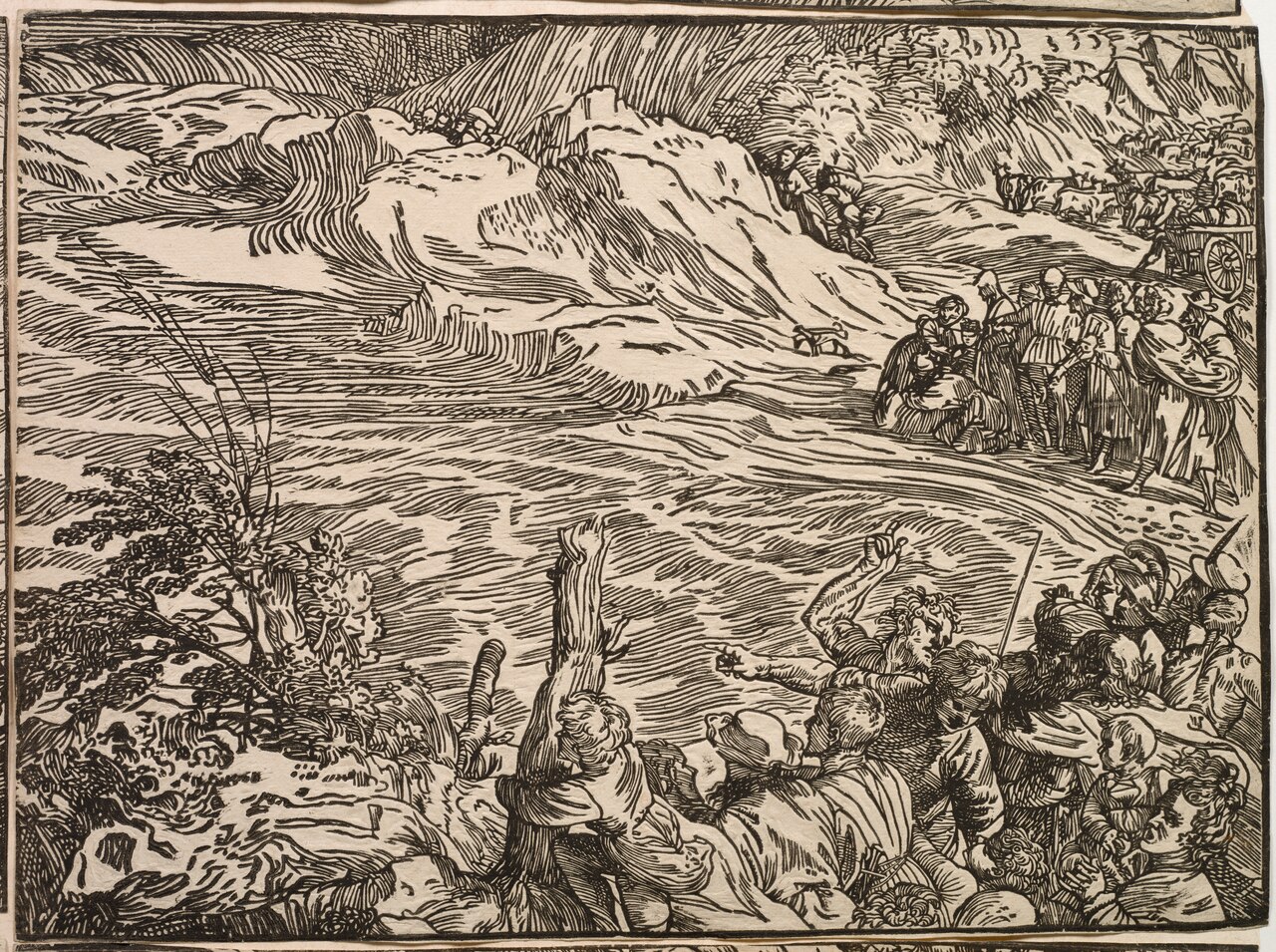
The Submersion of Pharaoh's Army in the Red Sea
Titian (design); Domenico dalle Greche (publisher) · c. 1515, published 1549
A monumental multi-block woodcut designed by Titian around 1515, showing the Egyptian army drowning in the Red Sea.
Designed by Titian, this woodcut shows how he used printmaking to spread his artistic inventions widely.
Free Humy account · No credit card · 120,912 sources to read
About this source
What it is
This enormous woodcut print was designed by Titian around 1515, carved into twelve blocks, and published by Domenico dalle Greche. Only a fragment of the first 1515 edition survives; the print is mainly known from a second edition printed in 1549. It is now held by the Metropolitan Museum of Art.
Why it matters
Titian never engraved himself, but he understood how prints could spread his reputation and ideas further than paintings alone. This huge design, meant to decorate walls like a painting, may also have carried a political message: some historians think the drowning Egyptians represented the League of Cambrai, an alliance that threatened Venice. The piece shows Titian's bold, loose drawing style, very different from the precise lines of printmakers like Albrecht Dürer.
Look closer
- Why would an artist design a print instead of, or alongside, a painting?
- How might the chaotic lines and waves make the viewer feel about the scene?
- What political message could this biblical story have carried in Titian's own time?
This painting is part of the curated material that grounds the AI version of Titian on Humy.ai — when students ask about related events, the AI can quote it and cite it.
More Titian sources
Browse all 98 →
Ready when you are
Start chatting with Titian now.
20 messages free · No credit card · Available in 50+ languages.