


Secondary sourcePainting1765
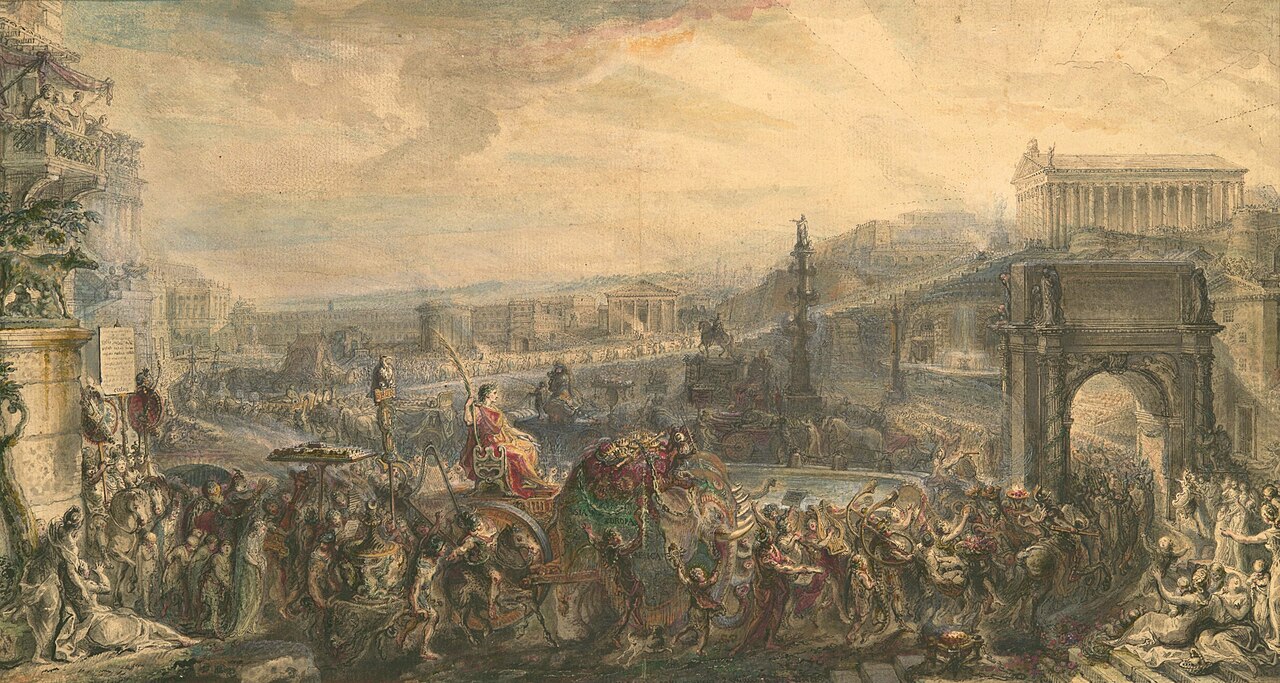
The Triumph of Pompey
Gabriel de Saint-Aubin · 1765
An 18th-century drawing imagining Pompey's triumphal procession through Rome, made long after his lifetime.
Imagines one of Pompey's triumphal processions, a ceremony central to his reputation as a victorious general.
About this source
What it is
A pen and wash drawing by Gabriel de Saint-Aubin, made in 1765, showing a Roman triumphal procession identified with Pompey. It depicts a chariot, soldiers, elephants, and crowds moving through a classical city.
Why it matters
Triumphs were grand Roman ceremonies celebrating military victories, and Pompey was famous for holding several. This drawing, made over 1,800 years after Pompey's death, shows how 18th-century artists imagined Roman glory using classical architecture and dramatic staging rather than historical evidence from Pompey's own time.
Look closer
- What makes this scene look grand and celebratory?
- Which details are the artist's own invention rather than historical fact?
- Why might 18th-century audiences have been interested in Roman triumphs?
This painting is part of the curated material that grounds the AI version of Pompey on Humy.ai — when students ask about related events, the AI can quote it and cite it.
More Pompey sources
Browse all 82 →
Ready when you are
Start chatting with Pompey now.
20 messages free · No credit card · Available in 50+ languages.