


Primary sourcePainting1886
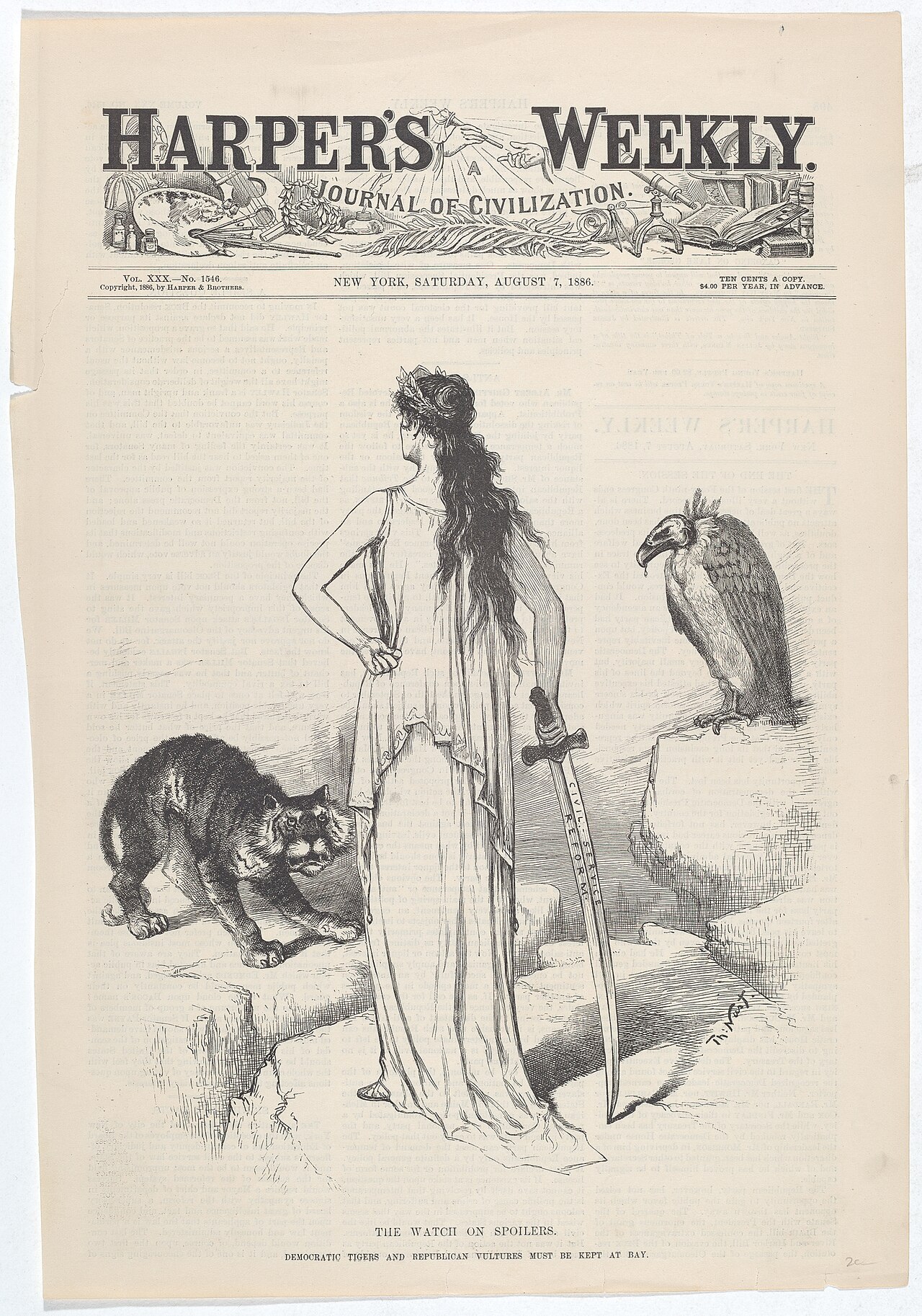
The Watch on Spoilers
Thomas Nast · 1886
An 1886 Harper's Weekly cartoon by Thomas Nast showing his independence from both major political parties.
Nast created this cartoon near the end of his career, showing his independent stance against corruption in both parties.
About this source
What it is
This engraving appeared in Harper's Weekly on August 7, 1886, during the last year of Nast's career there. It was created by cartoonist Thomas Nast and shows a robed woman holding a sword labeled 'Civil Service Reform,' standing between a crouching tiger and a perched vulture. It is held in the National Gallery of Art's print collection.
Why it matters
The cartoon shows Nast's 'Mugwump' political stance—independent of both the Democratic and Republican parties—as he criticized corruption ('spoilers') in both. It reflects his long career of using allegorical figures and animals to represent political forces.
Look closer
- What do the tiger and vulture represent, and why might Nast have chosen these animals for each party?
- What does the woman with the sword symbolize, and what is she defending?
- How does this cartoon show Nast's attitude toward political parties by this late point in his career?
This painting is part of the curated material that grounds the AI version of Thomas Nast on Humy.ai — when students ask about related events, the AI can quote it and cite it.
More Thomas Nast sources
Meet the AI Thomas Nast →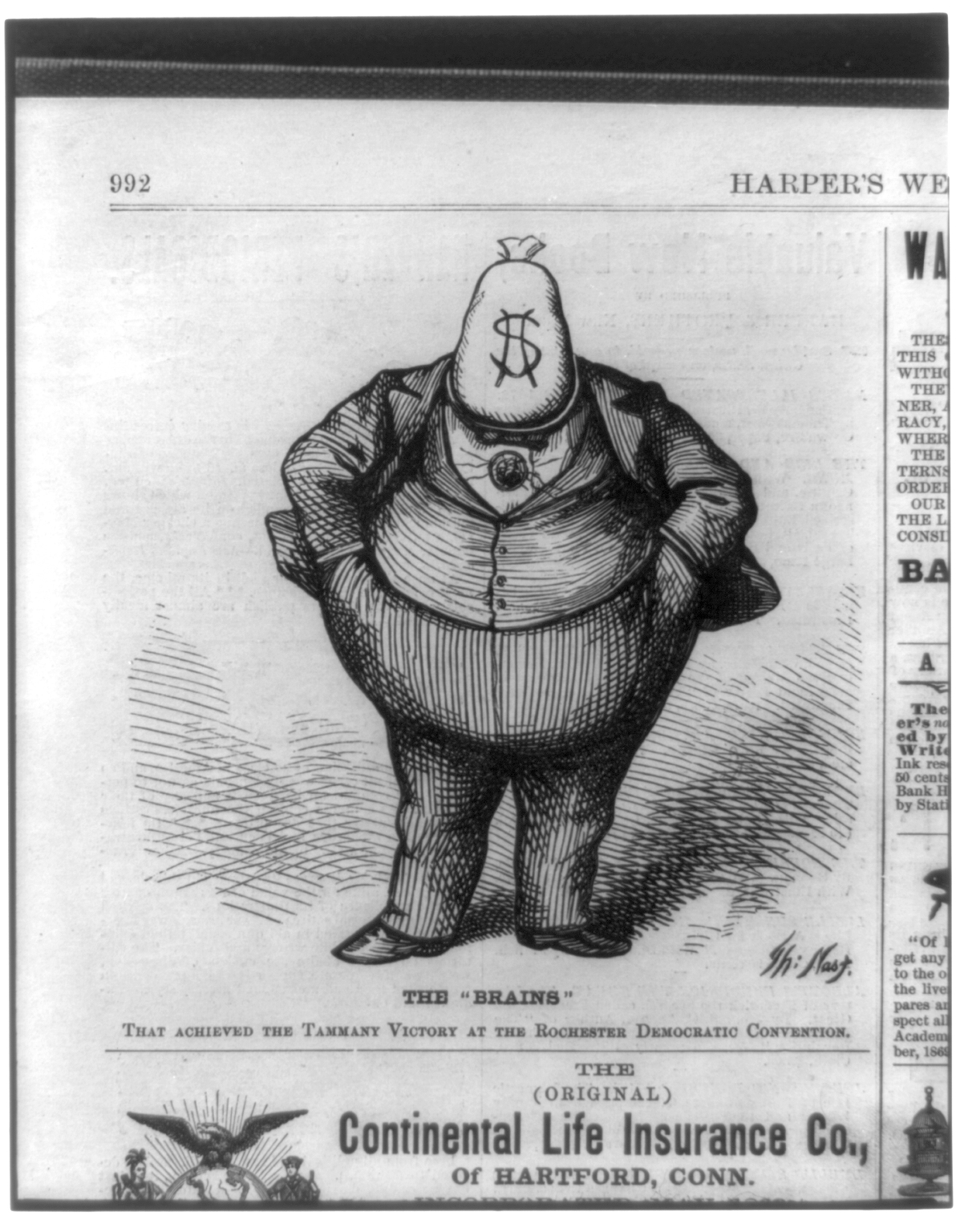 Painting
Primary source
The Brains
Thomas Nast · 21 October 1871
 Painting
Primary source
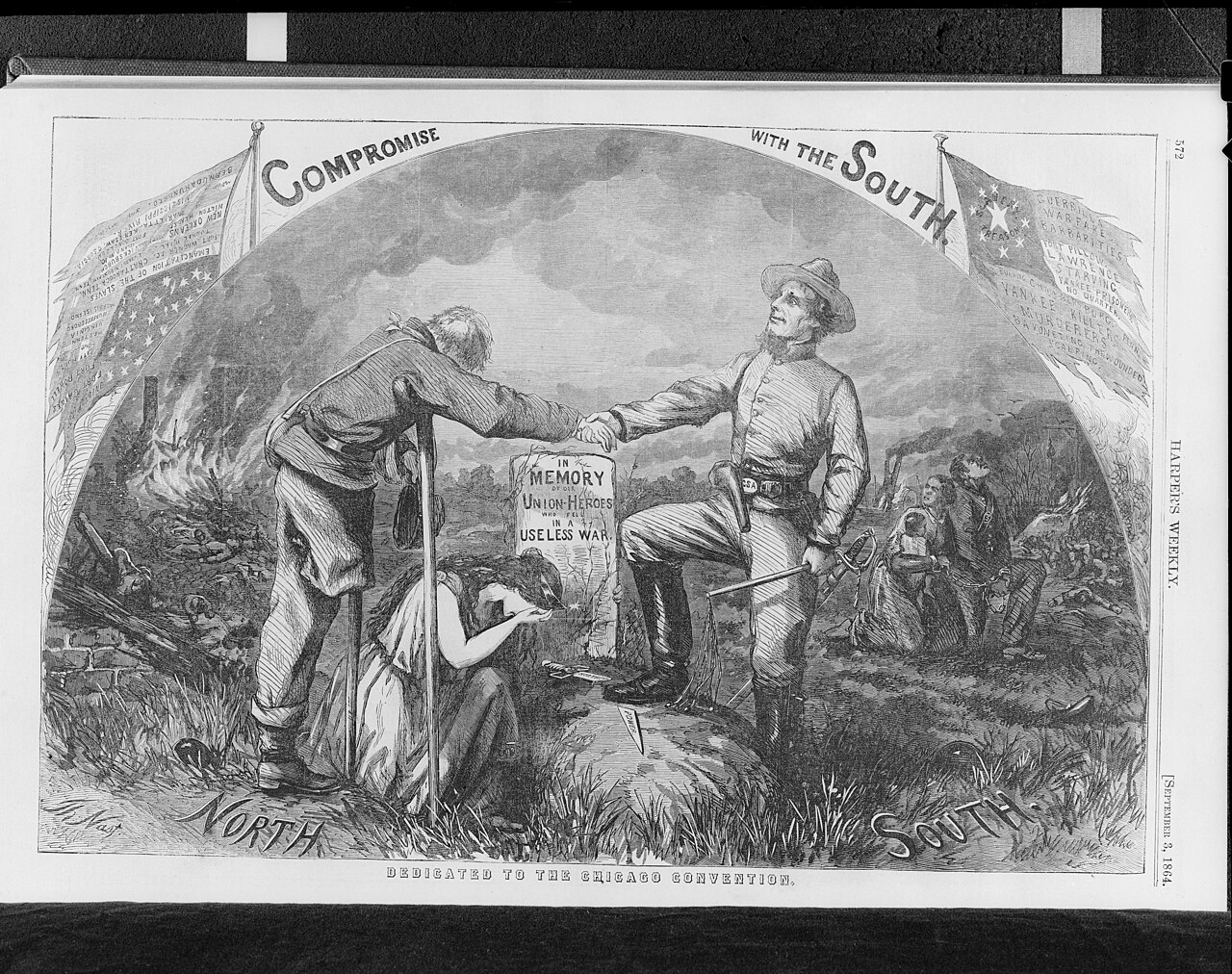
Compromise with the South—Dedicated to the Chicago Convention
Thomas Nast · 3 September 1864
 Painting
Primary source
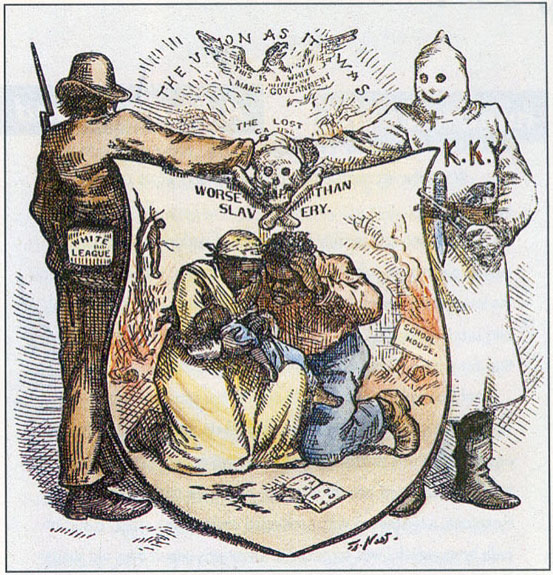
Worse than Slavery
Thomas Nast · 1874
 Painting
Primary source
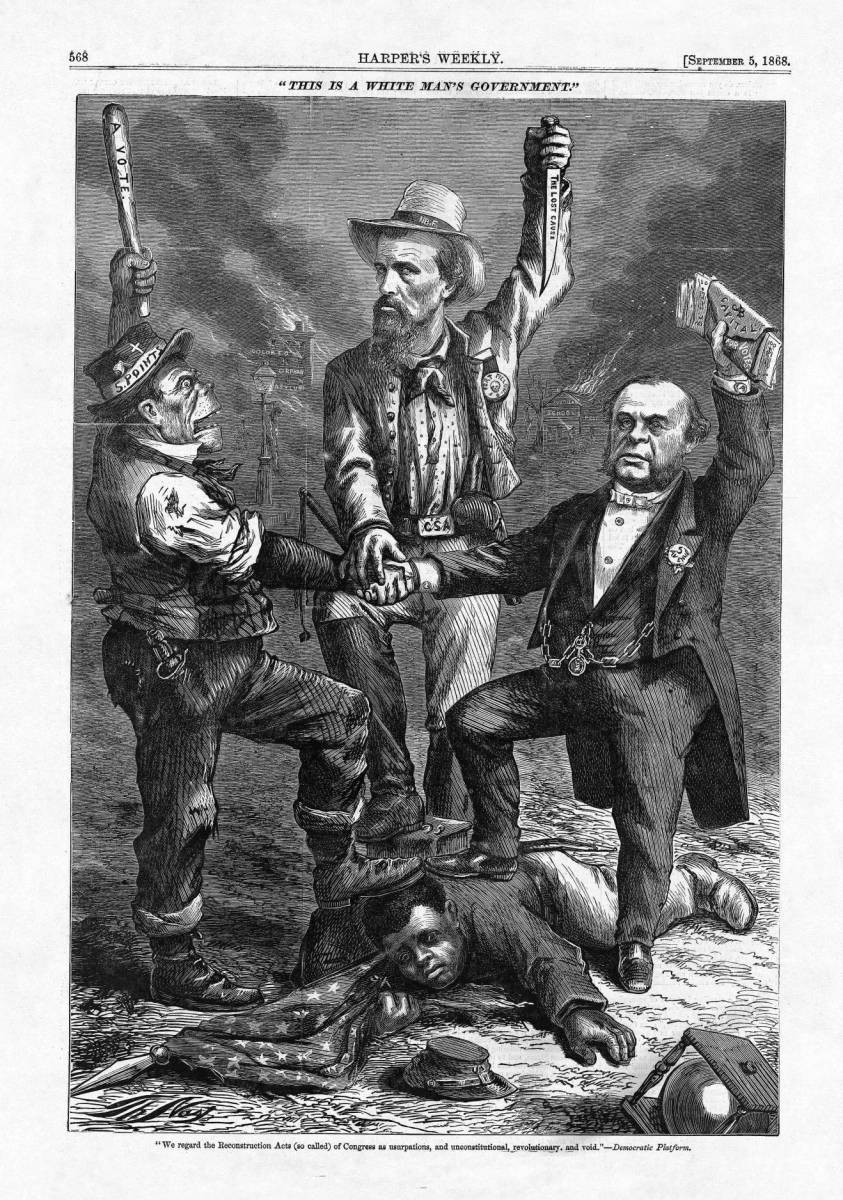
This Is a White Man's Government
Thomas Nast · 5 September 1868
 Painting
Primary source
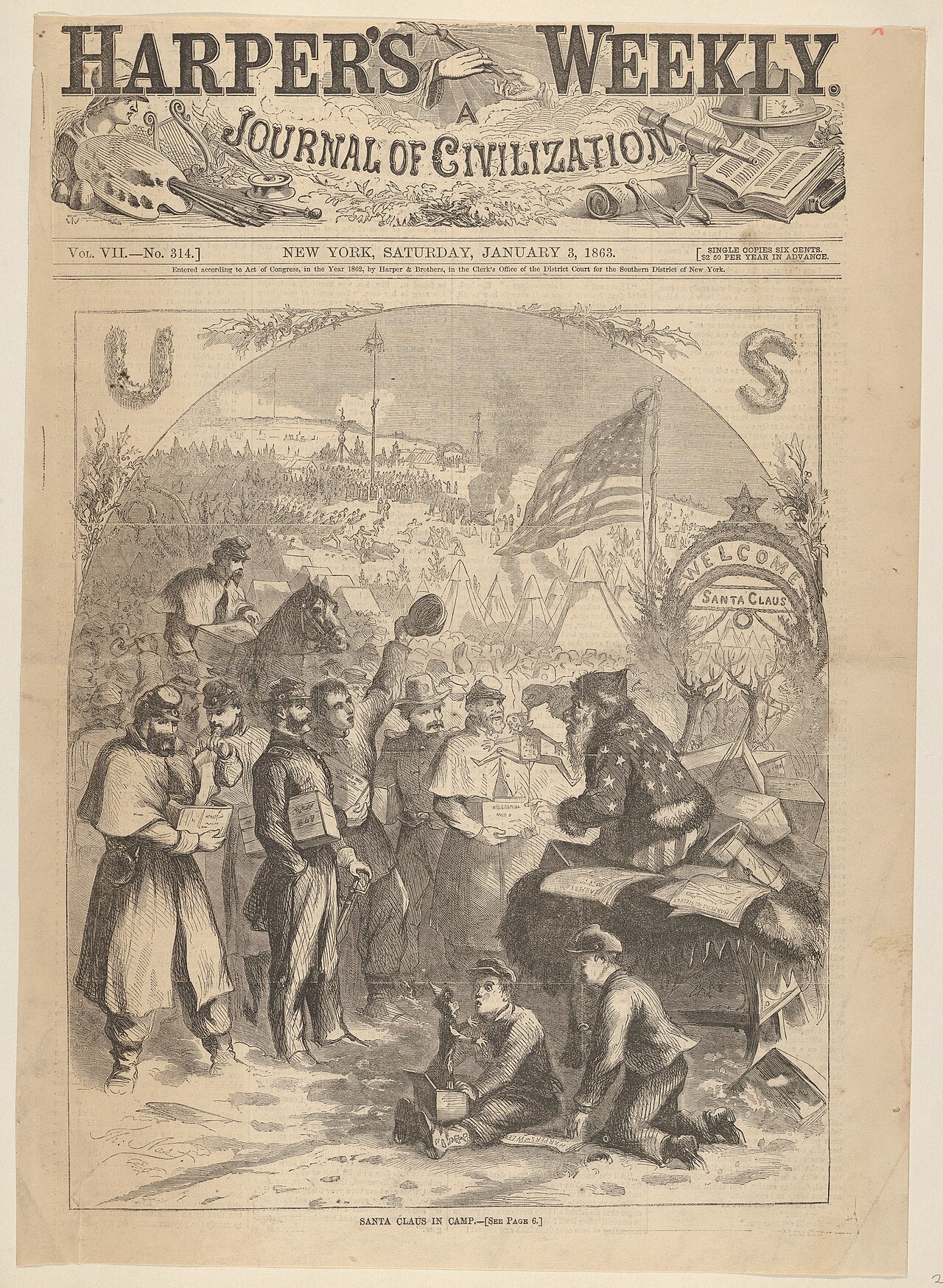
Santa Claus in Camp
Thomas Nast · 3 January 1863
Ready when you are
Start chatting with Thomas Nast now.
20 messages free · No credit card · Available in 50+ languages.