


Secondary sourcePhotograph2008
Théâtre des Champs-Élysées, Paris
Pline · 2008
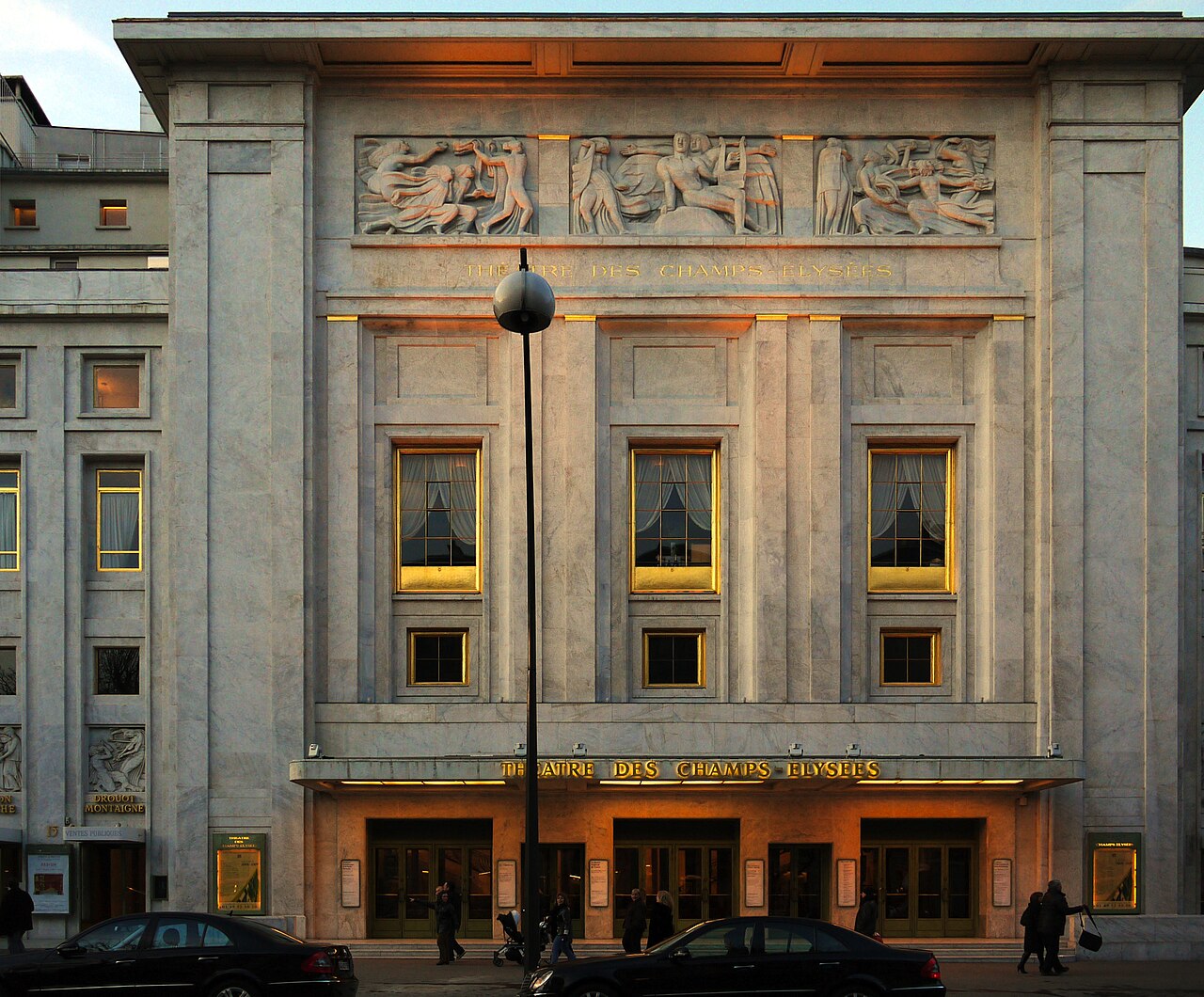
A 2008 photograph of the front façade of the Théâtre des Champs-Élysées in Paris, where Bourdelle's reliefs appear.
Shows the theatre whose façade reliefs were partly inspired by Duncan's dancing; the photo itself does not show her.
About this source
What it is
This is a modern photograph of the front façade of the Théâtre des Champs-Élysées in Paris, taken in November 2008. It shows pale stone walls, a row of carved relief panels above the entrance, the name in gold letters, tall lit windows, a street lamp and parked cars at dusk. The photograph is a recent image of the building, not an image from the time of Duncan.
Why it matters
The theatre is important because it displayed the Bourdelle reliefs that were partly inspired by Isadora Duncan's dancing. The building is a physical link between Duncan, the sculptor Antoine Bourdelle and the Paris performance world of the early 1910s. A modern photo like this one shows how the site looks today rather than what it looked like then.
Look closer
- What features of the building show that it was designed for public performance?
- Why might a photographer choose dusk and street details for this image?
- What does this photo leave out about the performances that took place inside?
This photograph is part of the curated material that grounds the AI version of Isadora Duncan on Humy.ai — when students ask about related events, the AI can quote it and cite it.
More Isadora Duncan sources
Browse all 91 →Primary source
My Life
Isadora Duncan · 1927
Primary source
The Dance of the Future
Isadora Duncan · 1903
Secondary source
The Art of the Dance
Isadora Duncan (ed. Sheldon Cheney) · 1928
 Photograph
Primary source
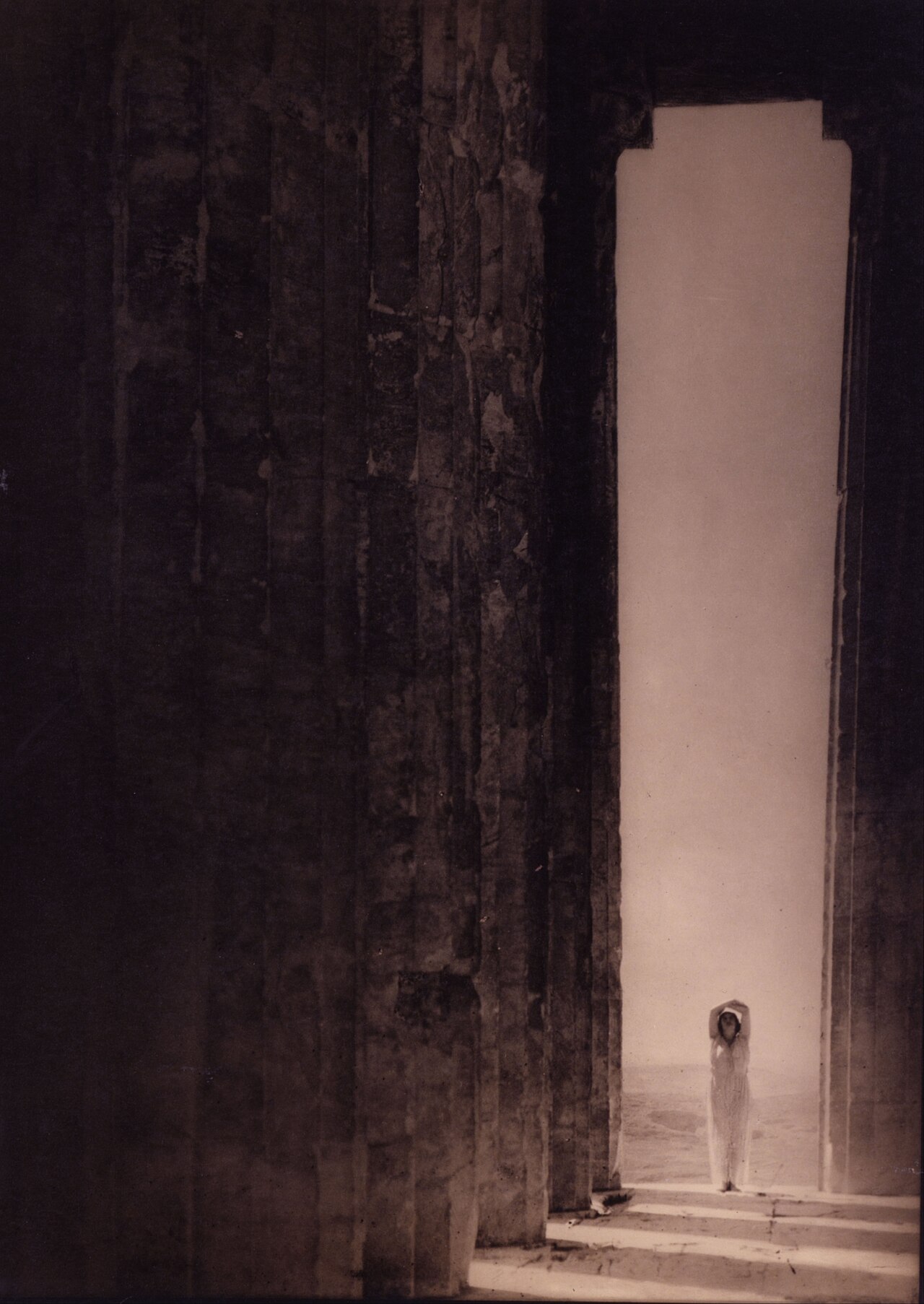
Isadora Duncan in the Parthenon, Athens
Edward Steichen · 1921
Free account
Read every Isadora Duncan source
Sign up free →
Ready when you are
Start chatting with Isadora Duncan now.
20 messages free · No credit card · Available in 50+ languages.