


Secondary sourcePaintingEarly 18th century (inicios del siglo XVIII)
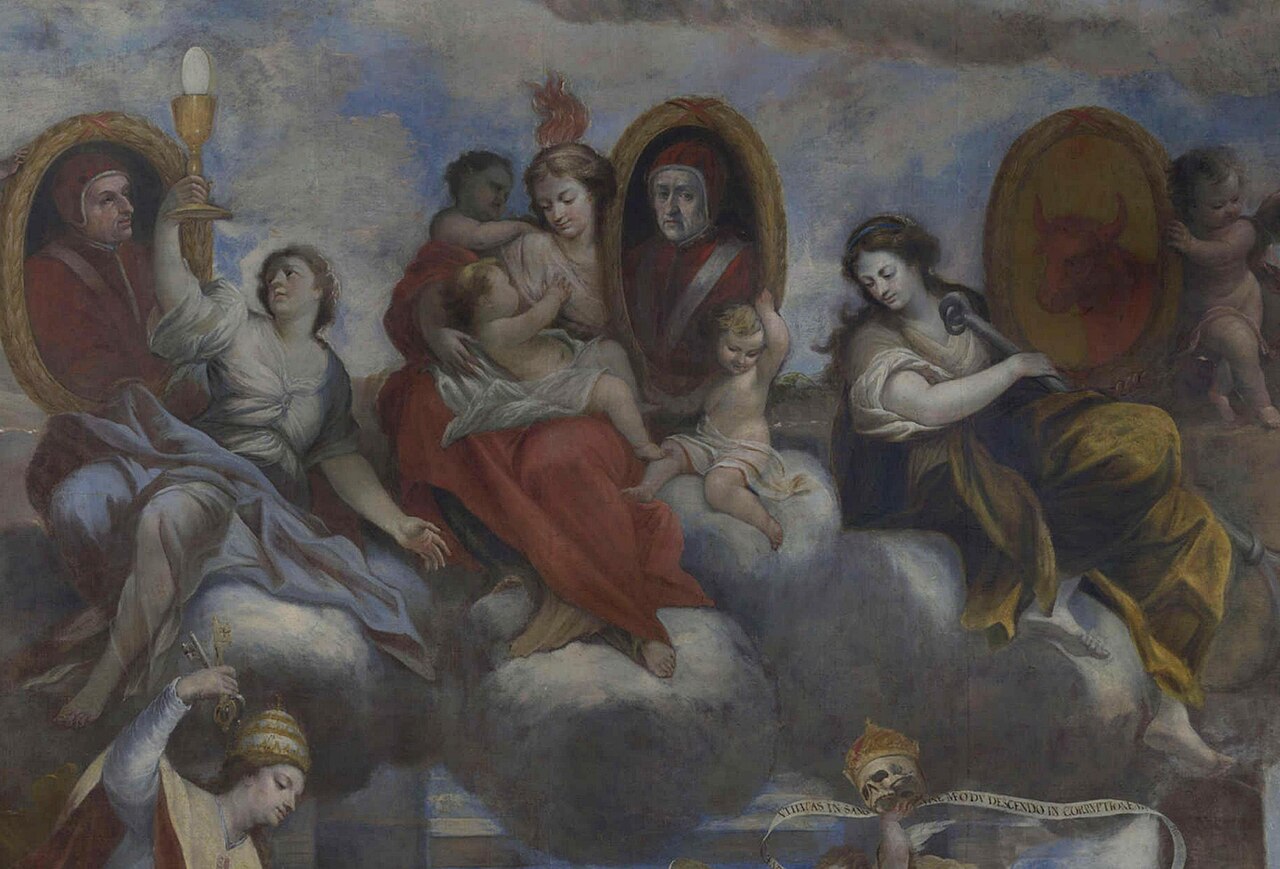
Theological Virtues, Ducal Palace of Gandia
Gaspar de la Huerta · Early 18th century (inicios del siglo XVIII)
A painted ceiling panel in the Ducal Palace of Gandia, built for the Borgia family. It shows allegorical figures and a Latin scroll, and was painted in the early 1700s.
Shows the decoration of the palace built for the Borgia family, rather than Alexander VI himself.
About this source
What it is
This is part of a painted ceiling in the golden gallery of the Ducal Palace of Gandia, in the Valencia region. It is titled Theological Virtues and is an oil painting. Allegorical women appear on clouds: one holds a chalice beside a man in a red robe, one nurses an infant with a flame on her head, and one in gold drapery holds a staff. A red medallion with a bull and a portrait medallion appear among them, and a Latin scroll runs along the bottom. The painting is attributed to Gaspar de la Huerta and dates from the early 1700s.
Why it matters
The palace was built for the Borgia family, and this painting shows how their decorative programme was reworked long after the family's rise. Because the painting was made about a century after Alexander VI's death, it reflects the taste of its own time as much as the Borgia past. The bull on the medallion is part of the Borgia heraldry, which links the room to the family. Students can see how later artists used religious and allegorical images to honour a noble house.
Look closer
- Which figures in the ceiling could be identified from their objects, such as the chalice or staff?
- Why might a family's palace be decorated with virtues and allegories rather than portraits of its members?
- What does the painting leave out about the Borgia family's actual deeds?
This painting is part of the curated material that grounds the AI version of Pope Alexander VI on Humy.ai — when students ask about related events, the AI can quote it and cite it.
More Pope Alexander VI sources
Browse all 89 →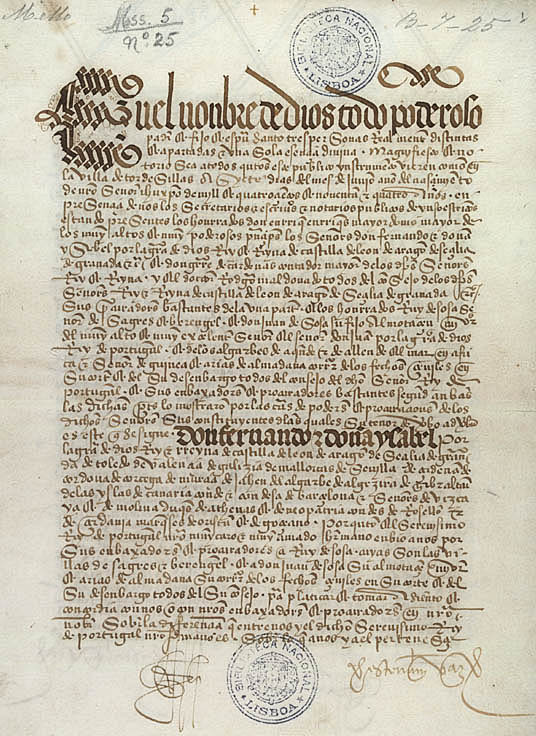 Document
Primary source
Treaty of Tordesillas
7 June 1494
 Artifact
Primary source
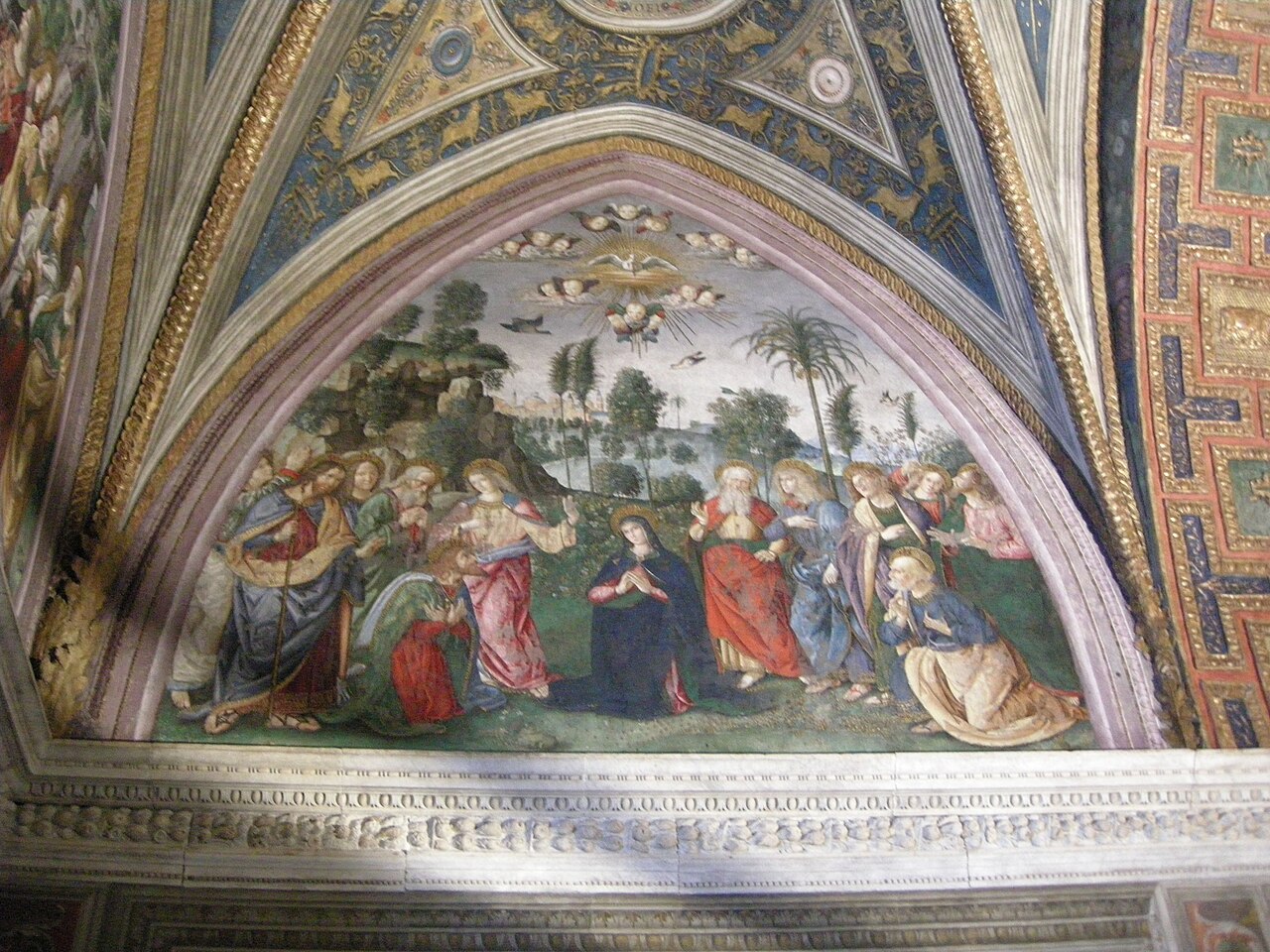
Borgia Apartment
Pinturicchio · 1492-1494
 Book
Primary source
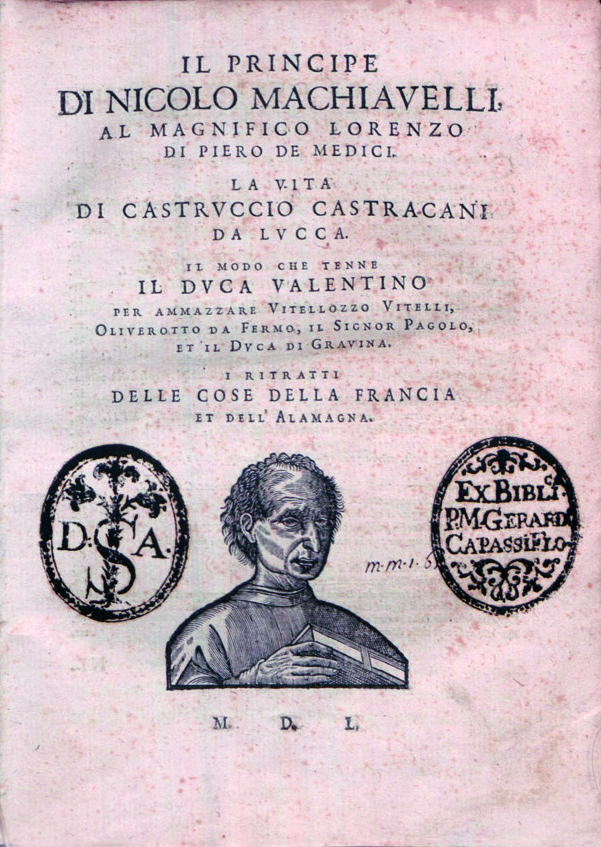
The Prince
Niccolò Machiavelli · 1513
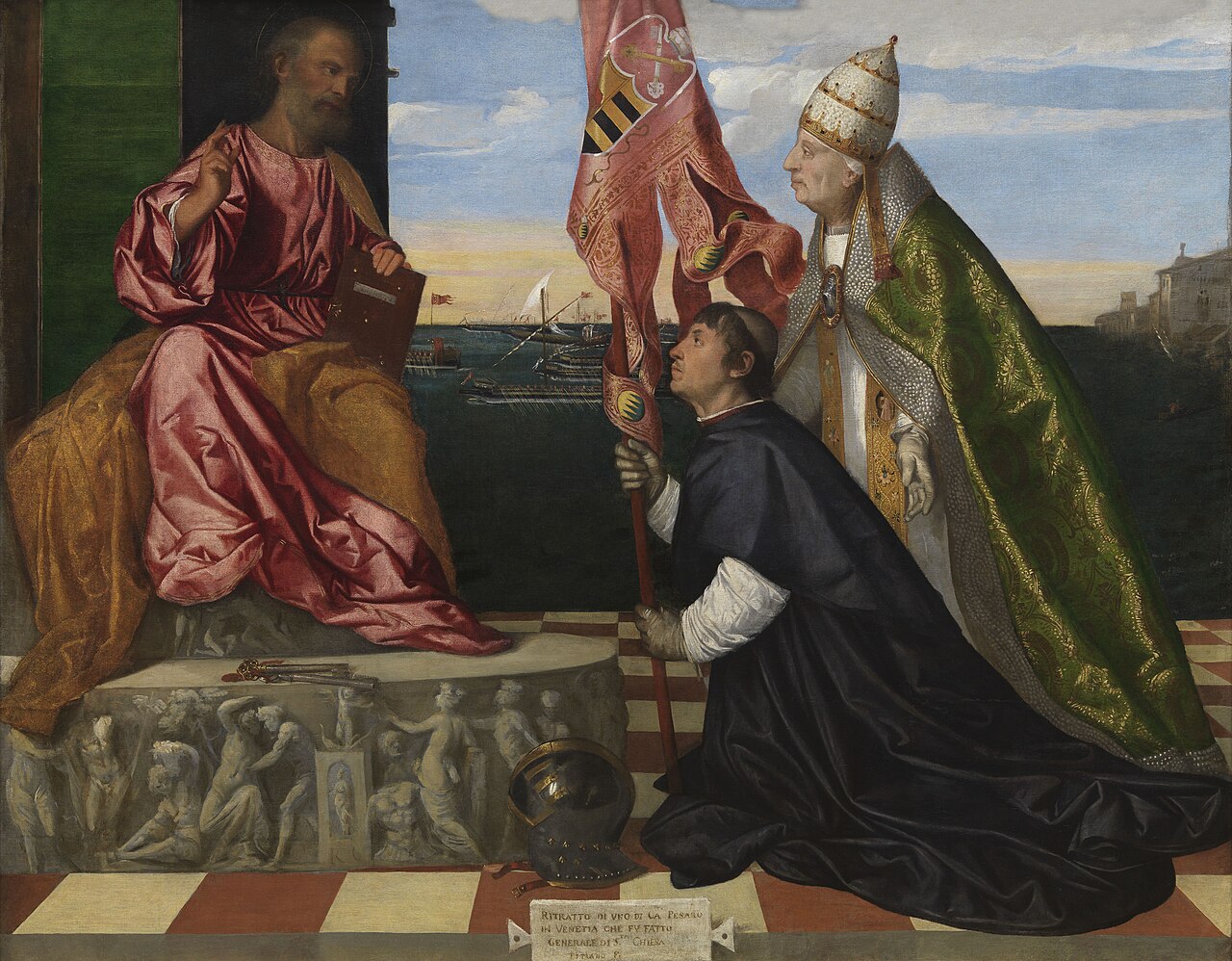 Painting
Primary source
Jacopo Pesaro, Bishop of Paphos, being presented by Pope Alexander VI to Saint Peter
Titian · c. 1503-1511
Free account
Read every Pope Alexander VI source
Sign up free →
Ready when you are
Start chatting with Pope Alexander VI now.
20 messages free · No credit card · Available in 50+ languages.