


Primary sourceArtifact1930
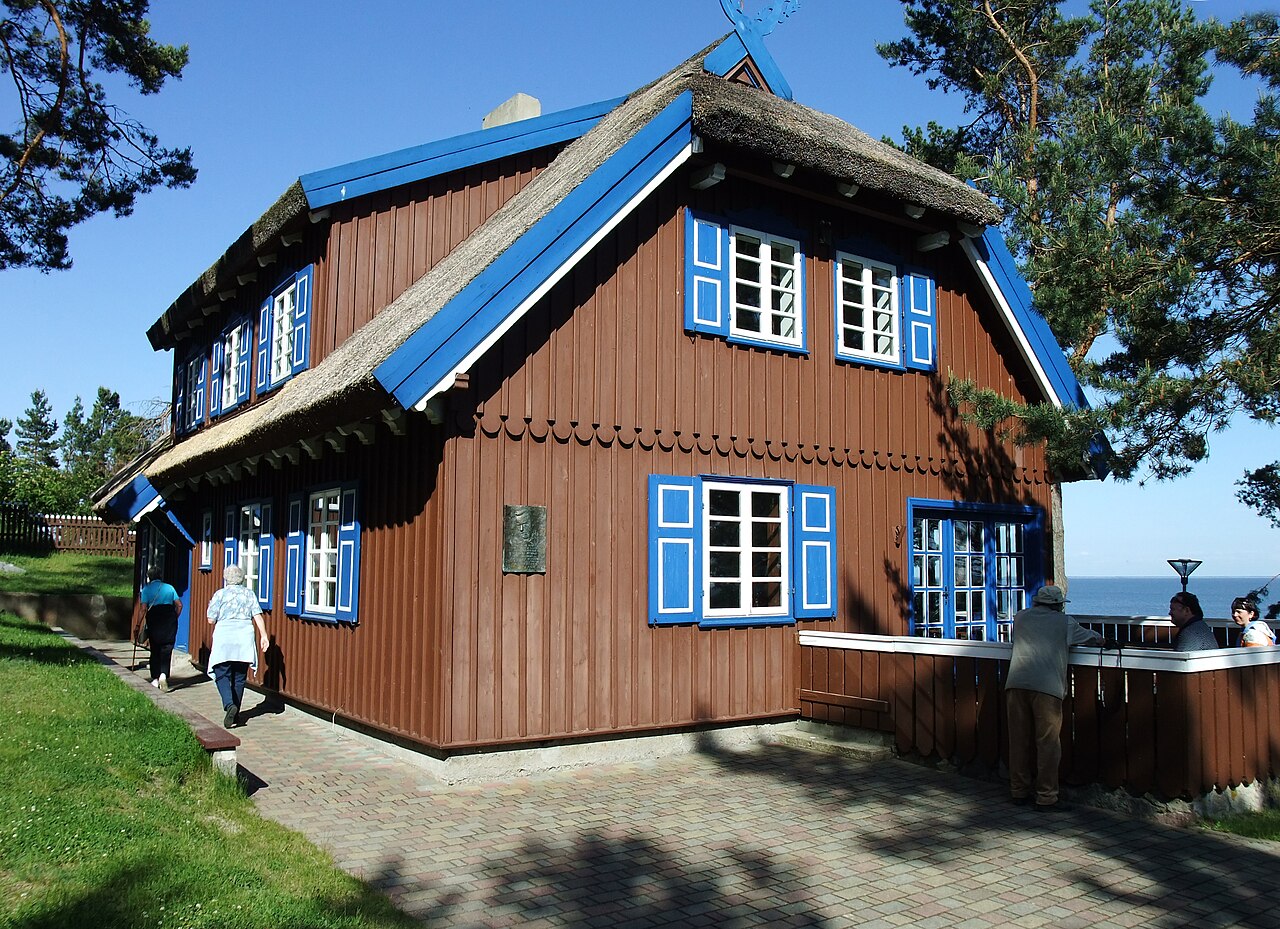
Thomas Mann's Summer House in Nida
Herbert Reissmann · 1930
The wooden cottage on the Curonian Spit that Mann built with his Nobel Prize money and used as a summer retreat before fleeing Germany.
Mann had this summer house built with his Nobel Prize money and worked there on Joseph and His Brothers before exile.
Free Humy account · No credit card · 120,912 sources to read
About this source
What it is
This two-storey wooden house with a thatched roof stands on a hill above the lagoon in Nida, on the Curonian Spit. It was built in 1930 by architect Herbert Reissmann for the writer Thomas Mann, who had decided to put up a summer house there after visiting the area in 1929. Today it is kept as the Thomas Mann Cultural Centre.
Why it matters
Mann and his family spent several summers here, and he used the quiet surroundings to work on parts of his epic novel Joseph and His Brothers. Local people, amused by its plain wooden style, nicknamed it "Uncle Tom's Cabin." The house also marks a turning point: after the Nazis came to power in 1933, Mann left Germany for good, and this peaceful retreat became impossible to use again.
Look closer
- What does the choice of a simple wooden cottage, rather than a grand villa, suggest about how Mann wanted to spend his summers?
- Why might a successful, prize-winning author want to work far from the city?
- How does knowing what happened in 1933 change how you look at this peaceful house?
This artifact is part of the curated material that grounds the AI version of Thomas Mann on Humy.ai — when students ask about related events, the AI can quote it and cite it.
More Thomas Mann sources
Browse all 55 →


Ready when you are
Start chatting with Thomas Mann now.
20 messages free · No credit card · Available in 50+ languages.