


Secondary sourceArtifact
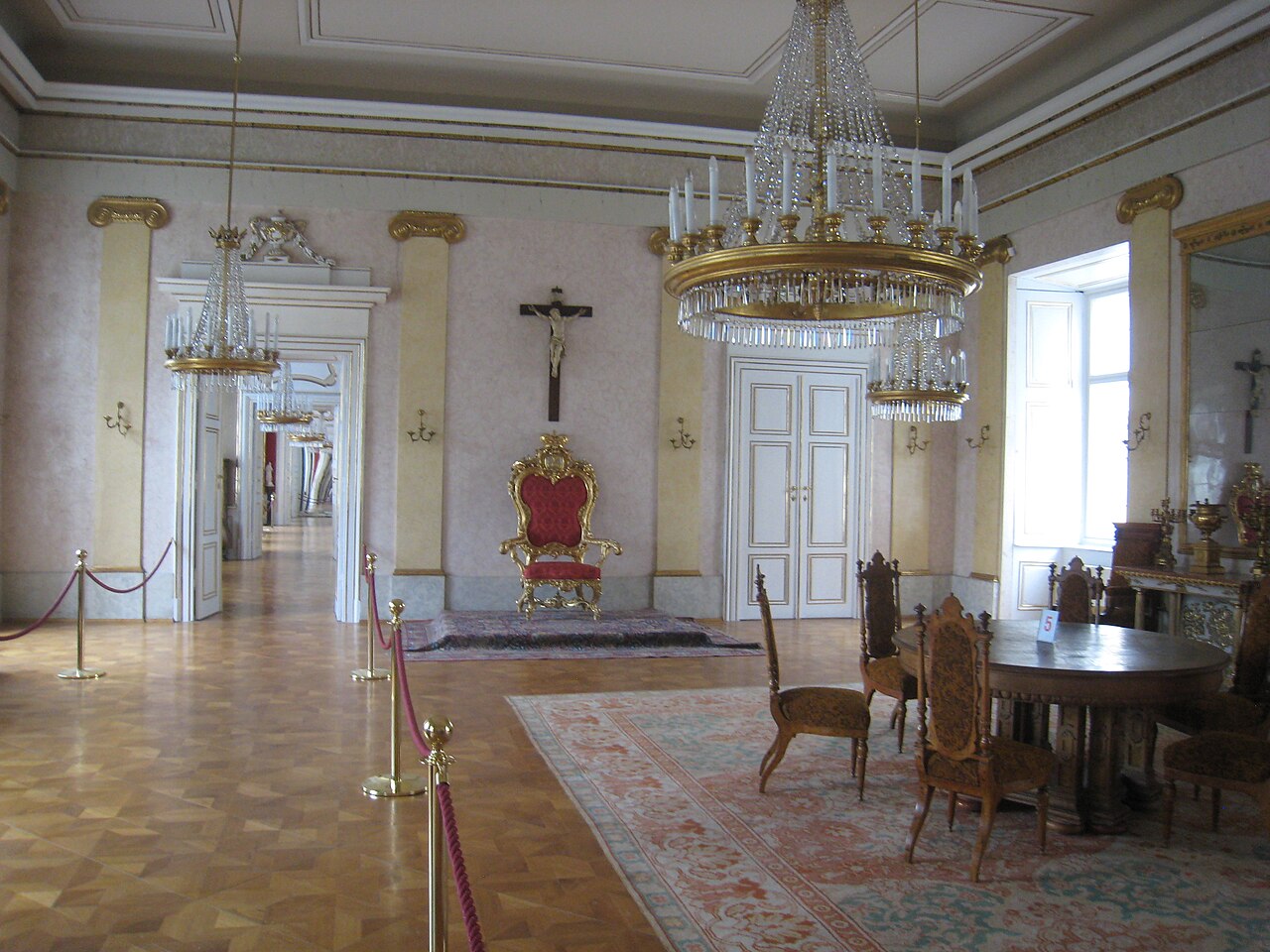
Throne Room, Archbishop's Palace, Olomouc
Avemundi
The formal throne room in the Archbishop's Palace in Olomouc where Ferdinand I signed his abdication in 1848.
Ferdinand I abdicated as emperor in this room on 2 December 1848, ending his reign.
About this source
What it is
This is the throne room of the Archbishop's Palace in Olomouc, a grand chamber with patterned pink walls, gilded columns, and a red velvet throne beneath a crucifix. The building was designed by the architect Avemundi.
Why it matters
This room is historically significant as the site where Ferdinand I abdicated as Emperor of Austria on 2 December 1848, during the revolutionary upheavals of that year. The abdication ended his reign and passed the throne to his nephew, Franz Joseph I, marking a major turning point in Habsburg history.
Look closer
- What do the grandeur and formality of the room suggest about the importance of the event that took place there?
- Why might an emperor choose to abdicate in a private palace rather than in the capital?
- What questions would you want answered about what happened in this room on that day?
This artifact is part of the curated material that grounds the AI version of Ferdinand I of Austria on Humy.ai — when students ask about related events, the AI can quote it and cite it.
More Ferdinand I of Austria sources
Browse all 85 →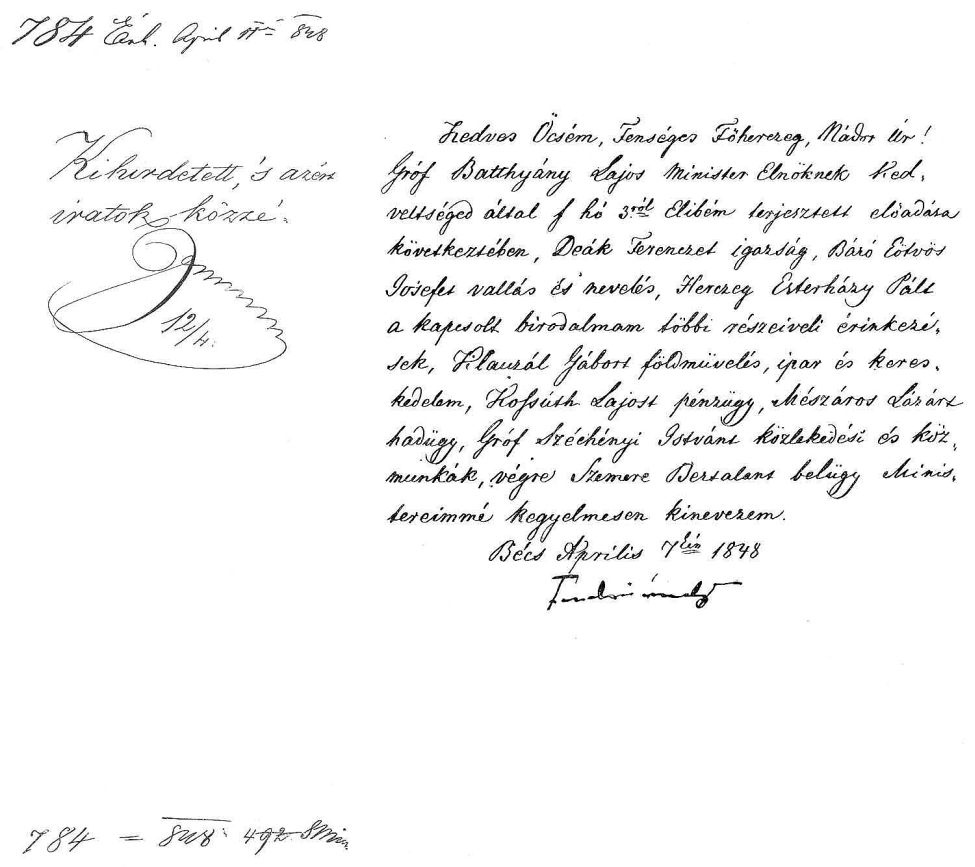 Letter
Primary source
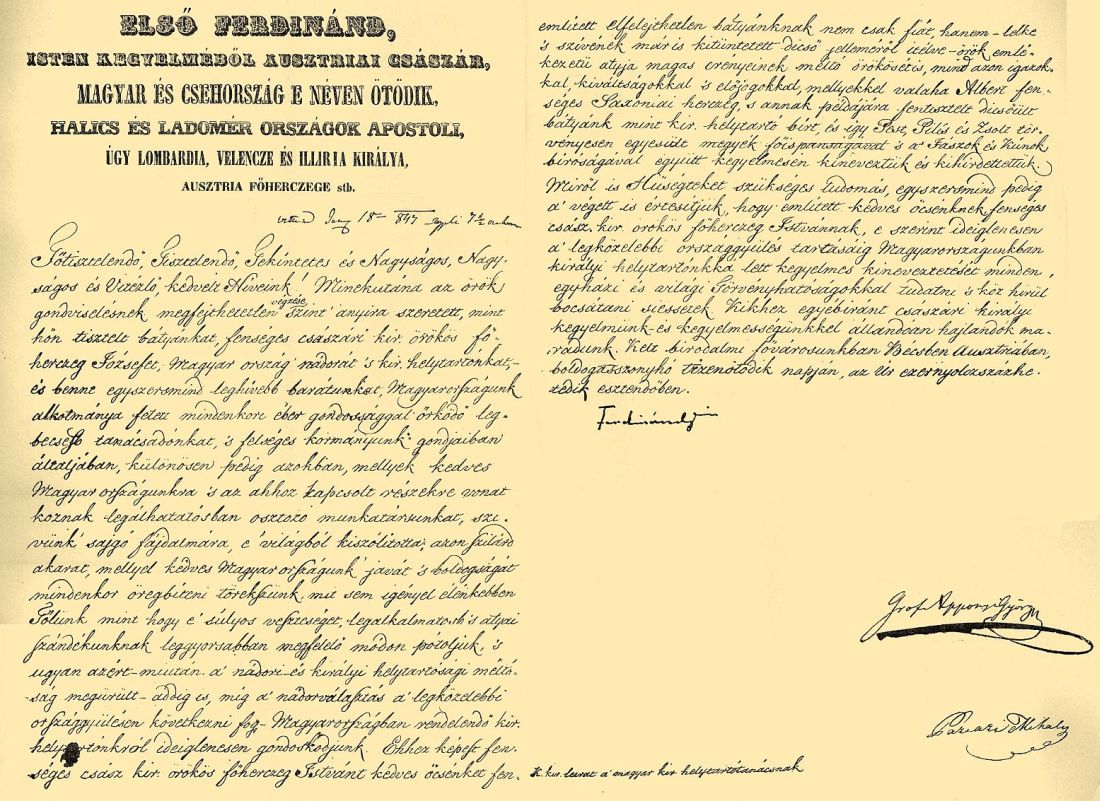
Letter Appointing the Batthyány Government
Ferdinand I of Austria · 7 April 1848
 Painting
Secondary source
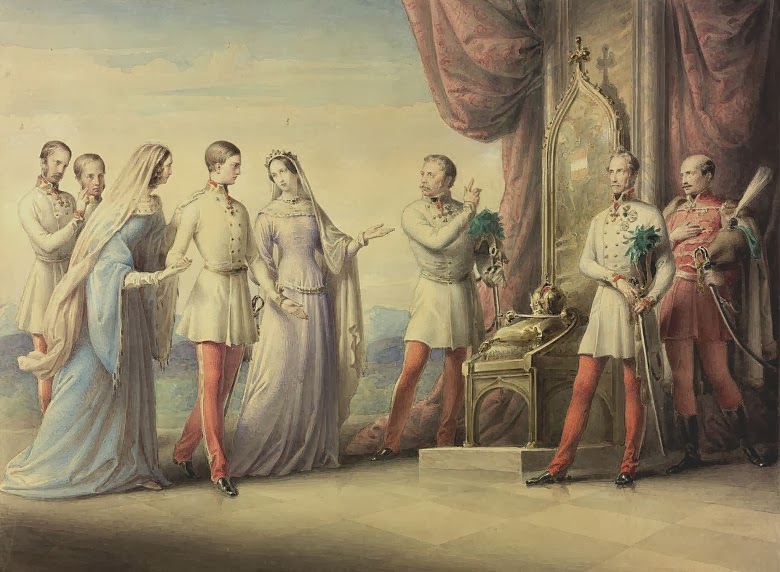
Archduchess Sophie Leading Her Son Franz Joseph to the Throne
Leopold Kupelwieser
 Painting
Secondary source
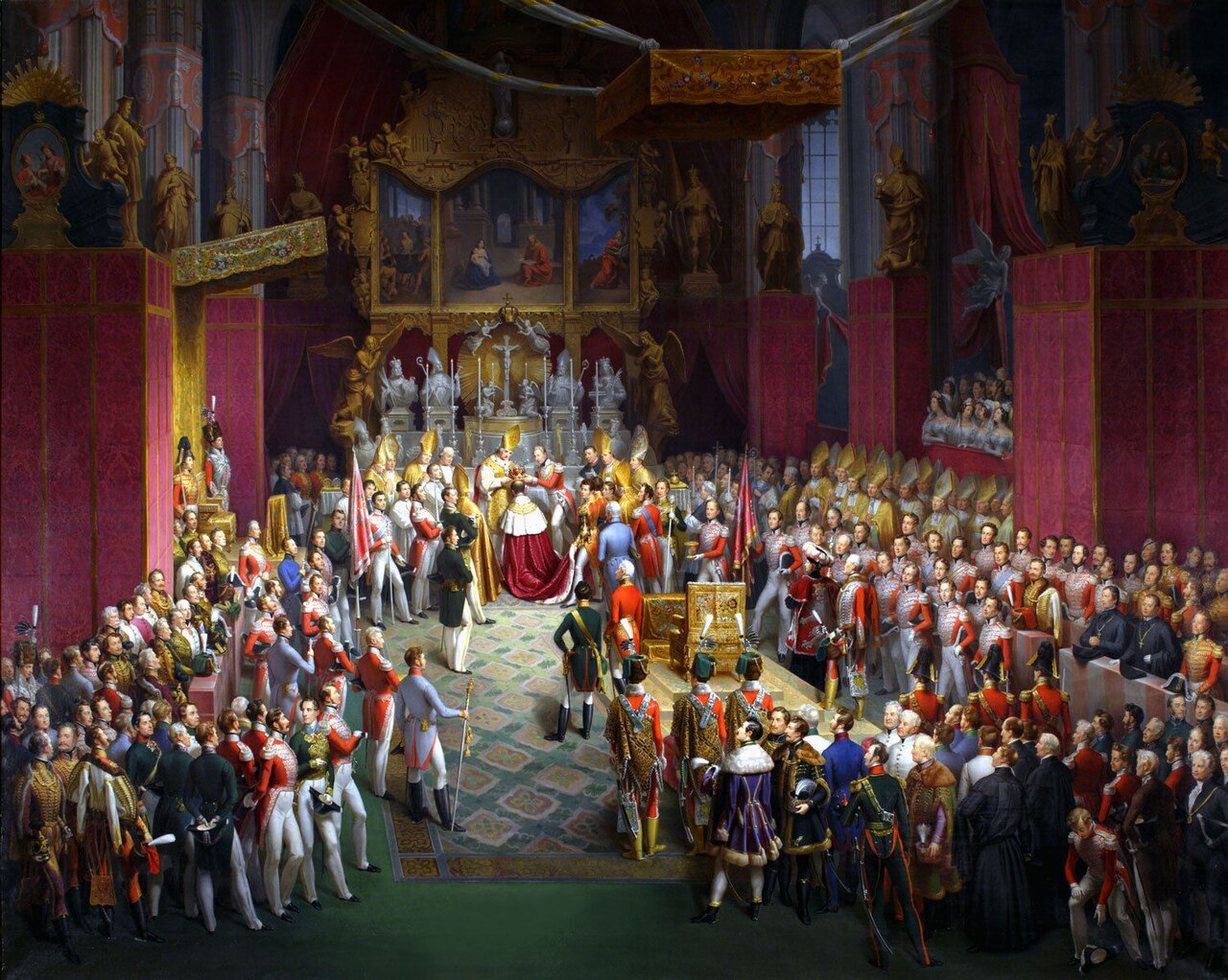
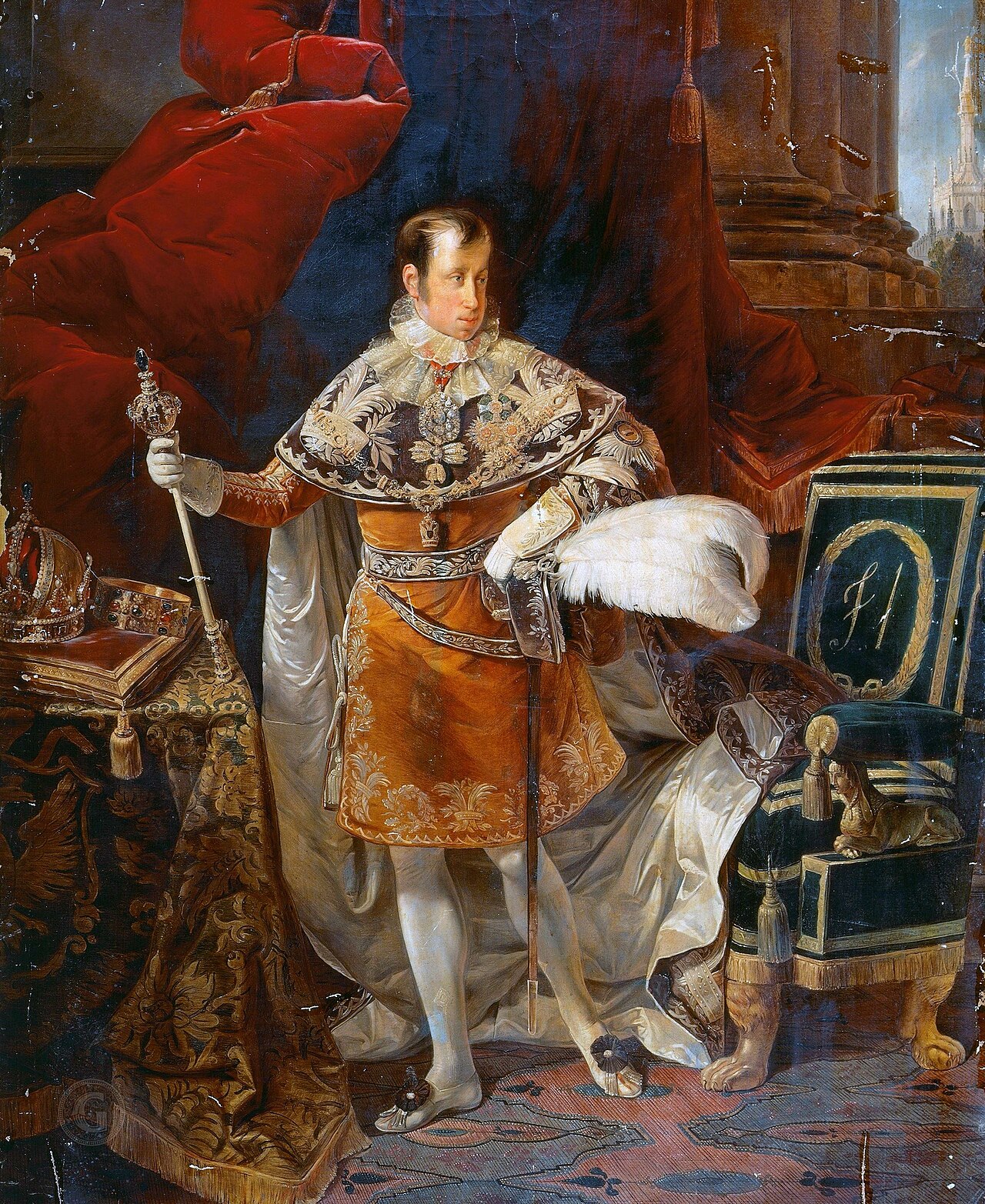
Coronation of Ferdinand I as King of Bohemia
Leopold Bucher · 1847
 Painting
Primary source
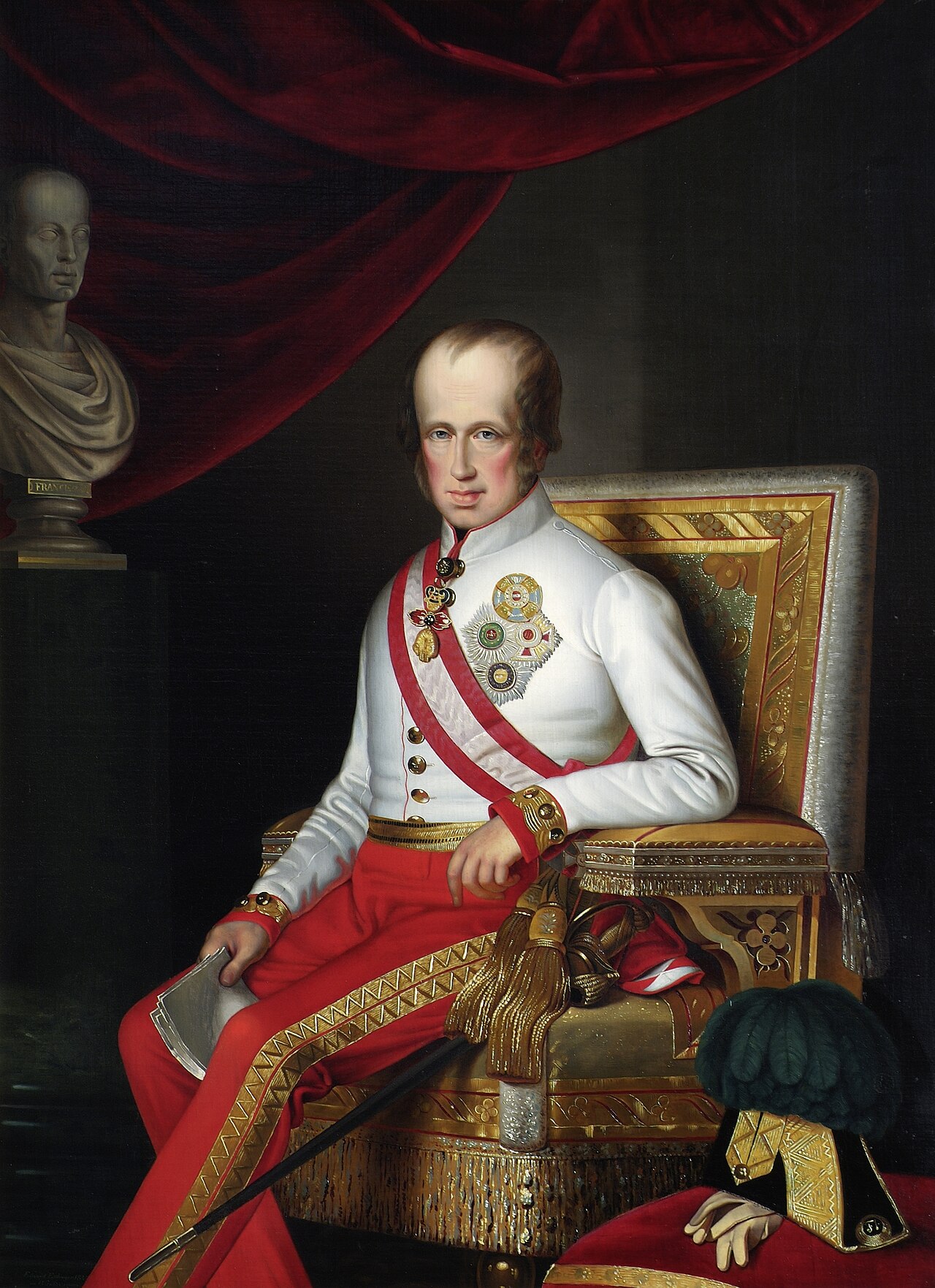
Portrait of Emperor Ferdinand I
Eduard Edlinger · 1843

Free account
Read every Ferdinand I of Austria source
Sign up free →
Ready when you are
Start chatting with Ferdinand I of Austria now.
20 messages free · No credit card · Available in 50+ languages.