


Primary sourceArtifact1667-1669
Tibetan Dragon Buddhist Canon
1667-1669
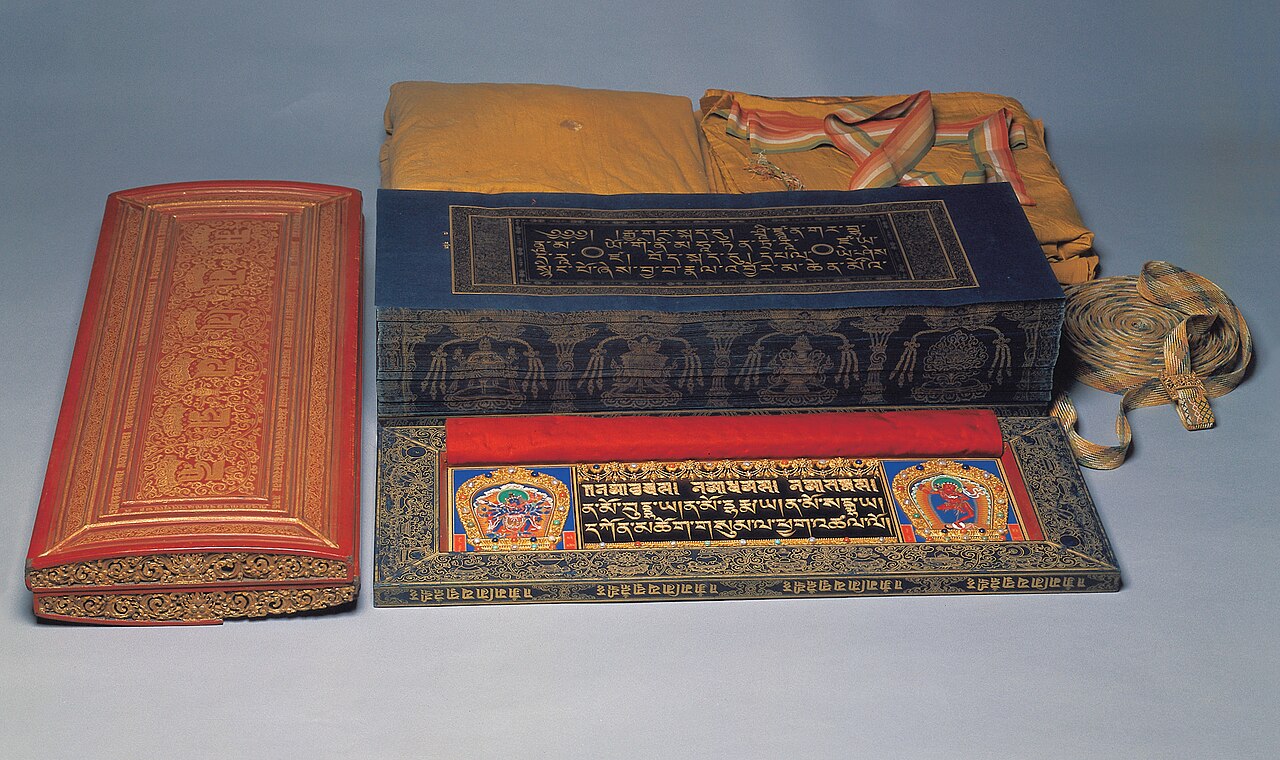
A lavishly made Tibetan Buddhist scripture, the Kangxi Kangyur, commissioned by Kangxi's grandmother during his reign.
This Buddhist canon, commissioned by Kangxi's grandmother during his reign, reflects the court's use of religion in Inner Asian policy.
About this source
What it is
This is a richly decorated edition of the Tibetan Buddhist canon, known as the Kangxi Kangyur, made between 1667 and 1669. It was commissioned by the Grand Empress Dowager Xiaozhuang, Kangxi's grandmother, and is now held at the National Palace Museum.
The set includes a gold-decorated red lacquer box and a blue textile-covered volume with gold Tibetan lettering, a red cover panel, and painted images of deities.
Why it matters
This canon reflects the importance of Tibetan Buddhism at the Qing court, both as personal faith for figures like Xiaozhuang and as a political tool for managing relations with Inner Asian peoples during Kangxi's reign. Its lavish materials show the resources the court devoted to religious patronage.
Look closer
- What does the quality of materials tell you about who commissioned this object and why?
- Why might a ruling family support a religion that wasn't native to their own traditions?
- What does this object suggest about the Qing court's relations with Tibet and Mongolia?
This artifact is part of the curated material that grounds the AI version of Kangxi Emperor on Humy.ai — when students ask about related events, the AI can quote it and cite it.
More Kangxi Emperor sources
Browse all 65 → Document
Primary source
Treaty of Nerchinsk
Songgotu and Fyodor Golovin · 27 August 1689
 Document
Primary source
Sacred Edict of the Kangxi Emperor
Kangxi Emperor · 1670
 Letter
Primary source
Red Manifesto to Pope Clement XI
Kangxi Emperor · 1716
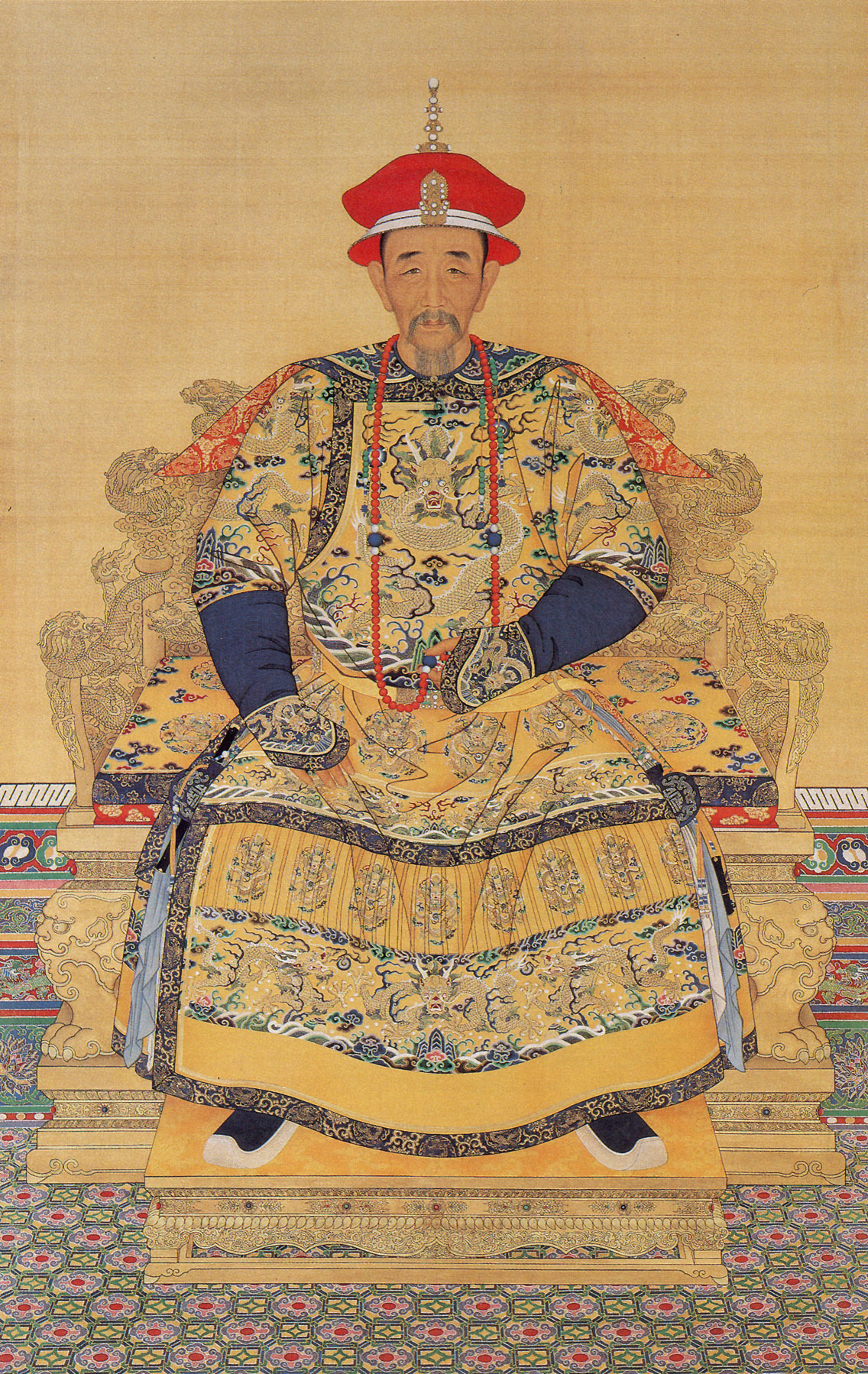 Painting
Primary source
Portrait of the Kangxi Emperor in Court Dress
Free account
Read every Kangxi Emperor source
Sign up free →
Ready when you are
Start chatting with Kangxi Emperor now.
20 messages free · No credit card · Available in 50+ languages.