


Secondary sourcePhotograph14 September 2011
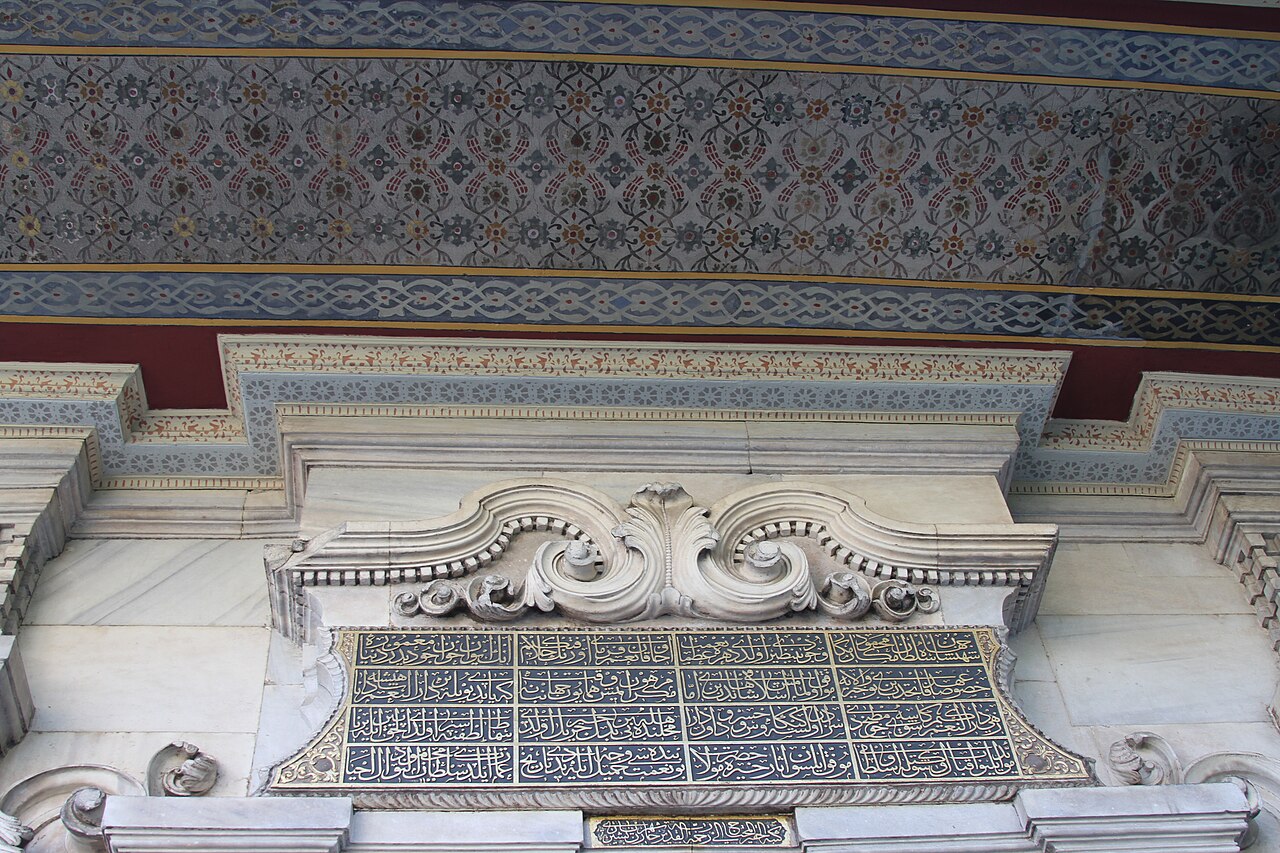
Tiles and Inscription at Topkapı Palace
José Luiz · 14 September 2011
A photograph of decorative tiles and an Arabic inscription at Topkapı Palace, the setting of Kösem Sultan's life at court.
Depicts decorative detail from the palace where Kösem Sultan lived and exercised political power.
About this source
What it is
This 2011 photograph shows a section of wall at Topkapı Palace with patterned tiles, a carved marble cornice, and a gold Arabic inscription set in framed panels.
Why it matters
Decoration like this was part of the everyday surroundings of the Ottoman court, where Kösem Sultan spent much of her life. Such inscriptions and tilework reflect the artistic and religious culture that shaped palace life and the image of imperial power.
Look closer
- What might the inscription say, and why would it be placed in a palace?
- How do the materials used (gold, marble, tile) communicate status and power?
- What does this detail NOT tell us about daily life in the palace?
This photograph is part of the curated material that grounds the AI version of Kosem Sultan on Humy.ai — when students ask about related events, the AI can quote it and cite it.
More Kosem Sultan sources
Browse all 35 →
Ready when you are
Start chatting with Kosem Sultan now.
20 messages free · No credit card · Available in 50+ languages.