


Secondary sourceArtifact
Tomb of Constantine I of Greece
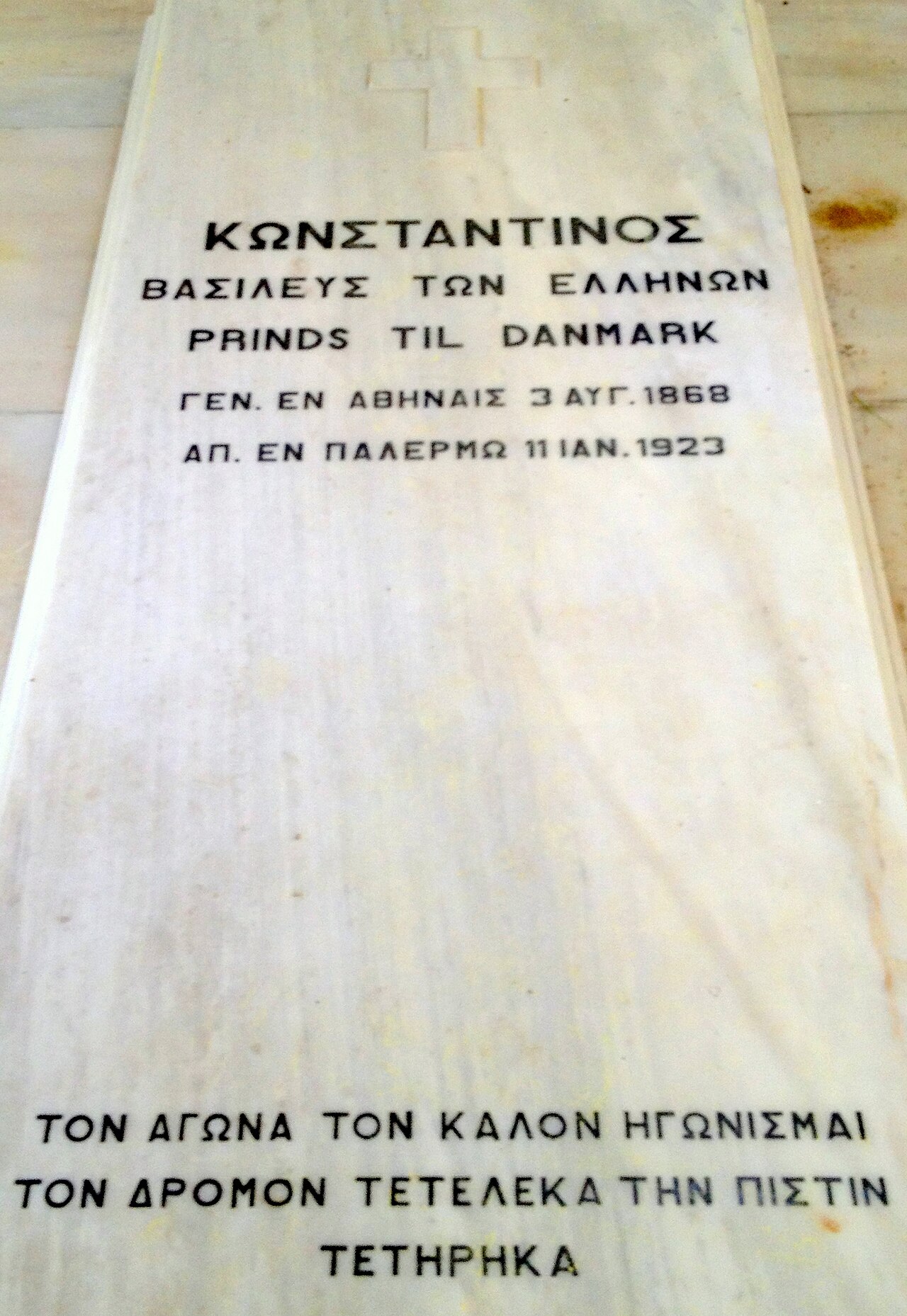
A white marble grave slab marks where King Constantine I of Greece is buried. It is a later memorial photographed in 2013, not an object from his lifetime.
Shows where Constantine I is buried and how his memory was inscribed on his grave after his death.
About this source
What it is
This is a photograph of the tomb of Constantine I of Greece. The white marble slab has a carved cross at the top, Greek and Danish inscriptions with his name and birth and death dates, and a Greek epitaph at the bottom. The photograph was uploaded to Wikimedia Commons by a user named Kostisl and dated 31 March 2013.
Why it matters
A tomb records how a family and a state chose to remember a ruler after his death. The inscriptions name him both as King of the Hellenes and as a Prince of Denmark, which reflects his Danish birth and the dynastic ties between the Greek and Danish royal houses. Because the slab was made after his death, it shows later memory rather than his own time.
Look closer
- Which titles are carved on the stone, and why might the inscriptions use both Greek and Danish?
- Who would have chosen the words and the cross, and what might they want visitors to remember?
- What does a grave monument leave out about the king's reign and its conflicts?
This artifact is part of the curated material that grounds the AI version of Constantine I of Greece on Humy.ai — when students ask about related events, the AI can quote it and cite it.
More Constantine I of Greece sources
Browse all 83 →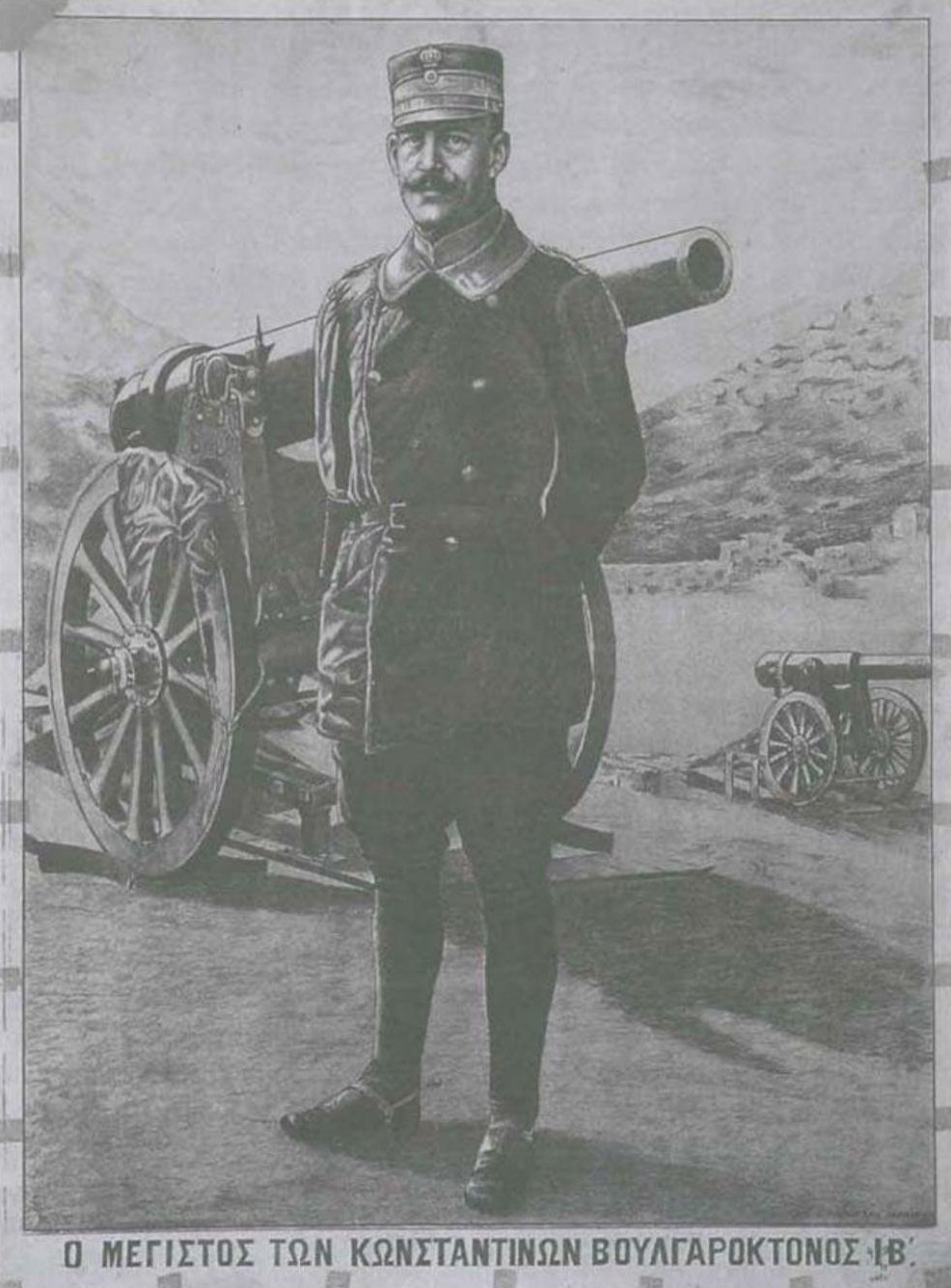 Painting
Primary source
The Greatest of the Constantines, the Bulgarslayer
1912-1913
 Photograph
Primary source
King George I of Greece and Crown Prince Constantine Enter Thessaloniki
November 1912
 Book
Secondary source
Ex-King Constantine and the War
George M. Melas
 Photograph
Primary source
Portrait of Constantine I of Greece
1914


Free account
Read every Constantine I of Greece source
Sign up free →
Ready when you are
Start chatting with Constantine I of Greece now.
20 messages free · No credit card · Available in 50+ languages.