


Secondary sourceArtifactbefore the French Revolution
Tomb of Emperor Louis the Pious
Chaillot · before the French Revolution
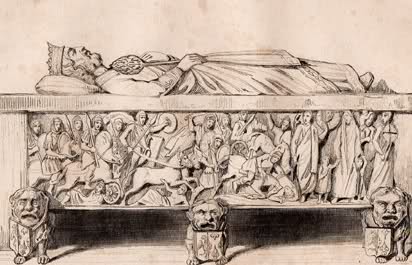
A drawing recording the tomb of Louis the Pious at Saint-Arnould in Metz, destroyed during the French Revolution.
Records the now-destroyed tomb monument built to honour Louis the Pious after his death.
About this source
What it is
This engraved drawing, made by an artist named Chaillot, shows the tomb monument of Emperor Louis the Pious, son of Charlemagne, as it looked before the French Revolution at the abbey of Saint-Arnould in Metz. The tomb reused an ancient Roman sarcophagus carved with a frieze of small figures, topped by a reclining effigy.
Why it matters
The tomb itself no longer survives, destroyed during the Revolution, so this drawing is one of the few records of how Louis was honoured in death. Reusing a Roman sarcophagus linked Louis, as emperor, to the authority of ancient Rome, echoing how his father Charlemagne also drew on Roman imperial tradition.
Look closer
- Why might Louis's tomb have reused a much older Roman sarcophagus instead of a newly carved one?
- What is lost when we can only study a monument through a later drawing rather than the object itself?
- What does the choice of a reclining effigy tell you about how rulers wanted to be remembered?
This artifact is part of the curated material that grounds the AI version of Louis the Pious on Humy.ai — when students ask about related events, the AI can quote it and cite it.
More Louis the Pious sources
Browse all 94 →Primary source
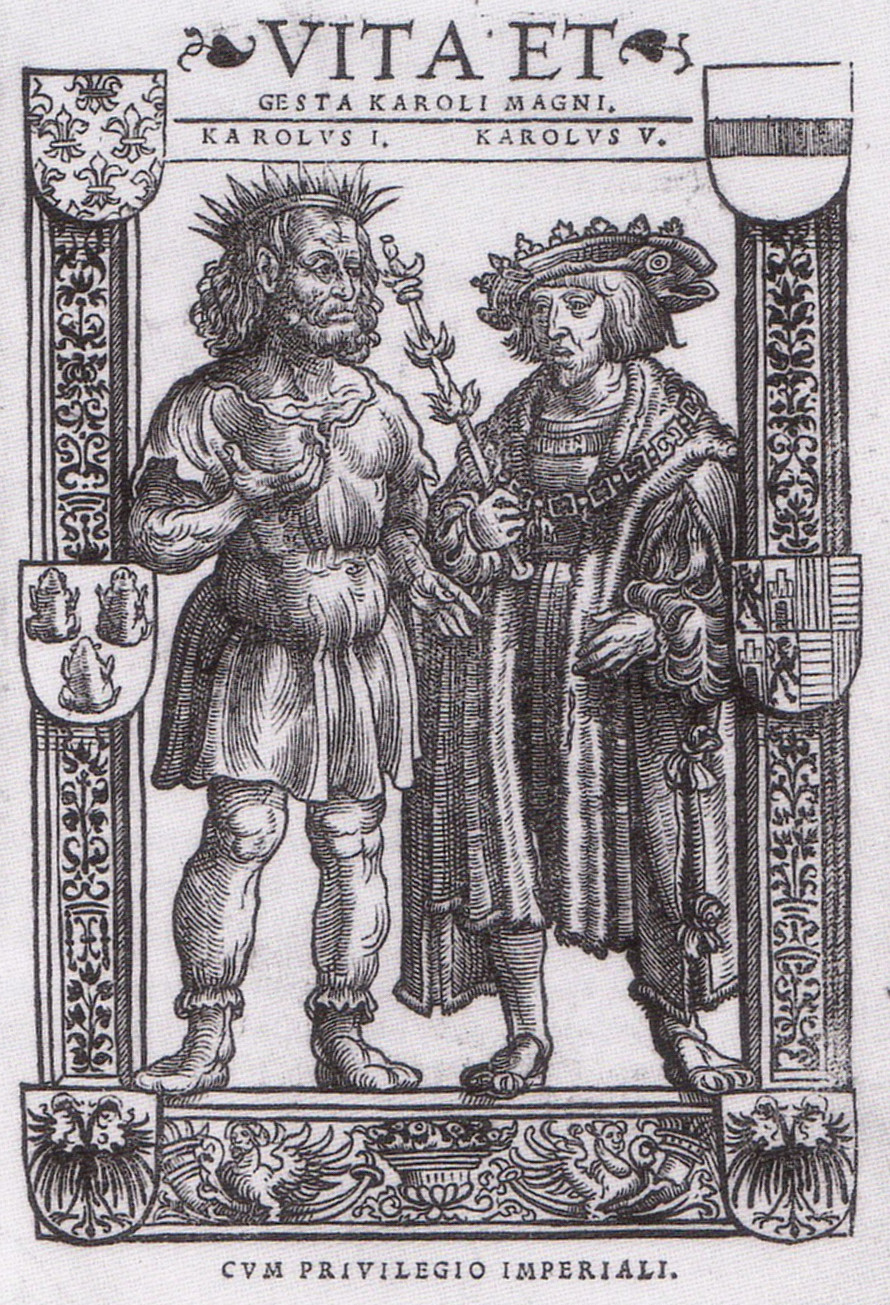
Annales Bertiniani
various authors · 850
 Book
Secondary source
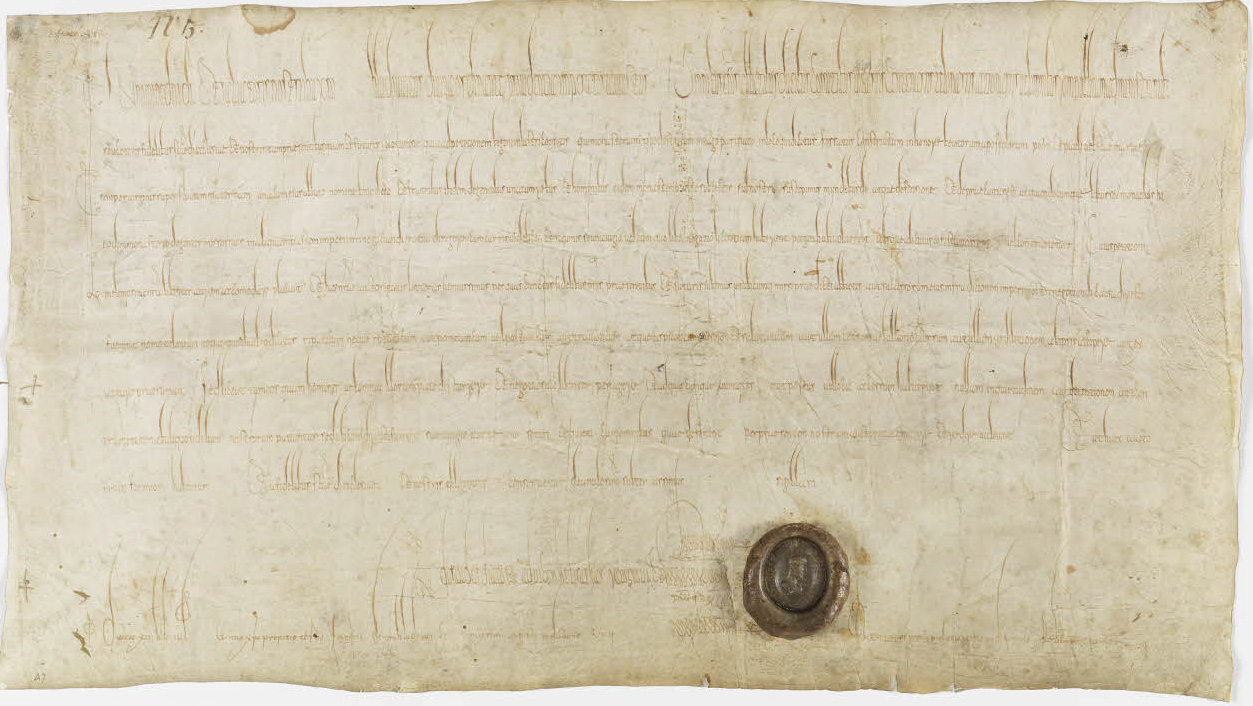
Vita Karoli Magni
Einhard · c. 817-833
 Document
Primary source
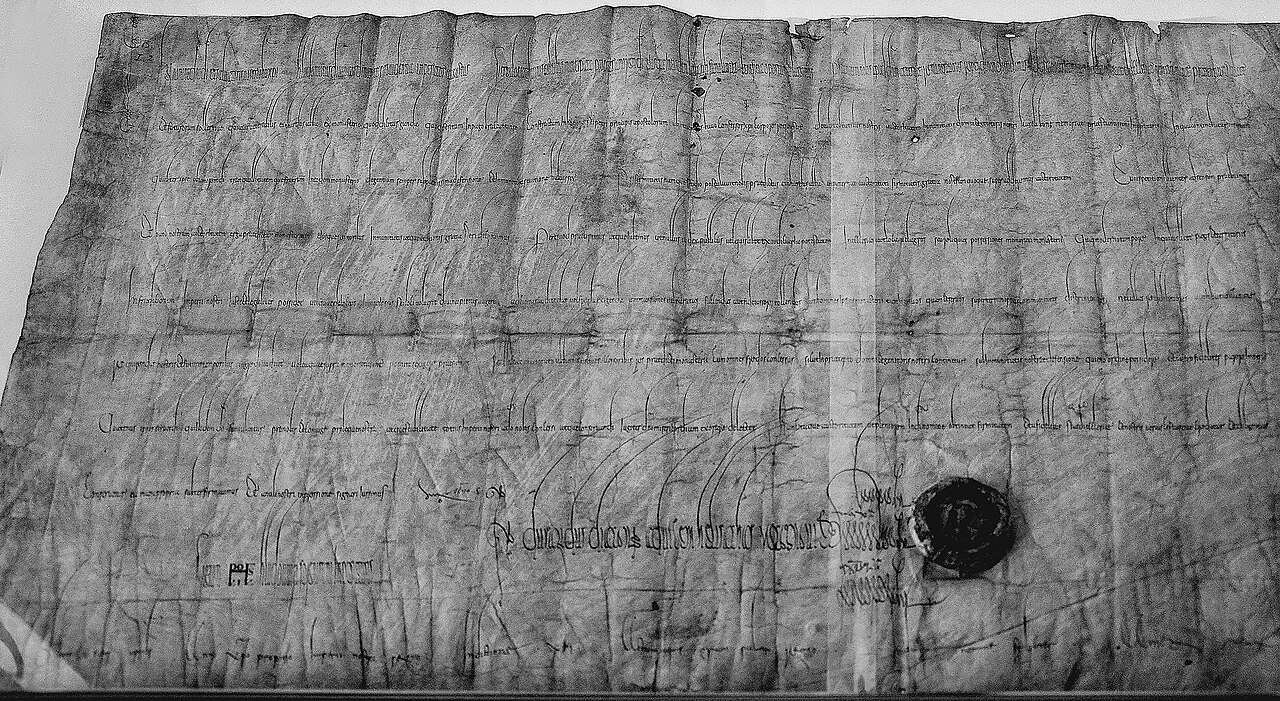
Exemption Charter for the Abbey of Saint-Maur-des-Fossés
Louis the Pious · 20 June 816
 Document
Primary source
Charter of Immunity for Saint Bavo's Abbey
Louis the Pious
Free account
Read every Louis the Pious source
Sign up free →
Ready when you are
Start chatting with Louis the Pious now.
20 messages free · No credit card · Available in 50+ languages.