


Secondary sourcePhotograph
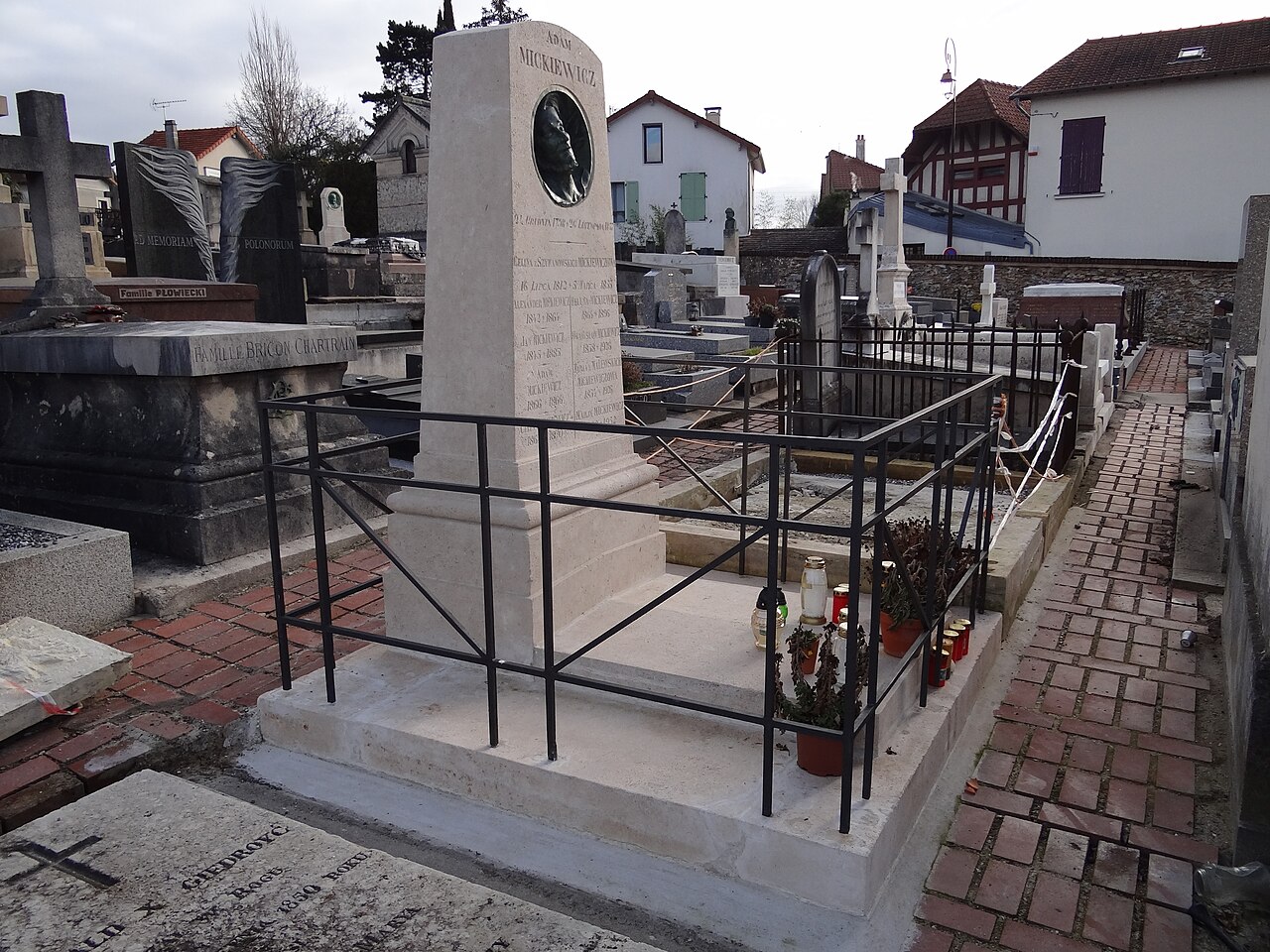
Tombe d'Adam Mickiewicz
Antoine Rex
Photograph of Mickiewicz's original 1855 grave at Montmorency cemetery near Paris, where he was buried before his remains were moved to Kraków.
Shows the first grave of Mickiewicz, where he lay from 1856 until his remains were taken to Kraków in 1890.
About this source
What it is
A photograph by Antoine Rex showing the original tombstone of Adam Mickiewicz at the Cimetière des Champeaux in Montmorency, France. A stone obelisk-like stele bears his name and a bronze portrait medallion.
Why it matters
Mickiewicz died in exile and was first buried here, in the country that hosted so many Polish émigrés after the failed uprisings against Russian rule. The later move of his remains to Wawel Cathedral in Kraków shows how important he became as a national symbol once Poland could honour him on home soil.
Look closer
- What does the choice of an obelisk shape suggest about how mourners wanted him remembered?
- Why might a poet who died abroad later be moved to a national cathedral?
- What do the candles and plants at the grave tell you about how people still visit it?
This photograph is part of the curated material that grounds the AI version of Adam Mickiewicz on Humy.ai — when students ask about related events, the AI can quote it and cite it.
More Adam Mickiewicz sources
Browse all 95 →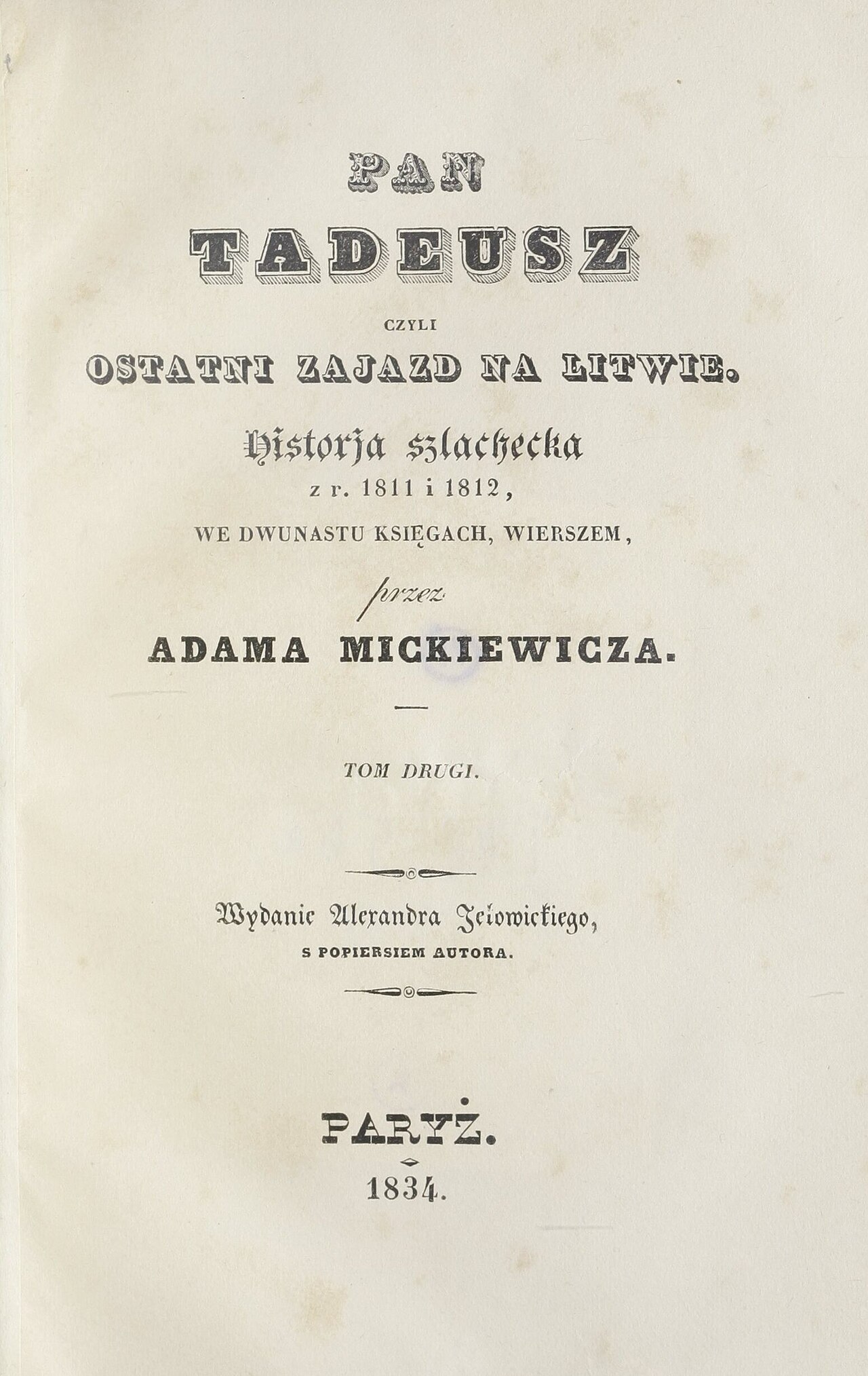 Book
Primary source
Pan Tadeusz
Adam Mickiewicz · 28 June 1834
 Book
Primary source
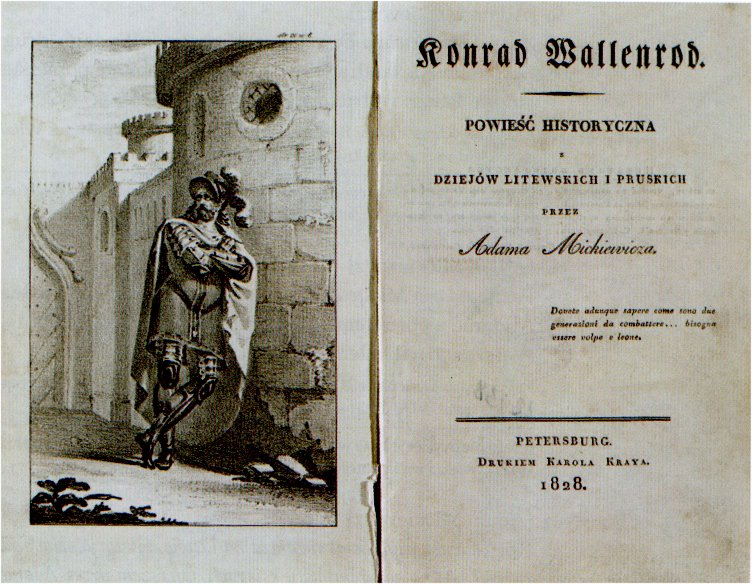
Konrad Wallenrod
Adam Mickiewicz · 1828
 Book
Primary source
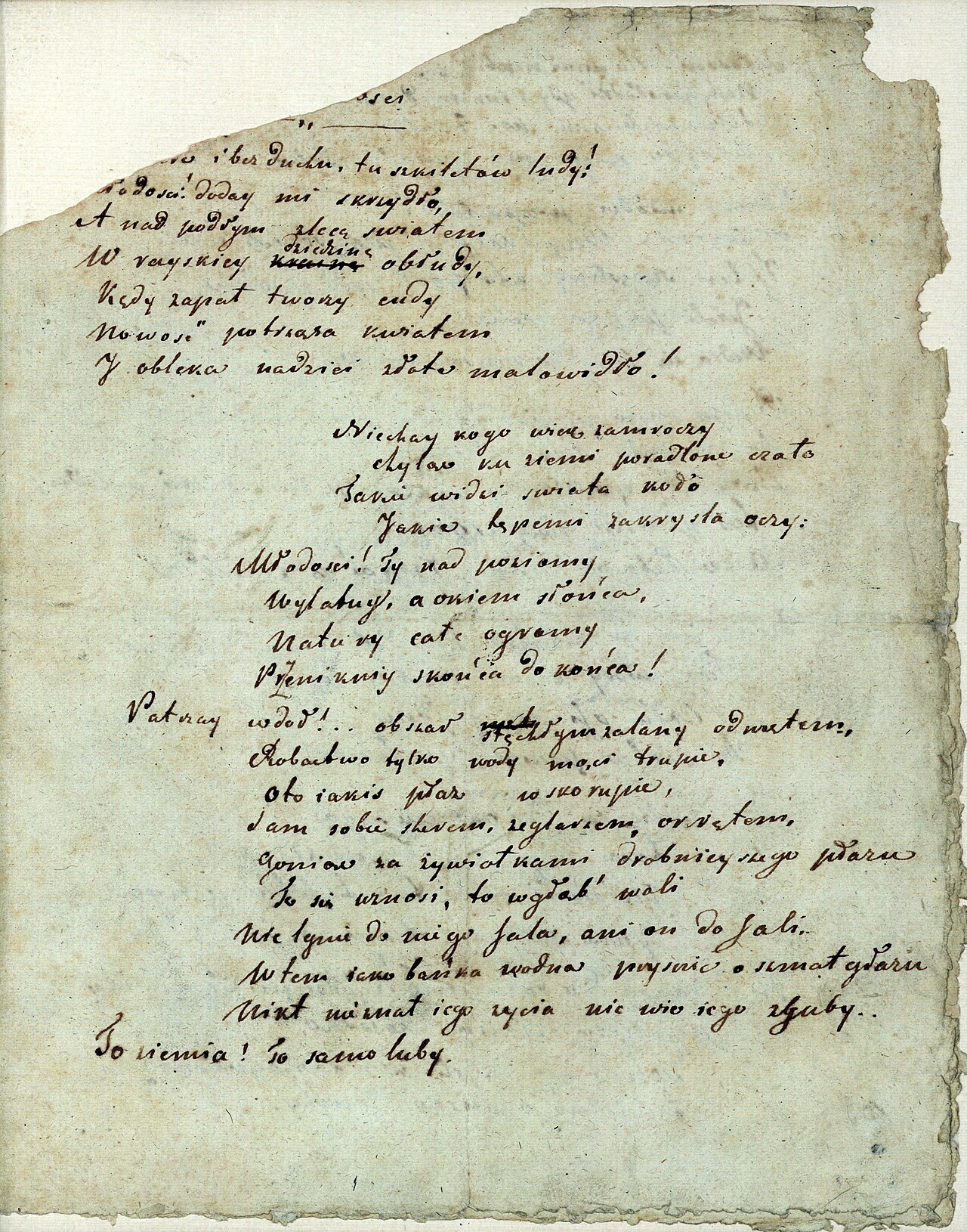
Ode to Youth
Adam Mickiewicz · 1820
 Book
Primary source
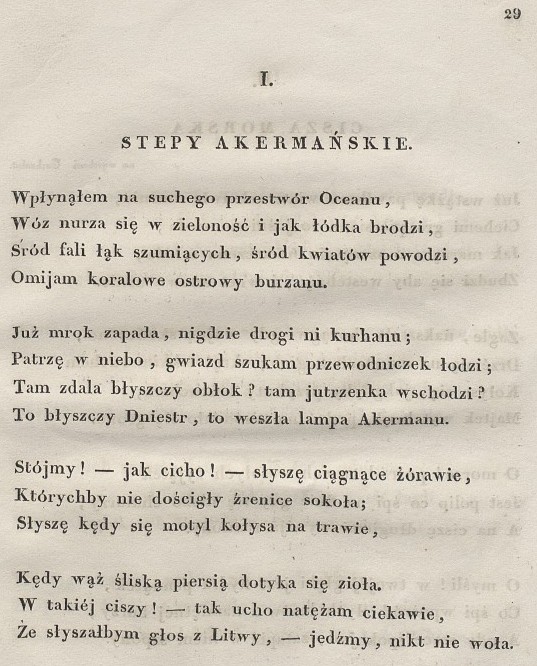
Sonnets from the Crimea
Adam Mickiewicz · 1826
Free account
Read every Adam Mickiewicz source
Sign up free →
Ready when you are
Start chatting with Adam Mickiewicz now.
20 messages free · No credit card · Available in 50+ languages.