


Secondary sourcePaintingca. 1500-34
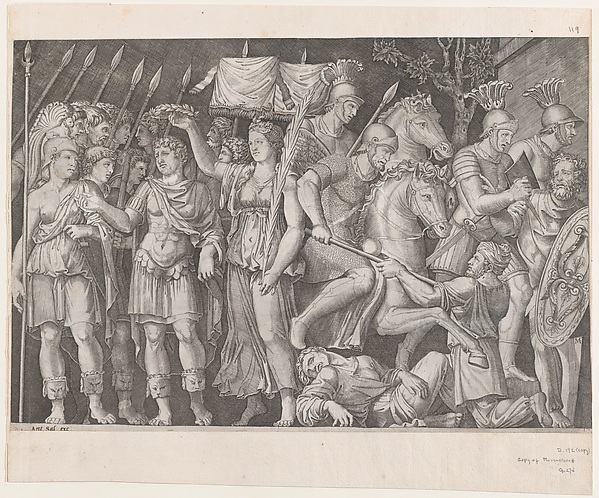
Trajan Between City of Victory and Rome
ca. 1500-34
A black-and-white engraving from a sixteenth-century Italian print series, the Speculum Romanae Magnificentiae, showing Trajan with allegorical figures. It was made centuries after his reign.
Shows Trajan himself as a subject in a later Italian print, so it belongs in his archive as a depiction made long after his reign.
About this source
What it is
This is a black-and-white engraving from the Speculum Romanae Magnificentiae, a print series. The Metropolitan Museum of Art holds it, and it was given by the Harris Brisbane Dick Fund in 1941. An unnamed Italian artist made it, and it is dated to about 1500 to 1534. The museum record describes it as showing Trajan himself, flanked by allegorical figures of Victory and Rome.
Why it matters
The print was made centuries after Trajan ruled as emperor from 98 to 117. It is therefore not a record from his own time but a later picture of him. Trajan gained large territory for the empire, and this scene of soldiers, riders and fallen figures shows how later artists imagined his military success.
Look closer
- Which figures in the scene look powerful, and which are lying on the ground?
- Why might an artist centuries later choose to show an emperor between Victory and Rome?
- What does this image leave out about the people who lived under Trajan's rule?
This painting is part of the curated material that grounds the AI version of Trajan on Humy.ai — when students ask about related events, the AI can quote it and cite it.
More Trajan sources
Meet the AI Trajan →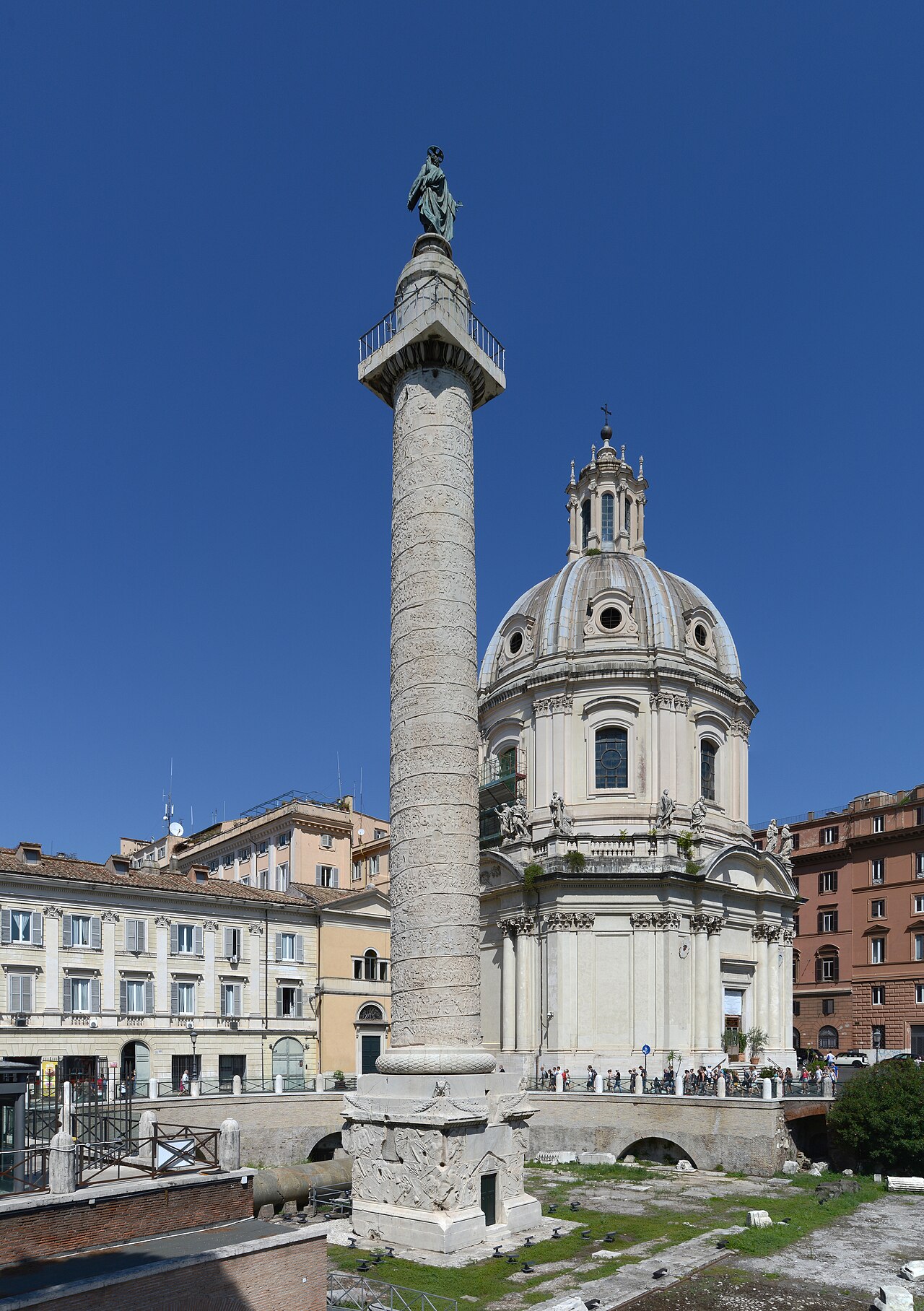 Sculpture
Primary source
Trajan's Column
Apollodorus of Damascus · 113 AD
 Artifact
Primary source
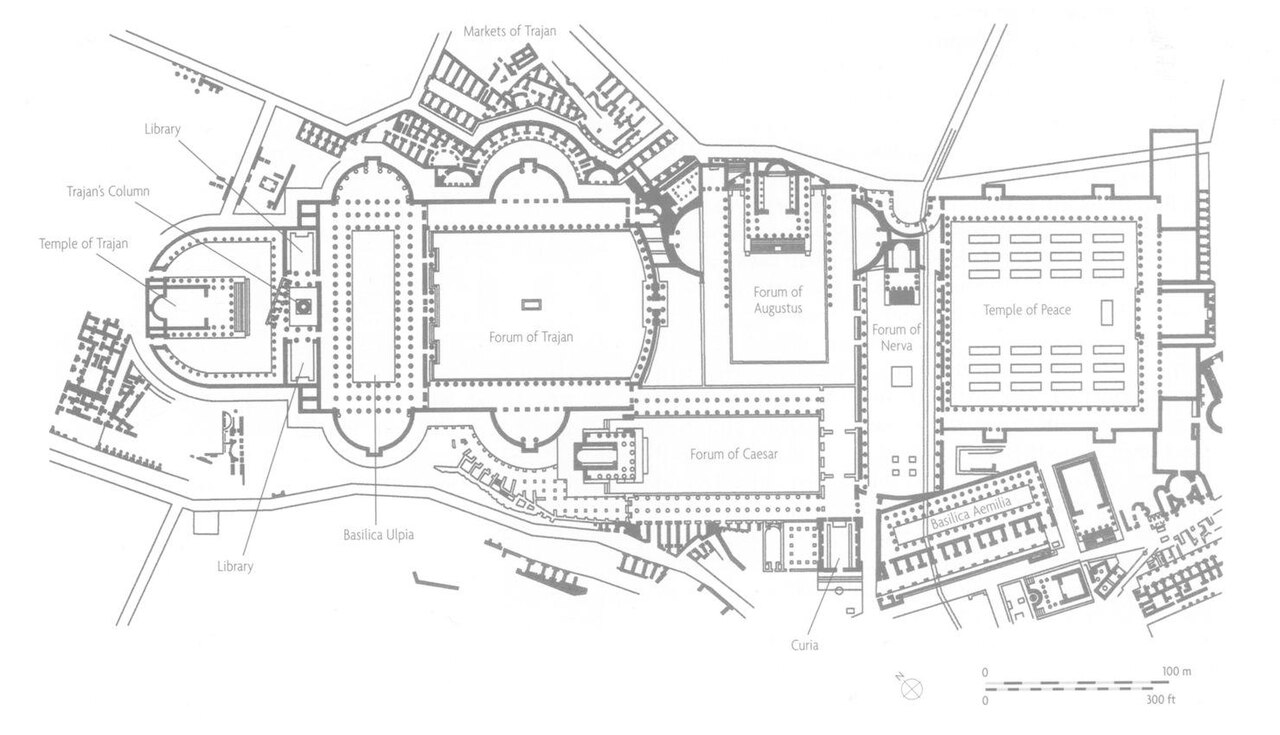
Trajan's Forum
Apollodorus of Damascus · c. 100-113 AD
 Speech
Primary source
Panegyricus
Pliny the Younger · c. 100 AD
 Artifact
Secondary source
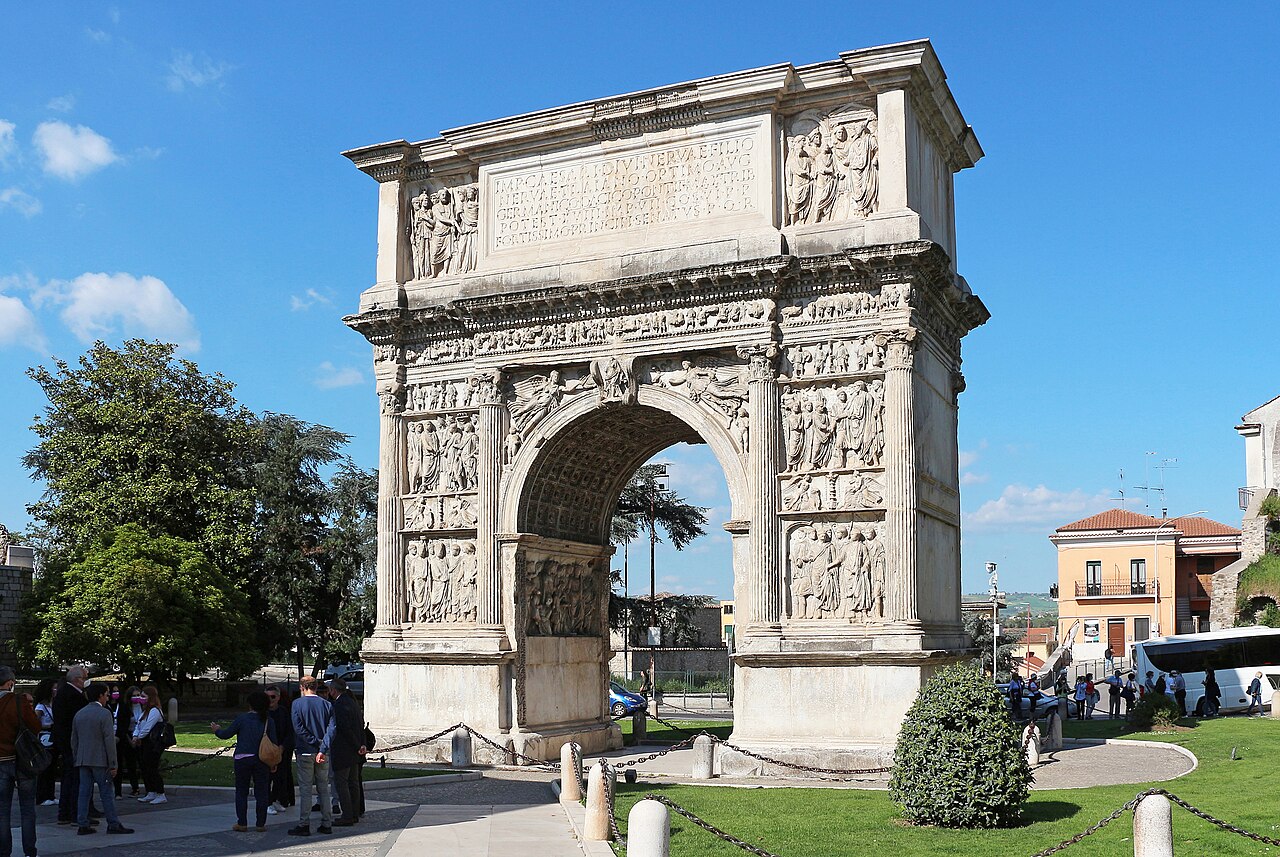
Arch of Trajan at Benevento
114-117 AD
 Sculpture
Primary source
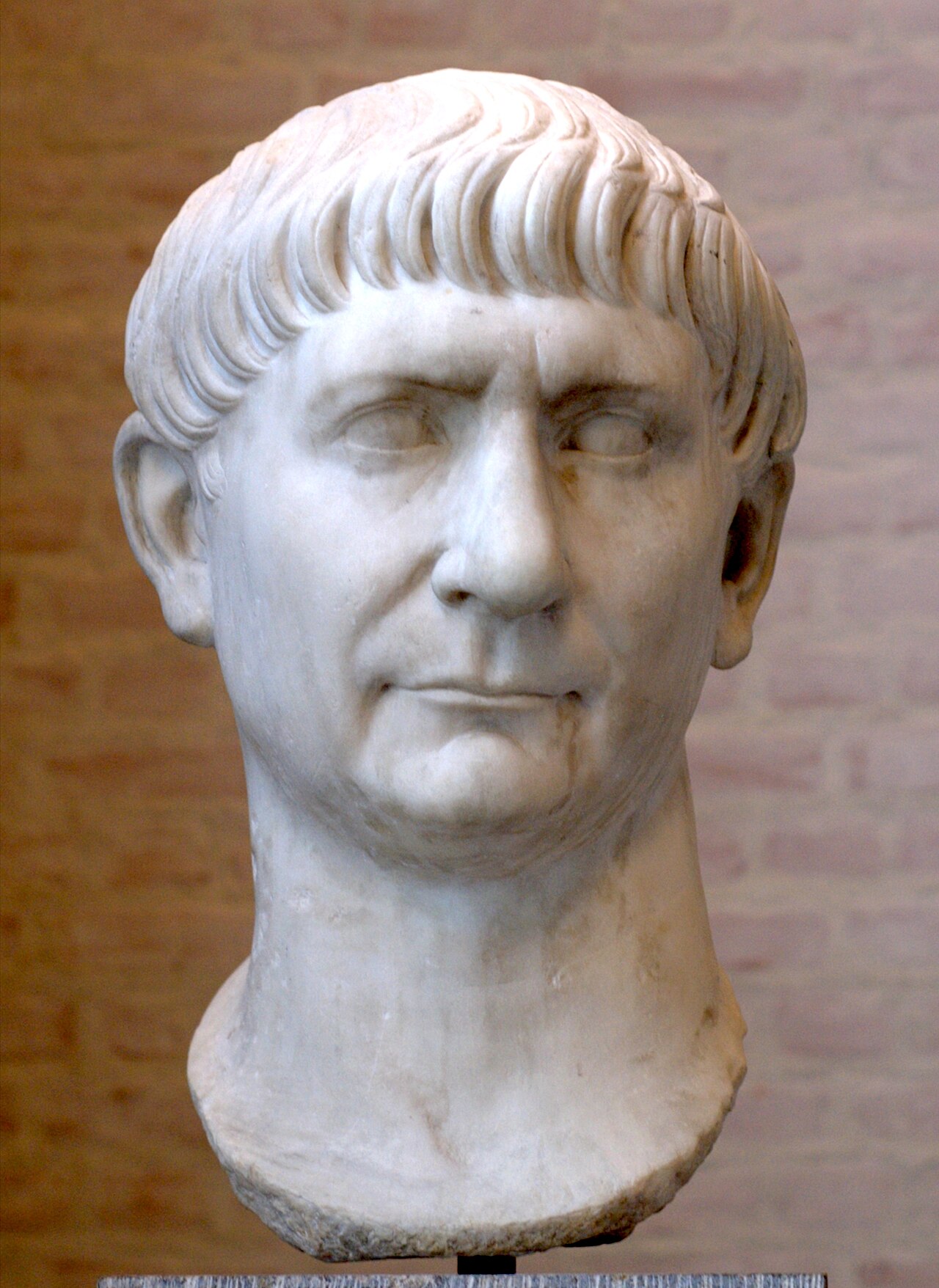
Portrait of Trajan
Ready when you are
Start chatting with Trajan now.
20 messages free · No credit card · Available in 50+ languages.