


Primary sourceDocument26 November 1580
Treaty of Fleix
Henry III of France · 26 November 1580
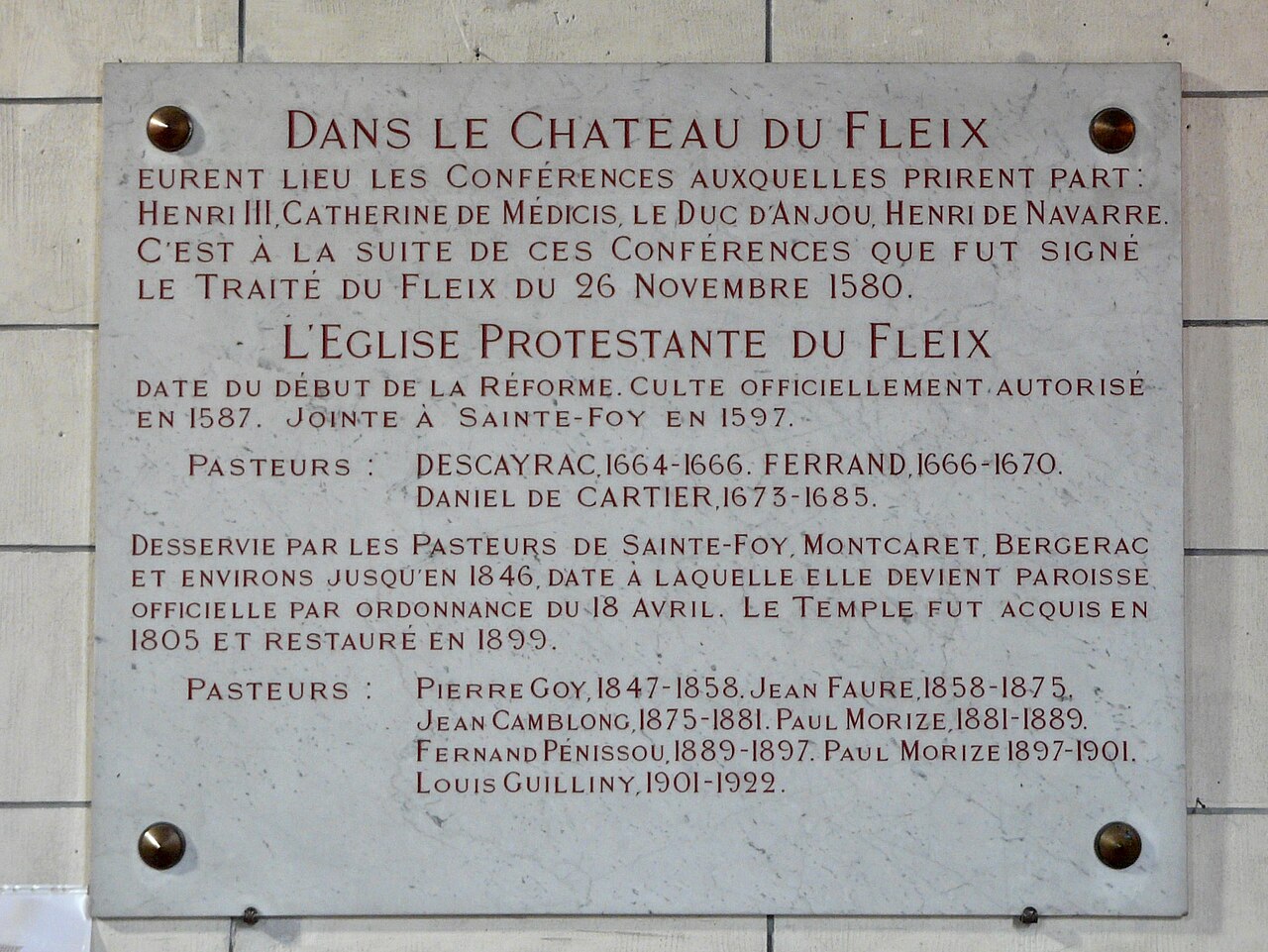
The 1580 peace treaty signed by Henry III ending the 'Lovers' War' between Catholic royal forces and Navarre's Huguenots.
Henry III personally signed this treaty, showing his approach of negotiated peace during the Wars of Religion.
About this source
What it is
The Treaty of Fleix, also called the Edict of Fleix, was signed on 26 November 1580 by King Henry III of France at Le Fleix. It ended a round of civil conflict between Catholic forces and Protestant Huguenots led by Henry of Navarre.
Why it matters
The treaty shows Henry III's recurring strategy of negotiating peace settlements during France's long Wars of Religion rather than pursuing total victory. It highlights his role as mediator between Catholic and Huguenot factions, and connects him directly to Henry of Navarre, his eventual successor.
Look closer
- Why might a king prefer negotiated peace over continued war?
- What does the survival of a commemorative plaque, rather than the original document, tell you about how this treaty is remembered today?
- Who might have been left out of these peace negotiations, and why?
This document is part of the curated material that grounds the AI version of Henry III of France on Humy.ai — when students ask about related events, the AI can quote it and cite it.
More Henry III of France sources
Browse all 84 →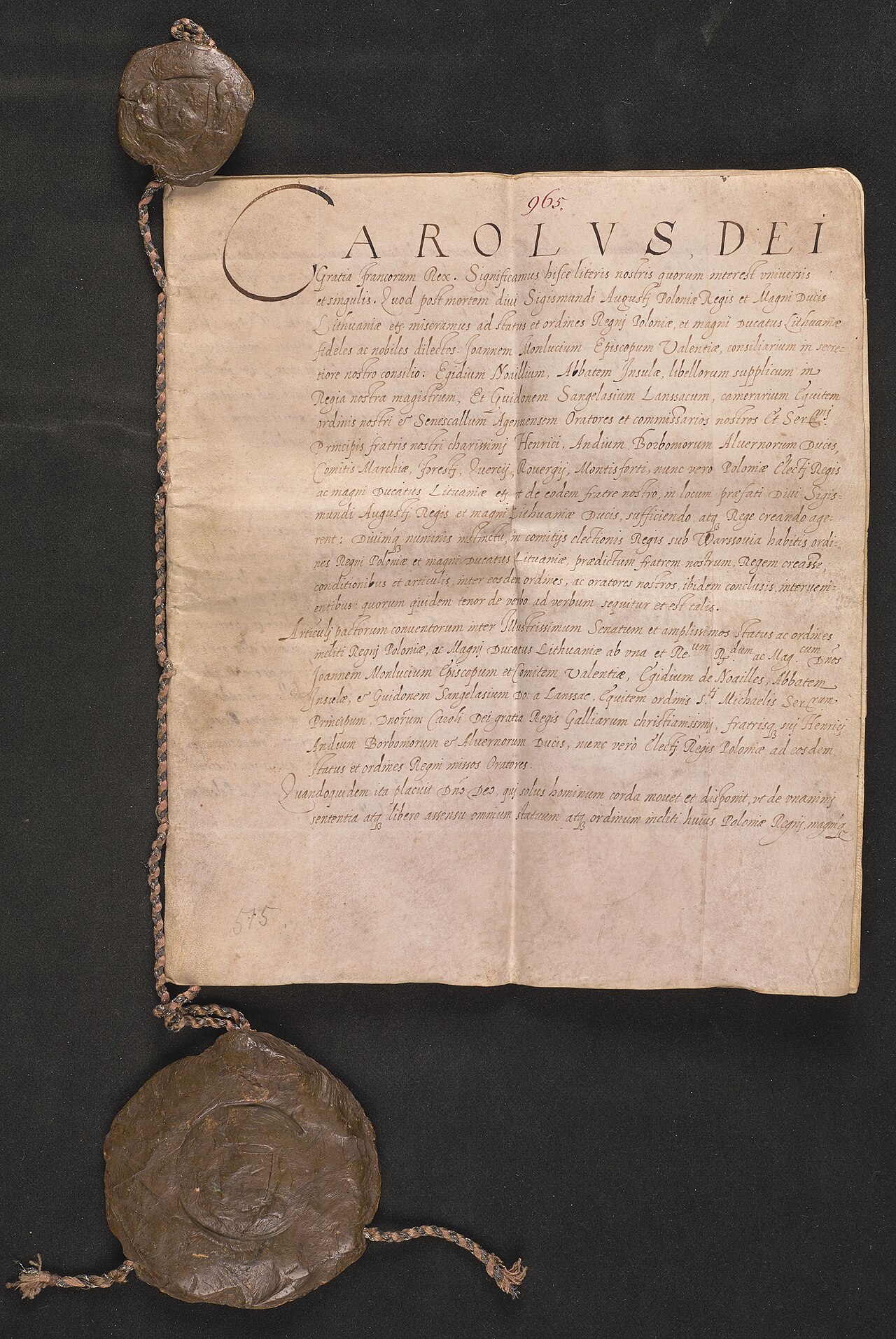 Document
Primary source
Pacta Conventa of Henry of Valois
1573
 Painting
Primary source
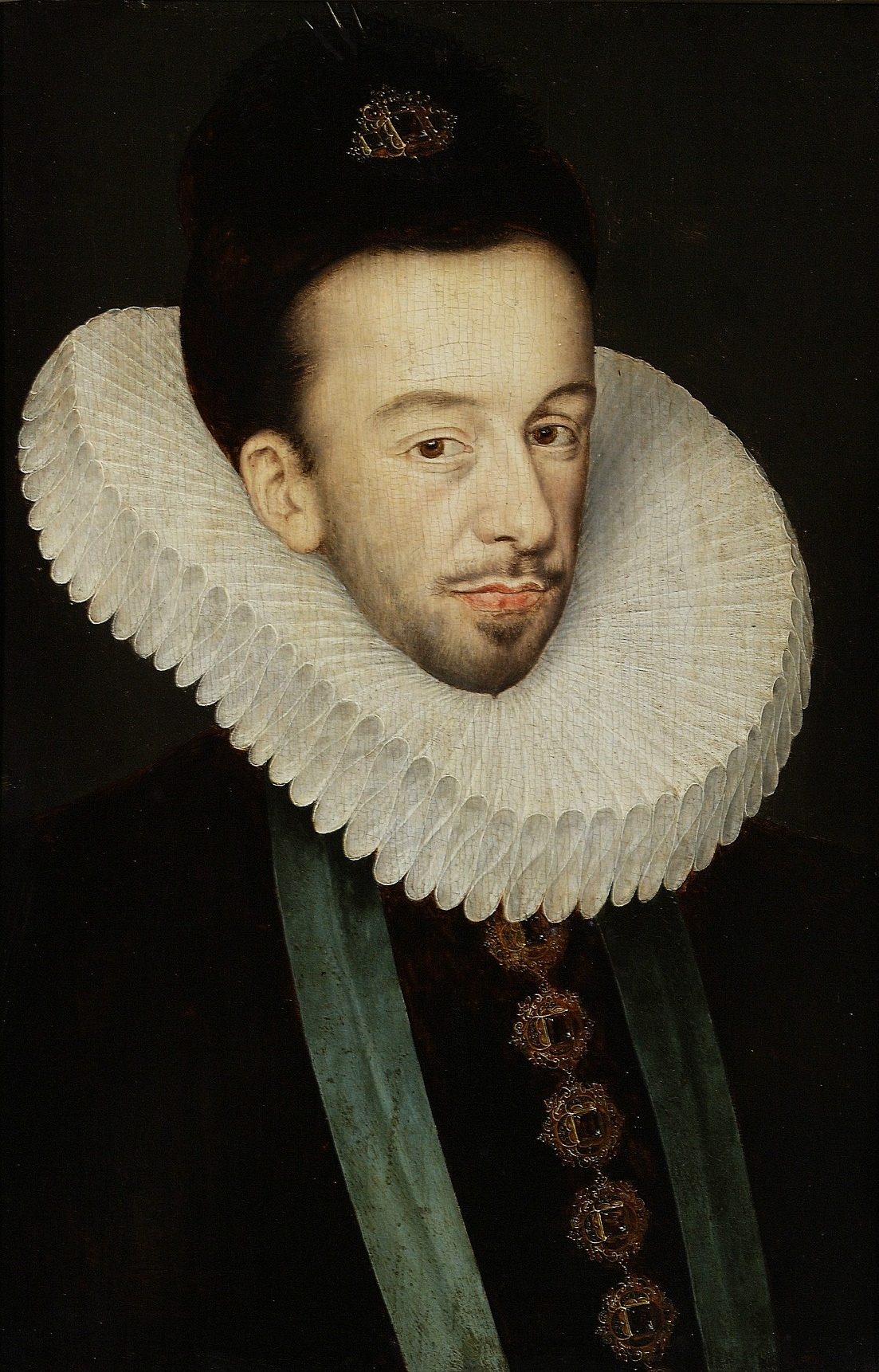
Portrait of Henri Valois
François Quesnel · 1588
 Painting
Secondary source
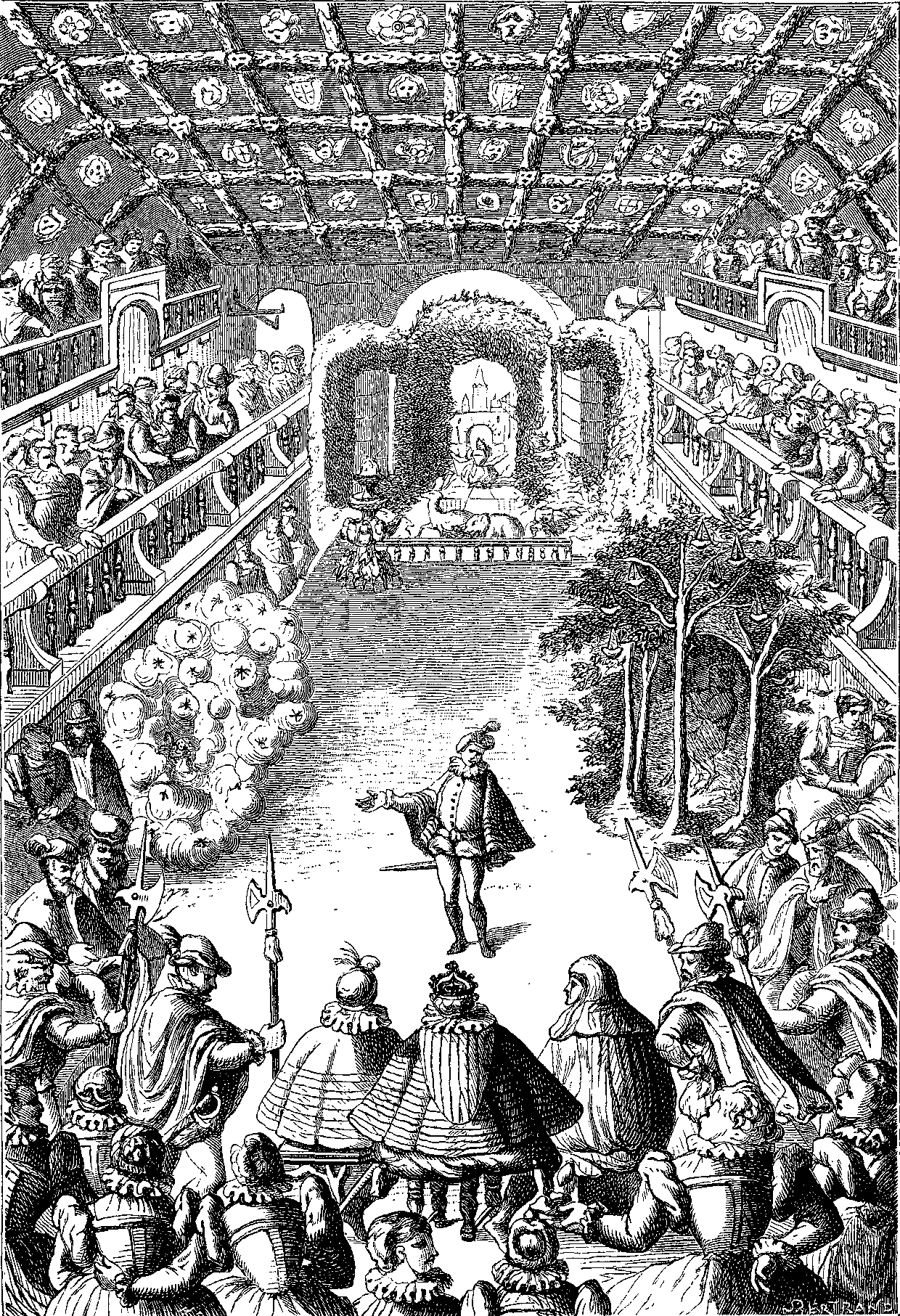
Ballet before Henri III and His Court
Jacques Patin · 1582
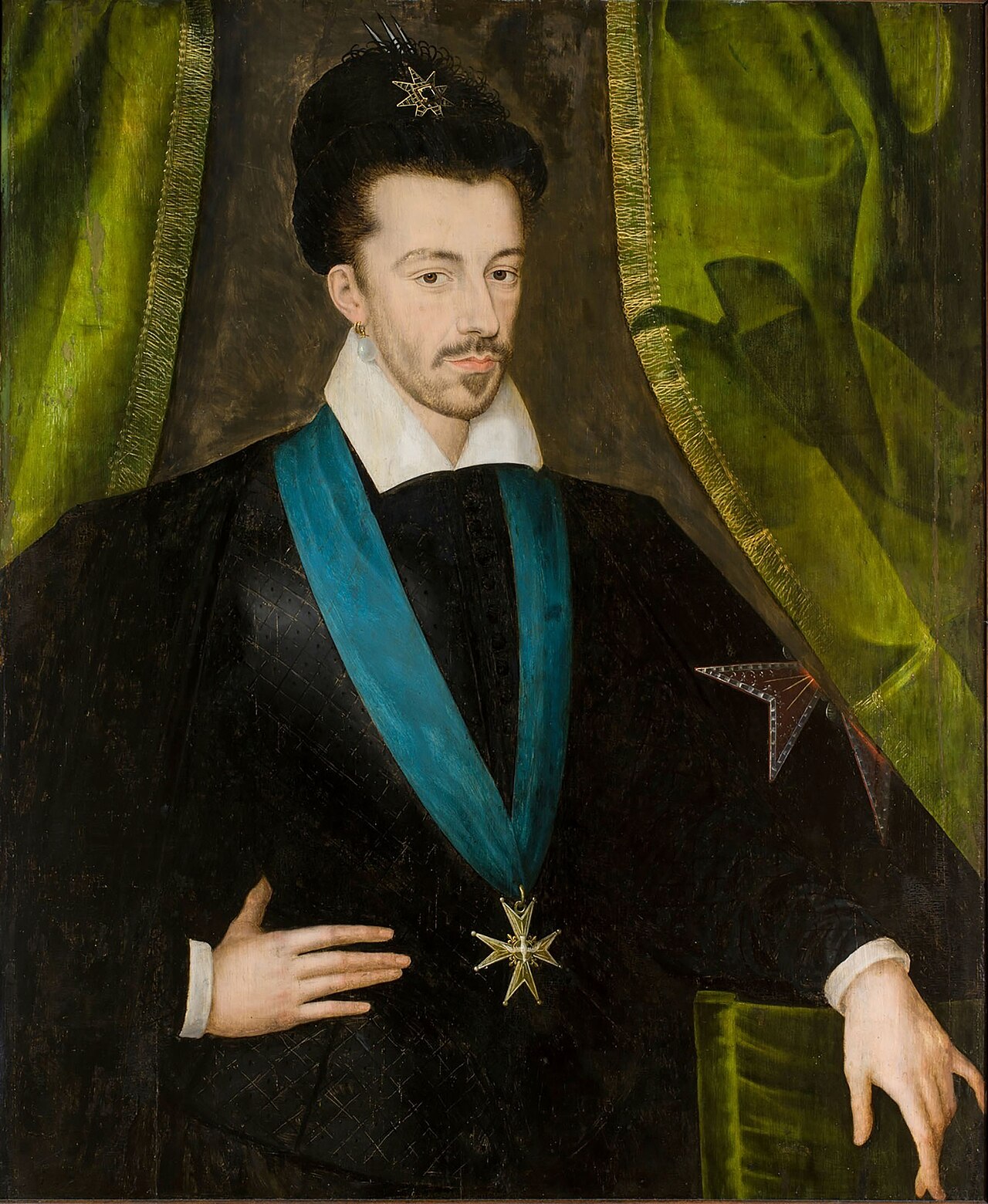 Painting
Primary source
Portrait of Henry III of France in Polish Hat
François Quesnel
Free account
Read every Henry III of France source
Sign up free →
Ready when you are
Start chatting with Henry III of France now.
20 messages free · No credit card · Available in 50+ languages.