


Primary sourceDocument10 December 1898
Treaty of Paris (1898)
10 December 1898
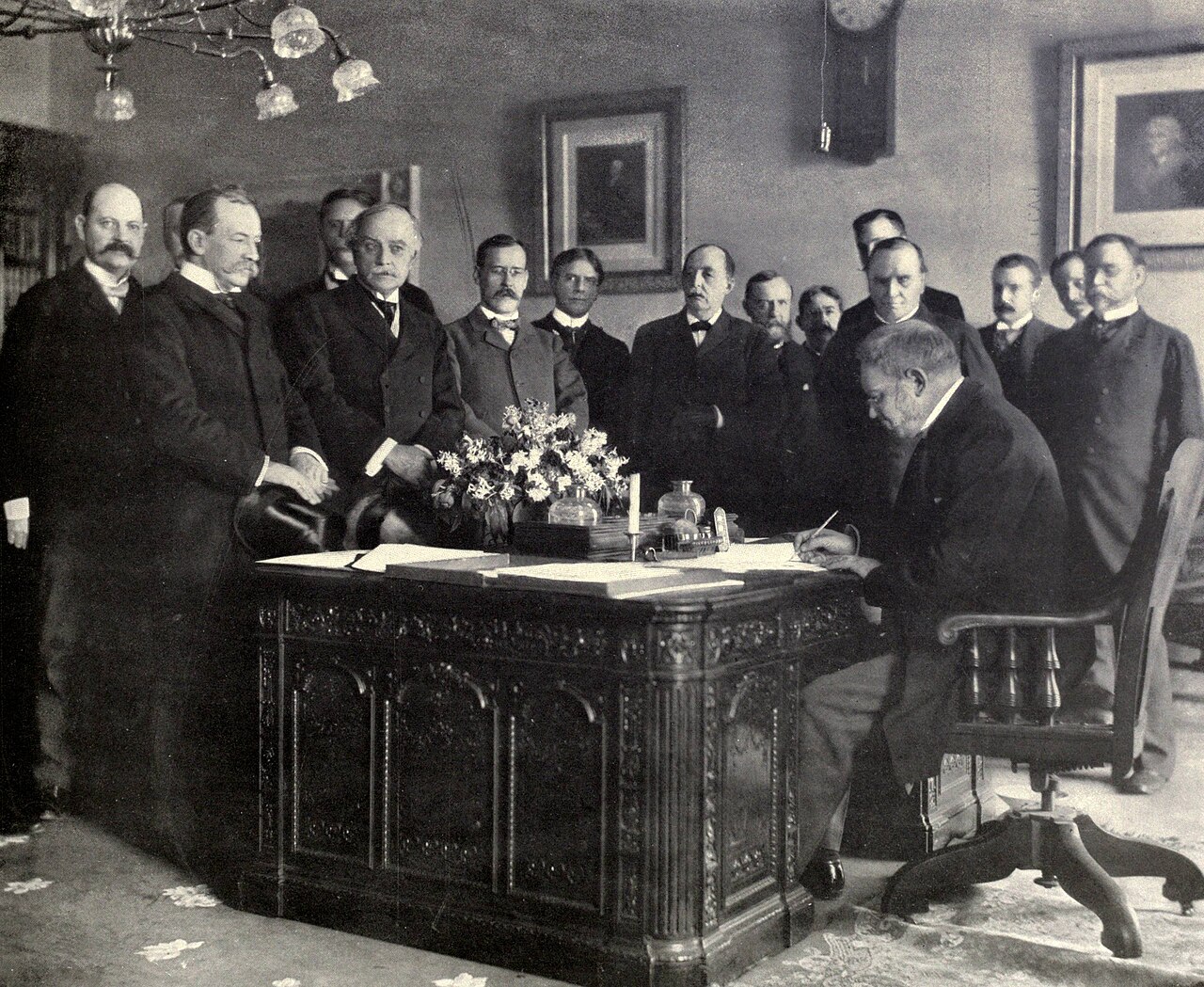
The 1898 treaty ending the Spanish-American War, whose terms on the Philippines Bryan urged senators to ratify and then campaign against.
McKinley directed the American commissioners who negotiated this treaty, which secured US control of new overseas territories.
About this source
What it is
The Treaty of Paris of 1898 was signed by the United States and Spain on December 10, 1898, ending the Spanish-American War. Spain gave up Cuba, Puerto Rico, Guam, and the Philippines to the United States, with the U.S. paying Spain $20 million for the Philippines.
Why it matters
The treaty marked the end of the Spanish Empire and the start of the United States as a world power, but it provoked fierce debate over American imperialism. William Jennings Bryan urged Senate Democrats to ratify it so the war could officially end, planning instead to fight Philippine annexation as a political issue in the 1900 election against President William McKinley.
Look closer
- Why might Bryan support ratifying a treaty whose policy he opposed?
- What does the treaty's language about demands and concessions reveal about the balance of power between the two nations?
- Whose voices are missing from a treaty negotiated only between Spain and the United States?
This document is part of the curated material that grounds the AI version of William McKinley, William Jennings Bryan and Emilio Aguinaldo on Humy.ai — when students ask about related events, the AI can quote it and cite it.
More William McKinley sources
Meet the AI William McKinley →Primary source
William McKinley's War Message to Congress
William McKinley · 11 April 1898
 Letter
Primary source
De Lôme Letter
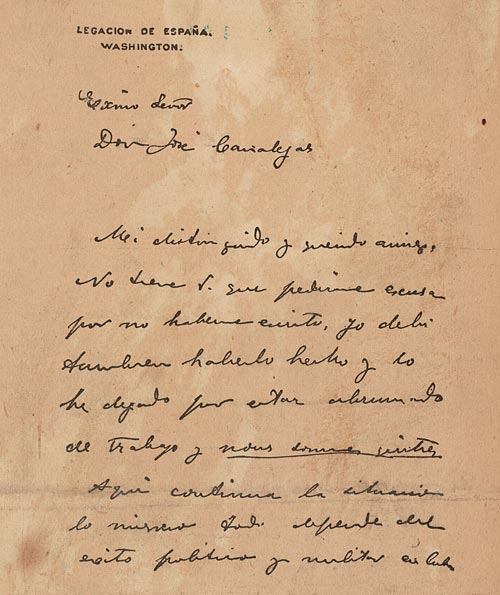
Enrique Dupuy de Lôme · 9 February 1898
 Document
Primary source
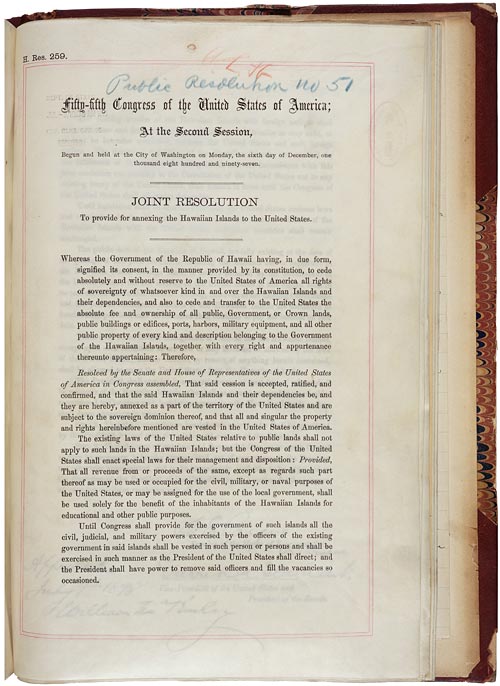
Joint Resolution to Provide for Annexing the Hawaiian Islands to the United States
United States Congress · 7 July 1898
 Speech
Primary source
McKinley's Last Speech at the Pan-American Exposition
William McKinley · 5 September 1901
Primary source
Recording of the Voice of William McKinley
William McKinley · 1896
Ready when you are
Start chatting with William McKinley now.
20 messages free · No credit card · Available in 50+ languages.