


Primary sourceDocument11-12 July 1859
Treaty of Villafranca
11-12 July 1859
The 1859 Franco-Austrian armistice ending the Second Italian War of Independence, which Victor Emmanuel II signed despite Cavour's objections.
He signed this armistice despite his prime minister Cavour's objections, revealing his dependence on Napoleon III.
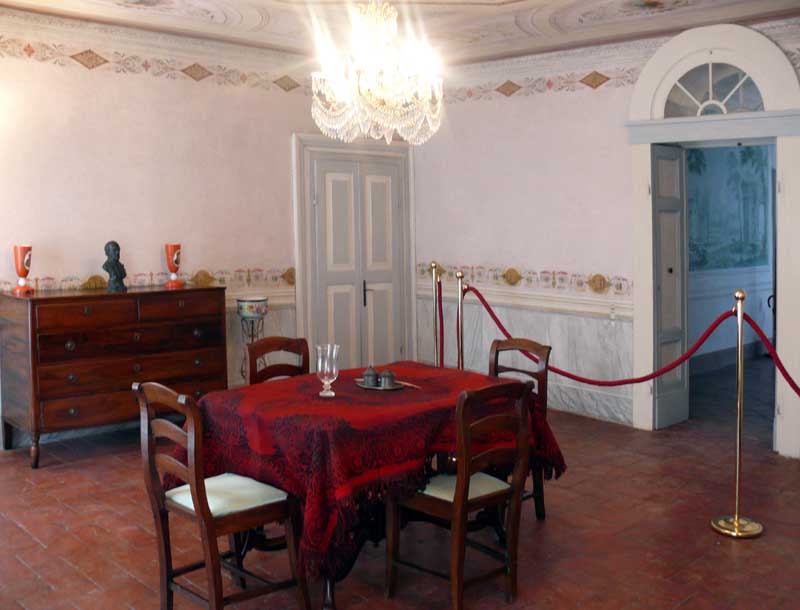
About this source
What it is
The Armistice of Villafranca was concluded between Napoleon III of France and Franz Joseph I of Austria on 11 July 1859, ending the fighting of the Second Italian War of Independence. King Victor Emmanuel II of Sardinia also signed it, on 12 July, though it was negotiated without his full control.
Why it matters
The armistice gave Piedmont only Lombardy, not all of Lombardy-Venetia as promised in the earlier Sardinian-French alliance. This broke the terms Cavour had negotiated and led to his resignation as prime minister. For Victor Emmanuel, accepting the armistice against Cavour's wishes shows how dependent the kingdom still was on Napoleon III's France in 1859, even as unification moved forward.
Look closer
- Why might a king sign a treaty that his own prime minister strongly opposed?
- What does this episode reveal about the limits of Piedmont's power compared to France and Austria?
- How might Cavour and Victor Emmanuel have seen this moment differently?
This document is part of the curated material that grounds the AI version of Victor Emmanuel II and Franz Joseph I of Austria on Humy.ai — when students ask about related events, the AI can quote it and cite it.
More Victor Emmanuel II sources
Browse all 92 →Primary source
Proclamation of 27 March 1849
Victor Emmanuel II of Italy · 27 March 1849
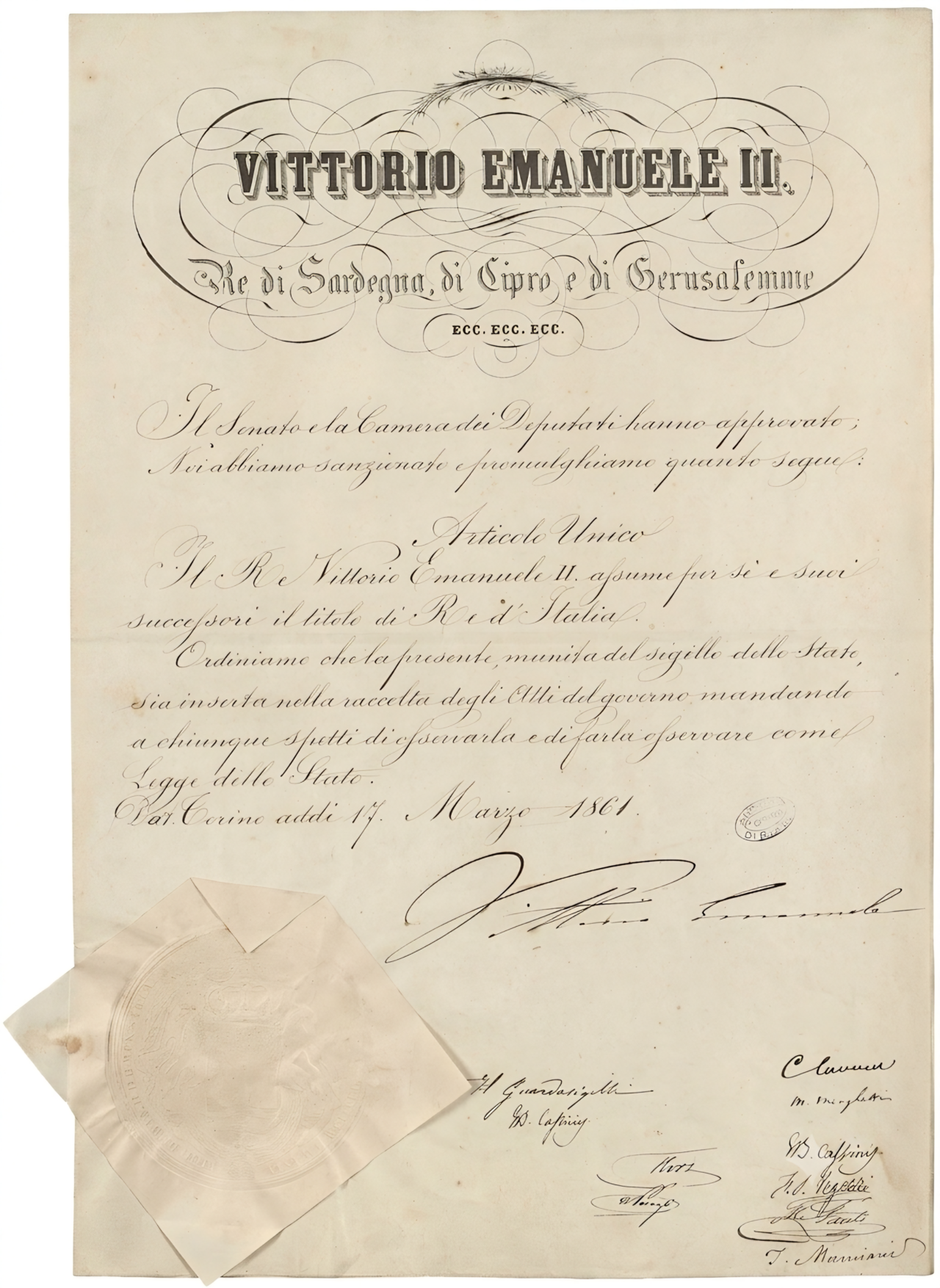 Document
Primary source
Law proclaiming the Kingdom of Italy
Victor Emmanuel II of Italy · 17 March 1861
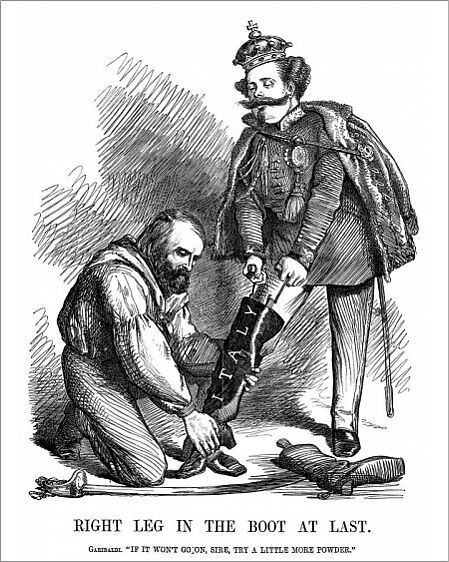 Painting
Secondary source
Right Leg in the Boot at Last
John Tenniel · 17 November 1860
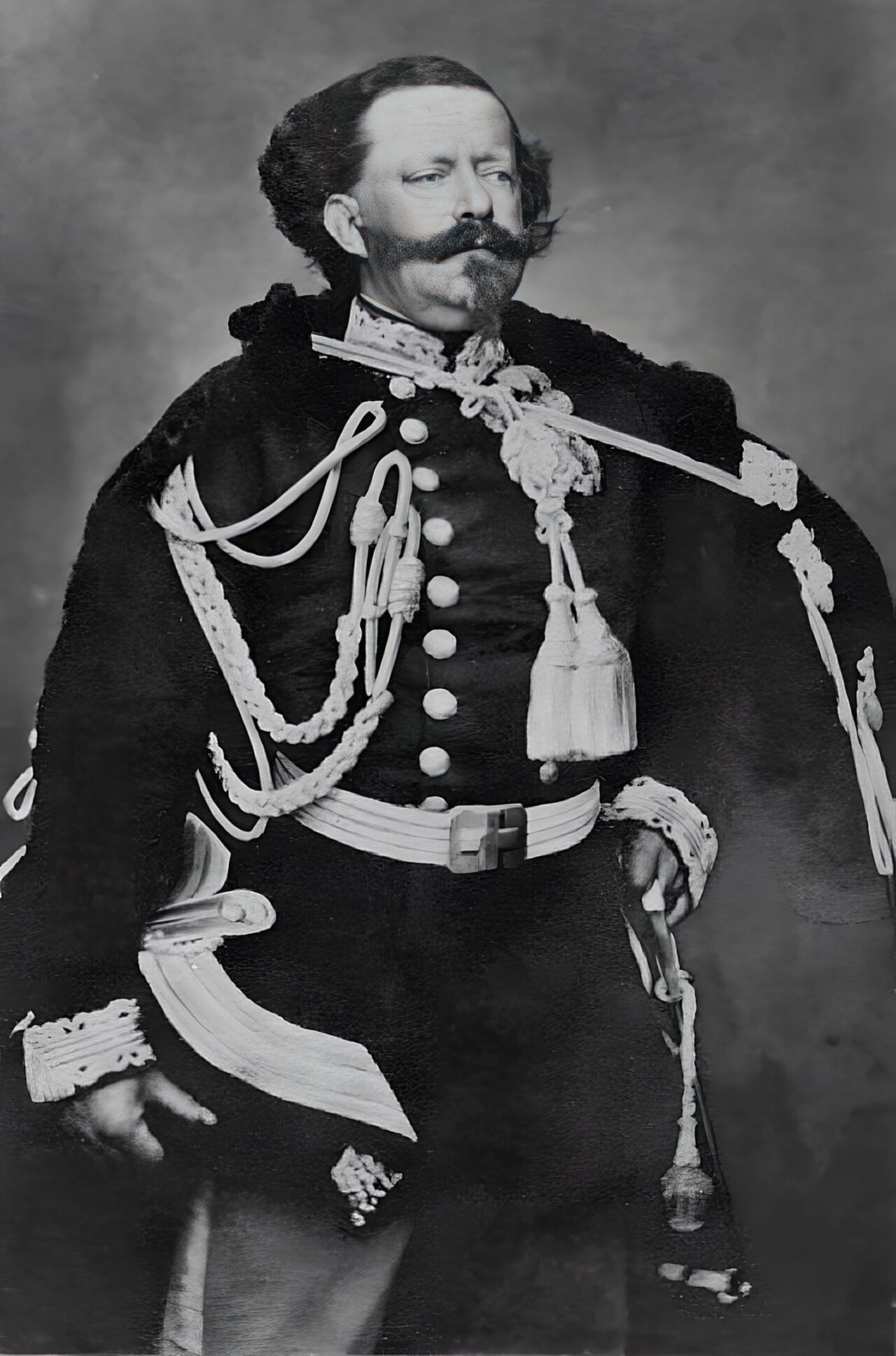 Photograph
Primary source
Portrait of Victor Emmanuel II of Italy
Free account
Read every Victor Emmanuel II source
Sign up free →
Ready when you are
Start chatting with Victor Emmanuel II now.
20 messages free · No credit card · Available in 50+ languages.