


Primary sourceDocument7 December 1970
Treaty of Warsaw
7 December 1970
A 1970 treaty between West Germany and Poland, signed by Chancellor Willy Brandt, accepting the Oder–Neisse line as Poland's western border.
Brandt signed this treaty as Chancellor, making it a defining document of his Ostpolitik.
Free Humy account · No credit card · 65,431 sources to read
About this source
What it is
This is the Treaty of Warsaw, signed on behalf of West Germany by Chancellor Willy Brandt and for Poland by Prime Minister Józef Cyrankiewicz at the Presidential Palace in Warsaw in 1970. It committed both countries to nonviolence and recognised the existing Oder–Neisse border between them.
Why it matters
The treaty was a central achievement of Brandt's Ostpolitik, his policy of reconciliation with Eastern Europe. By accepting the postwar border, Brandt took a politically risky step that angered conservative opponents at home but was seen abroad as a major step toward peace after the Second World War. It shows how Brandt used diplomacy to address the painful legacy of the war between Germany and Poland.
Look closer
- Why might accepting a border be controversial for a country's own population?
- What does the treaty's language about 'nonviolence' suggest about the fears still present 25 years after the war?
- Why did some West German politicians call this treaty a 'betrayal'?
This document is part of the curated material that grounds the AI version of Willy Brandt on Humy.ai — when students ask about related events, the AI can quote it and cite it.
More Willy Brandt sources
Browse all 99 →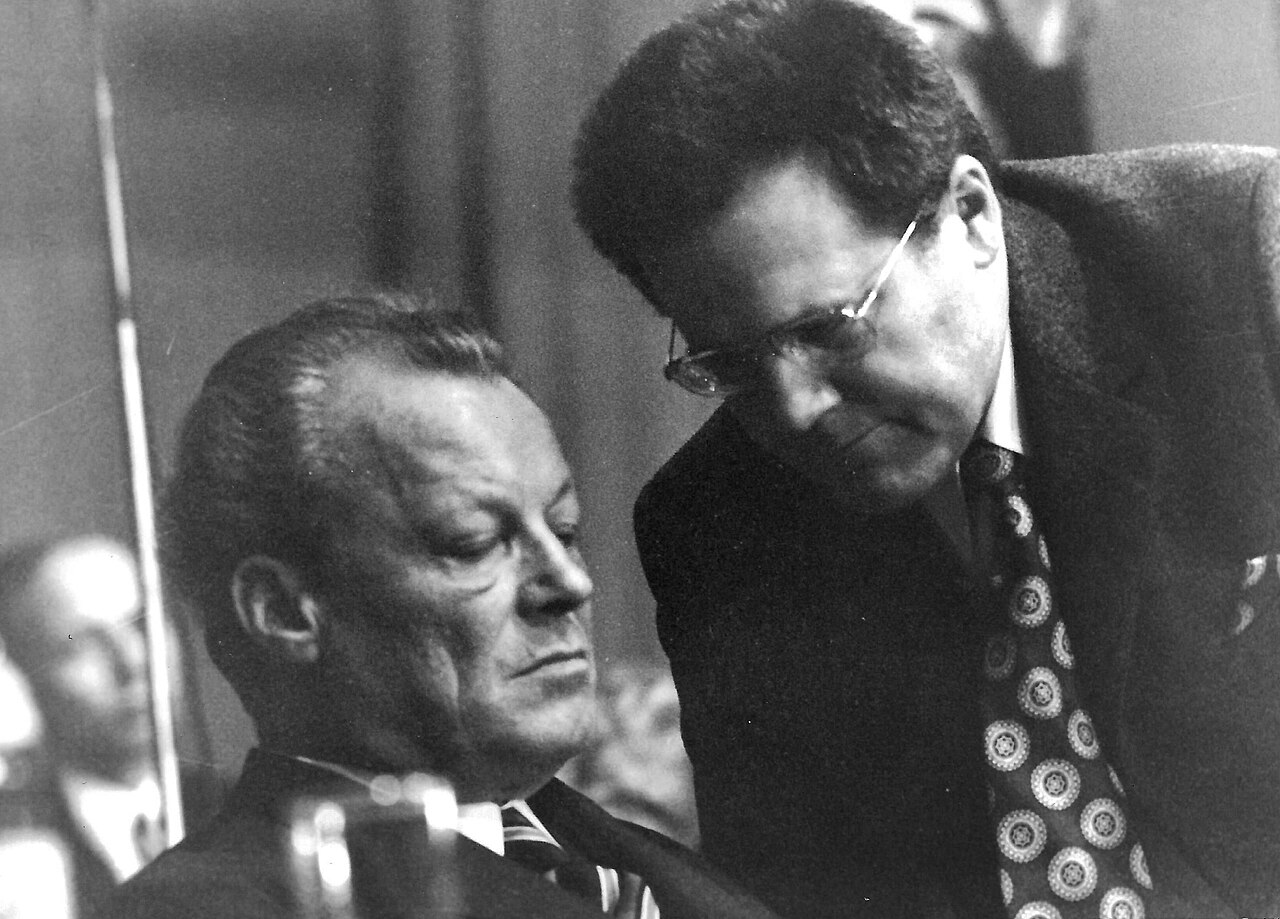 Photograph
Primary source
Willy Brandt and Günter Guillaume at a Party Congress
Pelz · between 1970 and 1974
 Document
Primary source
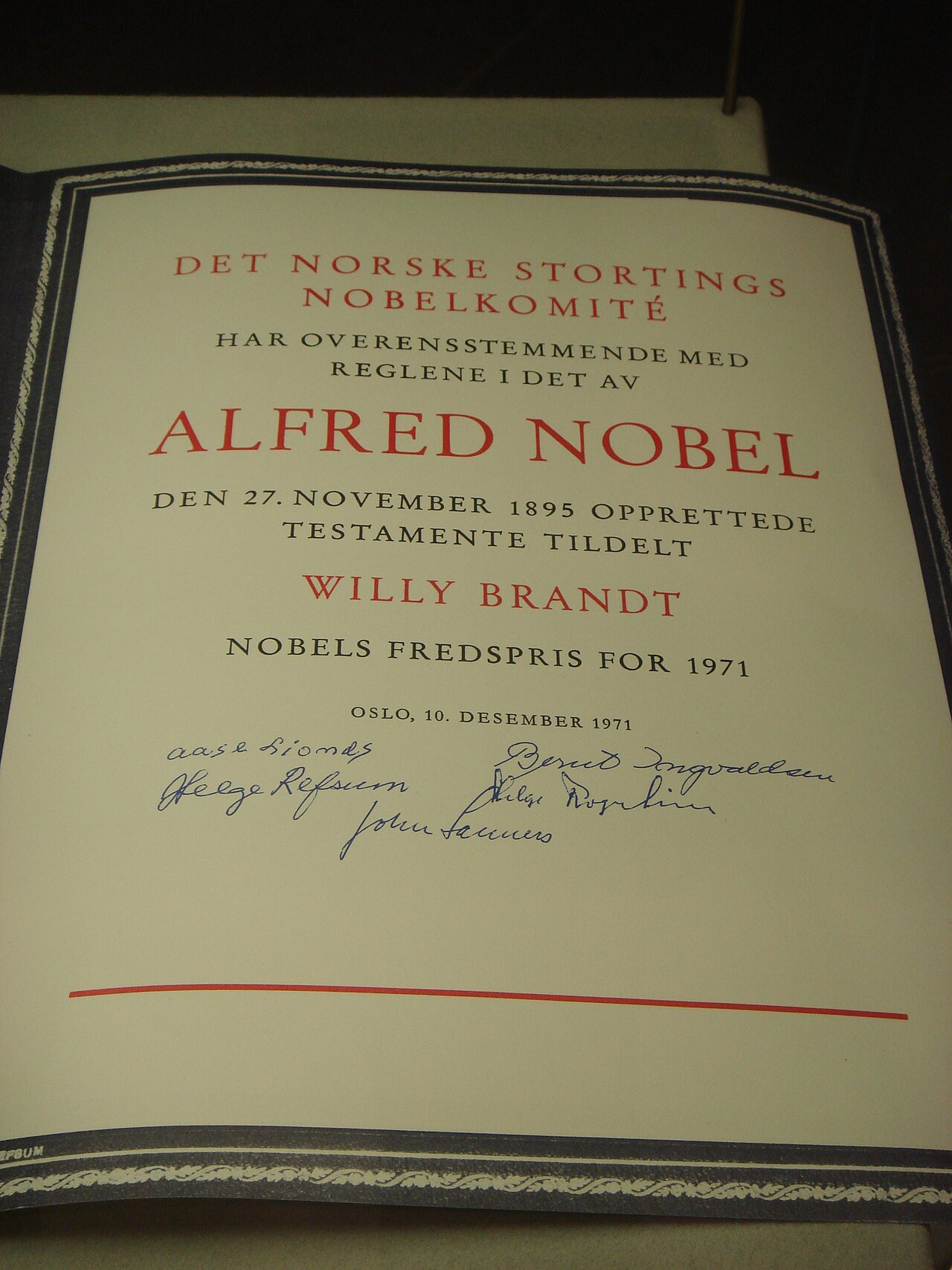
Willy Brandt's Nobel Peace Prize Diploma
Norwegian Nobel Committee · 10 December 1971
 Photograph
Primary source
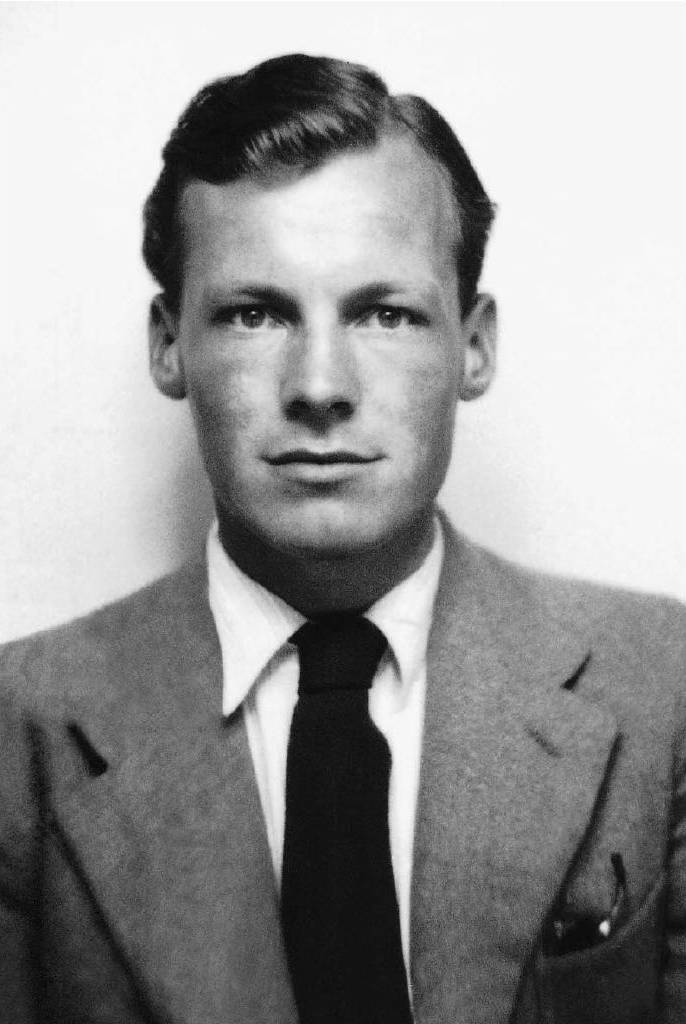
Herbert Frahm's Norwegian Passport Photograph
Norwegian Government · c. 1933-1940
 Document
Primary source
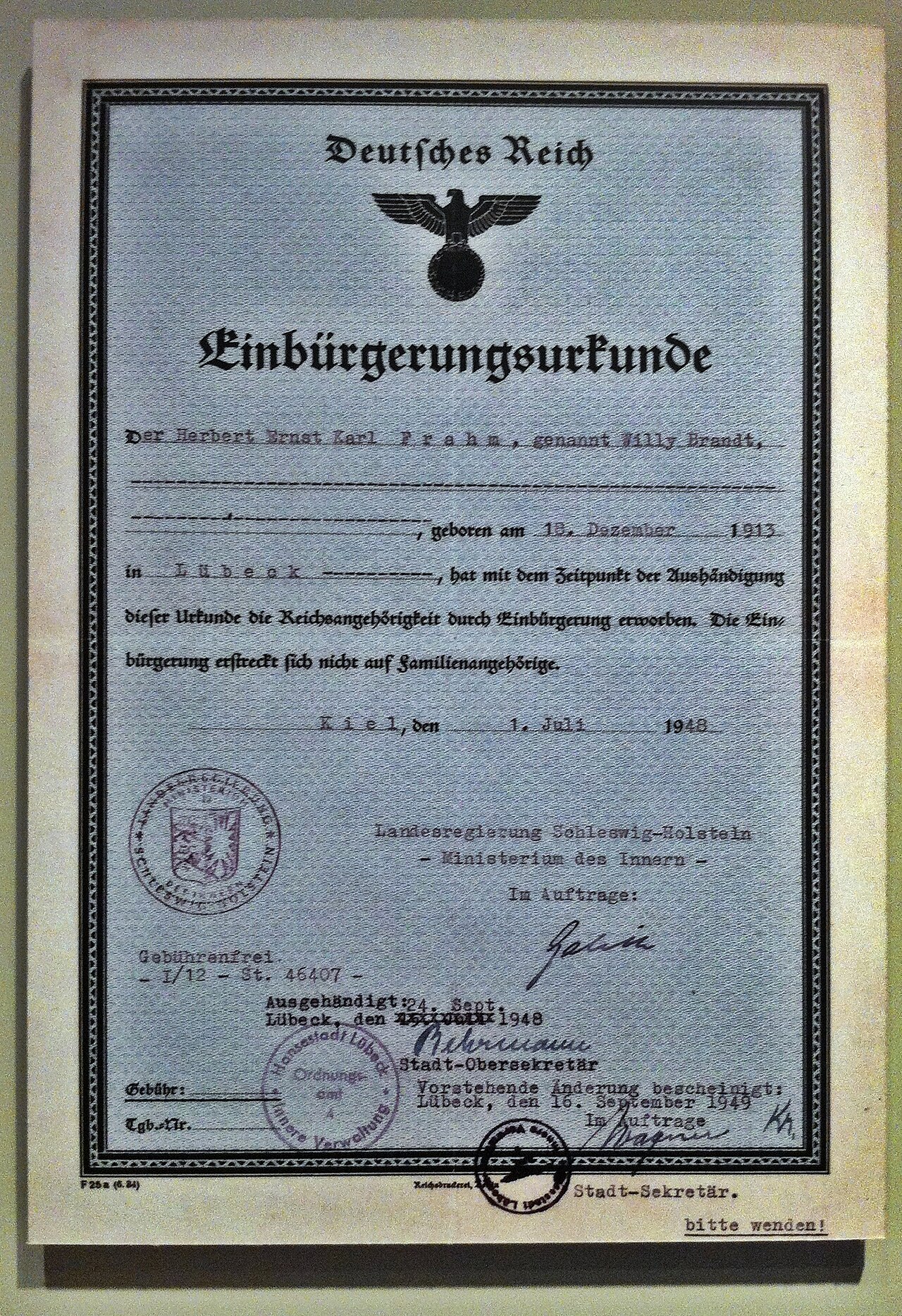
German Naturalization Certificate for Willy Brandt
Landesregierung Schleswig-Holstein · 1 July 1948
Free account
Read every Willy Brandt source
Sign up free →
Ready when you are
Start chatting with Willy Brandt now.
20 messages free · No credit card · Available in 50+ languages.