


Primary sourceDocument1968
Treaty on the Non-Proliferation of Nuclear Weapons
1968
The 1968 international treaty, known as the NPT, aimed at stopping the spread of nuclear weapons. The curator's note calls it Johnson's major arms-control achievement with the Soviet Union.
Johnson's government negotiated and signed this treaty, which the curator calls his major arms-control achievement, so it belongs in his archive.
About this source
What it is
This is the Treaty on the Non-Proliferation of Nuclear Weapons, known as the NPT. It was negotiated between 1965 and 1968 by the Eighteen Nation Committee on Disarmament in Geneva, opened for signature in 1968, and entered into force in 1970. The image in this archive is a scanned National Archives withdrawal sheet, a form that describes a secret 1968 draft of the treaty. It is not the signed text itself.
Why it matters
The treaty aims to prevent the spread of nuclear weapons, promote peaceful uses of nuclear energy, and move toward disarmament. Its central bargain is that non-nuclear-weapon states agree never to acquire nuclear weapons, while nuclear-weapon states agree to share peaceful nuclear technology and pursue disarmament. As of August 2016, 191 states had become parties. Critics argue that the treaty cannot stop proliferation and that progress on disarmament has been limited.
Look closer
- Which states does the treaty recognize as nuclear-weapon states, and which countries have never joined?
- Why might states without nuclear weapons have agreed to a bargain that asks them to give up the option?
- What does the scanned form tell you about how the draft was handled, and what does it leave out?
This document is part of the curated material that grounds the AI version of Lyndon B. Johnson on Humy.ai — when students ask about related events, the AI can quote it and cite it.
More Lyndon B. Johnson sources
Meet the AI Lyndon B. Johnson →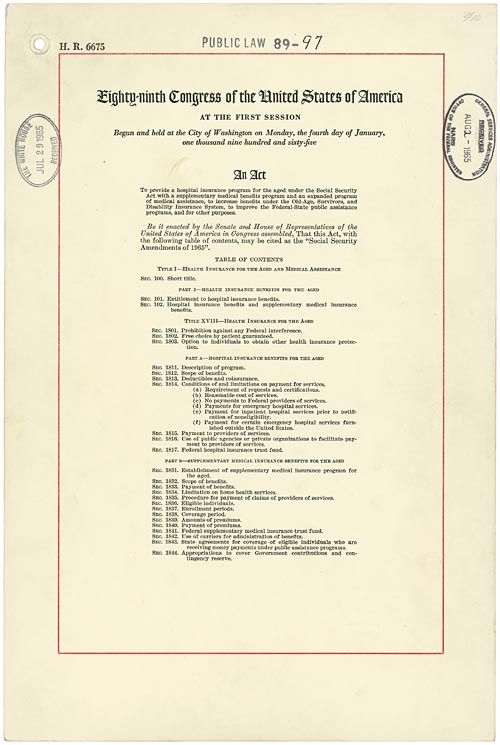 Document
Primary source
Social Security Amendments of 1965 (Medicare and Medicaid Act)
United States Congress · 30 July 1965
Primary source
Great Society Speech at the University of Michigan
Lyndon B. Johnson · 22 May 1964
Primary source
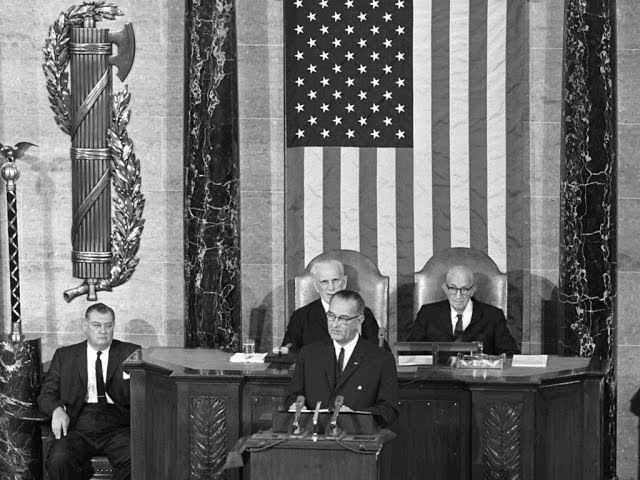
The American Promise Speech to Congress
Lyndon B. Johnson · 15 March 1965
 Speech
Primary source
1964 State of the Union Address
Lyndon B. Johnson · 8 January 1964
Primary source
Renunciation Speech
Lyndon B. Johnson · 31 March 1968
Ready when you are
Start chatting with Lyndon B. Johnson now.
20 messages free · No credit card · Available in 50+ languages.