


Secondary sourcePainting
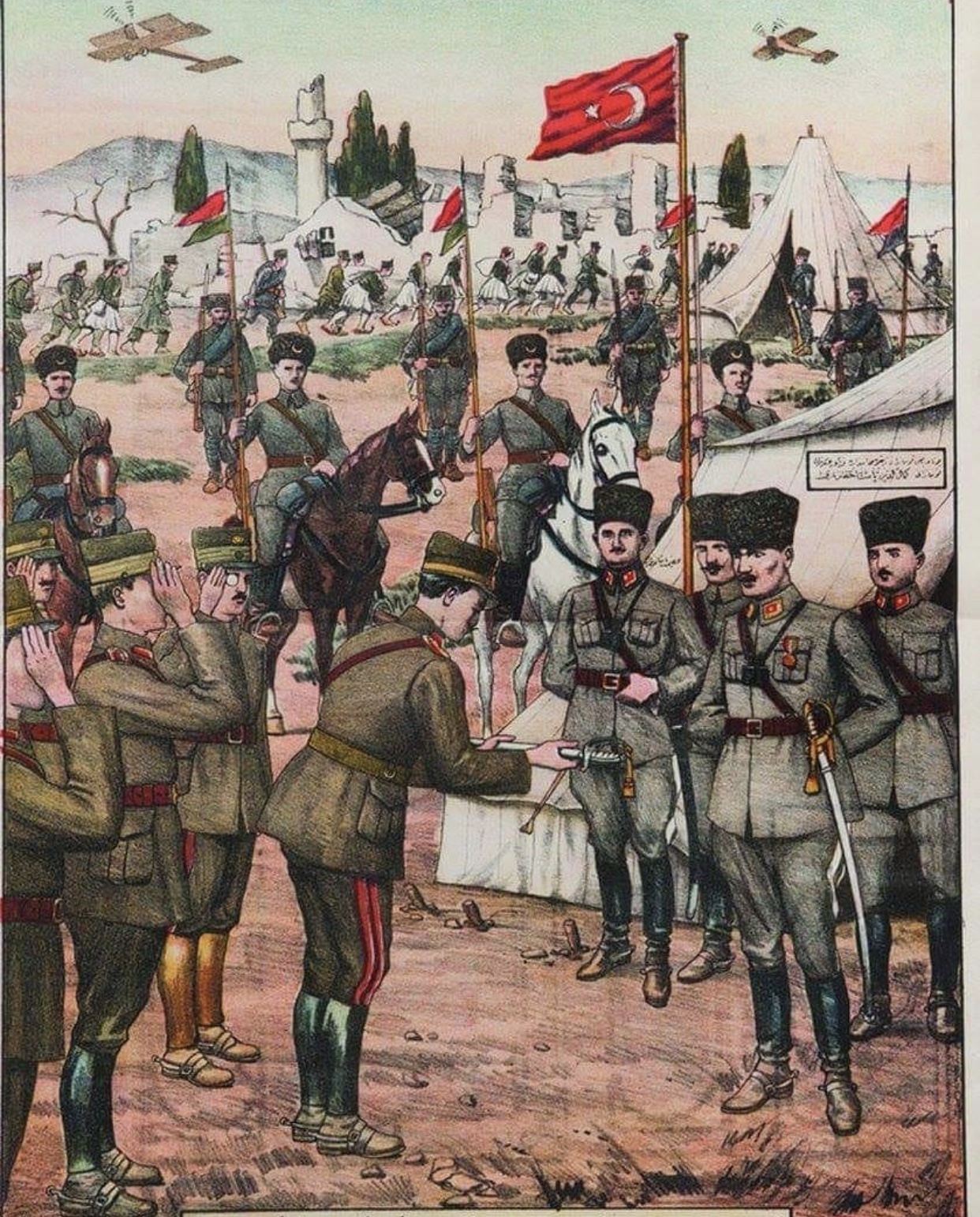
Trikupis Surrendering His Sword to Mustafa Kemal Pasha
TengriTürkMenen
A colored print showing the Greek commander Nikolaos Trikupis handing his sword or a paper to Mustafa Kemal Pasha during a military camp scene. It is a later artistic depiction of a key battle.
It shows Mustafa Kemal as the Turkish commander receiving the surrender of a Greek commander, a later depiction of his military leadership.
About this source
What it is
This is a colored image of a military camp. A Greek officer in khaki bows and presents a sword or paper to Turkish officers in grey uniforms and tall black caps. Turkish red flags with a crescent and star fly nearby, and the scene includes mounted soldiers, tents, ruins and two airplanes in the sky. The file's record names the Greek officer as Nikolaos Trikupis, commander of the Greek armies, who was taken prisoner in the battle the Turkish caption calls Başkomutanlık Meydan Muharebesi. The creator is listed only by an online username, and the date of making is not known.
Why it matters
The image was made long after the events it shows, so it reflects how the battle was remembered and presented, not an eyewitness view. It places Mustafa Kemal at the center of a moment of victory over the Greek army, a story that helped build his reputation as a military leader and later as founder of the Turkish Republic.
Look closer
- Who is shown standing and who is bowing, and what does the placement of each figure suggest about power?
- Why might the artist include airplanes, flags and ruins in a scene about surrender?
- What does this image leave out, such as the soldiers and civilians who were not part of the ceremony?
This painting is part of the curated material that grounds the AI version of Mustafa Kemal Atatürk on Humy.ai — when students ask about related events, the AI can quote it and cite it.
More Mustafa Kemal Atatürk sources
Browse all 99 →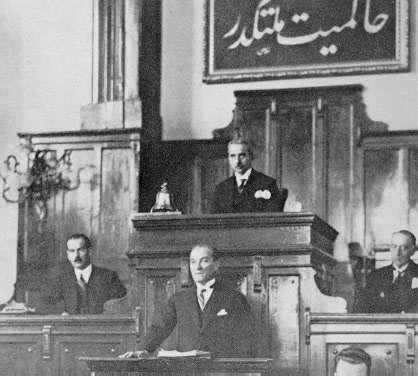 Speech
Primary source
Nutuk
Mustafa Kemal Atatürk · 15-20 October 1927
SpeechPrimary source
Atatürk's Address To Turkish Youth
Mustafa Kemal Atatürk · 27 October 1927
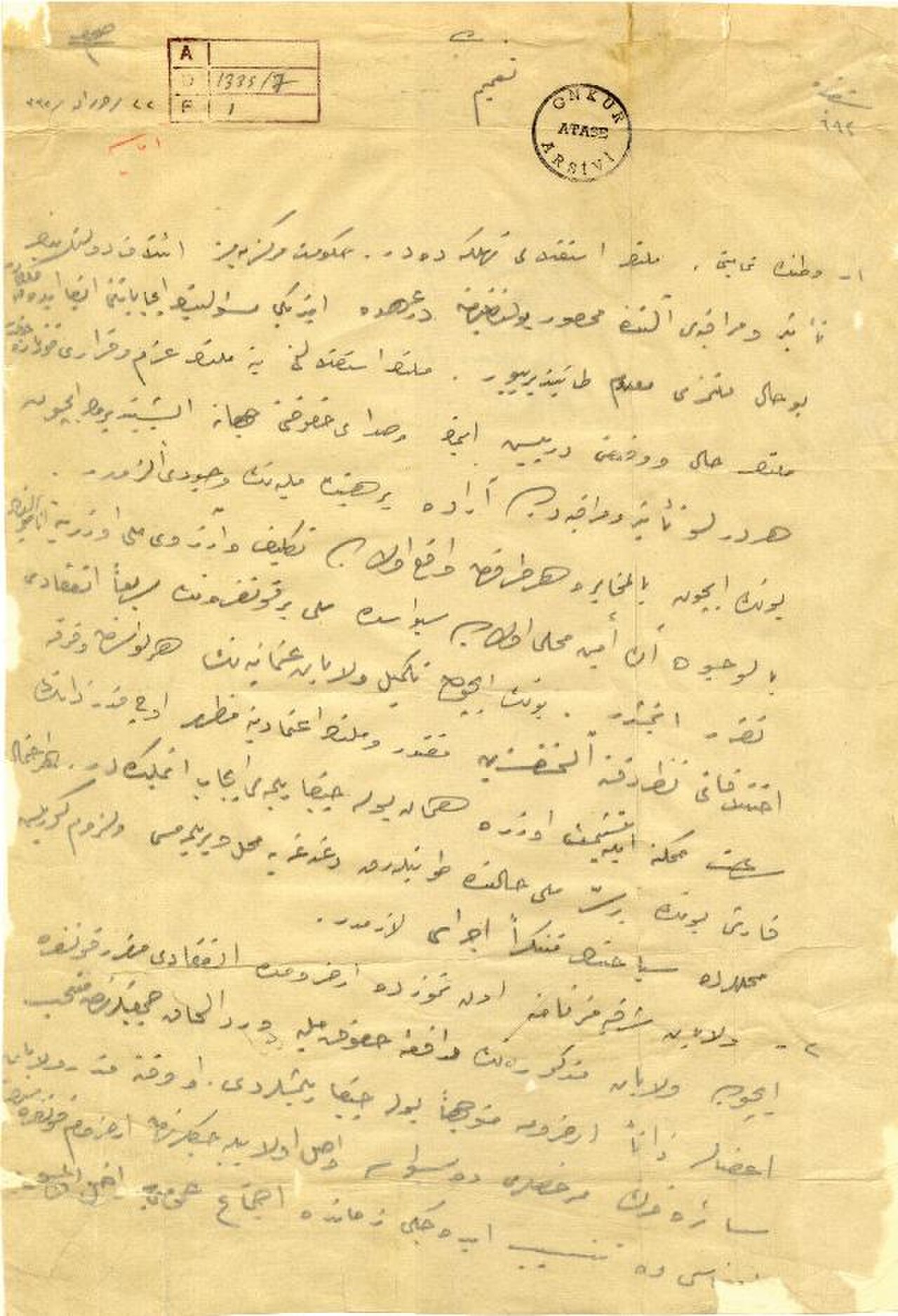
Primary source
Recording of the voice of Mustafa Kemal Atatürk
Mustafa Kemal Atatürk · 1930
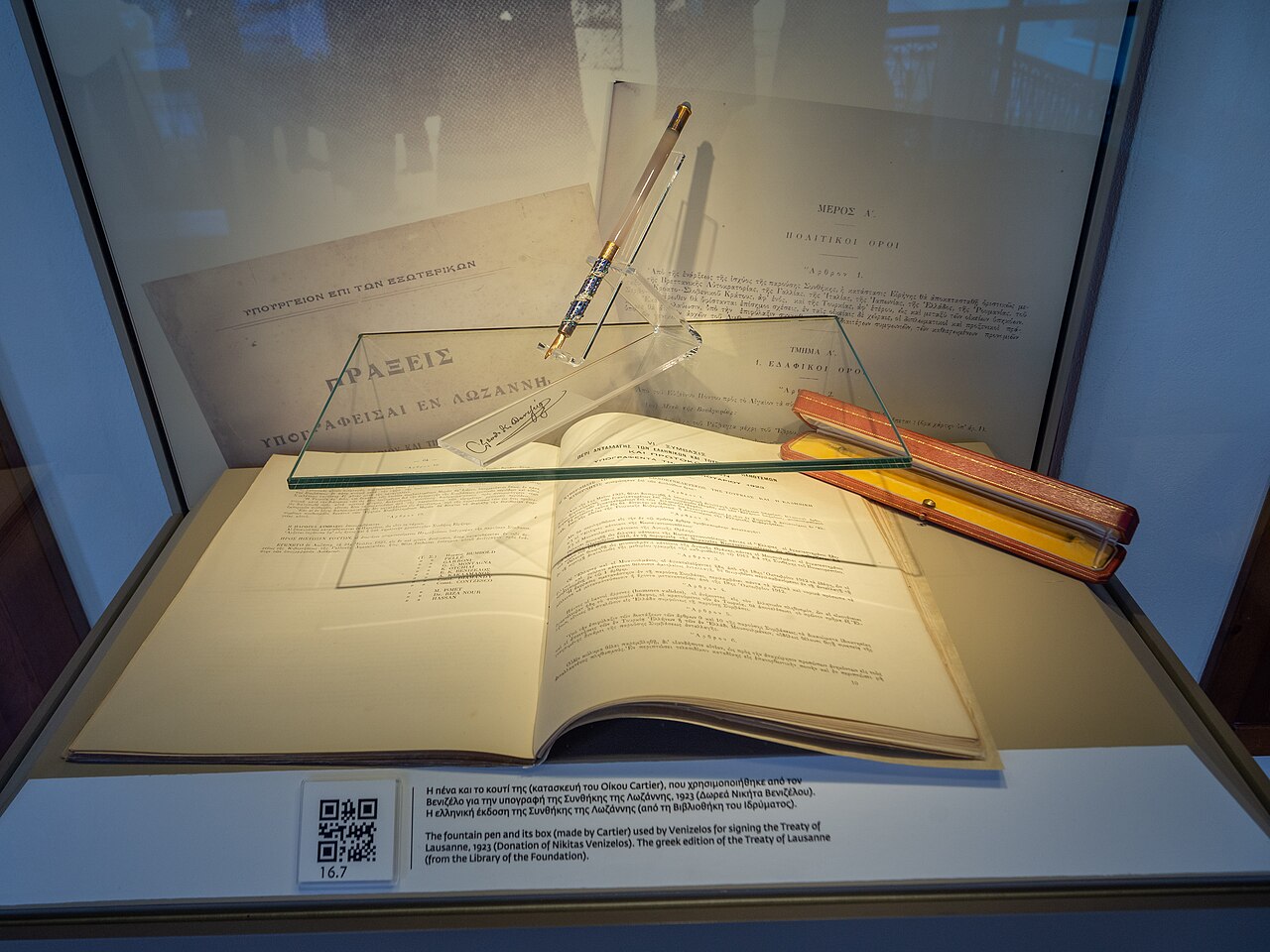
Primary source
The Tenth Year Speech
Mustafa Kemal Atatürk · 1933
Free account
Read every Mustafa Kemal Atatürk source
Sign up free →
Ready when you are
Start chatting with Mustafa Kemal Atatürk now.
20 messages free · No credit card · Available in 50+ languages.