


Primary sourceDocument1648-1687
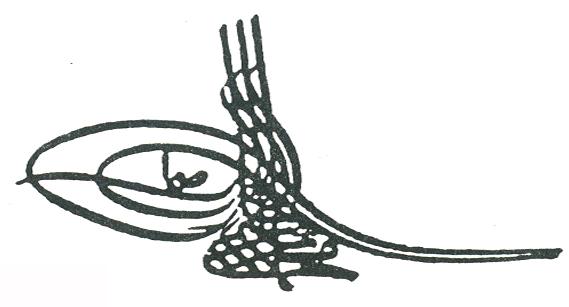
Tughra of Mehmed IV
Unknown court calligrapher · 1648-1687
The official calligraphic signature, or tughra, used by Mehmed IV on decrees and coins throughout his reign.
This is Mehmed IV's own official signature, used on all decrees and coins during his 39-year reign.
About this source
What it is
This is the tughra, or imperial calligraphic signature, of Sultan Mehmed IV. It was created by an unknown court calligrapher and used between 1648 and 1687 on all official Ottoman documents and coins issued in his name.
Why it matters
The tughra was more than decoration — it was the mark of royal authority, appearing on every official act of the sultan's government. Its elaborate, flowing design reflects the skill of Ottoman court calligraphers and the importance placed on visual symbols of power.
Look closer
- What shapes and strokes make up the design, and how do they create a sense of grandeur?
- Why might rulers want a unique, hard-to-copy signature like this?
- What might this symbol have meant to someone receiving a document stamped with it?
This document is part of the curated material that grounds the AI version of Mehmed IV on Humy.ai — when students ask about related events, the AI can quote it and cite it.
More Mehmed IV sources
Browse all 65 →

Ready when you are
Start chatting with Mehmed IV now.
20 messages free · No credit card · Available in 50+ languages.