


Primary sourceArtifact1569
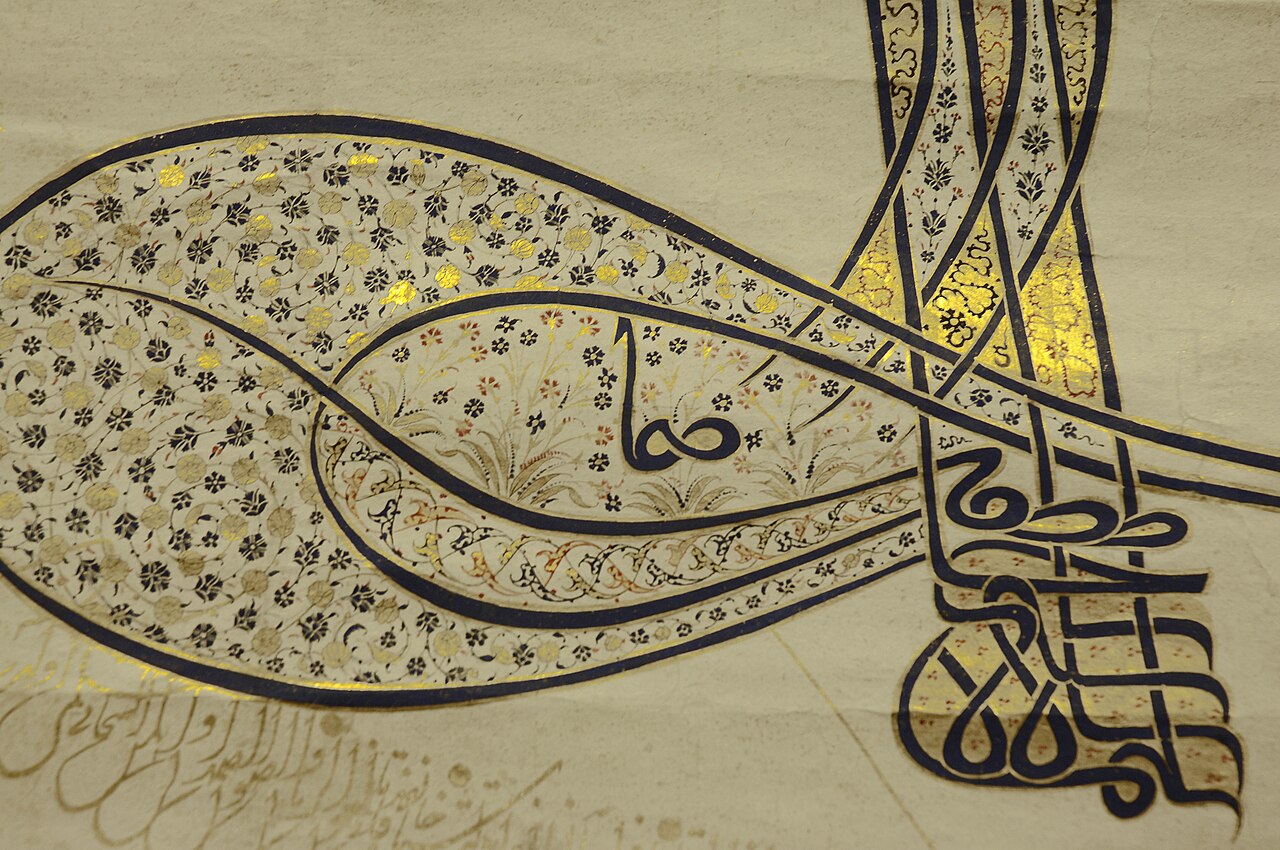
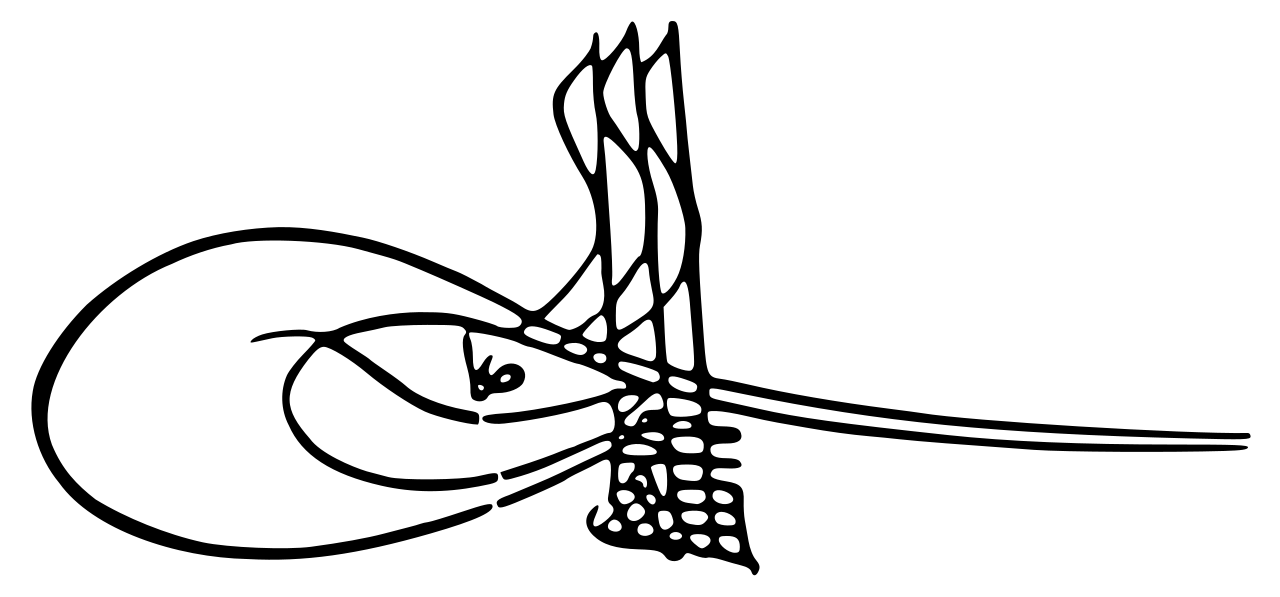
Tughra of Selim II
Unknown court calligrapher · 1569
A dated 1569 calligraphic monogram used as Selim II's official imperial signature, stamped on documents and coins.
This tughra was Selim II's own official seal, used to authorize documents and coins during his reign.
About this source
What it is
This is a photograph of a 'tughra', a highly decorated calligraphic monogram that served as the personal seal and signature of an Ottoman sultan. This example is dated 1569, during the reign of Selim II, and is now kept in the Istanbul Turkish and Islamic Museum.
Why it matters
Every sultan chose his own tughra design at his accession from samples made by the court calligrapher. It was stamped on official documents, carved into seals, and struck on coins, making it a mark of royal authority recognised throughout the empire. The elaborate decoration shows the skill of Ottoman court calligraphers and the importance placed on visual symbols of power.
Look closer
- What details in the design make this more than just a signature?
- Why might a ruler want his signature to be a work of art?
- What does the care put into this object suggest about how power was displayed?
This artifact is part of the curated material that grounds the AI version of Selim II on Humy.ai — when students ask about related events, the AI can quote it and cite it.
More Selim II sources
Browse all 95 → Artifact
Primary source
Selimiye Mosque
Mimar Sinan · 1568-1575
 Painting
Secondary source
Portrait of Selim II
Nakkaş Osman · 1579
 Painting
Primary source
Portrait Of Sultan Selim II
Nigâri
 Document
Primary source
Firman of Sultan Selim II
Selim II
Free account
Read every Selim II source
Sign up free →
Ready when you are
Start chatting with Selim II now.
20 messages free · No credit card · Available in 50+ languages.