


Primary sourceDocument1670
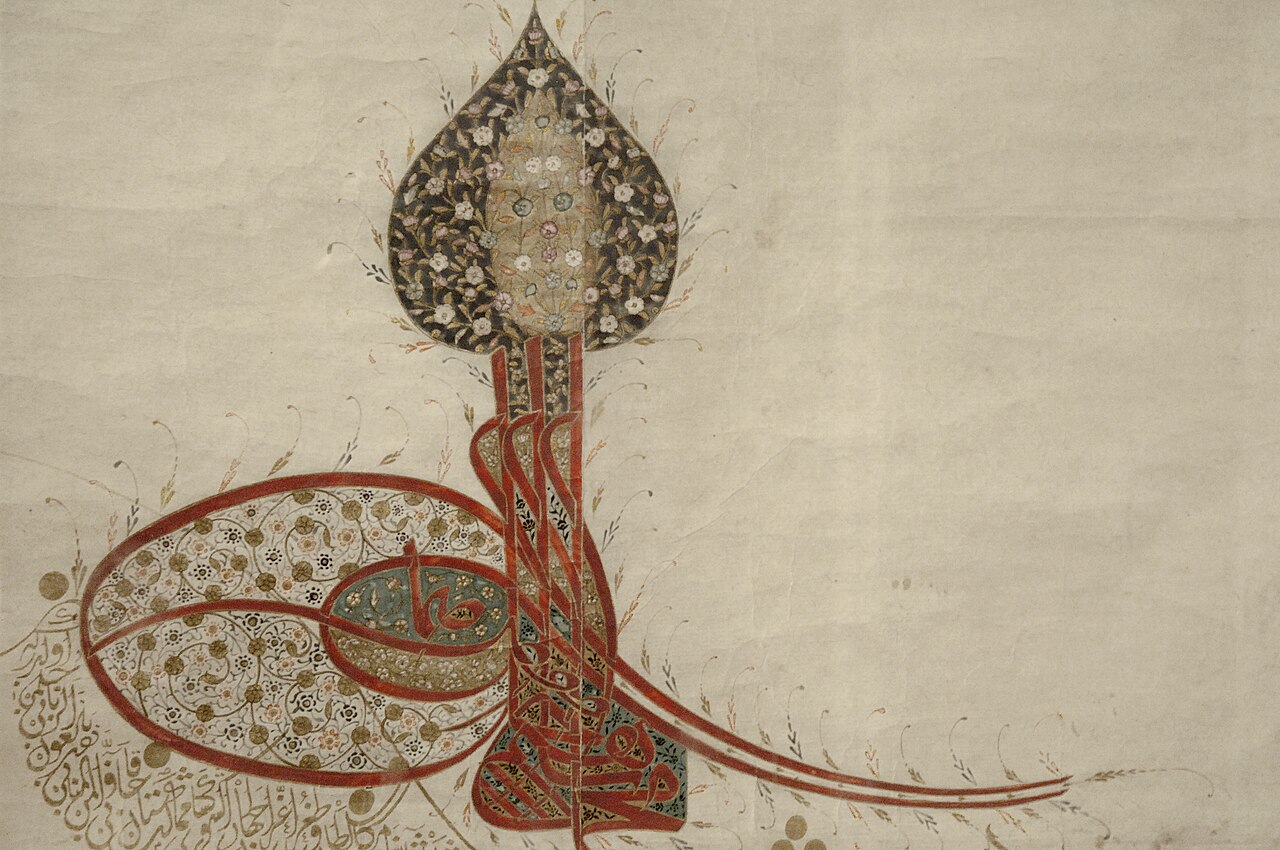
Tughra of Sultan Mehmed IV
1670
The official calligraphic monogram of Mehmed IV, used to authenticate his decrees, coins and documents.
This tughra was Mehmed IV's own official signature, used to authenticate decrees and coins during his reign.
About this source
What it is
This is a photograph of a tughra, the calligraphic monogram that served as the official signature of an Ottoman sultan. This one belonged to Mehmed IV and dates from 1670. Tughras were created by court calligraphers and chosen by each sultan at his accession; they were stamped on coins and attached to official papers and correspondence.
Why it matters
The tughra was how Mehmed IV's authority was marked on every important document of his reign. Because each sultan's design was unique, tughras help historians identify which ruler issued a document. They also show the high level of artistic skill in the Ottoman court, since elaborate versions were treated as works of art.
Look closer
- What shapes and patterns can you find in the design?
- Why might a ruler want his signature to look this elaborate rather than simple?
- What does the existence of a special court workshop for this signature tell you about Ottoman government?
This document is part of the curated material that grounds the AI version of Mehmed IV on Humy.ai — when students ask about related events, the AI can quote it and cite it.
More Mehmed IV sources
Browse all 65 →

Ready when you are
Start chatting with Mehmed IV now.
20 messages free · No credit card · Available in 50+ languages.