


Primary sourcePhotographc. 1838/42
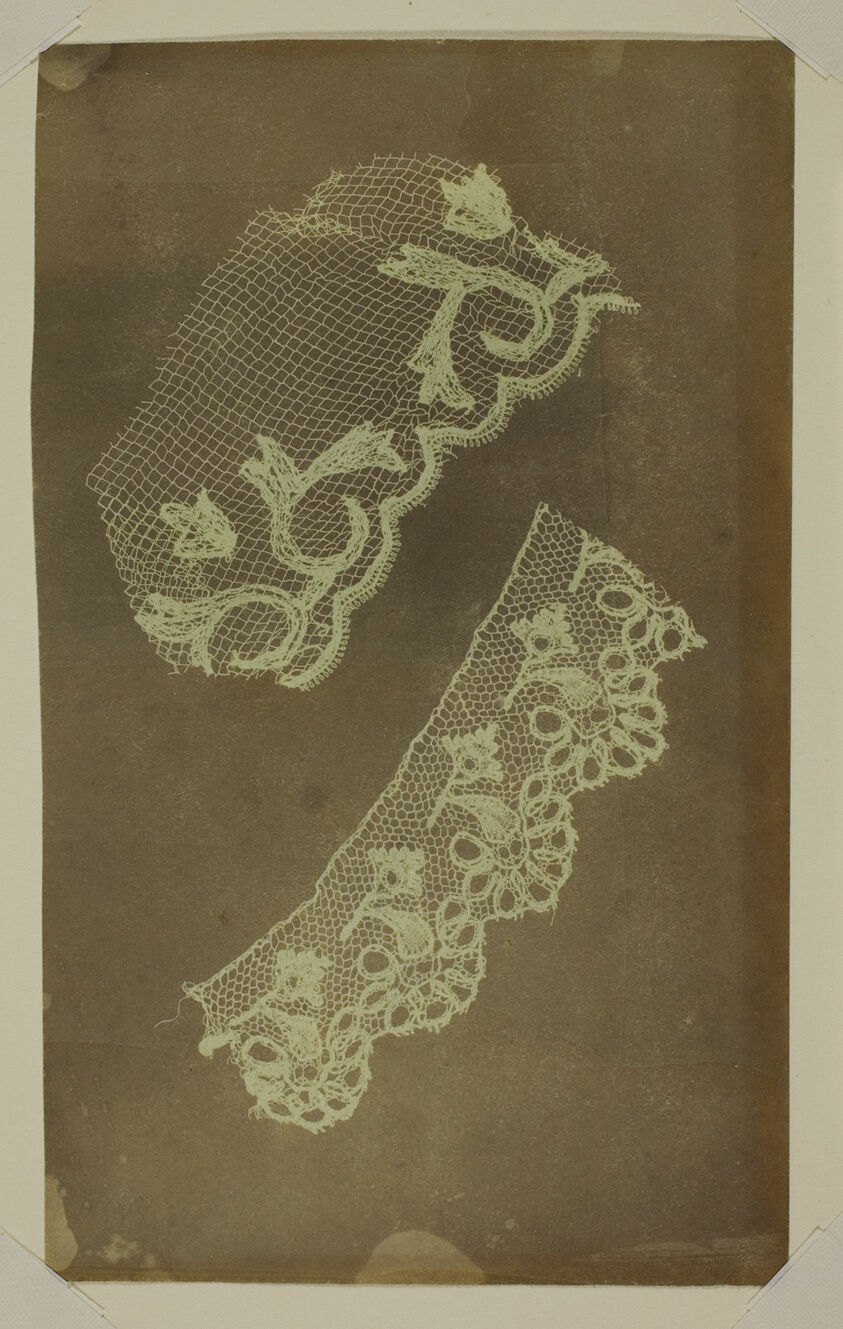
Two Scraps of Lace
William Henry Fox Talbot · c. 1838/42
A photogenic drawing by William Henry Fox Talbot showing two pieces of lace, made using the camera-less process Man Ray later revived.
Another early photogram, part of the technical lineage behind Man Ray's rayograph experiments.
About this source
What it is
This photogenic drawing by William Henry Fox Talbot, made around 1838 to 1842, shows two pieces of lace in pale outline against a sepia ground. It is held by the Art Institute of Chicago.
Why it matters
Talbot helped invent photography in the 1830s, and this piece was made without a camera, by laying lace directly on sensitized paper and exposing it to light. This photogram method was picked up again nearly a century later by Man Ray, who used it to create his rayographs within the Surrealist movement. Looking at Talbot's work alongside Man Ray's shows how the same basic idea could produce very different kinds of images depending on the era and the artist's intentions.
Look closer
- What differences can you spot between the two pieces of lace shown here?
- Why might an inventor of photography have chosen lace as a subject?
- How might Man Ray have used this same method differently?
This photograph is part of the curated material that grounds the AI version of Man Ray on Humy.ai — when students ask about related events, the AI can quote it and cite it.
More Man Ray sources
Browse all 56 →
Ready when you are
Start chatting with Man Ray now.
20 messages free · No credit card · Available in 50+ languages.