


Primary sourceBook1842
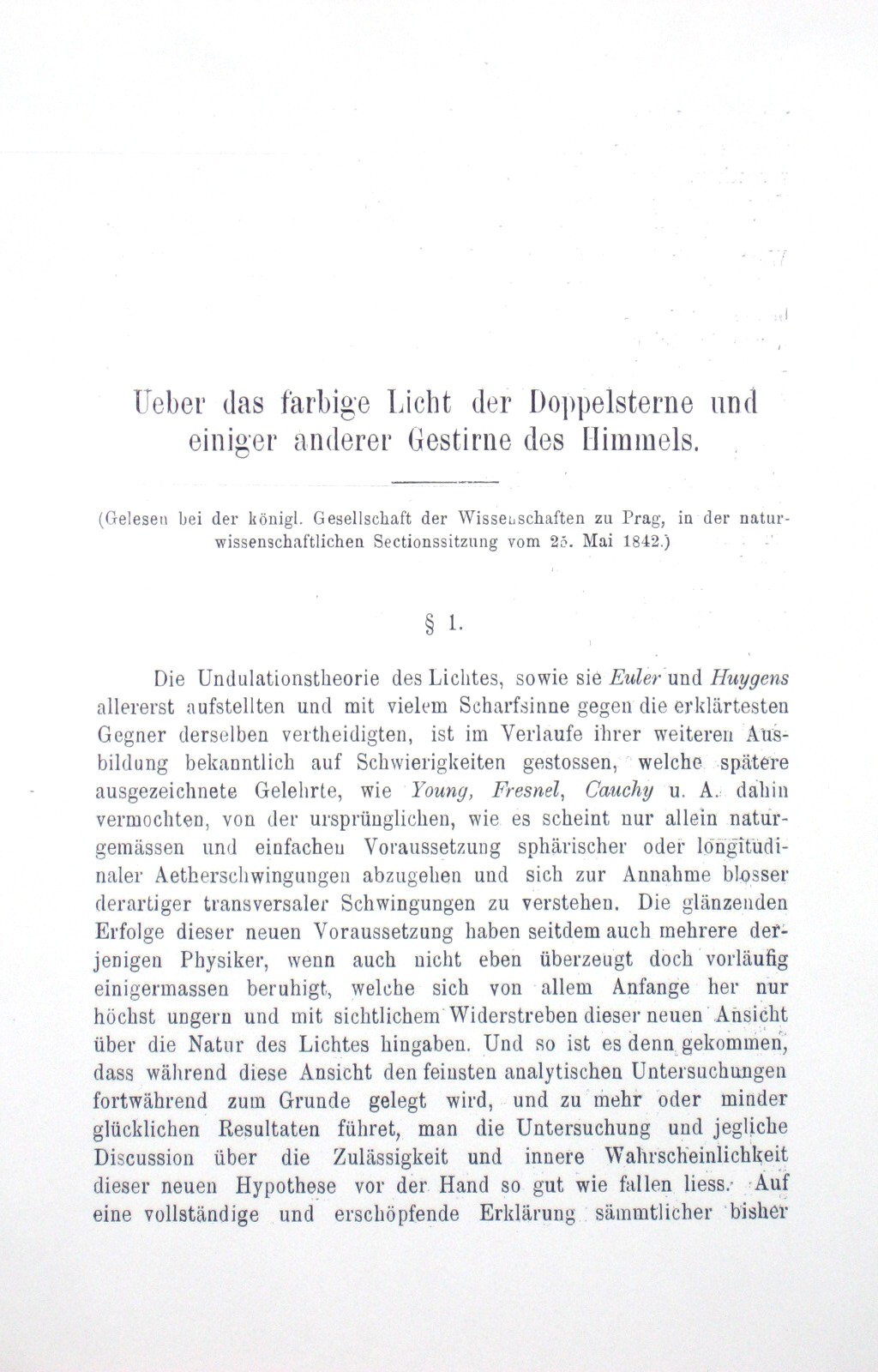
Über das farbige Licht der Doppelsterne und einiger anderer Gestirne des Himmels
Christian Doppler · 1842
Doppler's 1842 treatise, read in Prague, which first set out the principle that the observed frequency of a wave depends on the relative motion of source and observer.
This is Doppler's own 1842 paper in which he first described the principle that bears his name.
Free Humy account · No credit card · 53,307 sources to read
About this source
What it is
This is the printed text of a paper by Christian Doppler, read to the Royal Bohemian Society of Sciences in Prague on 25 May 1842 and printed in the society's proceedings. It applies the wave theory of light and sound, and includes formulas for how frequency changes when a source or observer is moving.
Why it matters
The paper contains the first statement of what is now called the Doppler effect, a principle used across physics and astronomy. Doppler used it to try to explain the colours of binary stars, an explanation that turned out to be wrong, but his mathematics describing the frequency shift was correct and was later confirmed for sound and used by astronomers to measure the motion of stars.
Look closer
- Why might Doppler have compared sound and light waves to ocean waves meeting a ship?
- What does it tell us about science that a wrong explanation (the colours of stars) could still contain a correct and useful formula?
- Why do you think few people attended the original 1842 presentation?
This book is part of the curated material that grounds the AI version of Christian Doppler on Humy.ai — when students ask about related events, the AI can quote it and cite it.
More Christian Doppler sources
Browse all 29 →Secondary source
Über die Änderung des Tones und der Farbe durch Bewegung
Ernst Mach · 1860
 Document
Primary source
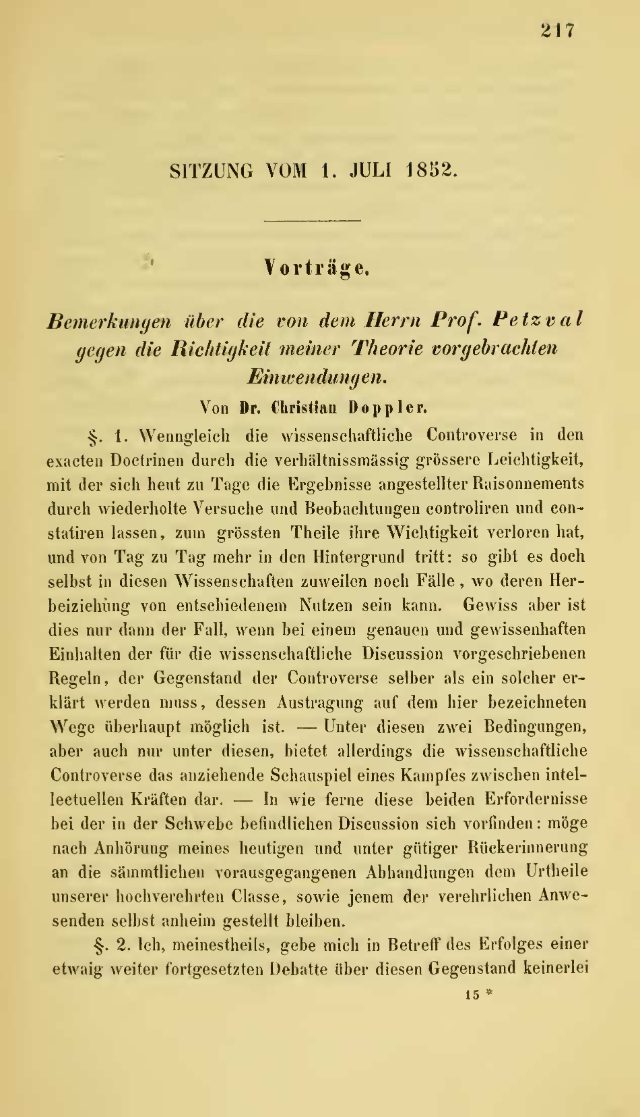
Remarks on Professor Petzval's Objections
Christian Andreas Doppler · 1852
 Painting
Secondary source
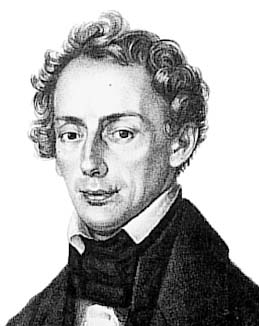
Portrait of Christian Doppler
Unknown
 Photograph
Primary source
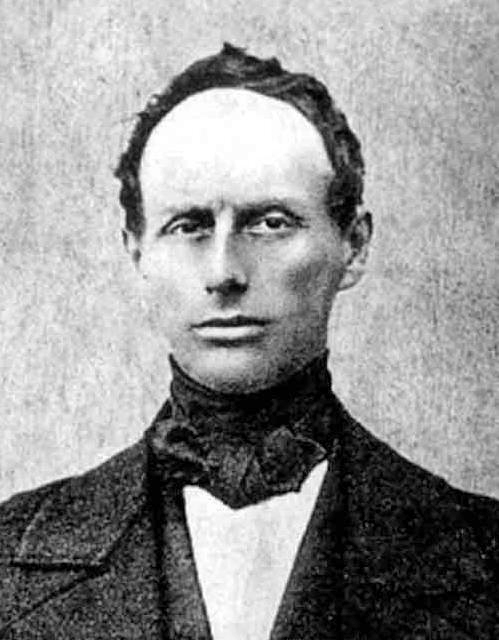
Photographic Portrait of Christian Doppler
Free account
Browse every Christian Doppler source
Sign up free →
Ready when you are
Start chatting with Christian Doppler now.
20 messages free · No credit card · Available in 50+ languages.