


Primary sourceDocument1866
Über die mechanische Bedeutung des zweiten Hauptsatzes der Wärmetheorie
Ludwig Boltzmann · 1866
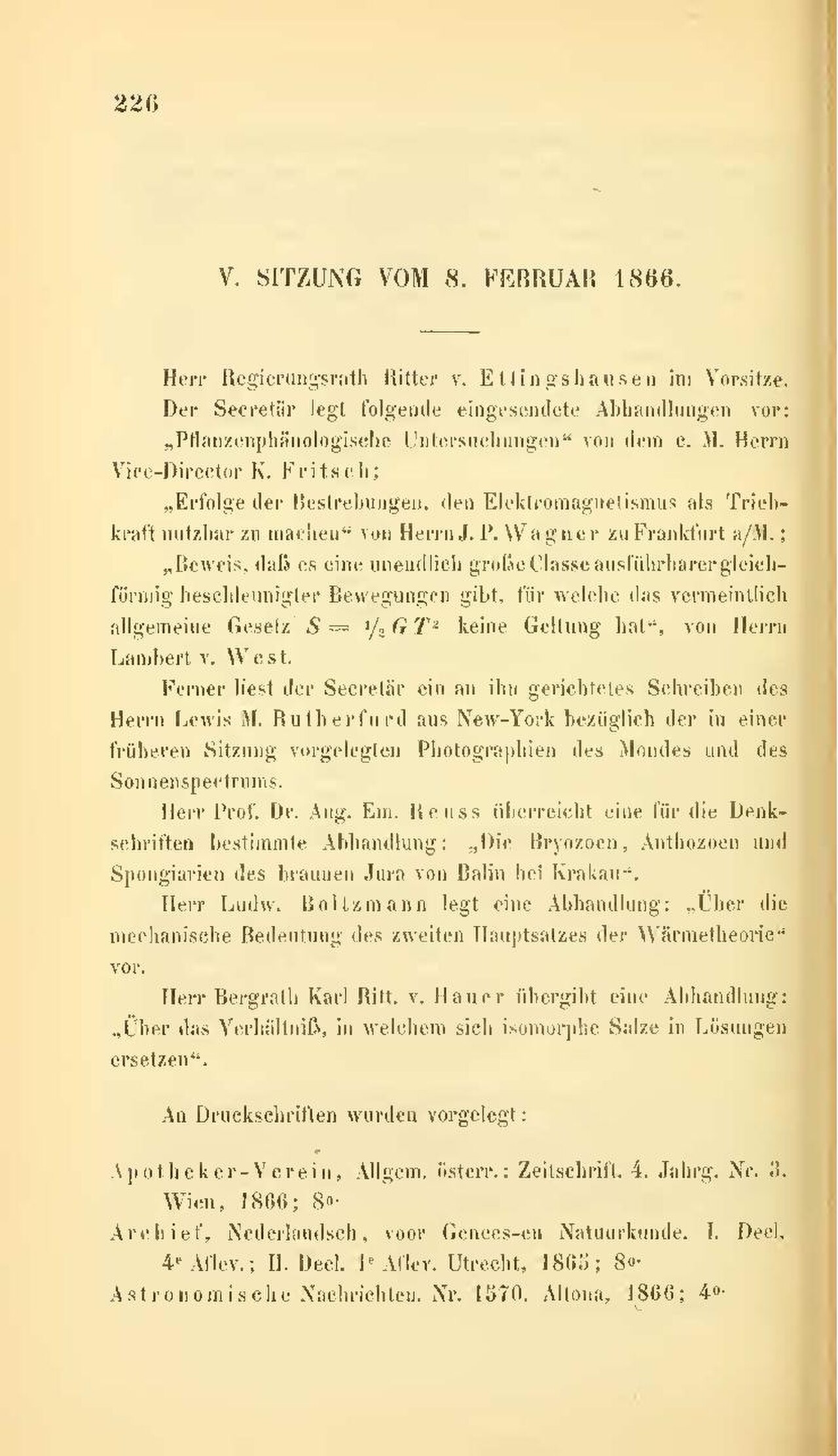
Boltzmann's 1866 paper, written at age 22, attempting to derive the second law of thermodynamics from mechanics.
This is Boltzmann's earliest major paper, written at 22, beginning his lifelong work on the second law of thermodynamics.
About this source
What it is
This is a printed page from the proceedings of the Austrian Academy of Sciences in Vienna, dated 8 February 1866, recording Ludwig Boltzmann's presentation of his paper 'Über die mechanische Bedeutung des zweiten Hauptsatzes der Wärmetheorie' (On the mechanical meaning of the second law of the theory of heat).
Why it matters
Written when Boltzmann was only 22, this paper marks his first attempt to derive the second law of thermodynamics from the laws of mechanics, a problem that would occupy him for the rest of his career. It shows the beginning of a lifelong scientific project.
Look closer
- What does it mean that a 22-year-old presented this work to the Academy of Sciences?
- Why might deriving a physical law from mechanics have mattered so much to scientists of this period?
- What can a record like this tell us, and what can it not tell us, about the actual content of the paper?
This document is part of the curated material that grounds the AI version of Ludwig Boltzmann on Humy.ai — when students ask about related events, the AI can quote it and cite it.
More Ludwig Boltzmann sources
Browse all 44 →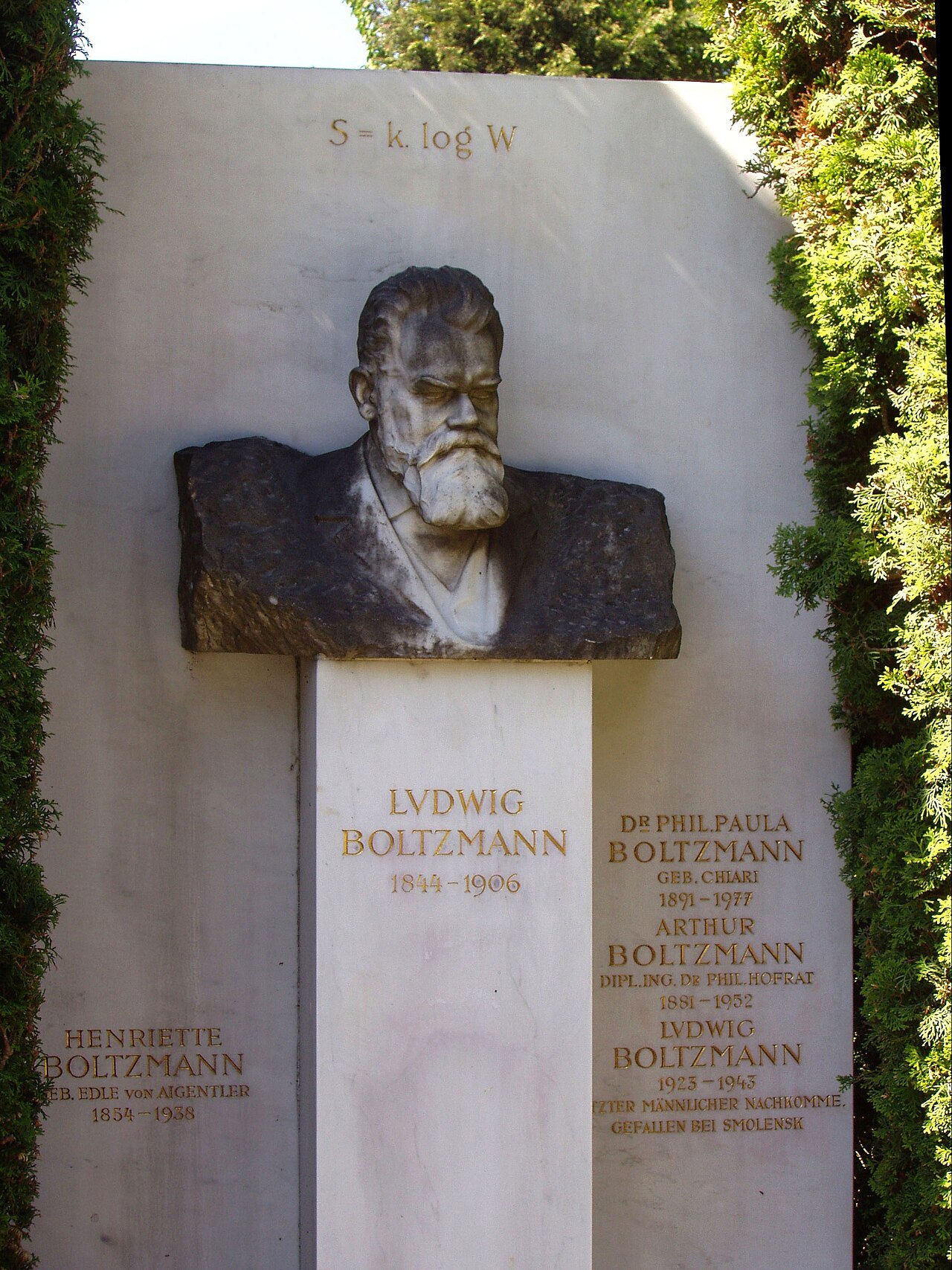 Artifact
Secondary source
Grave of Ludwig Boltzmann
 Photograph
Primary source
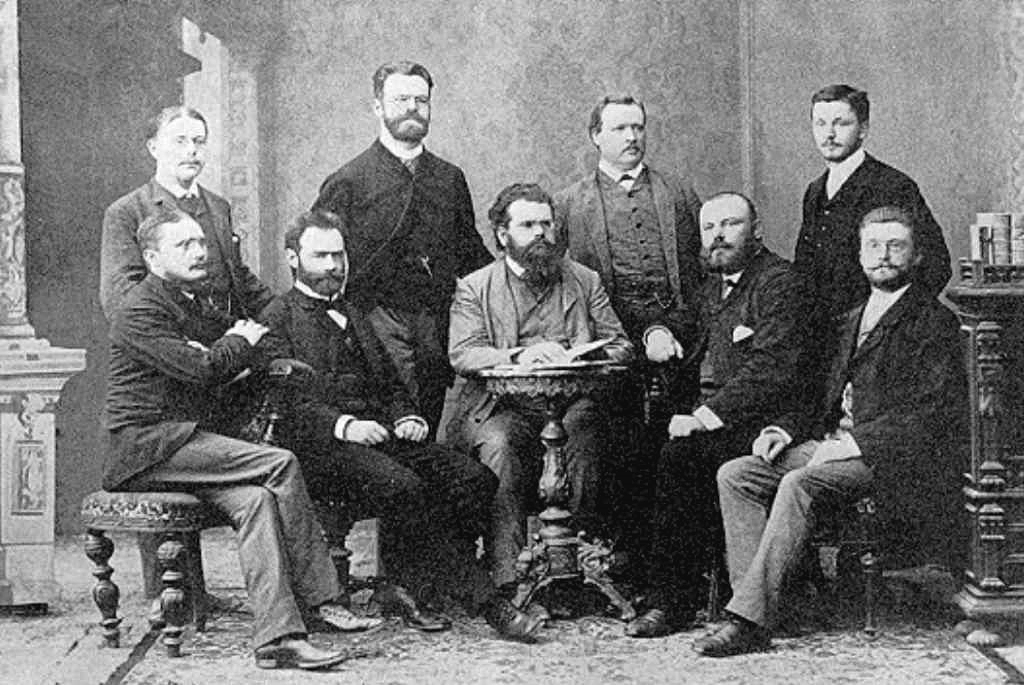
Boltzmann with Students and Colleagues, Graz
1887
 Photograph
Primary source
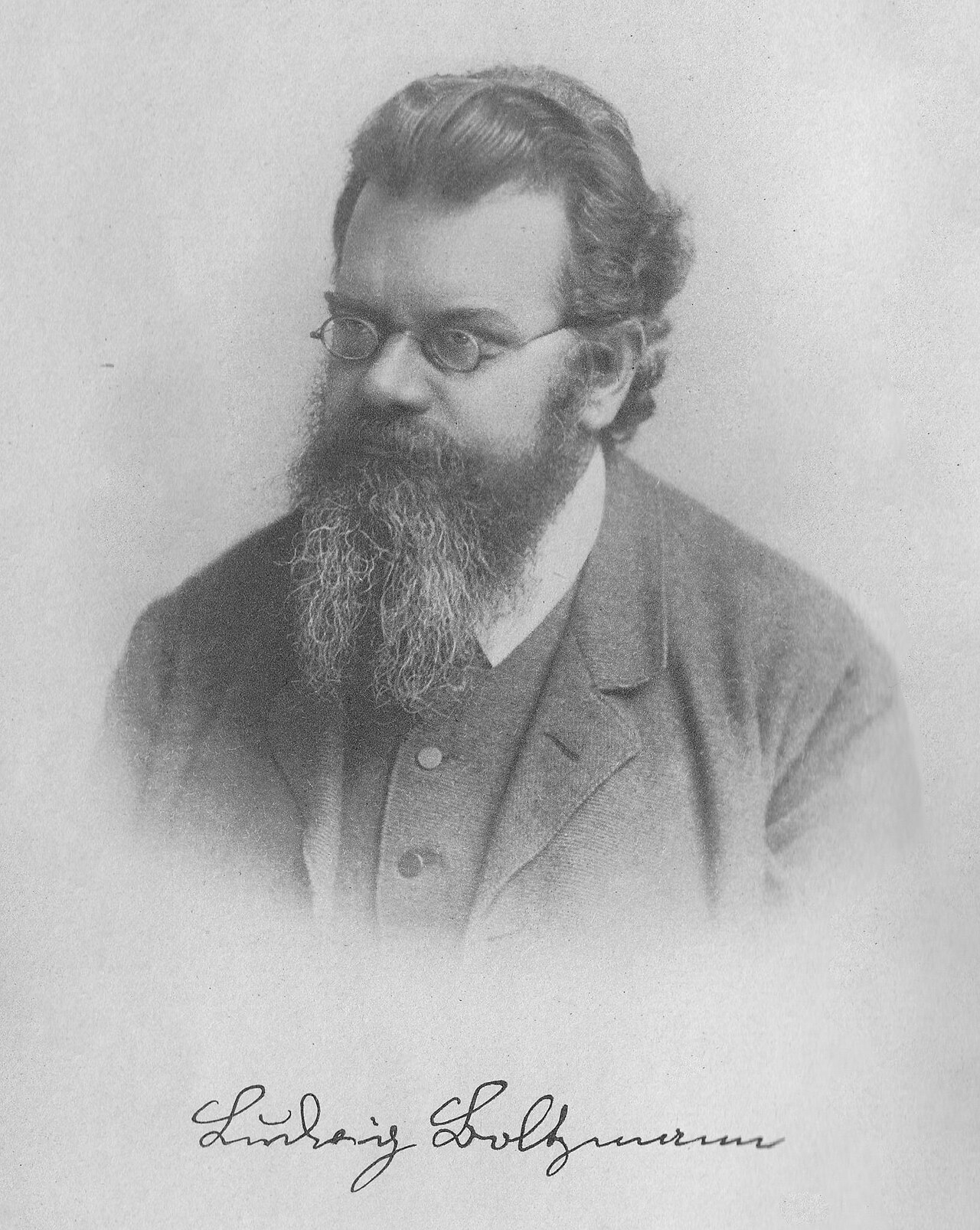
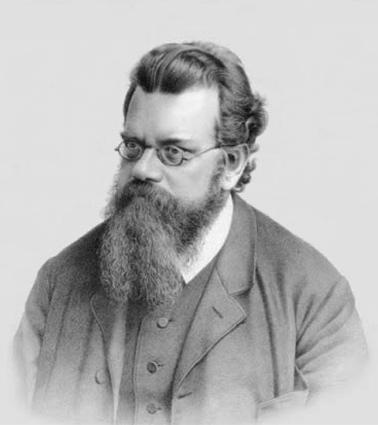
Portrait Photograph of Ludwig Boltzmann
 Document
Primary source
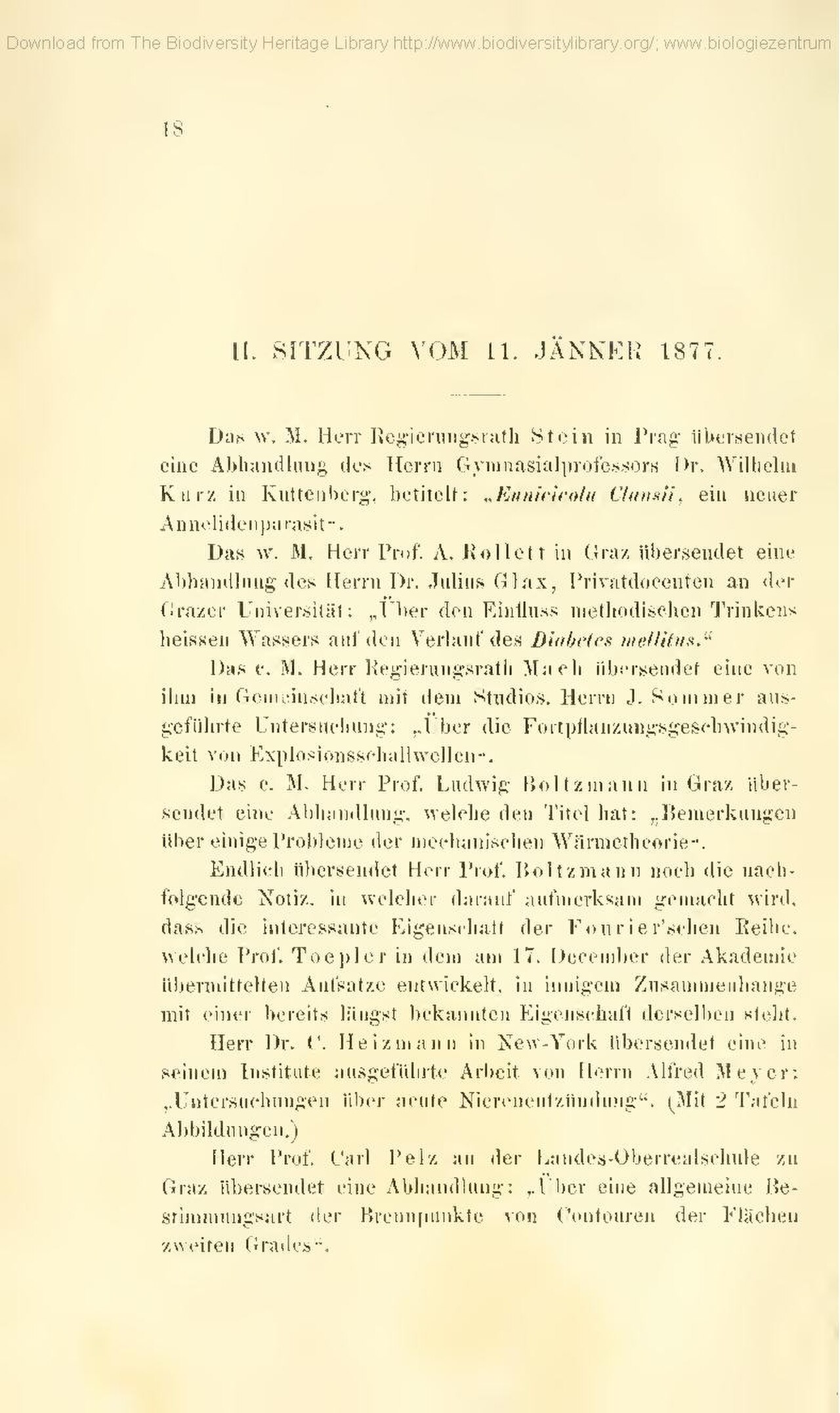
Bemerkungen über einige Probleme der mechanischen Wärmetheorie
Ludwig Boltzmann · 1877
Free account
Browse every Ludwig Boltzmann source
Sign up free →
Ready when you are
Start chatting with Ludwig Boltzmann now.
20 messages free · No credit card · Available in 50+ languages.