


Secondary sourcePainting19th century
Umar Converts to Islam
Unknown · 19th century
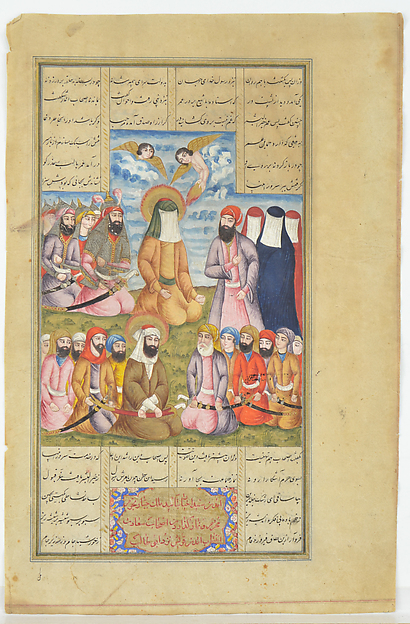
A 19th-century Persian manuscript painting depicting Umar's conversion to Islam, with angels and a haloed figure shown in the scene.
A later artistic depiction imagining the pivotal moment of Umar's conversion to Islam.
About this source
What it is
This painted folio comes from a 19th-century illustrated manuscript of the Hamla-yi Haidari (Attack of the Lion), a Persian epic. The painting, done in opaque watercolor, gold, and ink, shows the moment of Umar's conversion to Islam, with Arabic-script text above and below the image. It is held today at The Metropolitan Museum of Art.
Why it matters
This artwork was created over a thousand years after Umar's life, so it reflects later religious and artistic traditions rather than an eyewitness record. It shows how Umar's conversion became a celebrated turning point in Islamic storytelling, worthy of dramatic illustration with angels and divine light.
Look closer
- What visual clues (halo, flames, angels) tell you this moment was considered sacred by the artist?
- Why might artists centuries later still want to illustrate this particular event in Umar's life?
- What does the style of the painting tell you about where and when it was made?
This painting is part of the curated material that grounds the AI version of Caliph Umar ibn al-Khattab on Humy.ai — when students ask about related events, the AI can quote it and cite it.
More Caliph Umar ibn al-Khattab sources
Browse all 54 →Secondary source
Umar's Assurance
637-638
 Book
Secondary source
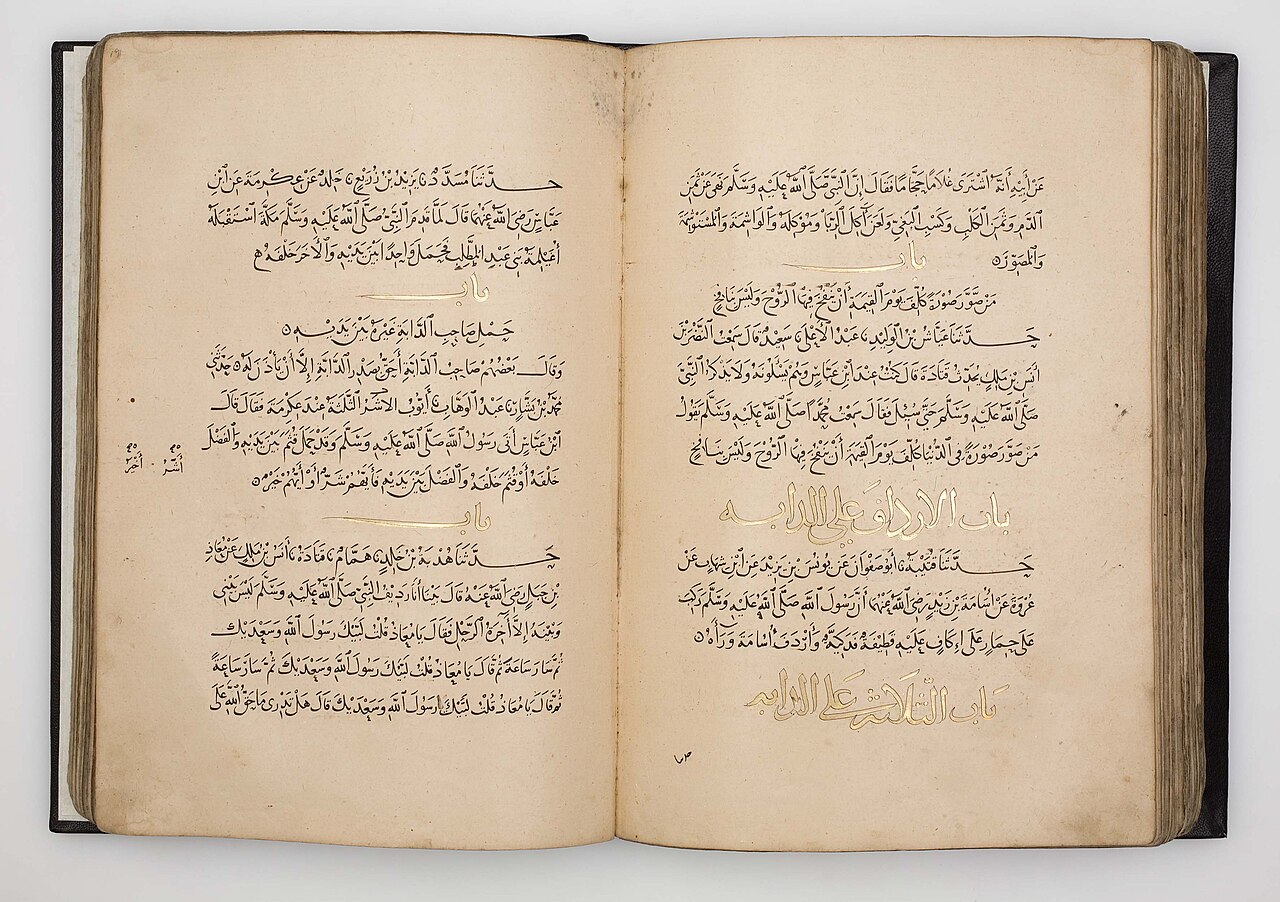
Sahih al-Bukhari
Muhammad ibn Isma'il al-Bukhari · c. 846 CE
 Book
Primary source
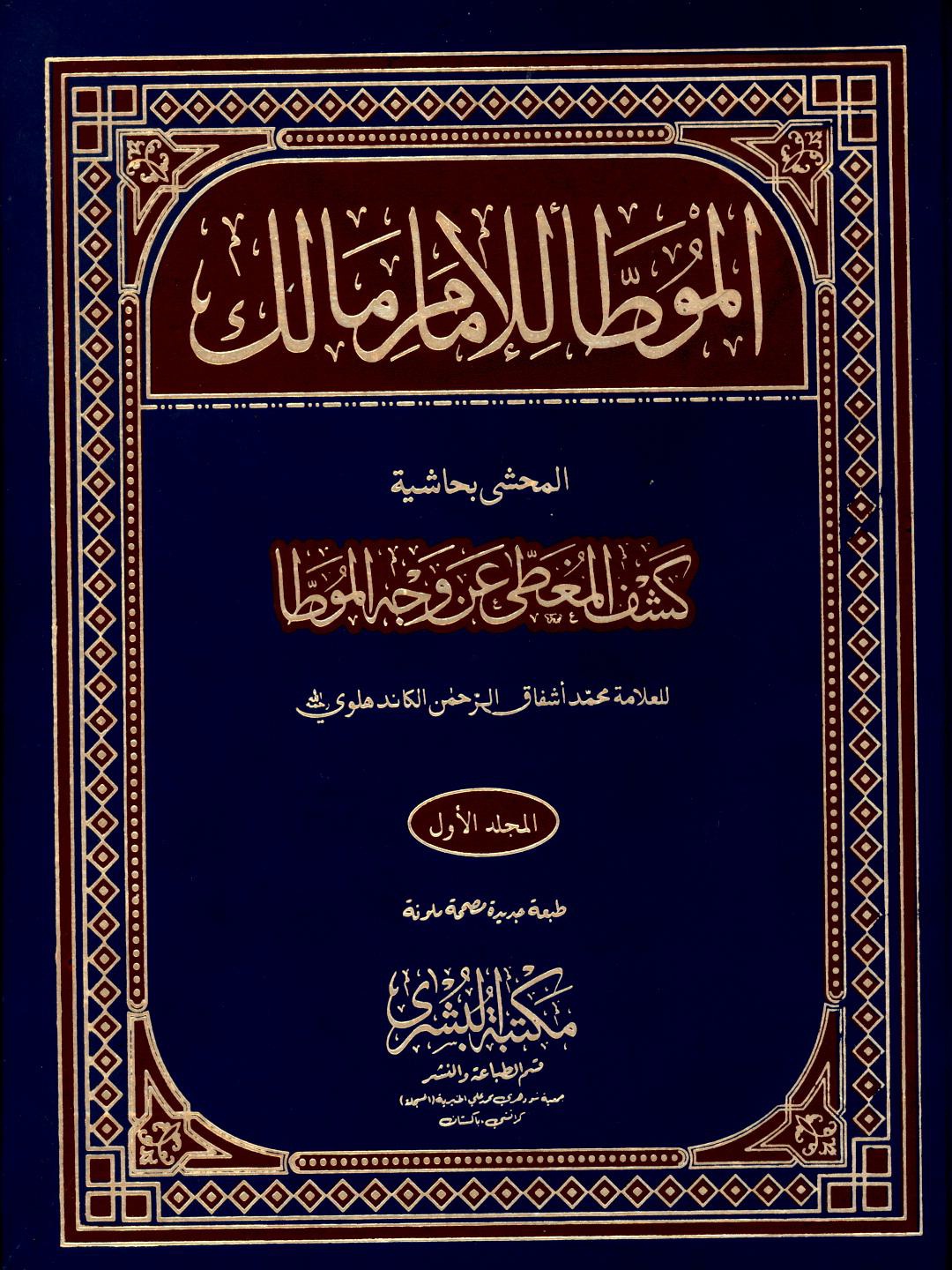
al-Muwatta
Malik ibn Anas · 8th century
 Book
Secondary source
Futuh al-Buldan
Al-Baladhuri · 9th century
Free account
Read every Caliph Umar ibn al-Khattab source
Sign up free →
Ready when you are
Start chatting with Caliph Umar ibn al-Khattab now.
20 messages free · No credit card · Available in 50+ languages.