


Secondary sourceArtifact1901
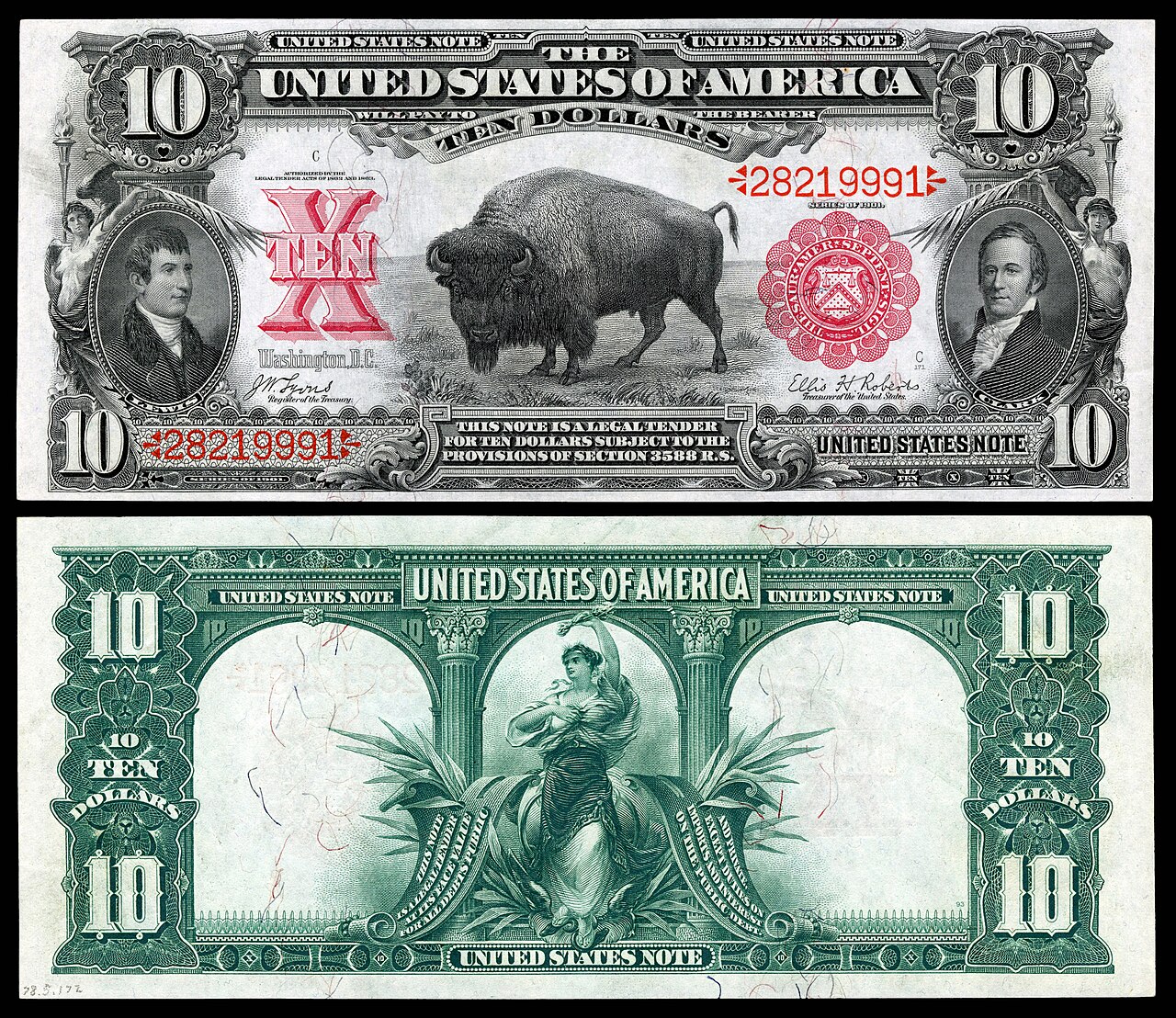
US $10 Legal Tender Note, Series of 1901 (Bison Note)
National Museum of American History · 1901
A 1901 ten-dollar US banknote featuring portraits of Meriwether Lewis and William Clark alongside a bison.
This banknote places Lewis's portrait on official US currency as a national symbol of westward expansion.
About this source
What it is
This is a United States ten-dollar Legal Tender note from the Series of 1901, held in the National Numismatic Collection at the Smithsonian's National Museum of American History. The front shows a large bison at center with portraits of Meriwether Lewis and William Clark in oval frames on either side; the back shows an allegorical seated female figure.
Why it matters
Nicknamed the "bison note," this currency shows how, roughly a century after their expedition, Lewis and Clark had become national symbols of westward expansion, honored enough to appear on official money alongside an iconic image of the American West.
Look closer
- Why might the government have chosen a bison as the central image on a note honoring Lewis and Clark?
- What does putting someone's portrait on money suggest about how they are remembered?
- What is left out of this image about the expedition's impact on Native nations and the land?
This artifact is part of the curated material that grounds the AI version of Meriwether Lewis on Humy.ai — when students ask about related events, the AI can quote it and cite it.
More Meriwether Lewis sources
Meet the AI Meriwether Lewis →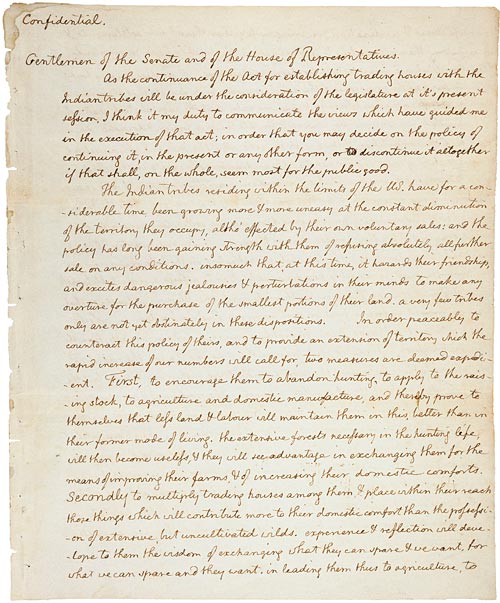 Document
Primary source
Jefferson's Secret Message to Congress Regarding the Lewis and Clark Expedition
Thomas Jefferson · 18 January 1803
Primary source
The Journals of Lewis and Clark
Meriwether Lewis and William Clark · 1804-1806
Primary source
Louisiana Purchase Treaty
30 April 1803
 Painting
Primary source
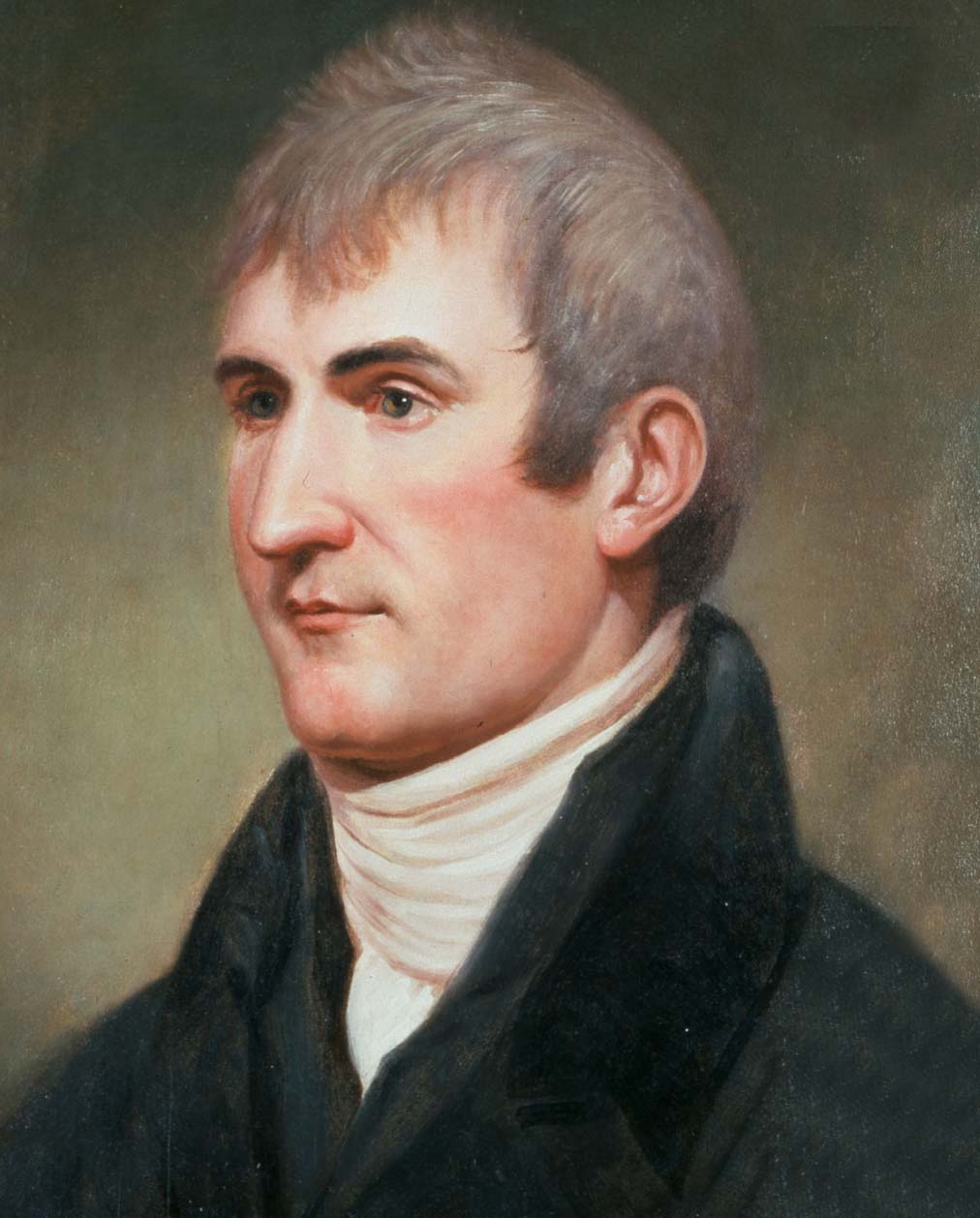
Portrait of Meriwether Lewis
Charles Willson Peale · c. 1807
 Painting
Primary source
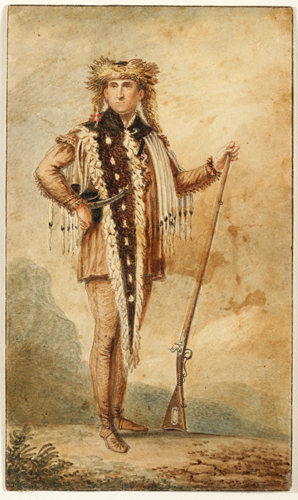
Meriwether Lewis in Frontiersman's Regalia
Charles-Balthazar-Julien Fevret de Saint-Mémin · 1806-1807
Ready when you are
Start chatting with Meriwether Lewis now.
20 messages free · No credit card · Available in 50+ languages.