


Secondary sourceSpeech8th century (attributed)
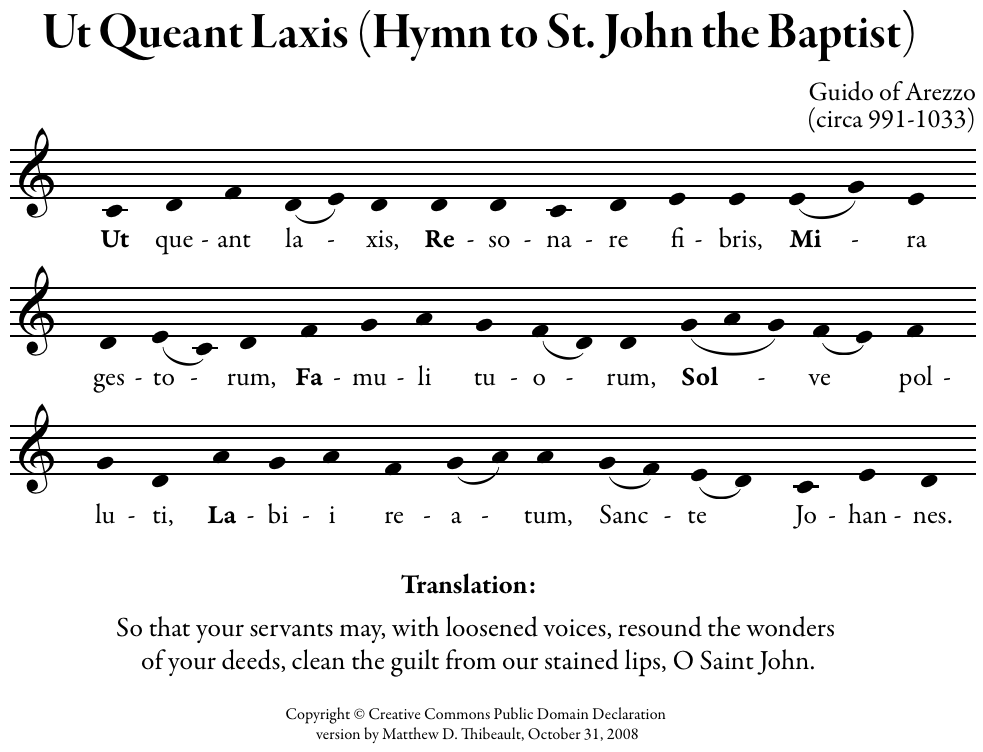
Ut queant laxis
Paul the Deacon · 8th century (attributed)
A medieval Latin hymn honoring John the Baptist, traditionally attributed to Paul the Deacon, whose syllables gave the musical scale its names.
A hymn written in John's honor for his feast day, later famous for shaping musical notation.
Free Humy account · No credit card · 120,288 sources to read
About this source
What it is
Ut queant laxis, also called Hymnus in Ioannem, is a Latin hymn honoring John the Baptist, written in classical Sapphic verse and traditionally attributed to the eighth-century writer Paul the Deacon. It is sung in the Catholic liturgy on the feast of John's birth. The melody's composer is unknown, though Guido of Arezzo, an eleventh-century music theorist, may have used it or an existing tune.
Why it matters
This hymn is central to the history of music because each line begins on a successively higher note, giving us the syllables ut-re-mi-fa-sol-la, the root of the modern solfège scale (do-re-mi...). Guido of Arezzo is credited with turning these syllables into a teaching tool that is still used by singers today. The hymn shows how religious devotion to John the Baptist shaped not only art but even the language of music.
Look closer
- Why might singers have needed a memorable hymn to learn the notes of the scale?
- What does it say about John the Baptist's cultural importance that a teaching device was built around a hymn to him?
- How many centuries of change can you trace from this hymn to the solfège syllables we use today?
This speech is part of the curated material that grounds the AI version of John the Baptist on Humy.ai — when students ask about related events, the AI can quote it and cite it.
More John the Baptist sources
Browse all 86 →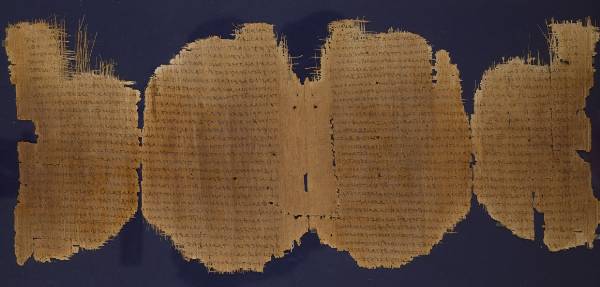 Book
Secondary source
Gospel of Luke
Luke the Evangelist · c. AD 85
Secondary source
Josephus on Jesus
Josephus · c. 93-94 CE
 Painting
Secondary source
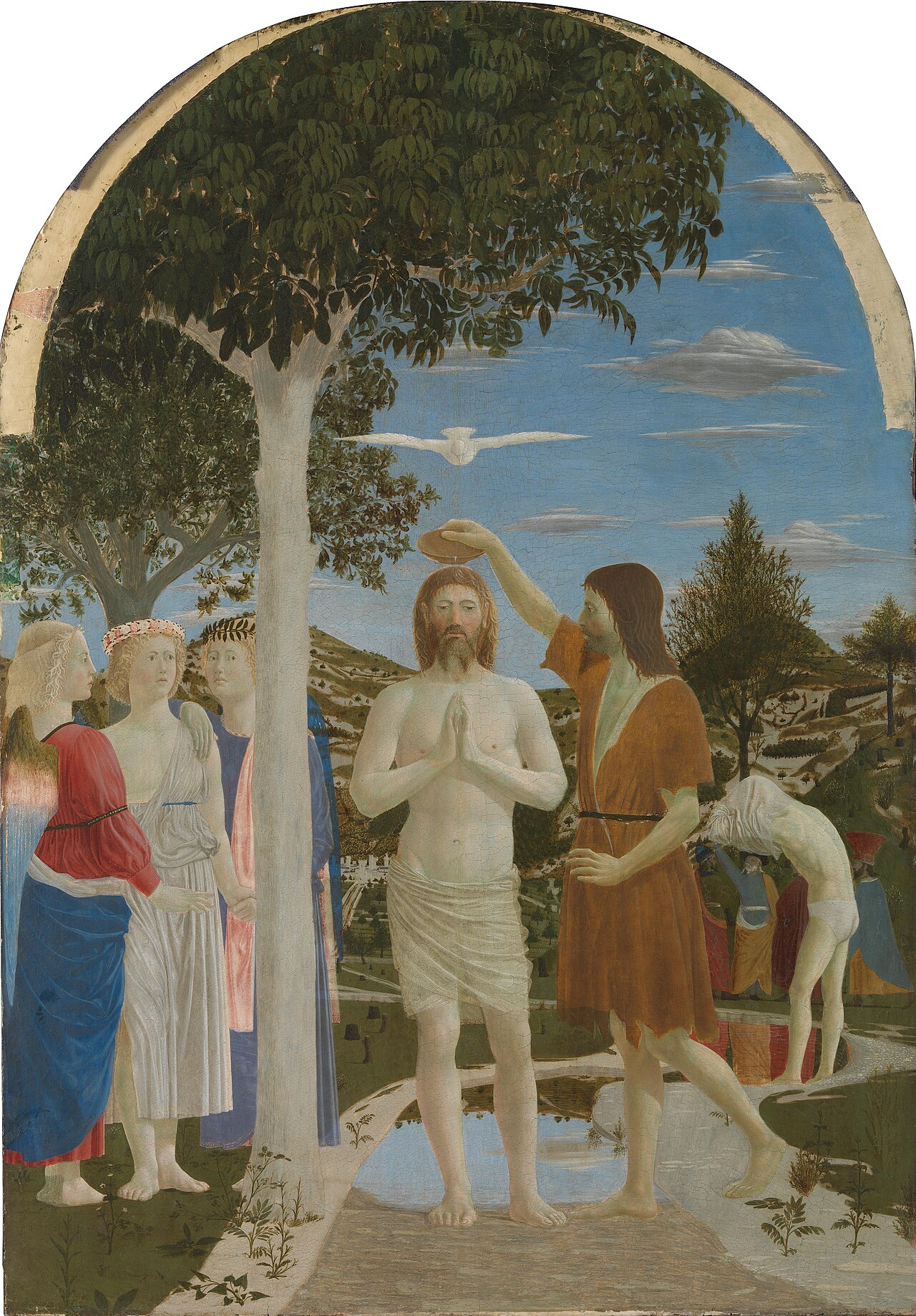
The Baptism of Christ
Piero della Francesca · c. 1440-1460
 Painting
Primary source
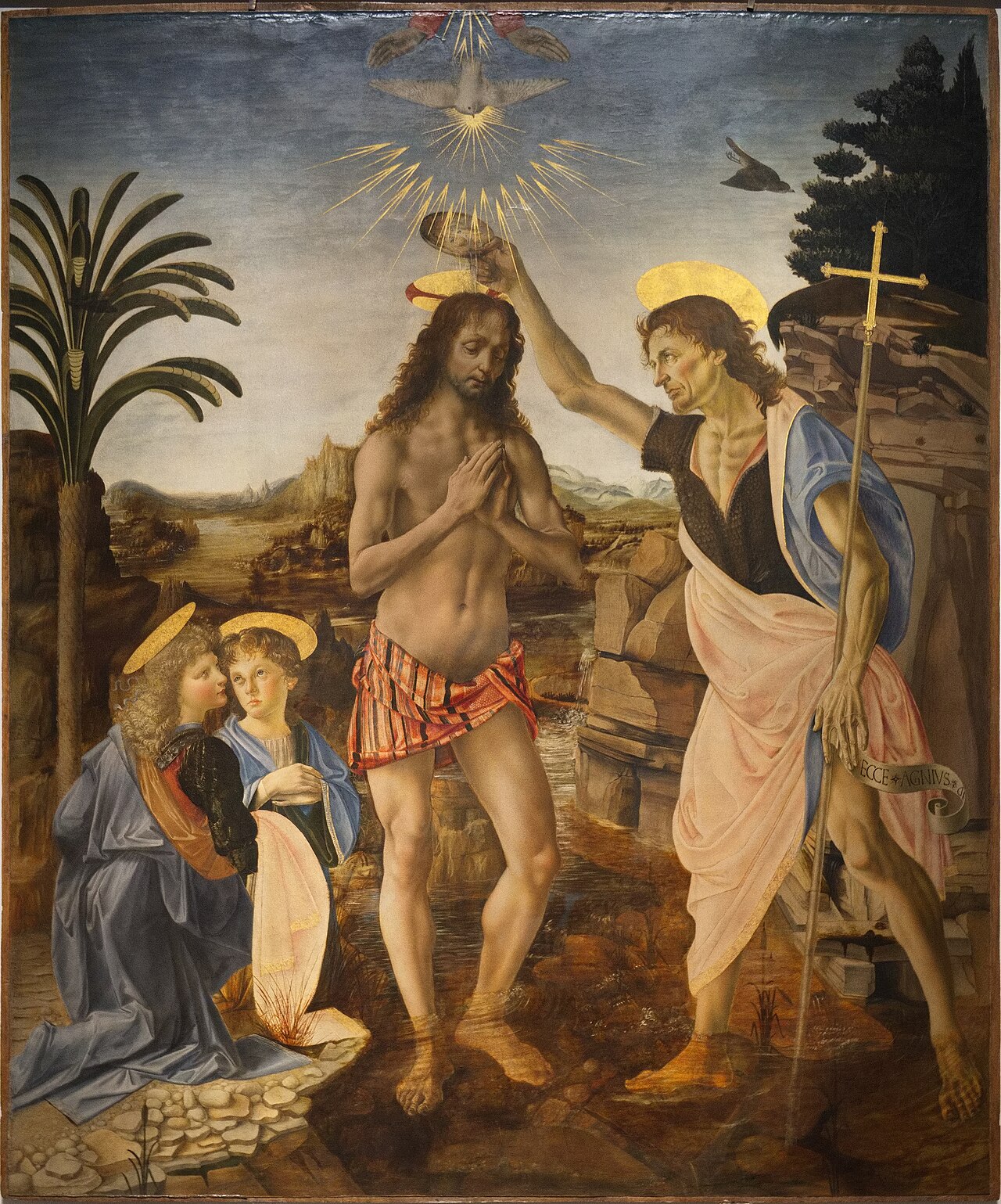
The Baptism of Christ
Andrea del Verrocchio and Leonardo da Vinci · c. 1470-1475

Free account
Read every John the Baptist source
Sign up free →
Ready when you are
Start chatting with John the Baptist now.
20 messages free · No credit card · Available in 50+ languages.