


Primary sourceArtifact1952
Vermelding Schweitzer
Albert Schweitzer · 1952
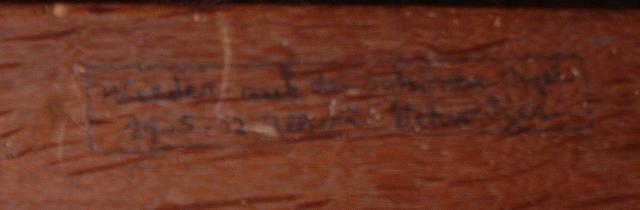
Albert Schweitzer's 1952 signature inscribed on the music stand of a historic Dutch organ, recording his visit.
Schweitzer's own signature, left on this organ's music stand, shows his personal advocacy for historic organs.
About this source
What it is
This is a close-up photograph of a handwritten inscription in faded ink on wood, part of the music stand of the Van Hagerbeer organ. It records that Albert Schweitzer wrote on it in 1952, in cursive Dutch text with a date line.
Why it matters
Schweitzer was known not only as a doctor and theologian but also as an organist and advocate for preserving historic pipe organs. This inscription is physical evidence of his presence at this particular instrument and his personal involvement in the organ-preservation movement.
Look closer
- Why might Schweitzer have chosen to leave his name on this organ rather than elsewhere?
- What does this object reveal about Schweitzer's interests beyond medicine?
- How does an inscription like this differ as evidence from a photograph or a letter?
This artifact is part of the curated material that grounds the AI version of Albert Schweitzer on Humy.ai — when students ask about related events, the AI can quote it and cite it.
More Albert Schweitzer sources
Browse all 95 →Primary source
The Quest of the Historical Jesus
Albert Schweitzer · 1906
Primary source
On the Edge of the Primeval Forest
Albert Schweitzer · 1922
 Artifact
Primary source
Albert Schweitzer Hospital
1913
 Photograph
Primary source
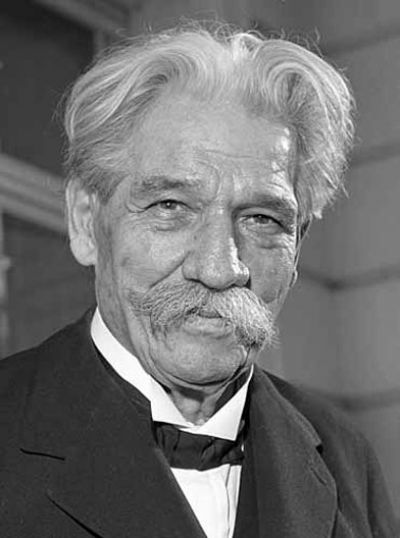
Albert Schweitzer, 1952 Nobel Portrait
Nobel Foundation · 1952

Free account
Read every Albert Schweitzer source
Sign up free →
Ready when you are
Start chatting with Albert Schweitzer now.
20 messages free · No credit card · Available in 50+ languages.