


Secondary sourceSculpture1927
Victory Monument, Ulus
Heinrich Krippel · 1927
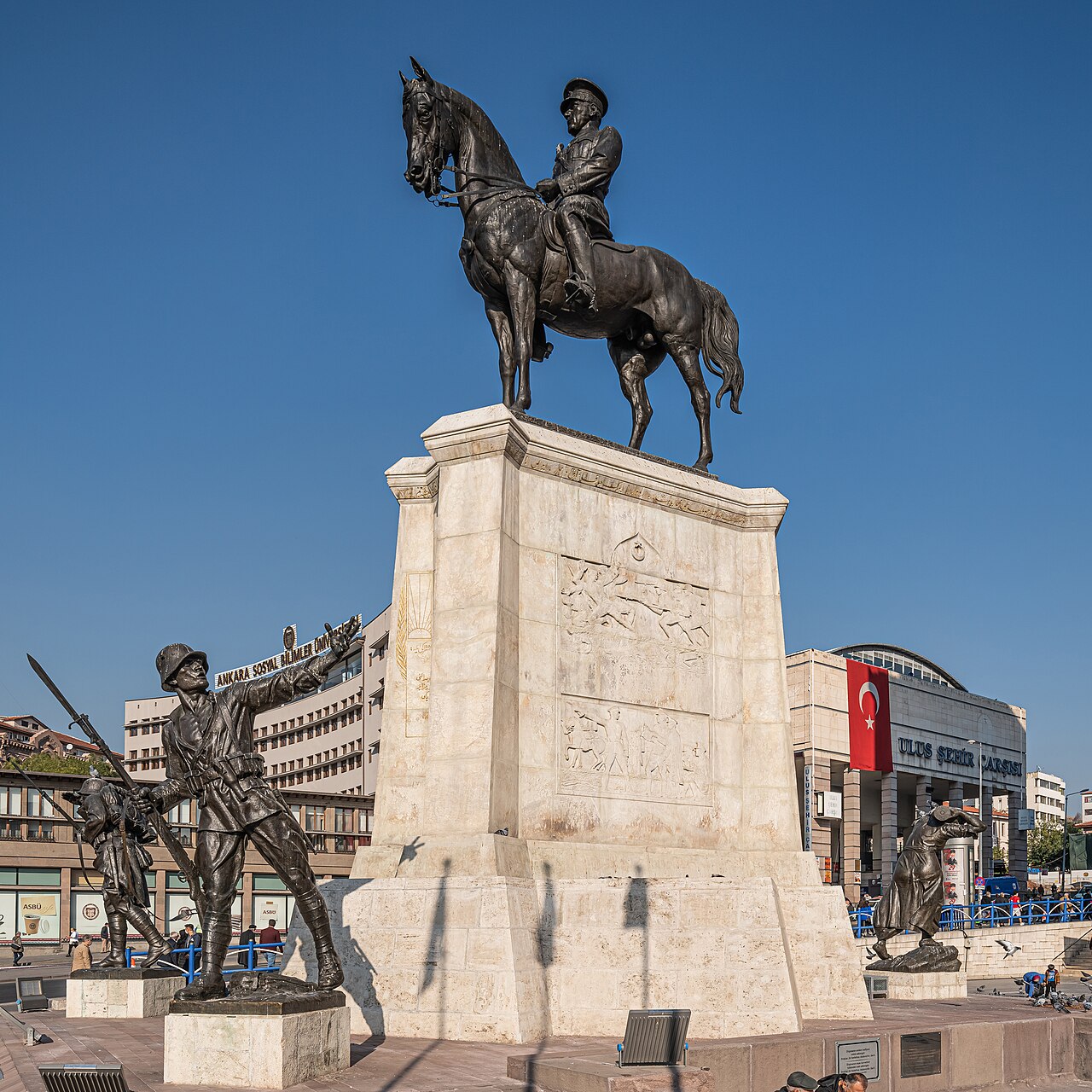
An equestrian bronze statue of Atatürk in Ankara's Ulus Square, erected in 1927 through a nationwide public fundraising campaign.
An early public monument to Atatürk, erected in Ankara while he was still alive, honoring his role in the War of Independence.
Free Humy account · No credit card · 118,535 sources to read
About this source
What it is
The Victory Monument, also called the Ulus Atatürk Monument, stands in Ulus Square, Ankara. Designed by the Austrian sculptor Heinrich Krippel after an international competition, it was inaugurated on 24 November 1927. It shows Atatürk on horseback together with two soldiers and a woman carrying a cannonball, representing the contribution of Turkish women during the War of Independence.
Why it matters
Funded by a nationwide public drive organized by the journalist Yunus Nadi, the monument is one of the earliest pieces of state imagery built around Atatürk during his own lifetime, when Ankara's central square was still the heart of the new capital.
Look closer
- Why was Atatürk shown on horseback rather than standing or sitting?
- What is the significance of including a woman carrying a cannonball alongside the soldiers?
- What does a nationwide fundraising campaign for a monument tell us about how the new Republic wanted citizens to feel involved?
This sculpture is part of the curated material that grounds the AI version of Mustafa Kemal Atatürk on Humy.ai — when students ask about related events, the AI can quote it and cite it.
More Mustafa Kemal Atatürk sources
Browse all 99 → Speech
Primary source
Nutuk
Mustafa Kemal Atatürk · 15-20 October 1927
SpeechPrimary source
Atatürk's Address To Turkish Youth
Mustafa Kemal Atatürk · 27 October 1927
Primary source
Recording of the voice of Mustafa Kemal Atatürk
Mustafa Kemal Atatürk · 1930
Primary source
The Tenth Year Speech
Mustafa Kemal Atatürk · 1933
Free account
Read every Mustafa Kemal Atatürk source
Sign up free →
Ready when you are
Start chatting with Mustafa Kemal Atatürk now.
20 messages free · No credit card · Available in 50+ languages.